1 free read left. Create a free account for unlimited reading + AI research.
Create free accountWhitepaper DiGRA
1 free read left. Create a free account for unlimited reading + AI research.
Create free accountWhitepaperDiGRA
La valise de Lise combines analog and digital elements to address older adult mistreatment, also known as elder abuse. Small teams solve puzzles in facilitated workshops.
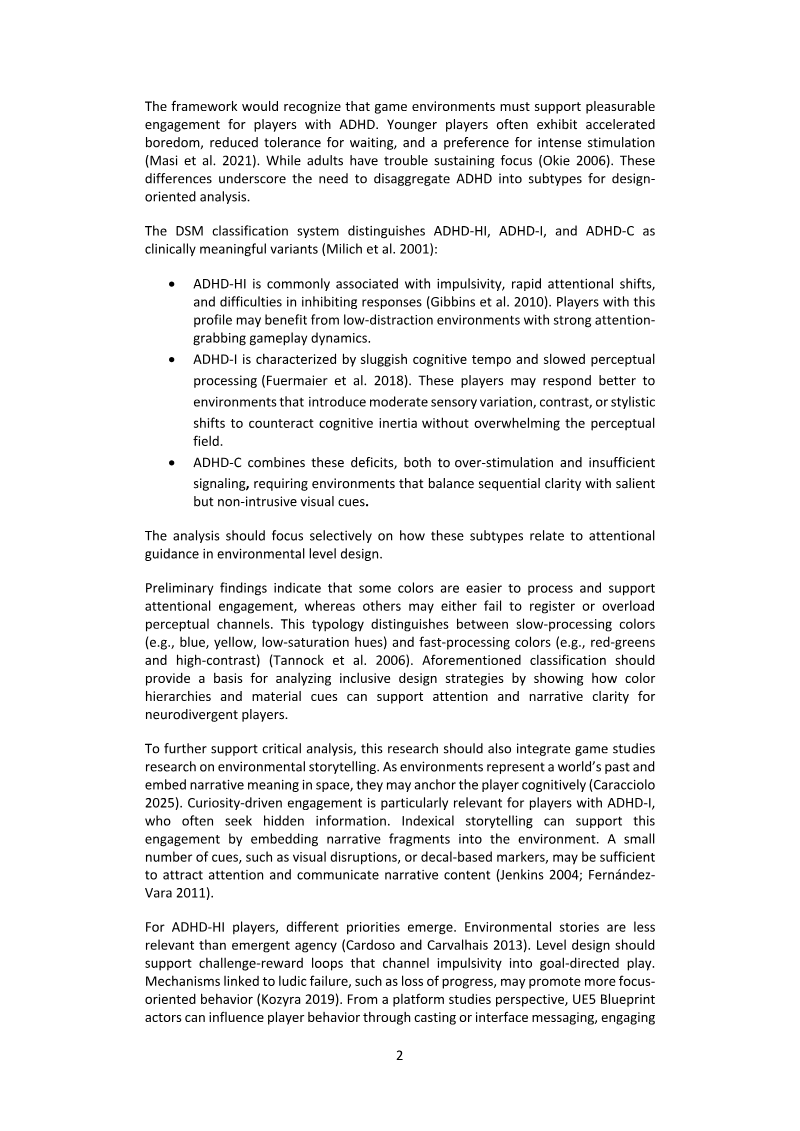
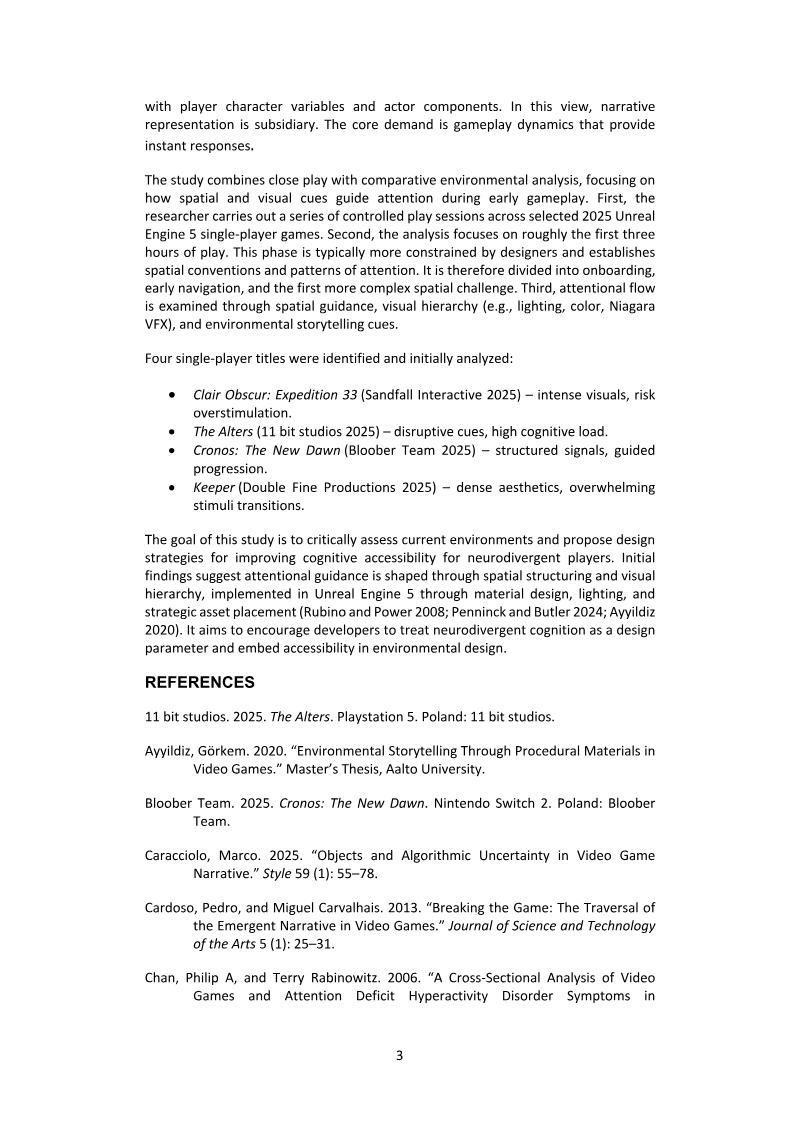
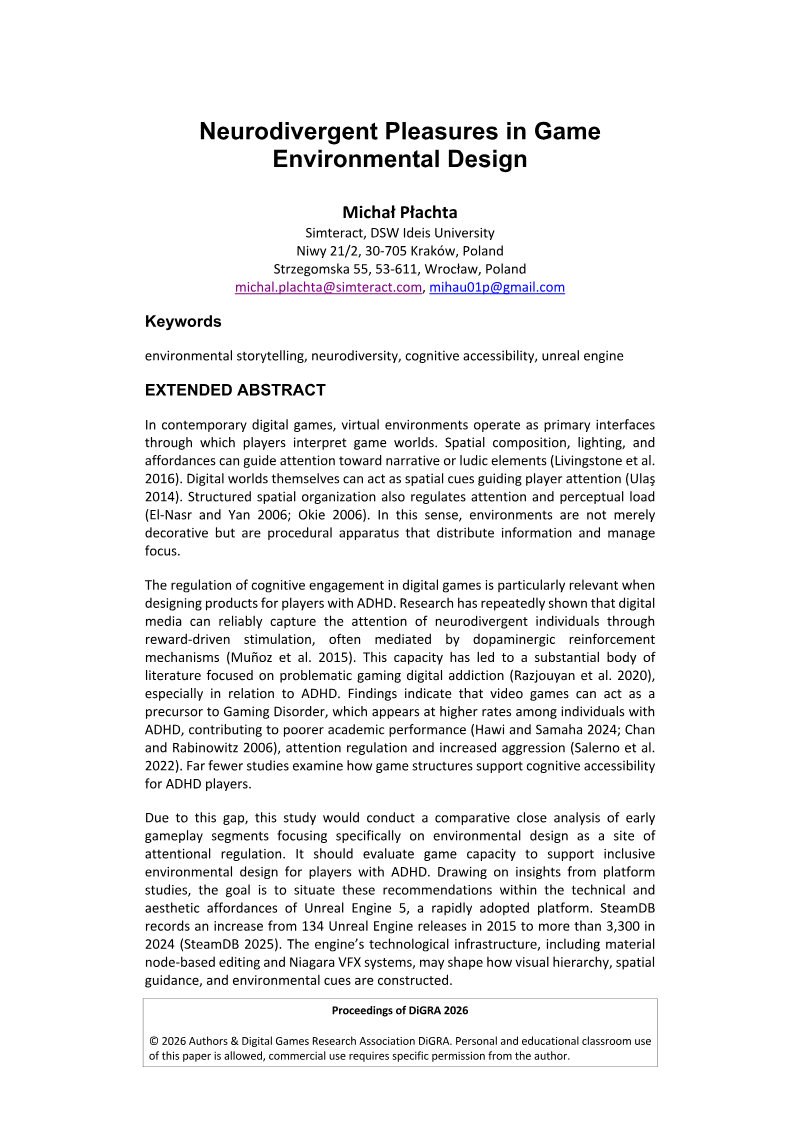
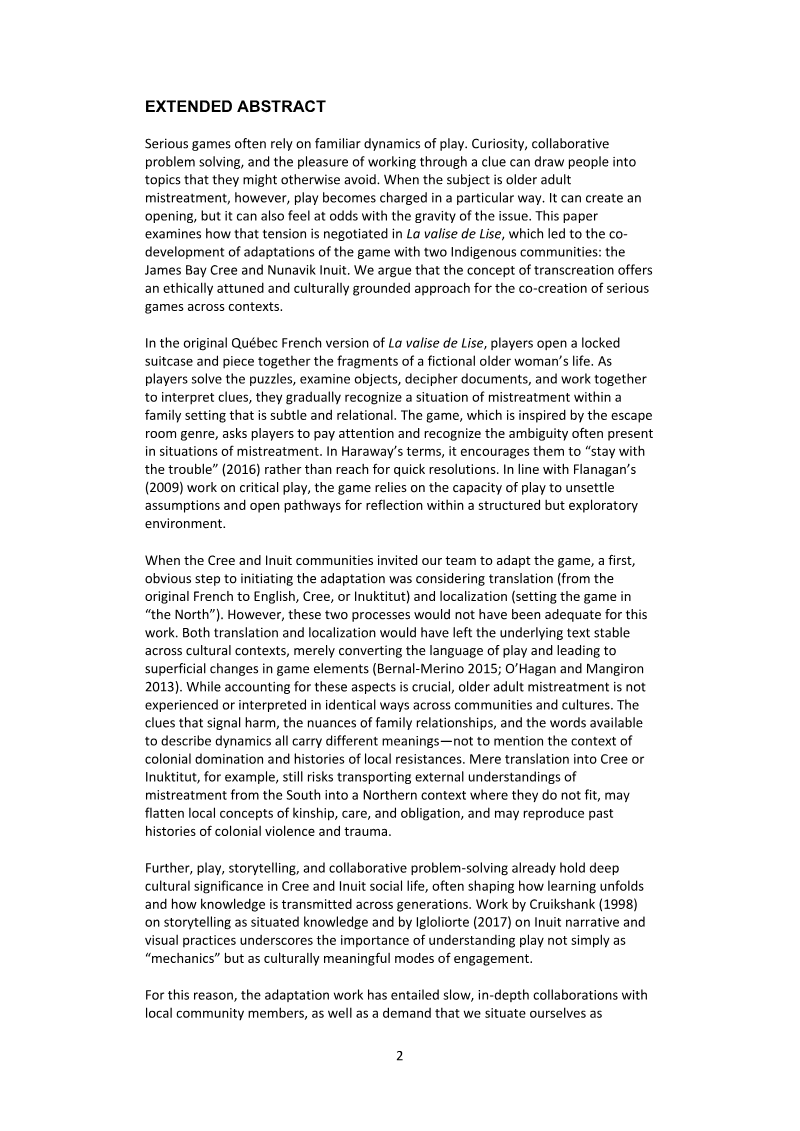
"Assemblages of Awareness" examines La valise de Lise (Lise's Luggage), a portable serious game that combines analog and digital elements in an escape-room format to address older adult mistreatment, also known as elder abuse. Played in workshops with groups of 3 to 40 participants, the game asks small teams to solve puzzles that reveal the life of a fictional character experiencing mistreatment within family dynamics. The gameplay is designed to prompt collaborative storytelling and expertly facilitated discussion, drawing on scenarios grounded in real-world cases. The authors position the game within debates on procedural rhetoric, research-creation, participatory design, and assemblage theory, asking how serious games can balance learning, sensitization, and action with cultural specificity.
The paper reports that the game is being widely deployed across Quebec as of 2025, as part of a provincial multi-year strategy against mistreatment. It serves as a sensitizing tool for health and social services staff and for audiences including teenagers, young adults, and frontline workers such as medical staff, police officers, and bank employees. The game has also been adapted with the James Bay Cree and the Nunavik Inuit, a process that required iterative, informant-driven co-design and the integration of culturally specific communication approaches, materials, and narratives. The authors draw on the concepts of situated knowledges and relational accountability to frame these adaptations.
The central argument is that La valise de Lise functions as an assemblage in which physical props, cultural narratives, digital fragments, human facilitators, and policy contexts together produce meaning through interaction. The authors contend that this relational structure mirrors the complexity of mistreatment itself, which calls for attentiveness to context and resistance to hasty judgment. They frame the game as a model of "response-ability," an ethical practice of accountability and care within networks of mutual engagement, and suggest that serious games can cultivate shared responsibility by turning abstract social problems into occasions for dialogue and collaboration.

DiGRA · 2026

DiGRA · 2026



DiGRA · 2026



DiGRA · 2026



DiGRA · 2026



DiGRA · 2026



DiGRA · 2026



DiGRA · 2026

DiGRA · 2026



DiGRA · 2026



DiGRA · 2026

DiGRA · 2026
DiGRA · 2026