1 free read left. Create a free account for unlimited reading + AI research.
Create free accountWhitepaper DiGRA
1 free read left. Create a free account for unlimited reading + AI research.
Create free accountWhitepaperDiGRA
It also says young players are routinely denied a voice in these debates.
This paper, authored by Gareth Schott of the University of Waikato, examines how adolescent game players in New Zealand understand and articulate their engagement with violent content in interactive digital games. Its central argument is that the language conventions surrounding "violence" in both academic research and public debate are too narrow to capture the complexity of players' experiences, and that young people are routinely denied a voice in discussions about the effects of games. The study positions itself against experimental psychology's causal and desensitization models, arguing that these frameworks treat participant responses as objective data rather than as products of social and linguistic context.
The research was a two-year project funded by the Royal Society of New Zealand, conducted primarily in five schools across the Waikato and Bay of Plenty regions of the North Island. Sixty-one students (53 male and 8 female) took part in weekly game clubs over a full school year, supplemented by focus groups and individual interviews. Players were allowed to nominate games for play, and the most frequently chosen titles carried age ratings of R16 or lower. Rather than presenting discrete findings, the author describes conclusions as assemblages built from repeated observation, conversation, and participant review of the analysis.
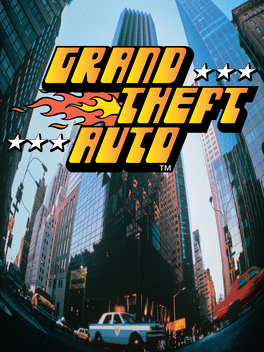
Among the key observations, players selected games for reasons spanning franchise loyalty, technological novelty, and narrative appeal, with war-themed and science-fiction scenarios such as Resistance: Fall of Man especially prominent. Participants consistently distinguished between "violence" and "cruelty," endorsing combat and killing in heroic or defensive contexts while rejecting gratuitous or sadistic content. They also rejected games depicting urban gang culture, such as Grand Theft Auto, framing these as shallow and as reflecting an unwelcome Americanization of youth culture. The study additionally documents media controversies, including the response to Sony's depiction of Manchester Cathedral, which players viewed as having been misread in public debate.
The paper concludes that the appropriation of violence in games cannot be reduced to predictive or causal claims, and that understanding it requires attention to players' ideology, values, and pleasures. The author frames the work as a contribution to building alternative discursive resources for public and academic discussion of games, while acknowledging that it resists conventional standards of progressive research.
Each row is a game or company this document names, each column a document, oldest first. A mark means that document names it. Select a row to see those documents.
DiGRA · 2018
DiGRA · 2018
DiGRA · 2018
DiGRA · 2018
DiGRA · 2018
DiGRA · 2018
DiGRA · 2018
DiGRA · 2018
DiGRA · 2018
DiGRA · 2018
DiGRA · 2018
DiGRA · 2018
DiGRA · 2007