1 free read left. Create a free account for unlimited reading + AI research.
Create free account
How to successfully work remotely as a team
Key insights
7 takeaways- 01Prioritize hiring candidates with prior remote experience, a history of freelancing, or an entrepreneurial mindset to ensure cultural and operational fit.
- 02Maintain centralized, accessible game design documentation and utilize asynchronous communication channels to bridge gaps caused by distributed time zones.
- 03Optimize production cycles by using time zone differences to create a continuous, 24-hour development workflow.
- 04Implement a 'working on' channel for daily task and blocker updates to replace the need for constant, synchronous supervision.
- 05Shift management focus from tracking hours worked to measuring tangible output to ensure productivity in a remote environment.
- 06Leverage continuous integration tools to ensure game builds are consistently available for testing by all developers regardless of their physical location.
- 07Utilize trial projects as a standard assessment tool to evaluate a candidate's technical capability and cultural alignment before committing to long-term employment.
Ask AI about this video
Transcript
[Music] hello okay my first question is how many of you working remotely as a team okay let me describe remote working you have three two more team members in your team they don't have any set time to work or they don't have any set place to go like an office or something and you measure actually not the time of work but you measure the getting how many things get done so how many of you are working remotely good good okay so i'll be talking about working remotely but first let me introduce myself I am the co-founder of red mill and we are actually 10 person team with
different working on different topics we are in four cities two countries and we are doing this for the last two years this is for red milk but for me I'm working remotely from a beach not really I'm working remotely anywhere for almost eight years or maybe more and I did more than 15 projects around the globe I've worked with different teams from different regions and countries and you know everywhere in the world except australia i think i had some people that work with me from south africa south america also in US and everywhere so I have a bit of experience in this and you can see it on my hair that is getting white it's not easy so let's start with what is it for and what is it not for so i'll be talking on
the perspective of a of a studio not from as respect to a publisher or something i'm what we are more in funding team it doesn't publish our game yet we will be publishing it but there are very critical stuff that then i talked to people they when they think about remote working or freelancer that using some freelancers or you know working with other teams from other countries first they think that it is cheap it is not cheap it is you have to pay the developer designer or whoever you're working with the proper salary and let's say the benefits even if they are working remotely or even if they are working in a different country which was cheaper than what where you live or where you do your work and it is not fast definitely it is i can tell you slower than working in a same room or vergonha same office
and not easy not easy at all so why we do it why red mill does it why am i doing it it is it's very important I mean it is very flexible you can tap into anyone not anyone I'll explain that but anyone that lives anywhere in the world so this actually opens up the whole world is a new pool of talents for you so you can select your designer for your new game that leaves a sort of America has a very good you know design aspect that you want to put into the game and you can do it if you can beat you can work with the rock stars I mean the only reason that we can able to hire our new art director which has like four games featured by Apple globally and two of these his games actually in the Apple stores pre-installed to these demo machines that they have and the only reason that
we can work with him because he doesn't work work he doesn't want to work in Istanbul anymore he wants to quit his job he doesn't want to go to office and deal with the whole you know cottage world of Istanbul so he wants to move out and I said yeah we are removed working team come and join us you can work wherever you want so that was the only reason that we can actually work with him and [Music] what I see is if you can make this work you see less turnover in your company so it is very I don't know if it is evil as a start I mean a start-up but keeping good people in the team is very hard especially you know there are big companies that paying a lot of money that paint out of benefits and gives out of other good stuff and for us we are small we don't tell that budget we don't have that all the good
benefits of big companies and all these things and when you have this remote working start working it and when people get really started to you know work like this it's really not easy for them to go back to the office every day I mean last year one of our developers were in philippines for two months he was just going around and doing his tasks anywhere in anywhere in the Philippines we are fine with that as long as we can do what we need to do and we can plan so this is very important there's a small studio for us right now keeping people happy and keeping the turnover rate small and work with rock stars repeat to anyone that we like to work around the world is very important that's why we do slower it makes harder for us and we bear all the negative stuff but it's it is good to try and do it I think so i'll talk a bit more about the people
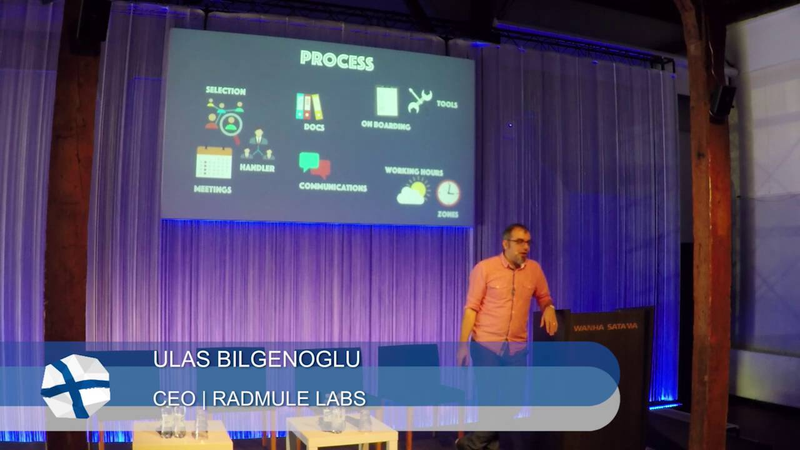
process and the tools and the people side of it the most important part is not everyone is suitable to work remotely I mean this is a fact this is something that we learned over the several years of experience really not everyone is suitable to work remotely what we do is I will explain it more in the process part but when we are selecting people we keep this in mind because it's very important it starts from there there's a really good talk in Ted Ricardo Semler I think he's a CEO from Brazilian company I really recommend you to watch that he talks about also working remotely but the culture that comes with it and it should be there for people to work remotely there is always a debate about salaries and freelance work so you can use Freeland's people to help
with your project and then they go moving to the different projects or maybe they can stay and do more work there is a conception of if people are getting paid no matter what they do every month they work less hard or they don't care that much or something like that and if their freelancer they need to finish off your work first and then they can get free and get more work there is a conception like this I don't believe in this conception the it is more importantly then it's not everyone suitable for remote working so keep in mind and use freelancers and solder it in a mix we do it like that and this makes you also not to grow too much and be more flexible as a company keep in mind that there are a lot of preferences that goes into every one that works sometimes people want to work with their laptops with desktop some of 10 months there really an office
that to go there even though not all the team is there just needs to want some set hours to work sometimes they work it in daytime some of them they work in night time because of the time zone differences the team might be working in different hours so this is the people side of it you need to think about this you need to think if the person that you are getting to work with is suitable to work with what is their preferences and what is your team's preferences sometimes the people are actually good at working remotely but maybe some of their preferences doesn't fit the team so you need to think all these things [Applause] so the process all-star selection selection is very important what we do is we usually go through a trial project or a trial period with anyone that will join the team and for in that period we don't ask
them to quit their job if they are not working so we do pay them for their work but we don't ask them to quit because we end up most of the time not hiring them because it's not easy to find someone to work really good with the team and work remotely so we do try people with projects they do it on the weekends at night or whatever time that they can find it and we do give them small tasks it's not the whole project we try to keep small chunks that they can actually do it so we see how it fits to the team and how it fits the whole selection process it is sometimes it's good to have someone handler I call it so if you're working alone in a city that you don't know any anyone from the same team you should have someone that you can always reach to from the from the team either from the management or someone like project manager it can be or or manager
that you have in the company so it is good to head have these contact points let's say in the projects or hole if you're a small team you can only have one and you can kill yourself to answer all the calls and messages and I usually find that setting set meetings like every week two o'clock Tuesday we will have a art meeting is it's good because people works in different time zones different times and they have some other things to do in light some errands to run and all these things but you have to have at least I think one meeting set every week depending on your schedule on your project you can make this maybe every day or maybe you know every two weeks or something but you should have something set and then you can all the team can discuss all together the
communication is really really important if you cannot communicate you cannot work at all so we use different tools for communications I'll explain that to you and documentation for onboarding and for the tools it is also very important and like game design documents I mean it's a very boring thing to do but you have to have to do it because it's not like the people is sitting with you and you can just open it and explain it to him of course you can use skype or some other technology to do this but it is good to have something written and stay somewhere that everybody can access because maybe that person is gonna need it three o clock in the morning and you want to sleep so working hours and zones are very important we had a very mixed team at one project which the one team member from Canada one team member from philippines and we were in Turkey
very hard to manage you if you want to do something like that try to manage in the project like QA in a different time zone and then the development at different time zones so they can finish what they do and the Quai can continue what they are doing actually so if you think that you need to work with someone that you really need to work you need to maybe set up the project in a way that it will work in different time zones but usually you know two to three hours difference between is it's not that bad so the tools that we use is it's very integrated into our process I'll keep this slide this is my last slide so you can take a new photo we used to like there is a hip chat and matter most which you can use but it's very goes hand to hand in your process because what we have is in select we
have every single project as a channel so everyone in the project that goes into channel first we have a general channel which I personally try to post something I don't know anything to this channel that doesn't really relate it to the work but just to keep the communication open and you know everybody to post something there and we have a working on channel working on channel works like this it's not like really you know checking everybody what everybody is doing but it is i log in I say ok I am planning to do these things today or the lot you know next several hours so anybody can see this in that channel and say that oh wait wait i was waiting this art is that from you but you know you're working on that one so can you please send this Saudi it opens up the communication a bit so you need to always keep a channel separated I mean specifically for this to see what the people are doing and then increase the communication
we use skype hangouts or go to meeting time to time for video calls or screen sharing or you know this kind of calls we actually use the most skype on this and on the management side of it you can use anything that you want but video 0 it's good to keep track of the sprints and also the tasks and everyone so the most important part of the management side of it is first of all you need to let go that total working or does not equal to total things done it is different and separate stuff I mean people can come and sit here 8 hours and do nothing or can work two hours and finish three tasks in this to our so it's completely separate you need to think a bit of differently when you are managing a complete remove team so what we do is we always measured we don't even put estimations some time into JIRA and we don't log any hours
worked at all we don't blog it because doesn't really matter as long as if somebody says that this test will finish by friday we expect that test will finish by friday it doesn't really matter how many hours that he put in or van he put them so that's the main concept that we go you can use anything I mean we in one of our project we are using github issues on me that's it we try to a low then work out for us also a solid in work out I think we are settled on zero now you know what CI is continuous integration so I would recommend you to check this you should build a complete continuous integration you check in the code it builds it does does the tests its publishes to test flight or somewhere so every time it's always available to all the team if they want to test something they can test it very fast so I would recommend you to go
and check the CIA tools you can use unity cloud build you can use fast lane or similar tools to deploy your own so that's it I can take questions if you have any can you rose just great as a couple of others i'll add to that list yeah we're using favreau which is the new one from hand soft into the Trello and that's rash you're really good for agile kind of development and it's just a really nice structure from things that are planned in progress and yeah and complete and it really works very nicely was there an old cow build completely incline is pretty little approach I'm gonna Cowboys there is actually if you don't use cloud but if you want to use on your own server of this team I don't remember the name but you can send a message to me and I can share that you can you build your own cloud build server actually with
that so I dinner it's hockey episode does some elements so clearly not that one's the Bulgarian campin company oh yeah anyway I'll it's all about creating a kind of efficient build yeah I caught yes yes I'm particular when you got different time zones you know it's just incredibly we were had a guy was in dubai who was our environment artists and it was really actually worked out really well because he would finish I'd see it and then I'd have enough time to get their coats to put into the scene so yeah it is there are you can you you can use the time zone in your own advantage let's say as UK as you said I mean if you do it like artists working in a different time zone and then the developers working a different time zone when they artists done developers can start working it's like it becomes more efficient exactly exactly and I think I really that's the key is he can be more efficient yeah but you're like you said it's not not easy easy did anyone have any questions actually oh hello Japan so I think you you're like a milli
second faster than the guy behind you but then it is a guy behind you no no no you f else is fine I love it very much thanks for the talk at the question if you see any patterns which people are more suitable for remote work than others especially during the interview process on a beginning yeah yeah i forgot to mention that very important because yeah it's very important to thank you for the question i specifically look for if you work for a company like Microsoft Google or these bigger companies that has embedded remote working culture this is a plus because I work for Microsoft almost seven years and I were completely removed all the time I mean I went I got office like maybe once a month this is one thing that you can check the other thing is if he's a successful freelancer that's for sure that he can do remote work or he's an entrepreneur old entrepreneur or you know he did something and then he's doing
of course I'm not saying that the rest cannot do it they can do it but these are good indications in the very beginning to look at yeah you particularly the entrepreneur kinda Moines not necessary full blown but yeah I mean something they build a small game by themselves after hours you know these kind of things actually gives a good indication thanks for a good plantation so you don't have working hours has it caused problems and how happy soft lemma it doesn't it doesn't so what we try to do is if we need to work together on something like let's let's say we have a big epic or a big task that needs to a couple of people that need to work on it we try to set some working hours for the next couple of days or a week or something so we say ok let's start working this week let's start working 3 p.m. till 8pm let's say you know so we try to encourage people to stick that right now we are actually
all the way all in the same time zone so I'm so happy about that so but even if it is different time zone you can really still find a window to match and it's these communications you just set as a team and then go ahead from there the key thing for us was making sure everybody is at rather channel in slack with setup called daily reports yeah we do effectively the ad jar thing but all you have to do is say what you're doing yeah so what you've done what you're doing and what's holding you back yeah this is this is we use the working on channel in select for that yeah so it's like I'm working on this and then oh I couldn't finish that or I I'm having problems with this or we keep that not like you're working or provide so on going there yeah and nicest of a bullet so that make it really timely ya it's not your sort holding anyone up yeah yes just done thank you very much oh wait fortunately run that time yeah sorry I can I do I didn't I see Hannah but I also knew I had to stop there so sorry maybe I didn't talk later yeah
I'll take some thank you kiss [Music] you
Summary
Managing a successful remote team in the game industry requires a shift in focus from tracking hours worked to measuring tangible output. Remote work is not inherently cheaper or faster than traditional office-based environments; rather, it is a strategic choice that offers flexibility and access to a global talent pool. By removing geographic constraints, studios can recruit high-level specialists who prioritize autonomy over traditional office settings, which often leads to higher employee retention and lower turnover rates.
The core of effective remote management rests on three pillars: people, process, and tools. Not every professional is suited for remote work, so the selection process is critical. Ideal candidates often possess prior experience in remote-friendly organizations, a history of successful freelancing, or an entrepreneurial mindset. To mitigate risk, teams should utilize trial projects to assess cultural fit and technical capability before committing to a long-term hire.
Operational success depends on structured communication and clear documentation. Because team members may operate across different time zones, studios must maintain accessible, centralized game design documents and utilize asynchronous communication channels. Establishing a "working on" channel—where team members post daily updates on their tasks and blockers—replaces the need for constant supervision. Furthermore, implementing continuous integration tools ensures that builds are always available for testing, regardless of a developer's location.
Ultimately, while remote work presents challenges in coordination and management, it can be optimized by leveraging time zone differences to create a continuous, efficient production cycle. By fostering a culture of accountability and utilizing integrated project management software, small studios can compete for top-tier talent and maintain high productivity without the overhead of a physical office.




















Comments