VideoDeconstructor of Fun
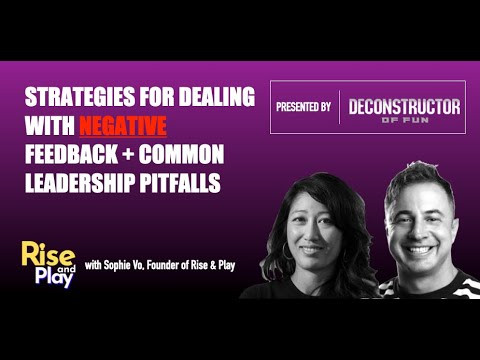
How to Deal With Negative Feedback, a conversation with Sophie Vo of Rise and Play
23 Oct 202355 min video
Transcript
Hello friends and welcome to the deconstructor of fun podcast I'm your host michig katoff and in today's episode I'm joined by my friend and former colleague Sophie V she's a person with 15 years of experience in the game industry from companies like Gameloft wuga roio wodoo and dear old Savage game studios Sophie is also known for Horizon play podcast and newsletter so if you enjoy the content of this podcast I really suggest you sign up to rise and play newsletter as well as subscribe to her awesome podcast now in this episode we talk about a lot of self meaning the importance of self-esteem self-awareness self-reflection and self-evaluation we also discuss strategies for dealing with negative feedback and the common pitfalls of leadership which in our experience stem from misalignment within teams I really hope you enjoy this episode please do check out rise and
play podcast and please do connect with Sophie V she runs great workshops and I know this because I've attended them so without further Ado ladies and gentlemen welcome to the podcast welcome Sophie to cassa catov you mean like bar not castle cassa like a like a casa like a this is for sure this is not Castle anybody watching on YouTube this is far from a castle um this is just a wooden house yes yes a nice bar like we are also in the middle for because people don't see in the video but we are in the middle of nature actually uh espo which is quite nice still like the end of summer like still like the bright light after PGC yes PGC Pocket Gamer connect happening in Finland uh it's the weirdest thing is like when you have these Hometown events or Hometown
conferences they're the most um difficult to attend cuz people are like hey I'm here I'm there would you come here I'm like no this is Tuesday like I got my kids that I need to take to to daycare they' got gymnastics we got a pickup they come from school we have all this stuff so this not like when you go into an event you have like a full day you can slam it in like no no I have I have believe it or not a little bit of work to do so so um so it's it's hard to attend but but yesterday we were at an event uh we organized together with uh apps lier and Google shout out to both uh a little bit of a mixer you came in there um had some dinner afterwards and all that all that jazz how's your Pocket Gamer otherwise going uh very good like we were just debriefing about it like for me it's always like nice to catch up with like the whole Community like from my time uh in Finland at R before and like everyone like from over organization and now building your own company or some going Independence like have a bit of
everything some who have already tried one company which failed and like trying maybe the second one so for me the joy I get out of it is like the pleasure to catch up with the like friends because I consider it's very friendly the community in hinki uh part that is more draining is I I must say the networking in the mass I was even like crossing your and we understood each other when we saw like too many people it's like it's time to go it's interesting when when when you go to like we're going to get two topics but when you go to different events and normally when I wake up the next morning I I think about like some sentences come to my mind I don't know if if others have this I've never maybe just how my brain is wired up and um this this sort of a uh conversation or interaction came to my mind this morning and I kind of wanted to discuss it with you so we were at the mixer and then there was this uh this one lady from roio shout out you know who who you are uh she came came in just
just like many people do and just like have you probably noticed since the podcasting and everything that people know you they've listened to you so the threshold of starting a conversation with you is very low because they feel like they've had a long many hours of interaction before this so naturally I've had a um what do you call not unilat like is it unilateral like one W interaction with this person for a long time so she came in and and very nice person uh said that she's uh really enjoyed the podcast it has helped her as she's entered the the gaming career uh and that she's learning a lot and all that positive thing and I was like thank you so much and all this St um introduce her to um she she really wanted to learn more about product so I was able to introduce her to Maya uh hrey she moved to Finland to work at supercell just a couple of weeks ago I was like Maya over there maybe one of the best product people in the world just you know just being objective over here uh likes art likes all that stuff so you should meet up anyways introduce them they have a good time they connect uh they're going
to meet up and so forth so this person is leaving and um you know the the happy hour is closing so she's uh she comes to me he like hey thanks for the instruction and all the conversations and so forth I'm like yeah of course like nothing and then she's like okay uh I thought that before meeting you that you were arrogant but you're really cool and nice person I was like okay thank you and that kind of leads very direct shout out to uh but but um where this is kind of leading is is like I've had this for you know for better or worse for a good part of a decade where people have certain uh Assumption of me uh and and they perceive that I'm a certain way without ever having an interaction with me um but you're now getting into the stage of you know through rise and play and through being more visible and through discussions through post on LinkedIn uh which we use not to promote ourselves but to promote our uh visibility of our content and so forth so it's a it's a
marketing channel uh so you're using that marketing channel and now people are probably having different perceptions of you people who have never have interactions with you never talk to you never met you but they think something of you because of the way you wrote or the type of content that you're covering am I accurate like is this happening now more a bit more and so it's it's funny that we start with that because um I I'm I'm going through like the comments I've had when I started like sometimes meeting again at conferences people so one comments I had like you sound like like the same on the podcast I guess that's good uh so we like kind of sound like the same it's like oh I feel I already know you yes before I start to talk to you it's like oh interesting so those are the kind of cute sweet comments where of course my intention when we speak here I I try to be as as close as possible and even like um true to myself to what I share and the way I share it that I would share
like I feel like that's how what kind of conversation we would talk of course with the awareness of a microphone right now uh however it's not totally true so that's what I'm trying to achieve most of the time but then yes I started to have also more some interaction and awareness of also different P perception or image or not even from the podcast actually more from what I advocate for like I've I've studied it three almost like two and a half M about conscious leadership like a topic really close to my heart for me uh based on my own practice like leading games also seeing quite many things company going public you know acquisition and so on and when uh I have faced sometimes uh in that case like it was a recent event a few weeks ago an opinion about how uh not true it was like a facade and like even like a fake identity it it really hurt me because because this is something I'm
really working hard on and not for the image but I really care about and I have done the work for the people at least who have known me and work with me uh but like what happened in that Gap and between like what I have done and uh like the way I'm perceive that happens and like back to your conversation is like there's a reality that you know your image based on who is receiving uh will like proceed you based on their own experience and whatever you know they have had from their own experience but someone who looks like you a talk like you and that maybe have done something bad so it's something I'm becoming aware of and also not to react but just to receive and like understand and you know and sometimes is it worth engaging or not so that's something as I start to rise yeah with rise and play Just observing if there's some gap between but I haven't face T face had experienced that so essentially what I'm talking about is a little bit of a you could call it bullying um through social media and so forth I I know you've had
now that the scale raises the the way I what are we 2 minutes in 3 minutes in I'm going to use an army example already so so this is the same one that I be keep telling me and this is the one that that I keep as a rule is like what I was told by the captain shout out to that Captain whose name I've already forgotten but an officer at school he said it doesn't matter what you do 20% will still not like you it does not matter and then as you bring more scale from 10 two people don't like you from 100 20 people don't like you from 1,000 you already got 200 people who don't like you and so as you bringing the scale out of those people who don't like you there's going to be there's always going to be uh and they're going to go on the next level and you're going to get Negative push back and this is this I know that would happened um those on Rise and play slack Chown know as well and we you know of course we're very encouraging words for you but this is going to happen in the future because the scale keeps increasing and through scale there's going to be more always so what's your kind of like uh
what's your me I know I'm asking you this because you're very self-observing uh and very much evolving type of a person where something happens you kind of you're normal person you get upset you get anxious you get sad then you have to share that to everybody and then you kind of go back and you put a theory around it and like this is how I'm going to deal with this now and that's not going to hurt me anymore so I saw that process now go through and like what is the the exit like what is that theory that rest of us can use basically yeah so which is also like we have been working together and you know how I've approach most of those problems like first exactly I like how you describe like I went through the cycle uh but then it's like I believe in system because no oh you know every day we are confronted to so many decisions to make and and that kind of decision that catch you by surprise when you don't have a good system then you have to go really in like thousand of question to even know what to to do in the moment so I
took like a bullying experience uh online to really reflect what is the system I will use for decision making for myself so first like checking in you know like first step okay how do I feel about that message is there something that I believe that is true and why is it hurting me so because there's always something to learn about yourself if whether it's true or not like why is it touching you and I can say like here for that uh um example of bullying where it was like really touching on imposture basically like imposture syndrome yeah like you you you're not what you say you are you know oh that's a big one yeah and and this is like touch a very strong identity part of me because of course I I grew up in a certain way um we talked about that parents uh immigrants you know like building your own wealth by working really hard and also uh growing up in also in a very conservative way and I had to I had to my J to emancipate
myself and find my own identity through several personal transformation so then of course when somebody is questioning who I am it it goes back to the question like who am I as well like who am I am I that Sophie that was sixy old when it was raised that way the one who moved to Berlin in 2014 the one who moved to Finland I had so many stages and it's a good Reflection Point for me like is do I feel behind what I'm doing so that was the moment of reflection and if I have insecurity about it why is that so it build that more confidence like no wait a minute I have done those things I have done those things in this way and so on it's like it is it is true to me so first I would say gain from this when you receive a an attack whether personal or professional it's a good point to reflect do you believe in it or not and why and building your self-esteem through that and second is like what do I do uh because being more a public
person and like in my case now my public uh image and brand is my future business so they are both associating and of course it's something to manage a bit more carefully than I'm an employee of XYZ and you know you can't hurt me because like my uh Destiny is owned by a company like my contract right so this is quite different here where do I need to respond uh do I need to not respond or if I decide to respond how do I respond and so I build system for myself is like who is in front who's saying is it the person that I need to respond to like has influence and network and that maybe something needs to be corrected like if it's a false statement uh misunderstanding so I always want to start from a point of misunderstanding so I have like kind of a tree of decision is like first do I engage or not and if so how and uh before that best evaluation is who and like the whole risk assessment is like what what is it that I should say and for me I
build also a framework of response to that always start with thank you I know it's silly but always start with thank you thanks thanks for sharing your thoughts thanks again like I stay true to my principle I always give a benefit of doubts maybe there's a misunderstanding maybe I there something I've done to harm uh that I said and I didn't know and I have noort to learn because I always want to learn so thank you um can we talk like it's very I would like to understand what led you to say this or that or act this way and maybe we have a dialogue and if based on the response vers a dialogue a curiosity it's like thanks for writing me I'm happy you reached out because I wanted to express this and then actually what I meant to say oh okay we understand each other and sometimes some conversation I've had more professionally like in a workplace actually we're creating bonds because that's where we overcame like kind of uncomfortable State like opinions and then oh we misunderstood each other and actually we connected
even further so I believe a lot in that approach but it depends on the respond and when it's like doubling down on grade that you wrote or like because you're you know this or that insulting and without even asking a question this is a sign for me to not engage further because there's no interest in uh learning and understanding or even the dialogue you know it's two ways so here it's just keep keep insulting so in that case I thank the person as well keeping my principles and then wish the best and uh disengage so that's kind of my system it will probably update as I have different you know it's like almost as the scale grows and yeah yeah yeah it but that's what I took away from it and it gave me peace because I can be more prepared for the situation instead of like being taken also by surprise and what do I do and I appreciate it a lot we have had more private conversation on the support really to um like just what you shared even like accepting this reality you know as you grow it's like
uh if you don't do something uh I I like that matters and then also where you take a stand because you take a stand in the world otherwise you are a people pleaser and you do every you say everything that every wants to hear you will also displease others that's inevitable and that's also part of the and to be okay with that right yeah yeah when you are you it's not your you is not for everyone as well I think for me like it was this is a great process so self-evaluation that helps you to build self-esteem of who I really am then you go into an action which is like thank you for expressing what you I mean I wouldn't think in those situations that we're talking about that's an attack you don't think attacker uh but if somebody wants to engage in conversation thank you let's you know let's either stop continue talking if you if you're willing you're willing opening that door if the person is still not willing then just close that door and and there's no point in in in trying to change somebody's opinion and that is um like for me what what has always always help with is understanding
that things are not as objective as we project meaning like if something has happened and you feel a certain way that something went against you like it has something has happened to me many of times where I felt that that person crossed the line and they did this and they did act and so that is my memory of that that is my perception of what has happened that is not objectively what has happened never and that you don't know the intent you even if I would go through the words I can tell you like in a context I could take a take a set of words and tell you what has happened and then it's up to you to interpret in what way they were the words were taking what was the whole context of the situation so the same thing goes with everything that we do is that we have our perceptions of how things are done or what has happened but that is only our side of the story and that that came to me and and and like I've I've interacted with some you know good leaders and sometimes they might reach out or you might reach out child is like hey I've heard this this is one the half of the
story what's the other half of the story like that's their start of the conversation and they they're they're not like reciting certain things I'm like oh that's the type of a decision making that's how I need to be thinking about every communication or every uh sort of a thing that is told to me I was like okay interesting great half side of the story I want to hear the other side of the story and you know sometimes sometimes I just don't want to hear even the half of it but uh but that's kind of a kind of a thinking is like these are these are not facts but I understand the uh the act the uh the emotional response because you're independent now and and that is something that that is that is hurting you directly and it's not hurting the company you're working at or so forth yeah yeah we will talk about it later but it's you done that for a while but when you throw yourself out there to be you know standing on your two legs and not being hiding behind a company name like it's it's you being you know judged
evaluated every part of you right so so of course it's it's still I'm not sharing my personal life so it's not a full me but it's a part of professional me that is of course judged and to be okay with that and to be also okay that it's a certain part of me that is Judge it's not fully me that's why going always back to who am I as a friend who am I as a partner who am I as somebody who has done other things that nobody knows publicly of but that's how you you keep your your self-esteem like remember and if there's something that you truly feel sorry about and shameful about being honest and what can I do to correct this if I really there's something that you haven't closed you know like sometimes I have had conflicts also you know in the work and it it was a good moment for me to reflect and like this is a moment where I've made a mistake and then I will not be in peace with it until I own it and then I I repair it with a person that where misunderstanding or you know I went too far without knowing about it and once you close this then then you are really
seing on the confidence because you know you've done everything you could have to not have this little weak like weak point you know like fragile P that can hurt you if somebody mentions something about yeah that's a that's another point that that you're erasing your approach and perhaps my Approach of of dealing with negative uh talk because that's what everybody deals in all their setups like you have and I think the the first part when you talk about the self- evaluation I think that's really important and that is the most difficult part um is is owning up to like hey there's most likely some truth in this let me let me understand what uh what has going on and like in our working experience and and everything I always ask you like hey Sophie am I this am I that and so when these situations happens like somebody calls me arrogant I'm like I feel pretty confident because you know I have many mirrors uh you being one of them it's like great uh I understand that that might be your perception uh but I'm I'm quite conf confident that that that's not like that doesn't phase me anymore
because I've had already conversations with the mirrors that that I use that that that's not me and great that your perception has changed but I want to jump into into another topic which is really the the kind of like the meat of this so sorry for for talking about the yesterday and and kind of uh the previous one is like I want to quote Morton mikos he's the uh the CEO of um hacker one uh great dude uh and um he he said this if if you're successful you do whatever you like if you're unsuccessful you do what someone else likes it's simple like that and that that is the type of a quote that I've written everywhere and it's a very powerful quote of of what success really is in the end and I wanted to kind of like ask you like are you doing whatever you like right now well that's why I decided I guess like over the summer to really reflect on do I uh do I even love what I'm doing every day I know it's very ambitious and it's it's not the reality you know as we are professional we work
with constraints sometimes it's not always the partners but we choose because someone else has chose another partner for us all those realities um and I I have like I'm like you know a deep thinker you you you've known like how i' I worked and I've been asking myself like what is uh how is the the resource for me of even like the talent of what I have to offer in the gaming industry and it's a lot of my energy in ins spiration creativity even Joy like I have a lot of joy I love to work with joy L and we had moments of L I think we all love we all like to do that way yeah and so what are I thought of your oppos what are the things that don't give me joy and when I had to remove some of those I realized like what if I can focus mostly or if only on the things that I truly enjoy that brings me joy but also where I can share that joy and it came down to a few things uh where I was exping what were the moments where I
felt the most fulfilled uh in my career and in personal life like first like working uh connecting a group and I have that multiple times whether it's like building my team at voodo working also with amazing liveops teams at different companies and even like that moment when I was um helping you as a team of co-founder at the beginning like of our work together and uh through some other work we've done later that moment like that bur moment like oh I did not realize that and that has really influenced how I perceive things and how I feel about myself like the feedback I get working with people I feel lighter I feel more myself I feel less stressed and this brings me a lot of Joy because that's what I wish for any professional the closer you get to yourself and I I believe also uh that um financial success follows that as well for reasons we will talk about uh
because a lot of decision we make by constraint things that we don't want to do again like working with people maybe we don't want to and then we we drag this over and over and this has a cost as well so focusing mostly on that I thought can I what are what is the environment I need to do that and the conclusion is like I have a great network with the rise and play of conscious leader have built like a community that has been really growing and also giving uh credit also to the work done because ack knowledging we need a space for that kind of conversation and leveling up the knowledge good uh practices of management you know self- leadership um so for me working with a great group of people and also influencing for transformation professional and sometimes personal transformation are the main elements and the best way I thought of doing that uh and following really what I believe in my ethic of work should be done is to be independent and that's how I concluded uh recently
about going fulltime really with rise and play to uh create because I could keep you know my career and be frustrated of things I don't control or then I start to create the job that I dream of doing and back to your quote uh like B like the success we talk a lot about financial success but to me success can I be myself and by being myself where I can live you know survive Live Well like of it but also influence and impact others to find their path that's the most fulfilling like Circle I can have and that's why so it's been um really matured in my mind for several years already I just didn't know how to kind of execute it and I'm very thankful for all the mentors although they didn't know there were mentors in my life to reach that point and you were one of them as well like for the work on the Constructor F the things we've done in instan like I I had aot lot of Joy like participating to those community events
and changing impacting really how they get into the gaming industry career and so on so I think that's what we had very much in common with the work we were doing media networks media I I read that recently like in the news I think it was new like writing like rise and play media and Leadership like I never thought of it so ah everything is Media right now it's just like it's it's you need to do the marketing to um you know service so I guess that's media um yeah influencing transformation finding path I like how you always take a step back and really think what you want to do this is something that I that I fail at I just go ahead like a train yeah we we were a good comboy like wait wait a minute stay here for a moment oh my God I'm just like oh there's five new starts that we can start think but um so so one of the these things like like I know I mean I'm a big fan of Patrick lon's books for example and and in in all of his in all of like if people haven't read
Patrick lenion these are like 200 Page Long books if you listen to an audio it's between two to three hours max fantastic books uh tell tell about usually tell about a story in some company in the Bay Area and fictive story and then and then come up with like a solutions for it and nearly in everything and his his books are really about focusing on the leadership style nearly with everything it's about leadership alignment like that's that's his thing one onone leadership alignment and I just finished up a podcast with uh with petrovich uh Chris petrovich and and even he was talking about like in terms of an m&a about leadership alignment like that's what it was talking about and I know that this is something that you want to work against so there's the one was where you're influencing transformation of finding a path but through all of our interactions like you've been you've been really adamant on this alignment and I'm I've sold it you know hook and hook and Tails everything whatever the say is like what is what do you see are the the common
pitfalls of leadership like is it like it's easy to say misalignment but what is it like how do you see it yeah so what's behind M alignment is um it's more of a reson Mis alignment right but it's like comes back to what have misalignment about so you can have misalignment on the vision of the company like where you going so back to so the conversation we had just before you know you can start straight and build your game uh but then at some point you end up with a group that becomes like your company and then when you haven't align with that you start to see problem as you scale right usually you can ship your first game you can ship your first game and if if it's also like hitting well the market good for you but scaling is really also Mr Raymond is on a vision where are we going what are we doing what are we even focusing what are we not doing uh so that's something that needs a conversation and even like the same language values or ways of working or ways of not working what is unacceptable for us as a group and again like if you
look at typical profile of people who are part of management team or even co-founders they are experienced professional who have experience from somewhere so they already take with them a baggage a culture from a company and I'm not even putting here the cultural like personal like country culture um and at last the purpose like the real like the why why you build that company and this is the part where it's interesting and I've seen quite misalignment of a co-founders team just by talking when they don't even know that they are misalign because of course when you ask why did you build this company and you have the surface answer which is well we want to make the next big game in that genre midcore shooter or hybrid casual new merge game yeah yeah or you know we want to solve that problem it's the vision but why you you particularly are you re building a company I want to create a workplace uh with a way of working that I wish wish I had okay we're getting somewhere or I
want to prove to myself that I can build an exit a company okay that's that's a very personal reason or I want to be crazy Rich because so I can buy my Villa on top of a mountain just to get a good divorce and then have parties invite my friends for party and and this is not uh an acceptable answer I could imagine in more official rooms when you talk to investors but that's the real motivation most of the time in a a co-founder team and this is where like when we had had that Workshop I wanted to get really at the heart of it just by talking to each of you understanding where you were coming from although even you could not fully verbalize it but I over time I understood it like really by the values of each of you uh what was your real white but it's not necessar that you were aware of it so this is where I think and I also talk on this um with FS I um think of it as an insurance policy like
when you are investing in a team you don't really know what you're investing until they especially for potential right the type of games they release you know only the credential X Zinga EA Rio Great on paper great uh you know um great group but how can they work together and I believe that there's um a step that can happen in that facilitation or just clearing out mapping out really what are the motivation and and unfortunately when those things are not fully aligned so I think the most like misalignment is sometimes on the purpose because those things become more visible how much are we taking money when um what kind of growth are we expecting why uh who are we selling to why when you know and then like back to the example I gave if one wants to exit uh because they want to retire early or one wants to go stay forever in the company and build the company of a Dream It's a conflict of interest of how you're
selling and who you're selling to and those things just multiply over time because all the decision you make to scale your business and grow and you know those are affected and everyone imagine a company you are the equal share which is also a structure I've seen which I'm not sure if it should always be that way it's a it's a so what are you talking about a cap table where you start a company let's say you and I start a company we do 50/50 and or you and I and three other started company then we do like 25 25 2021 or something like that uh it's typical for European companies because we're socialists it is not typical for others M yes the problem with that when you have equal shares then you have to agree and at some point if what if you don't you know it's it's it's very well uh without getting in deta this is another reality when you're not align so for me the cost of not being align is so high and it can kill your company at so many different stages
so um this is where I see the piton like kind of lack of awareness and you can see those signals along the way maybe you don't realize those in the moment like well we work together or we kind of discuss our vision and we put it on paper no you it it's something much deeper and so there's a process I'm not saying like I'm the only solution but I do really want to help there at at that step because it's critical like who you are picking up it's not about who you're picking but the kind of decision you make in the future and even how you how you vet some decision when you have to who's doing that as well because if you're not align from the beginning and it's okay to not have the same why uh how do you get resolved when those critical moments when you need to sell or you know to um raise the next round yeah there's a lot of a lot of good things that you you talked about not just the the cap table like the funds looking for the backgrounds I think it it has changed a little bit and hopefully Chang changing more they don't do a lot of vetting of the uh of the of the core team usually
the best vetting that fun fun can find is like how have you guys worked guys you know you know what I mean have you guys have worked before together as a team and if they have if they're coming in from Riot all these five people and so forth so that means they work for 5 years so there's not going to be most likely any kind of drama because they have been working dayto day together and that is basically the biggest securement the the silly one is like when you start building your uh your ultimate deck where you're like this guy is from Riot she's from Bungie he's from uh valve uh the uh the other let's call a non-binary person is from supercell and like and then I like they might look fantastic on paper I've seen that so many times and then and then they go in and they get the round they say like collective experience this and that and that those are tend to be the teams that are most misaligned because they don't have the reps together but they have actually a very strong background individually
where they have a very strong vision of how things should be and how should be done and because they have an equal partnership or close to equal then everybody has an equal equal voice inside the company and those if there is misalignment that causes a lot of problems so that's kind of like what you're alluding and I was trying to just give a a very concrete example but my kind of like a question from there is like in practice how how do you plan to get alignment between those type of Team let's say you come in there's a founding team of five people they've scaled down to 10 people there's EA person there's supercell person there's roio person there's um PLO person and uh let's throw in another one you name it and now they're 10 and they're saying like we're kind of fine everything is going hunky dory we're making our first product but you're seeing cracks like the fun sends you Sophie has landed yeah I see it's more likely to
happen with the the encouragement of the fun because usually uh what happens is like you think at an individual level as well you don't have to change when everything looks fine and it's like you know it's like with health it's like it's fine I can uh eat as much sugar as I want the rest of my life or drink alcohol and one day like oh okay I have like cardiovascular disease and then like too late to correct it's kind of the same idea here don't look at me looking I'm looking at you because I'm talking to you I know I'm not judging you but um so this is really hard to come from the company when they're funding however I hope this talk in uh with the support of funds because they have seen quite many like in portfolio of hundreds of companies and probably see the same patterns that I have seen you have seen as well also having done like gone through all the stages is um first awareness is because it's really
hard to help when there's not a Buy in so if this is a very important point in the future how also work with Partners do they based on everything that is shared in the industry do they understand how important or how critical what is the cost if it's not working well uh to really have that right from the beginning and so it's important to have a commitment as well of the of the management team for that and when as you come in what I like I I'm not an external coach I am uh not an external consultant who has observe game from the side I've been in the shoes at least on some operational executive role also in game development so I understand uh I mean some of the fear some of the embarrassment you don't want to have when you start to even to admit like okay we build something but we don't really know what we're doing especially with men like this is my experience just my you know not my experience like even my objective experience as myself self that's not objective that's per my personal experience and my objective
experience of of you know having about maybe there's like 16 Investments by now um for for male Founders the most difficult um thing to admit is you're having people problems it's fine they like oh the attribution the unity is doing this and and kpi this and D that and and you know legal documents whatnot but when you're having people problems you can get along with different people those are those are something that I've noticed from myself and from others uh that they are very hard to discuss and I've been able to just get there because if you haven't been a f if you haven't had these issues it's even impossible to kind of dig out uh but having had you know my my share of of people problems and not being able to communicate correctly doing all kinds of mistakes as a as a first-time CEO and a Founder um working with my my co-founders it's it's also easy to kind of start off with my own mistakes like listen these are the the mistakes that I've made as a as a
communicator as a as a as a as a leader of a leadership team you know are any of these things happening and then that leads you to really fruitful conversations where where where people in but they never start with that yeah so that's why I like to think of signals because if people are aware already they have a trouble of communication this is already a sign and and when you haven't really worked together that's why it's a good security when you have worked together as a team because you have a shared uh trust yeah trust and even framework of communication to go directly through the real heart of conversation but uh when as you don't know each other and you have Stakes high stakes everybody is kind of working a bit on you know uh Exel and like not really saying like so that is when you know and usually I hope the CE is aware and conscious enough that there's already kind of some discrepancy here and the other signal is really when uh talking to employees like
we ATT 10 at a like team what are you doing you ask like several people in a row independently what is the game you're making what are you trying to achieve answer a and then you ask second person answer B and then when I have already free for answer talking to five people I kind of have already an idea like they have a different picture of a game they are making why is that like are there so is this because a lack of alignment of the direction on from the management like the co-founders or is it maybe misom miscommunication it could be many different things but already that is a signal and the same applies for co-founders when you take them separately and you ask what are you building uh these days what are you doing what are your top priorities what are your challenges with what we've done at our Workshop I've done that separately with each of you to even understand where you were individually and I could understand okay we need to sit down together ever to align on this because there's not the Forum of conversation to really see the same
priorities like again like back to the equal voice so when I hear different priorities of a company we need to get this game out and no we need to hire first that person you know it's like different priorities and already from people who are core core of a co-founders and why why is it easier from someone uh external to do that first uh I have no stakes in the company so you can tell me whatever you want and me honest you know I'm not going to judge but uh so it's kind of a in that sense a neutral conversation coming from me and second is um it's not I rarely have seen in a group okay let's sit together and let's ask ourself that question it's it's it's unnatural so that's why you see sometimes in meetings like a producer a moderator of conversation because you neutral your objective and also there's a lot of things that you can see in the Ona when you look at the behavior and how people interact with each other and that's what I've done at the beginning
also working with you I was making a um a bit of a a discrete audit you know like course you know of a team like observing like kind of a team as well you and different and and then I gave you the my like my diagnosis at the end it's like look this is the situation I'm observing does that speak to you is it not but now we have the sound of yeah now we have rain on the background it's nice recording in the rain so like a meditative sound uh like Cal from the Cal app um and so I want to be here as a mirror as well to help I'm just going to deliver what I have seen if that sounds true to you I'm happy to help but at least you have an external picture when you don't have a bias of everything's fine we're good we're having some good dinners so that's that's not saying much about how you are truly aligned as a team and uh yeah that's that's how I would start
uh I would like to start based on my own experience yeah I wrote down in sort of like what is the flow let me know if this is right uh of course I've I've engaged in advisory projects over the years but but basically start this is like your process of first awareness so basically like getting the awareness like do do the the people who are here to help have the awareness that they need help because if they don't have the awareness then then you shouldn't even start no it's a l battle Yeah and then second part is like getting commitment like this is what's going to happen this is going to go forward are we all committed to this type of a process so so you're aligned with the the founding team or the leadership team that uh this is the process that is going to be followed it's not like something that they expect to next week to be fixed this is how I'm going to work is there a clearer got it then you go into basically Gathering observations not evidence but observations of how the organization is functioning uh finding all kinds of things that need to be improve or fixed uh then you talk to the um now that you have the view from the
people of what are the problems you go to the management and you ask them hey what are your priorities and then you ask them individually so you can see how their priorities align together and compare how their priorities align with the with what the people in the trenches on the ground who are actually developing are seeing um then you synthesize this information and provide a mirror to the leadership team of this is what you are you're not aligned on your priorities or you might be but they're not aligned in what's happening on the ground this is how they feel compared to how you feel things are uh and then that gets into plan of action that is presented to the management team is like this is how we're going to fix this do we agree on this plan of action and if they say thumbs up or any modification then you get to work yeah I would say the action plan is kind of a bit of least important in the list because uh it's more really the awareness and kind of because I trust like really cofounders they have all the abilities to solve the problems uh oh no
I've worked with too many too many founding teams they you know you have to trust the professional at least that's where I'm coming from because I'm not going to do the work but like let's take a concrete case here uh whereas um let's say there's overlap of runes or even like uh misalignment of Direction at least they walk out from this like it could be like really a more see that as a strategic offsite Workshop like we've done uh it's a commitment like who's taking care of it out of like who is in charge of this of that and how are you going to um execute or even communicate your priorities and so on and I I I believe more in accompanied work because it's not like a onetime fixer like okay great and then we go back to your habits and that's why as well being accompany it could be individual accompanyment and I'm not saying it's just me but that's why some of coaches like I'm so glad to hear now some Founders who are it's it's
hard when you have little budget at the beginning but it's like investing in a again insurance policy for yourself it's a good investment it's not you don't have a return immediately but it's like der risking quite early in a coach or in a mentor somebody to help you to just be a partner external partner to what you're doing I mean that's what how I was helping also at the beginning because I again I I I was not a cound and that was kind of my strength I have no Stakes here yeah you're a new person coming in yeah yeah exactly and I I could say really what I could I was seeing and really to help you that was my intention like each of you in the team uh without the stakes and the win I'm going to say the thing that will serve my benefits is like I'm employed here to do my job you know yeah no no it's a yeah um it it depends really what kind of ADV like what kind of advisor you provide like the ones that where I've been advising is quite usual where they're like okay so what what should we we do then and then that means the action plan and then you have to go through that so maybe you work with more
self-starting not not self self starting is wrong thing but but uh but I've noticed that that in the end it's like it's good to come in with uh with a final proposal is like these are the five things we're going to focus on yeah yeah of course and that's what how we're going to achieve and it's always through a lot of communication alignment and always telling them it's going to be slow cuz the problem is things were too fast in the beginning that's why we're slowing things down right now that's at least my my usual communication with the with the with the founders and and where they are usually in that situation where where my advice is needed is that is that from my own experience it's important that we slow things down right now cuz like we're acting like we're 10 here and um and and you know whatever their company might be 150 or 300 at that point when I when I walk in so everything is about slowing down clear lines of communication alignment on the top strategy those things really get multiplied like those those cracks they get multiplied and it's really hard to
fix communication with 100 people individually when you don't have a solid system of line of communication and you you have known that like even like changing 10 to 30 yes is you're already not communicating directly usually with people but you have like leads intermediary leads that who are the person people who need Clarity the direction the buying to be able to communicate with the team and if you don't have a clear system of Comm in even a line imagine the disaster like where I gave that example where you have eight different answer 100 different an like what kind of game are you making as a group right yeah it creates a situation where the organization's leadership or decision- making process is unclear because it feels like individuals are making decisions even though they're not like Founders for example uh just thinking about like the cases that I worked on um and you know my personal experience as well is like um if you start thinking from the big beginning that you're the CEO let's put it this way or you know CEO is a good example um
then you start off right away from the lonely job perspective like I have to really control my communication I know this is a startup with five people or with 10 people or with 15 people but at the same time you are like you have to move like think forward and that for me was like totally new in a sense cuz like I react to the environment that I have uh but I then come to think about some other you know super successful um not some other but Founders that are super successful usually second time Founders is like they started off from the second round again knowing that soon they're going to be much larger and they held their communication held their role like they were doing that role before that role even emerged and so they were that lonely person until they suddenly had that leadership team and a larger company not suddenly but a few couple of years it's like very forward thinking because you know what's behind behind the corner and it also leads to like what kind of uh mentors do you have in the company like are people telling you
this like hey by the way I know you're only five right now in a year there's going to be 15 and you can be and with the 15 you can still be the the chatty cat or whatnot you can be the yourself but then it's going to be a problem when you're 300 and we've talked to other CEOs that that were were talking about this thing where where they had formed uh the people who came in early and we've been at the companies where people came in early they have a special type of relationship with the founders is weird to others who came in later it's like what is this like you're on the same title level that I am but you have like a totally different type of a access to leadership and you're you're joking and having this and I'm kind of like it's a hidden power structure yes that will emerge if if you don't take the Lonely Road from the beginning yeah yeah it's it's a hard job yeah like let's not kill ourself here a for the C it's it's a it's not the Glorious job at all it's like you get a a lot of the problems and the hate eventually I talked to one of the uh one of one of
relatively new female CEOs that we have in the city she I think we refer to the role as a spit bucket I think it's uh I think she said it but it's like a and this is also where I I can see that and that's where I really want to help and in the future I'm really thinking of growing even a network of over like people who could mentor and help because it's such a lonely room but but you can't talk openly about all your not to employee and sometime not your co-founders and you need support you need support because to make a clear decision um so that's that's really the challenging part yeah all right I could talk for you forever but you have a plane to catch I can only say that if you're a Founder CEO you should come to deconstructor fund all the tasting alcohol tasting events cuz there's only CEO and Founders around you and you can be yourself in this company that's number one that's that's number two number one is uh I really enjoyed when when you were joining us is like you did this workshop with leadership team and um I remember I got so much out of it the whole leadership got so much out of
it uh I can only recommend um Studios to reach out to you and and do these workshops with you uh the the alignment is no joke it's like I mean it was for me a joke in the beginning until I realized that it was like the most important thing uh but but um but it's really the the role of a CEO the first thing the CEO needs to succeed at is the building alignment with his leadership team or her leadership team and that is sometimes very easy often times very difficult especially as the company grows as the leadership team grows as there's more more in effects and so forth so any like there are people advisors advisers like yourself providing help with that and I can only recommend that it's like it's like therapy like you think you don't need it you kind of do it's like I have like big secret everyone needs it it's just like there's a majority of us who don't know that we yeah yeah yeah exactly ex it just makes you better and and
um so I'm I'm really excited I'm excited that that you're you're crafting Your Role uh you're you're taking this seriously and then really like the stuff that you keep sending me about like different ideas cuz I'm I'm a I'm an idea guy I'm like yes awesome let's do it so I love all all of that stuff um I'm a starter not a finisher so mostly that's I talk to you to start yeah exactly so um so yeah happy to help with with anything and and I I recommend people to to reach out to Sophie and and talk about these things uh it's um it's a really really powerful thing that you don't know you need until you get it and then and then that that helps you significantly so thanks for coming to my place CU I get cough come back anytime Coffee five star yes that coffee no you didn't drink you're a coffee of so I can't can't serve you my machine coffee just like that thanks everybody for
listening um let us know how you felt about this this episode as always all feedback taken if you liked it why if you didn't why do you have slack Channel R and play as well slack channel oh rise and play Channel okay rise and play Channel all right thanks everybody thank you boom that's it co
Auto-generated captions from YouTube — names and numbers may be misheard.

















Comments