ArticlePush to Talk
Gaming’s Great Downsizing and the Garage-Band Game Economy
23 May 20251 page~21 min full read
Key insights
7 slides
The baseline
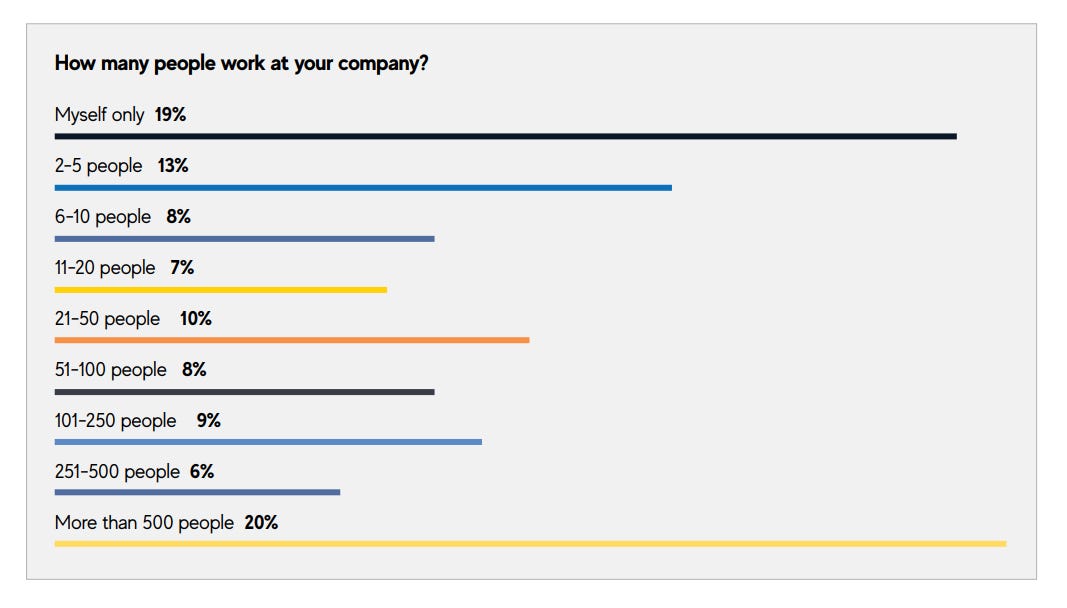
Most developers already work in studios with five or fewer employees.
Data from the 2021 State of the Game Industry report shows a majority of developers work in small studios. This contradicts the popular perception of the industry as dominated by mega-corporations.
majority
of developers work in studios with five or fewer employees
The strain
Triple-A growth is unsustainable as hardware advancements plateau.
Publishers historically generated growth by marketing incremental graphical and technical improvements. As hardware advancements have plateaued, this model has become unsustainable due to diminishing returns.
The shift
The industry is fragmenting into a decentralized, indie-centric model.
The global games industry is shifting from massive, corporate-led triple-A development to a decentralized structure dominated by small, artist-led teams. This transition is described as the deprofessionalization of the industry.
The enablers
Accessible tools and digital distribution enable small teams to reach global markets.
Accessibility to development tools like Unity and Unreal, combined with digital distribution platforms, has enabled small teams to reach global markets.
The risk transfer
Risk is increasingly outsourced to independent developers in a power-law economy.
The industry is increasingly outsourcing risk to independent developers, creating a high-stakes, power-law-driven economy. This structure mirrors the music industry, where success is defined by creative output from small, non-scaling clusters.
The precedent
The 2008 Australian collapse forced a pivot to self-financed, independent projects.
The current industry transition mirrors the 2008 collapse of the Australian games industry. Developers were forced to abandon large-scale, work-for-hire models in favor of independent, self-financed projects.
The research base
Analysis draws on interviews with over 400 developers across three regions.
The analysis is based on extensive qualitative research, including interviews with over 400 developers. These developers were located across Australia, Europe, and North America.
1 / 7
Ask AI about this report