VideoExtra Credits
The Secret Reason Some Games Reward You Early | Extra Credits Gaming
3 Apr 20249 min video
Transcript
Want to know why some free-to-play games throw like a thousand loot boxes at you when you start? Why they advertise that just for logging in they'll give you things that will make you OP and kind of ruin the game's difficulty curve in the beginning? Well, I thought I knew the only reason, to hook you. But actually, there is another one that I never thought of. But first, for some context, it's story time. A funny thing happened to James recently. He was working with a client on a game in Southeast Asia, and they just wrapped up this huge project together. And at the end, the team sent him a big doc with a summary of all of their work and the changes they've made to the game. But along with it was a little note saying, "Please send us any comments or feedback you have." Okay, no problem, he thought. Totally normal. They just want a final sanity check kind of thing. Makes sense. So, James does it, sending some last-minute feedback. And then, they send him another revised doc ending with the same note. So, he sends them some more comments on the new piece and gets another back with, you guessed it, the same note again. And this goes on and on until he finally turned to a friend out there and said,
"Look, this company is great, but I can't keep doing all this free work for them. We're like six revisions past the end date of this project." And his friend just starts cracking up. She immediately tells him, "No, no, no, no, no. They're doing what we call respecting the master. They brought you in as an expert, right? So, it's only polite to offer you the final word on the project. But it's supposed to be a formality. You were basically supposed to say it was great working with you or it's good to see how much progress we've made and leave it at that. Honestly, they're probably just as sick of making revisions on this thing as you are giving them." Now, when she said that, two things happened. First, James just let out a huge sigh of relief. But second, he jumped up and realized he had to write this extra credits episode because it dawned on him how much our cultural understanding of things far outside of the game space influence our game design. Thanks so much to Factor for delivering great meals right to to door so I can spend less time cooking and more time playing games. At its core, game design is about
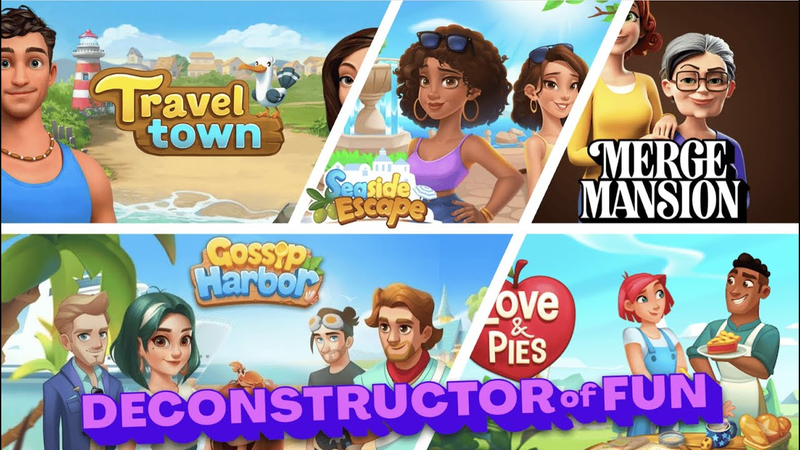
psychology and it's about crafting experiences for your player. But, how a player interprets an experience is dependent on many things, including their cultural understanding of that experience, which means that two players from very different parts of the world may have very different reactions to the same experience, and this is vital for us to understand when designing. For example, you know all those free-to-play games that just shower you with stuff when you start them? They're advertised by saying things like "New players get a thousand free pulls." Or, "Start now and get a triple S tier character just for you." Now, as soon as I said that and honestly read it in this script, I bet a lot of us were thinking the same thing. "Ugh, I hate those games." Or, "That kind of thing just always ruins the experience because they give you something so strong at the start it's like hours before I can do anything challenging." But, those reactions are kind of very western perspectives. Also, people we don't know giving us gifts for no reason? Oh, they definitely want something. Heck, people waiting on us and offering us an unreasonable amount of help for things we can clearly do ourselves? We may even find that kind of
insulting. But, look at where most of these games come from. They come from places that have a strong gift-giving tradition, such as parts of Asia, where the host, not the guest, usually gives gifts, and the more important the guest, the more lavish the gift-giving. The amount of gifts given to you is a symbol of status. So, by throwing a thousand loot boxes at you from the start, in addition to whatever getting those hooks in your hang-ups that I have, games of those regions are also trying to say to you, "You're someone important and you matter and we're very happy to have you as our guest." And by giving you those gifts and making you immediately powerful, they're saying, "Now we hope that you feel like someone important in this game world." It's a designed experience, one carefully crafted to target the hundreds of millions of people who never get that sort of treatment in their real lives, one built to make people feel like the game is giving them the respect they deserve, whether or not anyone else does. But, truly it is such a culturally dependent experience, one that plays out completely differently depending on what viewpoint you're coming from. Again, I
reference the "But, what do these people want from me?" reaction that I tend to have. So, it's essential that we understand that as game designers when creating for a global audience. All the time in the industry, we'll consider different regions' purchasing patterns and genre likes, but rarely do we actually think about how culture affects the experience as we're designing our games. We'll appeal to different cultures by putting in surface elements, artistic styles, for example, from that culture, but it's far less common that we ask ourselves if an experience we're creating is universal or something that comes from our specific cultural lens. Like, you know those incredibly complex, but a little rough around the edges games that come out of Eastern Europe? James always wondered how they got launched, because while he loves them, it boggled his mind a bit on how some of them got out of the meeting room, let alone got put in front of the public. Again, viewing it from the US's cultural lens, because here usability is a core tenant of almost any design team. Here, we operate from the principle that the more work you make the player put into your game to simply be able to play it,
the less people ever will. So, he asked one of his buddies out there for an answer on how folks in his neck of the woods thought these were acceptable to ship, and he got a pretty sweet response. Quote, "It's like working with an old Soviet tractor. You just hit it until it works. If your cultural expectation is that nothing just works like on its own, then it's not a high burden to ask the player to figure out whatever they have to do to make your game, well, function. But, for those of us in the US, where the standard cultural expectation is that if it doesn't work out of the box in 2 minutes or less without me reading the instructions, of course, then it's unusable and I'm never touching it again, well, then saying you need to watch a 3-hour video tutorial and then read a message board in Cyrillic before you can play seems kind of absurd to us. And, honestly, that's not even the expectation most of these games are designed around. The expectation is you just tinker with one of these games for a bunch of hours trying to figure out what it does and then play the parts you can make work until more and more reveals itself and then you repeat the process. But nothing in the game ever says that. That's something that's baked in culturally. So to many of us in the
US it just sort of screams that the game is unusable which obviously it's not. So as we are all playing games designed in all different places around this wondrous spinning blue marble, I do think it's worth the time to look at the experience in front of you and if something does seem odd or just really off, asking ourselves, is this element actually meant for someone interpreting this in a totally different way than I am interpreting it? And if it is, then of course by all means does not mean you have to like it, but it's just interesting and reveals another layer of the designer's thinking, one they might not even know was there. Conversely, as we design, either through getting more perspectives at the table or through trying to broaden our own, we should ask ourselves, how universal is the experience we're trying to create? And if it's not universal, is there any way we can invite people from other perspectives in? You know, to get them to understand what we're going for even if through the lenses of their individual lives and cultures, they don't experience what we're creating in the same way right up front. Because if we can do that, we'll be opening up our
games to new audiences while also helping others understand a bit more of who we are. And you know, speaking of sharing, I'm actually having some friends over for a board game night tonight and it is my turn to take care of dinner. So it's a good thing I've got a fridge full of delicious Factor meals to share and save my bacon. Heck yeah, they're going to love this. Factor of course being my favorite ready-to-eat meal delivery service that I've been using for over a year and a half now because each of their tasty meals is ready in just 2 minutes with no prep, no mess, and best of all, no clean up. Just great food ready when I have time to eat it. It seriously removes so much stress from my day. It is awesome. Each week I review Factor's rotating menu and pick what I'm feeling from their tons of seasonal meals and add-on options. Like their cold-pressed juices, protein shakes, wellness shots, and smoothies that I know you know I can't get enough of. There's so many options to choose from. I can always be sure that everyone in my household is going to get the food that they love fast. And since spring has officially sprung, I was craving their tomato basil chicken risotto. And let me tell you, it did not disappoint. Plus, since I didn't have to cook a whole meal from scratch, I was actually able to take the pets out in
this gorgeous weather for extra walks. No, that's not the name of a new show of ours. Although, I digress. So, head to factor75.com or click the link below and use the code extra credit 50 to get 50% off your first factor box and 20% off your next box. Okay, got it? Good. Now, it's tasty task time. Get fast and flavorful meals at a deep discount here. And once your dinner is decided, check out our next savory selection here. Thank you so much to Ahmed Ziad Turk, Angela Valenciana, Arclight Games, Dominic Valenciana, Ilknur, Easy Coin, Joseph Blain, and Kuya Koy for being the absolute best legendary patrons.
Auto-generated captions from YouTube — names and numbers may be misheard.
Key insights
6 takeaways · ~2 min read- 01Game design is heavily influenced by the cultural background of the developers, which often dictates how players perceive mechanics like difficulty, onboarding, and rewards.
- 02The practice of showering new players with free loot boxes and powerful items in some Asian markets is rooted in a cultural tradition of lavish gift-giving, where the host uses gifts to signal the guest's importance and status.
- 03Western players often interpret aggressive early-game rewards as suspicious or game-breaking, whereas the design intent is to make the player feel valued and respected as a guest.
- 04Eastern European game design often prioritizes complexity and player-driven discovery over the 'out-of-the-box' usability standards common in the United States.
- 05The 'Soviet tractor' design philosophy, where players are expected to tinker with a system until it functions, contrasts sharply with the Western expectation that software should be immediately intuitive and usable within two minutes.
- 06Designers should evaluate whether their game mechanics are truly universal or if they are inadvertently alienating global audiences by relying on culturally specific assumptions about how a product should behave.
Ask AI about this video
Cite this video
Citation
Generating citation…























Comments