1 free read left. Create a free account for unlimited reading + AI research.
Create free account
Future Opportunities for Devs
Key insights
5 takeaways- 01Developers can bypass saturated top-tier charts by targeting emerging markets in Southeast Asia and Hong Kong with localized pricing and content tailored to regional economic disparities.
- 02Long-term industry sustainability requires shifting focus from high-churn, loot-box-heavy monetization toward core gameplay value and diversified revenue streams that foster community retention.
- 03The PC market is emerging as a critical alternative to mobile, with new competing storefronts expected to challenge existing platform monopolies and improve revenue-sharing models.
- 04Escalating user acquisition costs in the mobile sector often exceed total revenue, forcing developers to move away from high-budget, mass-market competition toward niche-focused, indie-driven models.
- 05Rigorous keyword research and data-driven methodologies allow smaller teams to validate demand and achieve growth without the prohibitive costs of traditional mass-market acquisition.
Ask AI about this video
Transcript
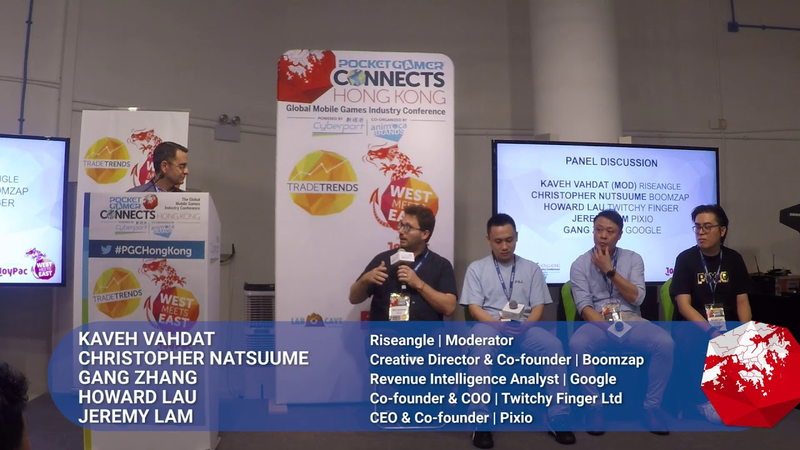
[Music] hey guys have you here so let's start with introduction please introduce yourselves and talk a little bit about what you do sure so from here maybe I'm Jeremy Lamb I'm the co-founder and CEO of pic Co Hong Kong mobile studios company we've been founded for three years and we launched six games so far and I'm Howard Lau my co-founder and CEO of twitchy finger games we're also Hong Kong based mobile and publishing studio so we've been around for six years we launched four games hi everyone so my name is Gong zone I'm a senior revenue analyst from Google in Beijing so my focus is
mobile gaming supporting a large publishers a lot of partnerships yeah hi I'm Kris Natsume I'm the creative director of boom zap we are about 16 years old we've published I think 56 games we are in Southeast Asia we're headquartered in Singapore and my name is kava F I'm founder and CEO of rising of your of your an A or games company we have released four games to the market so far and we have a lot of questions for you guys for the first one I would like all of you to pitch in but I mean for the next ones feel free whatever you're more comfortable just jump in and respond so we have a great diverse panel and then actually track is West meets East so which is great so the countries that you're currently focusing on how is the development and publishing environment in those countries on a high level
especially that we have distinguished panel from different countries we we publish mainly if you're carrying you a efforts they were mainly focused on the US and english-speaking countries but we develop our games here in Hong Kong so I think it's two separate things for I'll talk about a bit about publishing in the US and a bit about developing in Hong Kong publishing in the u.s. wise our efforts not that big we purchased around 1 million paid downloads in the past like 2 1 or 1 or 2 years so this is where is like a really small publisher but I think in terms of you know it's it's very it's very robust it's very developed you know you have Facebook you have at Google Ads and a lot of other studios the users are very high quality it's very easy to get and it's less complicated than say China Android for example that's very it's very transparent and very easy to publish
there and in terms of development in Hong Kong I think the talent pool is still kind of I want to say lacking but it's kind of scattered there's a lot of studios but then they're all really small studios in Hong Kong not a lot of big publishers here oh yeah like a couple and but then I think it's starting to mature in the past like two three years or so we're seeing like more of these events we're seeing more meetups from the developers more games being launched and so it's I think going up I guess I guess pretty much what Jeremy said about the development in Hong Kong as we both Hong Kong's to do here definitely the resource issue is a thing here it's very tough to find developers I think a lot of a lot more companies are calling for outsourcing now with like art so even part of their system being you know program elsewhere but in terms of our company we do tend to want to focus on like the tail end countries but somehow you know we are limited by what our games genre is right now it's
is a Japanese toy car racing game that we are working on and it's not properly in the States so it's actually more popular in Southeast Asia in Asia in general so Japan Taiwan even Indonesia is probably our biggest market so you know we you know we run into difficulties but publishing those regions despite me knowing that they're very popular so we spent like maybe at least the next two years trying to figure out you know how they are monetize like especially Southeast Asia there's a lot of difficulties actually promoting a game or even monetizing it for instance on localizations the thing race was probably the number one thing that you should always do you know when launching in other country other than your own right and then secondly monetization so so you know if most of you should know they they'll have a lot of credit cards play and they depend heavily on you know third party payments and you know we we
learned it like the hard way let you know there's so many people like we literally have you know daily ten to twenty thousand Organa users from doing nothing and we're like but they're not monetizing at all right so what's the problem and you know we talk a lot of time to figure out what it was so it was the payment issue and then later on we fixed the you know the still isn't rise but then you know we we start to look into optimizing our in-app purchases right because later we realize that you know the transaction that they have through you know tell appealing a lot of stuff they have a limit so you know if you charge them a $99 package they can't pay for that right so you stay you know we break it down into smaller pieces like maybe ten dollars five dollars and we saw like a maybe like two three hundred percent increase you know revenue so currently you know sub usage is definitely big and it's something that we are actually looking towards developing more into I mean other regions are important but then
that the first standard in terms of you know standard marketing standard monetization right but then I think you know there's definitely Southeast Asia is something that moving forward what our company's target actually exactly to your point so I want to add another point is the in Google especially in go China like recent past year we're hosting a event called game connect that the thought behind that is we we see a lot of very talented indie developers and then we're trying to really grow the communities and the ecosystem and on the other hand we also saw a lot of like very successful publishers who is really struggle to find like successful games so we really want to kind of you know match the two parties together so especially we seen the Asian
market and also like for last year we host like three events in Singapore in Vietnam in Beijing full of games connect during like major events like China joy so that we bring our top publishers and then we bring like 30 to 40 indie developers together and then they can just basically talk about their games there so create a better opportunities and then in terms of East Midwest this year earlier we also host an event in Poland where we bring like our about 20 different Chinese publishers going to Poland who goes in Google there we also have incubator within Google to really host a group of indie developers trying to really within the googles environment and cultures trying to grow the better
game so we bring our publisher there and then also host a kami connect even there too so it was pretty successful yeah thank you so there were two parts to your question one about developing in the region and one about publishing in the region obviously those are very different answers so for us we're a pen Southeast Asian studio so we have people in Malaysia in the Philippines in Singapore and so each one of those place is a little different for us but I would say the overarching feeling for being a developer in Southeast Asia right now is that we continue to fight some old battles for getting quality senior talent because the industries in the old in those regions if I'm in Los Angeles and I want to find a twelve-year experienced games programmer they exist if I'm in Manila I know there's three of those in the whole city so you can go hire one of those three guys and you know what two of them owns do
so that's difficult right so that's a continuing challenge for us on the other side though there are a lot of young people coming into the industry a lot of the barriers that used to exist for parents not really supporting people coming into the industry or people not feeling it was a valid career choice those things are sort of getting taken away and people are feeling that it's a more viable career option for them so it's easier for us to get people but if you're going to be developing in Southeast Asia even in even in places like Singapore Manila or KL which have reasonably developed development scenes you should expect to train a lot you should expect to be hiring more junior people and putting more money into training those people you should be using tools to make sure that you're retaining people because if you're gonna put the time and the energy and the money into training people to have them then immediately skip off to some other studio is kind of a dumb deal so retention should be a huge thing that
you think about in your Studios to the publishing question I think one of the big mistakes that people make when they talk about Southeast Asia is that they talk about Southeast Asia as though it were sort of a market and there are two very specific markets in Southeast Asia and they can be quantified as people who have more money than time and people who have more time than money right if I were to take people in say a relatively wealthy person in Jakarta or in Singapore or Manila somebody who has a professional job and owns a car they're really not so different than an American user or a European user they may have slightly different tastes but the way in which you're going to monetize them their access to a credit card the sort of things that you care about are going to be very similar and so that market actually represents a large amount of the income that people see from those regions because those people have money and they behave in the way that we expect them to behave but there is
another market in Southeast Asia in many cases people who are living in the same city block as those people who have much lower incomes it's very normal for somebody in say Manila to have $200 a month income and the way that you're going to monetize that guy versus somebody who has a $5,000 a month income is going to be radically different that person with the $200 a month income has a lot of time they're happy to watch your ads they're happy to play your free games but if you've got mechanics that count on that person dropping even five dollars for an object five dollars for a guy who earned $200 this month and has to pay rent yeah he doesn't do that and you'll excuse me using he is a gender that could also be a woman of course you get my point I think you have to I think more importantly than saying this is the Indonesian market or the Philippine market or even the Indian or African market report I think you would see more
similarity between a low-income user in Africa and Indonesia than you would see between a low-income user and a high-income user that lived within a mile of each other in Manila and I think that's a thing that people don't get when they thinking in these regions but to me it's always how small studio or small games not small studios but small games could kind of make it big lately there's a game called arch hero I think that was really good it's really well monetized but like I don't think anyone would have seen it coming even if it was shown to them before it was launched and it's it was a breakout
success and I really like these kind of stories because it shows that you don't have to make a midcourt game you don't have to spend millions on making a game to make millions and I think that's kind of the draw of this industry and kind of to some people and I think that's what's interesting so I'm always looking forward to like what is the next day indie hit like our mobile indie hit on this coming up small like a lottery kind of thing like even if our key you know like you know yeah it's nice if you can find the funds to boom our hero but then tomorrow something else it's kind of like the flappy bird thing like one flappy bird came out everybody was like blown away and then now you have like a million of them yeah I'd like to respond to this if I could I heard a really interesting pair of figures and please don't quote me on these figures but I didn't make these figures I didn't do this a very good friend of mine Derek Morton who runs a company called flow play in Seattle was doing some research
on how much money is made and how much money is spent in the mobile games industry and the numbers he found which I don't stand behind but the numbers he found were that it was very exciting because the mobile game revenue was 80 billion dollars in last year and you're like wow eighty billion dollars that's a lot of money however the amount of money that was spent to get the users to generate that revenue was a hundred billion dollars and I want you to think about that for just a second we spent as an industry to take the whole industry we spent a hundred billion dollars to make 80 billion dollars that's kind of stupid right and it gets even worse right because that 80 billion dollars worth of revenue I'm sorry mr. Google then 80 billion dollars worth of revenue you're gonna take 30% of that right off the top because you're paying your Apple tax you're paying your your Google tax
right that revenue includes the money you guys made right so that least for you know us dumb schmoes that actually made the game 56 billion dollars right so we spent a hundred billion dollars because god knows Google has never bought an ad so we spent you know 100 billion dollars to make 56 billion dollars right and so who's who's winning in this industry well Apple and Google who've never bought an ad in their lives well they made a good solid 30% of that 80 billion dollars right and Google on the back end right because that hundred billion dollars that got bought hey look who they bought it from I'm not picking on you but but my point to all of this is this is a deeply deeply broken industry now what is it that actually you are excited about what I'm responding to is I feel sometimes like we're in some sort of dystopian children's novel where like they pick a lottery ticket out and like
this one person gets to get out of his life of hell and he gets to live in a nice place you know like the one guy makes flappy bird and we all gather round flappy bird and we're like well who see this is a great industry but for every one of those dudes there's 200 people that lost their savings in this joke of an industry right so in terms of what I'm not excited about this industry I genuinely begun to question my involvement go back to that in the challenges and that's really one of the challenges I guess correct I'm not surprised if it is correct is that a lot of that is spending maybe comes from games that don't really go to the top charts while actually the revenue actually is basically harvested by the games that actually are on the top charts so is that it yeah it kind of
is not an imbalance thing but Google response ok there's different there's another side to that right because if you're buying mobile game users they often come from another mobile game so that one hunt like the hundred billion gets better so no explaining there is what we call a pyramid scheme right I mean that's if you're and you're in it I know right and at some point you wake up and you say like wow I'm in a pyramid scheme and this isn't too great I mean the day that you realize you're selling Amway you kind of have to stop yourself for a minute and be like wait a second I think this is a question that doesn't get raised very often in our let's all pat ourselves on the back about all the revenues we make talking about this think about how your life would change once you sell exactly that it's it's it's like that scene in in
Mockingjay you know may the luck be with you or whatever you know like we're all hoping that we get the one ticket out of this most of us don't get the ticket out of this first of all I'm a big fan of the movie series personally thinking I I do think the equation there still have room to improve like the game revenue where we're talking about it's probably only the mainly the in-app purchase but one of the main trend we'll see here is more and more this hybrid monetization models coming in where you really blend well with IP traditionally and with freedom or rewarded videos which benefit that
kind of click it back with a positive loop like yes you probably cut a game from another game like frequently but ultimately if the game is really cool qualities and players are really intrigued into that I mean right now we have all these informations around that you can always get attention to some other games it doesn't matter whether you see a ads or search it from the app store or just read a blogger so in the end is the essence of that game and then how we can really leverage that and unlock all the opportunities including IPS including us and thinking from the equations from the spending perspective not just the game spending we have a lot of branding spendings as like McDonald's right so it's all fun into this funnels it's just sometimes
decided on the angles you look at the picture but I do agree Mockingbird but I think it's up to you use the word fun right and I would I would seriously I would challenge you pull out the blog whatever the brochure is for the conference or any literature for any of these things how often do you actually hear anyone use the word fun anymore - what we do we talk about monetization and we talk about loops and we talk about pain points I've had conversations about pain points I'm making a product designed to hurt my user until he pays me and we talk about that like it's a good thing and now you say like what am i excited about about the end of this my follow-up question but I'm happy to hear you talk about wouldn't it be great if we had my
next question is kind of relevant so what are the biggest opportunities in front of the developers what are the best platforms and markets of the present and future and why and then you're basically your take I would say most it was on mobile but there are lots of different platforms also not as big so I mean do you want to like to take on that one so it's just what is what is it again like if you and then that's gonna be again another question but if if I am a developer I'm entering the market today what are the most exciting platforms for me to convert where should I go actually okay so but my take is all like right now I you know this mobile users in general I just talk about mobile because that's what I'm you know I'm experienced it I think it's get to a point where you know the market start to getting saturated to a point where on their actually new genre to be discovered there are games for different demographics you know about you know always like elderly is
really probably homosexuals or whatever right so there are more opportunity like that where bigger publishers would not do because the too niche at the beginning right and I think for studio like ours like you know it's an opportunity to explore something you know that's that's where that's where that's where you survive right let me the top developers up here down here and but we okay but okay to that right and and I think it's something that that you know we should probably start to think about like now right you talk about you know within the next five years there's gonna be games you know like you know thanks to poking Pokemon go and candy crush you know you see like your grandma playing Pokemon right and you know this there's actually a market for that like once they're done with Pokemon to look for other games right and that's where we come in eventually right and I think you know this is it's very exciting that you know it's gonna be different diversity of genre for different demographics and they could be more survival wise be easier for indie developers starting out so you know you don't always have to do like SLG or like
an RPG no this is all it's all been done by to pick a publisher and that's what they'll be doing for the next 10 20 years right we don't have to go there it's something that you know we can look elsewhere to survive to me it's healthier monetization models for mobile games I think it's kind of towards the end of its lifecycle um like you said I don't think the loot boxes have that much of a draw as before especially when if the government clamps down on it some more I think it's as developers we need to come up with better way than healthier ways for the users has been I think because often times those games only a small fraction of the players spend and like 90 something percent of players don't really spend I mean if you can convert more users but have them pay less each I think that's a better and healthier model carrying forward I would a brief and bear with me there's a brief history less than this when we got into games back in the you know we started 16
years ago with our studio there were a number of publishing platforms there I win and Oberon and big fish and a number of places where you could publish your game and because there were none and believe it or not children there was a time when publishers paid to make games I know it's really hard to believe of this magic land where publishers didn't just take your product they actually helped you build it back in those days one of the reasons you could get a publisher to help pay to build your product was because they had competition and because they wanted exclusive content if big fish wanted your game exclusively on their site on their site they would pay you to make that game and that would allow small indie developers to make bigger games better games make bigger risky games because someone was going to take that risk and spread it across the rest of the developers that were working with them in the publishing model in a sane world right as that coalesced into fewer and fewer people those exclusive deals dried up if we look at the mobile games world right now yeah you got two players
right you got Google you got Apple and they don't have to pay you to make games because there's 500 other schmoes out there that'll happily spend their money and put it on that platform so why would they bother one of the most exciting places for me right now is to see epic starting their own store right to see competition to steam when you see that competition to steam and that competition also includes giving the developers a higher royalty share steams gonna have to respond to that how does steam make sure that they get exclusive content how do they keep people on their platform at that point they have to actually pay us devs something they have to whether it's giving us a higher rev share whether it's helping pay for exclusive content any of those things changes the model I would like to see you know obviously in China there are a number of app stores it's not just the two app stores and there there is healthier competition and I think that's one of the reasons why you're seeing a really great content coming out of China because there is this competitive world where people can't just say hey we're Apple and all of the product comes to us so you know tough luck buddy
this to me is what's exciting about platforms in this world I am substantially more excited about PC right now then I'm about mobile and I hate to say that at a mobile conference but it's a healthy actually and that's a pretty good point and that kind of brings me to the next that if you guys they're not so heavily invested in mobile and you wanted to stir your game company today where would you go would you go to as you said like epic what epic is gonna bring is it's gonna be instant messaging games is it's gonna be BR AR is it gonna be blood change if you were to give me money to start a mobile game company right now I would take all of that money over to the Marina Bay Sands and I would put it on black because that would be a very good us done that's the question so it would be if you put it on PC absolutely I would probably if I had infinite money or substantial amount of money that I
don't have to be responsible for I would go for VR cuz I'm interested in it but if you're asking me does the VR have a suitable business model behind it does it have revenue potential I don't see it yet not yet like if you talk about just Curt evil with you know currently what's happening going on right now it's definitely mobile but you know it's just easier to market way more ways to monetize the game and you know it's so many ways in free marketing that you can get right and and the cell phone is so as you know so easily accessible to a lot of people right compared to like console or PC right so we kind of our bet is there's gonna be the killer use case for VR and but it's gonna take time
so for that to pick up is maybe oculus quest is the thing but I we are very actually with your very positive on what it is but this may be like the next gen of you are coming out of Facebook or Apple or someone the next year so that's kind of but for us actually the most exciting news this year was oculus cause that is at least something at console levels that is very exciting is like cheaper it has good quality maybe it has describe it they say that's the last gen of the first I mean cycle of VR I think that's how they speak with it or something like that we're actually involved in VR as well one of my teams actually does location-based VR work and I'm actually way more excited about location-based VR than I am about consumer VR there's a lot of hurdles in consumer VR I mean the biggest one being how small is your house and do you have room to roam around and play this game there is a very clear usage for location-based VR and there's some really great products
coming out and I think that's a very exciting market right now it's now that that kind of you kind of touched upon this subject before but I'm gonna go deeper so mobile console or PC for an indie developer and why and you mentioned epic that that's actually a great eye I would actually debate your point that there's so much free marketing and marketing opportunities on mobile I actually think the marketing opportunities on PC are better I think there are there are a lot of people throwing a lot of money trying to get eyeballs for mobile games and if you want to go out there and compete with 10 cent and supercell for marketing dollars on market on mobile games good luck to you but if you want to go compete with the guys on Steam I think you get a lot better bang for your buck buying Facebook ads or something like that I I think in terms of what's easier to market bang for your buck for an indie I would go steam before I would go mobile
for me it depends on what like if it's a brand okay say if it's a brand new developer never launched a game before barely has two years of experience and they want to make a game right for me it's gonna be mobile beat just because of its not the quantity of games but basically the quality of games on PC is so high and it's so hard to compete in that kind of arena that yes you could market your game and you could compete but then the people are at the top the top 20 games on mobiles barely changed for the last like four years yeah but you don't have to compete with them as well you don't have the end appstores will happily you know feature your app insert if they're okay if you're okay and that's that comes for free I know that they kind of went for a
very small subset of mobile the people for examle let's say a specific card games the people I just searched for data specific order you have two three competitors there so you you are not really competing with the top charts at the same time they have identified based on the competitors and they started there and they've become very very successful in mobile so that's one questions that maybe one paths to go and mobile now the other question that I would have and feel free to jump in for any of those is that when you go to PC which is another interesting aspect or even like consoles what do you think of free free to play for peace your consoles versus because mobile actually is free to play is very much common these days but I'm for console pc over we actually even for via our high end because bad reviews out of being free to play because people wanted to pay once instead of in a purchase I mean so that was kind of there and then I was wondering so we are giving something to
you for free and you're complaining about I'd like to go back to your earlier point I think you raised a very interesting and valid and important point you don't have to compete with everybody in the App Store you have to compete with the games that look like your game there was a guy I knew he was a Russian developer and he made word games simple little word games and he made them for little crappy languages in Eastern Europe but nobody cares about like he did like Romanian and Serbian and Croatian word games and there was nobody else making a Serbian or Croatian word game and so he became by default the number one Serbian word game on that App Store and after he had done that across a couple app stores he now had a number of apps in a number of stores that were number one which the algorithm loved him and now as he moved into you know languages to have more people he easily raised the charts and he made millions so that's a very valid strategy and I think that's very good advice to a young developer don't go out and compete with supercell go out and find a niche that
people aren't serving and be the best in that niche that's very good advice yes so yeah so also want to add to your earlier questions on that especially at this point so we a lot of times we see developers find their niche angles of doing their own successful game like the wargames you mentioned another case I saw is this developers is particularly developing this working for senior female players in the development market for kind of like a mind training games and then they particular design the graphics to really attract to them like flowers and jungles and they carefully tested it and also the moves they're trying to kind of simplify it as much as possible and give some useful hint so users really enjoy that then and they're trying out the number one on this direct niche point so I mean also
if personally thinking that yeah mobile game got a lot of tensions but on the other hand is also this ecosystem in the mobile world or like the tools and platform that offer to it is very well comprehensive there for new entrant developers that they can easily build something with probably a lot more less cost aside from the promotion cost I mean I'm I'm saying the building the game and decided so from that perspective also you have all these tensions from all the players non-traditional players like senior female players also probably not traditional players but they they probably don't even consider them as a gamer right but they they entering this this market so from that perspective I think there's also plenty of opportunities in that in essence we made most of our money off of those exact
ladies we made millions of millions of dollars off play hidden object games so that's definitely true just one reinforce what Chris was talking about so because we our companies is experiencing this firsthand in terms of like finding the niche market finding the right topic so right now with our game mini legend you know it's a Japanese toy car racing game no one's doing it and we're the only ones so far for the past three years you know we're still like the pop if you ever search for mini 4wd we're always at the top of the list so it works that only works but then the other thing is it's hard to find a niche market that sells right I mean a lot of these topics but then they don't make like you know they're not attractive anyway it's very hard so this it's a way but then you know you have to be very careful the cautious with you know what you choose to do so one one recommendation that I have there actually so just one way to
do that actually we have done it once at least for using Google Keyword tool to see what kinda keywords actually have searches and then go back and see for that that the ones that they have a lot of the search is if there are actually because they kind of translate from Google search also to other searches and then they see you can just kind of go and evaluate it if you have a lot of competitors there and kind of work on App Store optimization and go from that direction and then sometimes it works so that that's kind of one thing and yeah if you have a lot of other questions to ask but I mean yes yes exactly I don't have anything to add I really agree with the niche approach if you're a very small indie studio I think that's definitely the way to go
[Music]
Summary
The mobile gaming landscape is currently defined by a structural imbalance where escalating user acquisition costs frequently eclipse total revenue, creating a challenging environment for developers. This ecosystem is heavily influenced by the dominance of major platform holders, which often forces creators toward aggressive, monetization-heavy design patterns that prioritize short-term gains over sustainable product quality. To navigate these pressures, developers must pivot away from broad, high-budget competition and instead adopt more efficient, indie-driven models that emphasize niche targeting and localized strategies.
Success in emerging markets, particularly across Southeast Asia and Hong Kong, requires a nuanced approach to monetization that accounts for regional economic disparities and limited access to traditional payment infrastructure. By adjusting price points and tailoring content to specific, underserved demographics, developers can effectively bypass the saturated top-tier charts. Utilizing data-driven methodologies, such as rigorous keyword research, allows smaller teams to validate demand and capture specific audience segments, thereby building algorithmic favor and achieving growth without the prohibitive costs associated with mass-market acquisition.
While mobile remains the most accessible entry point for new developers, the broader industry is increasingly looking toward the PC market as a potential catalyst for change. The emergence of competing storefronts is expected to challenge existing platform monopolies, potentially leading to more equitable revenue-sharing models and improved support for innovation. Ultimately, the industry’s long-term health depends on shifting focus back to core gameplay value and diversifying revenue streams beyond traditional loot boxes, ensuring that developers can foster sustainable communities rather than relying solely on high-churn, high-cost acquisition tactics.