Transcript
Mr. Adam would love to talk about Mr. Ball and the rest of us are going to sit here and wait for Crest to explode. So go for it, Adam.
Sure. Straight from the Toronto ivory Tower, right? [laughter] Matthew Ball.
Philosophy Corner.
Oh, he's a fellow Canadian. is that that's why that's why this mad
uh Matthew Ball has dropped early access for SATA gaming for 2026. I think the entirety of LinkedIn has already chimed in with their hot takes. I actually went on LinkedIn and went down that rabbit hole.
Not getting that time back.
But anyways, B actually didn't get a memo from us. Like he called this early access. Sorry, man. Early access is your launch. This is it. But I will say like it was great analysis like last year. He only did 164 slides this year versus the 230 last year. So getting much more concise like last year I would say Matt
Ball of 2.0 is better than the metaverse ball. far more grounded even on things like AI he's calling out and I don't see him extrapolating to the moon as he did in the metaverse time in line with the market and he's kind of shifting from this doom and gloom stance to well let's figure this [ __ ] out attitude which is good like trying to find growth in pockets so congratulations Chris I think our pessimism has rubbed off on it so it's good the summary that I'll give is revenue hitting all-time high profits continue to decline since 2018. The winners in this stagnating market is Chinese publishers, non-core markets, platform holders, Steam, and Roblox. The losers are the rest of us. Everyone building for the mature market 8 or the West fighting over a market that's barely moved, 1.4%. VC being down about 85% from peak and only about three gaming stocks beating
the S&P. That's I think the picture that he paints and I would say after this deck I don't think that VC is going up anytime soon.
Nope.
Yeah. Certainly this this deck was not meant for the VCs. That's for sure.
Drum up interest from the VCs. Yeah. Yeah.
The big trends gaming down but gaming adjacent up which I think was an interesting area. So that's things like gambling AI only fans crypto
always sort of major growth stories postcoid versus gaming. And the story there is that gaming hasn't got worse. It's that other categories figured out how to be just as rewarding and interactive. Genai, get on board or be left behind. And I would say I prefer this around like ball being surprisingly sober on AI. It's not like a replace every artist tomorrow. It's not like new genres are going to happen next week. It's maybe stop doubling down on spend every sequel, right? And maybe try to use AI to invent some kinds of genres and new games, but that's still farther out. So personally all for new genres.
Everything still feels like a tech demo in this space though and definitely better for tooling to actually drop costs. But I would say that in general every experience I've had with especially aaa team. You give them better tools, you give them better content generation, they won't ship cheaper or faster. They'll just ship with more polished content. The growth levers is kind of what I want to focus on. Uh, so last year he had 11 I would call speculative growth areas and I think we we went line by line on those and really kind of tore some of those apart. We're down to really like five grounded ones now. The two obvious ones that I think everyone would agree with DTOC and external development. I'm not going to call on those. Third one is non-core markets. So that would be everything outside of those major eights. Those were up 11% versus the 1% for the West. So, this is pointing to games like Garina Freef Fire as proof that you can really take
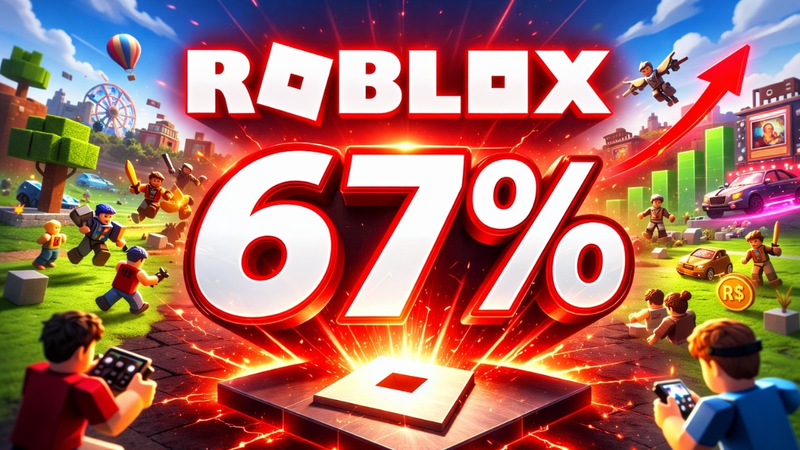
advantage. My issue with this one is that for 99% of teams, they don't have the scale of a game to make this meaningful, right? Like IDG has been showcasing, I think, the rest of world growth for a long long time, but the incremental gains and the fragmentation always made this really incremental for teams. So it becomes really hard for a team to act on this as a growth lever unless you have a game already at scale. Advertising continued growth 67 billion in gross revenue from 2025. So including ads the non-China market grew 35 billion. That's a much more positive story. If you exclude ads it grew 6.8 billion. That gives you a sense of like advertising actually is a hidden lever that continues to be a blind spot for us especially on mobile. And what's interesting is that this market is becoming durable and getting growing outcomes. The fifth lever is Roblox. Roblox now is the single dominant force in Western gaming. Quote from Matt. 67%
of non-China growth goes to Roblox. Interesting graph there as well. Roblox engagement being greater than Steam, PlayStation, Fortnite all combined. Just note that that's at 5 cents in revenue per hour versus I think 44 cents for PlayStation. And still you only get 25% of that. So Roblox growth continues to be impressive but as we've talked about many times platform still remains very immature and you did call these things out. The revenue outcomes still at the top of the pilot low but these revenue outcomes are growing every single year and the issue for me still remains finding these durable businesses within it. It's likely not long until the re revenue outcomes become favorable, but that durability is the piece that I think comes back to that immature business. So, I think it just continues to be watch Roblox. It'll continue to grow and hopefully they can start to build out a much more mature market there where where real business can be run.
I hope he makes this point is that this is actually detrimental to the business, right? Like Roblox taking all the growth. Yeah. It's absolute cannibalization of the market and so like this is not good growth, right? So the fact that it's 67% of the growth or whatever he estimates is a bad thing. The reason I don't like it is because it's not saying anything. It's meaningful of what's happening, but it's not really meaningful analysis of what what's to come. And again, my whole problem with him is he's never capitul. He's not being intellectually honest. He has not capitulated on the fact that his whole metaverse thesis was complete [ __ ] And Roblox's success is actually the antithesis of his metaverse thesis. And so until he actually comes
here until he miappas that like I I don't want to listen to this guy. Like I I think this guy is is just full of [ __ ] right? And he has great people that make great charts and has really great access to data.
Yeah. Holy [ __ ]
I'm not I'm not suggesting anything he's saying is incorrect at this point, right? But
I would agree there around like as a western studio, what do you do with
these levers? How do you take advantage of these things like DTOC external development and advertising I think is relatively obvious like take advantage if you can non-core market I mentioned like you kind of need a game that's scaled to really take advantage of that Roblox not sure for most developers like hire a bunch of high school kids and
no
make some meme games until one pops like like what like what is a a normal publisher going to do that's why like Roblox continues to be this innovator's dilemma of like it continues to grow continues seems to be interesting, but like how as a publisher do you take advantage of it? And I think that's why actually he could be missing levers. And he had one in the previous 2025 that I think is still missing, which is new genres, especially looking at mobile. New leaders are still being formed that are remixing genres in ways that we've never seen before. I think that was the one lever that I think he missed and actually continues to be grow because in general, my take is that the industry is stagnating and revenue is changing
hands. So growth is coming from that changing of hands. It's coming from teams that are better aligned with what players want. And on PC console, the teams that are able to maintain that focus, creative vision, right? Are not distracted by going after things like live services that they have no right or no ability to go after. And they can maintain that focus and that translates to production and cost rigor. And I generally believe the sort of Ubisoft way of building games and scaling teams is just not going to be successful. On mobile, it's really a lot more around finding that sort of resonant gameplay, resonant creative, and driving that strategy and scaling.
I'm sorry, Adam, but this is like all mice nut stuff like DTOC expanding markets. Like the thing he doesn't do in this analysis is basically track the growth of expanding markets to income, which is exactly what we'd expect as a normal good. As incomes rise, people are going to spend more on all goods and services. The question is whether or not we're capturing a growth rate above what the growth rate is in terms of income. This goes back to all of our conversations about India. You need to
be able to grow at a faster rate than income is growing for this to be material for us. And I just don't see that being the case or at least I would love to see that analysis explored. DDC already has a ceiling. It already has a ceiling. Like it's just going to be the difference between what you can get through a DTOC and what you get from Apple and Google's 30%. So maybe you're looking at 12%, maybe you're looking at 10% DTOC depending on if you're using a third party or doing it in-house, but there's still costs associated with that. So that's a fixed margin. That's a runway that's I think already been extinguished. Remember, it's only for midcore games.
Candy Crush is not bringing in huge amounts of DCC's money. Remember, it's when there's competitive aspect to spend. That's when DDC is the highest. It's highest social casino. It's the highest in forex because again, you can win by being more efficient with spend. So, all those things you're already looking at only 50% of the market. And then, you know, it's a share of a share. Like, should we take it? Absolutely, we should take it. But I'm actually kind of crestlike on this one. The thing that I think is most important is actually a Matthew Ball piece that he published before all the metaverse intellectual slop, which by the way, he was asked on
the Ben Thompson's Tetery podcast about the metaverse. Ben asks him, "Is the metaverse dead?" And of course, Ben, I'm sorry, but that presupposes the metaverse was alive and then he just rambles about Roblox. Not consistent with his definition at all. I'm completely with you, Eric. He hasn't been honest about that at all. He knows about it. He's being an intellectual coward, quite frankly, by not talking about the metaverse again. But this graph from his seven reasons gaming will take over I think is very important. And right now we're looking at the growth in video game revenue between arcades, console, PC, and mobile. And what you'll notice is that these things stack on top of one another. They grew the market. They didn't just take relative shares. The console market grew on top of arcades. PC grew on top of console. And mobile is really where generally all of our growth has come from. Stacking, stacking, stacking, stacking. So, what is the thing that's going to stack revenue? And it goes back to the central theme of this podcast that Eric has been trouting for maybe three years now. New platforms are new opportunities for
growth. What is the new platform? What is the new platform? It ain't going to be the metaverse. And it it has to it has to be AI in my opinion. It has to be AI. But I would say the other piece that is important is it's not just about us growing. And I think this is the one thing, Eric, that that you should take away from Matthew Ball's piece that I think was really important is that we actually have to play some defense when it comes to time share. Like we were growing because we were incredibly in compelling and immersive form of interactive entertainment, right? There is no other form of interactive tamement besides us. Except now it looks like dating, short form video, gambling is what he mentioned. Like these are things that we now get to play defense on. And I don't know, may maybe we can reverse osmosis. Like I one of the things I said at the beginning of the year is I'm spending a lot more time gambling because I get a lot more gambling clients, but a lot of that is gamification of gambling as it is so rare. We've talked about is a fantasy NFT platform. So I don't know. I think there's some reverse osmosis here about whether or not we can actually invade these forms of entertainment. Like you can play games on Tik Tok in some ways.
I would go back to things that move our GDP number and it ain't going to be any of the things he's talking about. New platforms. It's got to be AI or it's got to be some breakthrough in advertising. That's the only thing I can I can see going on here.
Last thing that I talk about a lot is like unlocking new monetization models, right? Like getting that 3% to like 5% 8% 10%, right? Like that would move move mountains, right? If you come up with games and mechanics and monetization methods that monetize a broader slate of the audience that's playing your games and you know revenue per user as well, but mostly like the conversion. I think that
what do you think that is though, Eric? like could you [ __ ] what if I do that you know like I mean I don't know I don't have no idea
throughout everything that he said and I listened to all of his podcasts that he was on I think his big point right now is that we are in an attention competition and we talked about this last week and multiple weeks which is we are all fighting over share of time and share of wallet and share of time is the most competitive thing right now because
typically male gamers are 18 to 35 and what are they doing these days they're doing gambling apps. They're on only fans. They are doing things that are taking away that you know someone's attention. When you play a game, especially a more of a core game, you need two hands on a controller, a hand on a keyboard and a mouse. And you can't dual screen watching Netflix and gambling on, you know, whatever your poly market thing is going on. And so the the challenge for gaming is it's a singularity of attention that you need to truly engage in that. And so I actually buy into this argument that we're in a war over attention. So that I was like, "Okay, dude. I get you." But that I think we already knew that. And I listened to him also on that strategy. How do you even say that podcast name
stratey?
Subscribe now. Ben Thompson's a god.
Yeah. No, [snorts] I Yeah. Yeah. And I I actually love love love that that podcast. So the thing that I took away at the very end when he kind of challenged Matthew Ball on like is the metaverse dead? The thing that Matthew
Ball said, which I actually kind of agree with, is that the metaverse turned into in the media's mind VR and it turned into I'm going to put a headset on and walk around with no legs and talk to my co-workers. And that actually and isn't what I think it is. I think Roblox is a metaverse. If you watch and talk to kids these days, they go into Roblox, it is their mall, it is their life. They make dates with their friends to go in and hang out in a world and jump from game to game, you know, whether it be a branded experience with Sonic or Barbie Dreamhouse or like the next Grow a Garden. That is actually what a Roblox is.
No, no, no. I can't I cannot take this anymore. He defines after an exhausting exhausting series of chapters. He says a massively scaled and interoperable network of real time rendered 3D virtual worlds that can be experienced simultaneously and synchronously and persistently by an
effectively unlimited number of users each with an individual sense of presence and continuity of data such as identity, history, entitlements, objects, communications, and payments. That is not Roblox. That is not Roblox. And he's been running away from it. He's been running away from it because he actually had to put the stakes down.
Yes. Okay. Fine. Fine. All right. Don't call it
flop. What Roblox is is what Facebook gaming was when it first launched now on steroids.
No, no, no, no. You have to go back to Second Life. You cannot make this new and sexy, right? You have to go back to Second Life. I mean, [ __ ] You can Yes. Yes.
Why? Why Second Life? because it it has all those components you just mentioned and it failed.
Is Roblox failing? I mean, Roblox is crushing it. Go talk to any kid. It's like crack. The only thing they want to do is go into Roblox cuz they can play with their friends. Now, the problem is that it is sucking again share of time and share of wallet from the rest of the game industry that actually delivers
higher margin and higher value. The thing we don't realize as dinosaurs is kids look at a Roblox game and they see shitty graphics and they're like, "Yes, I want to play that because I don't want friction in my life. I don't want something that's really hard. I want to jump in with my friends and have 10 minutes and jump out." They look at what we think are great games and they're like, "I don't want to do that cuz I don't want to invest my time and my energy and have to learn a game that I may or may not want." like we are losing out to what Gen A is now considering a game and a social experience. I think if we aren't paying attention to this, it's one of the things that like I was chatting about at USC with some of these younger folks that are like studying this and looking into this is I really think we are underestimating how the game industry is changing. And if you aren't putting these social mechanics in and thinking about this type of experience, I think we're going to get our ass kicked. But fine, if you want to say it's not a metaverse from that definition, I I don't I'm not trying to defend the word metaverse. I don't give
a [ __ ] I'm just saying that Roblox is and the is likely part of the future. And Chris, I know you say this all the time as well. It's just right now it's not monetizing.
I just would never never give Matthew Ball credit for that. Right. He's the one that defined it in a way that was completely ridiculous. Right. We were back then defining it as you're defining it now, which I said World of Warcraft is a metaverse. I think Call of Duty is a metaverse. I think all these are like communities of people playing interactive entertainment, right? And and communicating and socializing like that is what the metaverse was. His definition was completely off. Yeah. In the podcast, that was his work back. skip to the end where he he gets asked this question and he dodges it by saying well we overindexed on VR and actually if you look at Roblox that's kind of and so that was his a summary of his Anyway anyone else want to wrap up on Mr. ball. Adam, you want to close us out on your philosophy corner?
No, I [laughter] don't want to go with
the numbers ever again.
All right, everyone. Thanks and thanks for the superers size episode and see you again next week. [music]
[music]
Auto-generated captions from YouTube — names and numbers may be misheard.

















Comments