1 free read left. Create a free account for unlimited reading + AI research.
Create free accountArticle ETC Press
1 free read left. Create a free account for unlimited reading + AI research.
Create free accountArticleETC Press
Aaron Trammell's essay looks at the dungeon as a central fantasy trope in the original 1974 manual, The Underworld & Wilderness Adventures.
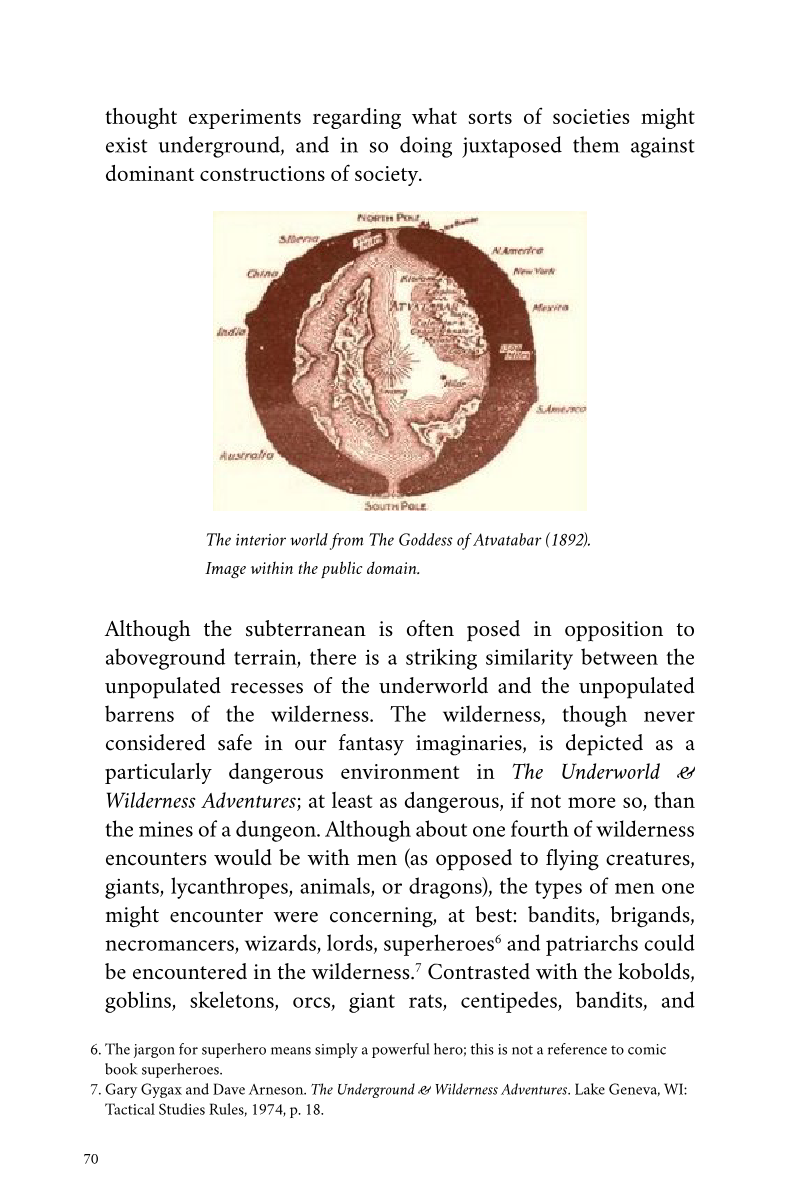
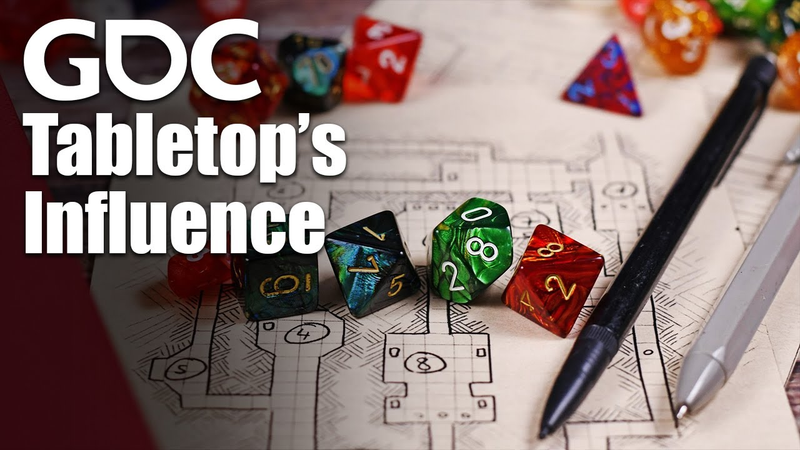
Aaron Trammell's essay argues that the emergence of the dungeon as a central fantasy trope in Dungeons & Dragons, particularly in the original 1974 manual The Underworld & Wilderness Adventures, is symbolically tied to Cold War anxieties about nuclear attack in America. Building on Matthew Chrulew's analysis of how maps structure play, the author contends that maps also reveal the cultural conditions of their making. The piece situates the dungeon within a 1950s and 1960s revival of subterranean fiction, citing works by C.S. Lewis, J.R.R. Tolkien, films such as The Mole People, and the "Hollow Earth" tradition, and it treats these as a backdrop against which the game's underground focus appears distinctive.
The essay's central observation is that the game's wilderness and underworld were presented as equally dangerous, yet players were given maps, charts, and reference tables that offered a sense of control over unpredictable environments. Trammell reads this as a response to a 1974 America marked by Watergate, civil unrest, the Vietnam War, and the atomic bomb, with the dungeon functioning as an imaginative retreat for a largely white, male, suburban player base. The author also notes the manual's sexist random-encounter tables as evidence of the period's assumptions.
To explain the motivation for the underground turn, Trammell draws on Sharon Ghamari-Tabrizi's work on Herbert Kahn, whose advocacy of subterranean survival communities was a prominent Cold War discourse, parodied in Dr. Strangelove. He proposes that such ideas circulated within the wargaming community through periodicals like The Avalon Hill General, though the evidence for direct transmission is largely inferential. The essay concludes that the dungeon served as a space for players to manage nuclear-era fears through systems of representation and simulation.
Each row is a game or company this document names, each column a document, oldest first. A mark means that document names it. Select a row to see those documents.
ETC Press · 2023
ETC Press · 2022

ETC Press · 2022
ETC Press · 2021

ETC Press · 2021
ETC Press · 2021
ETC Press · 2020

ETC Press · 2020
ETC Press · 2020
ETC Press · 2020

ETC Press · 2020
ETC Press · 2020
ETC Press · 2016