Loading the document
More from Tampere University
View all
Whitepaper
Learning to Play: How Players Recognize Implicit Guidance in Video Games
Tampere University · 2026
Whitepaper
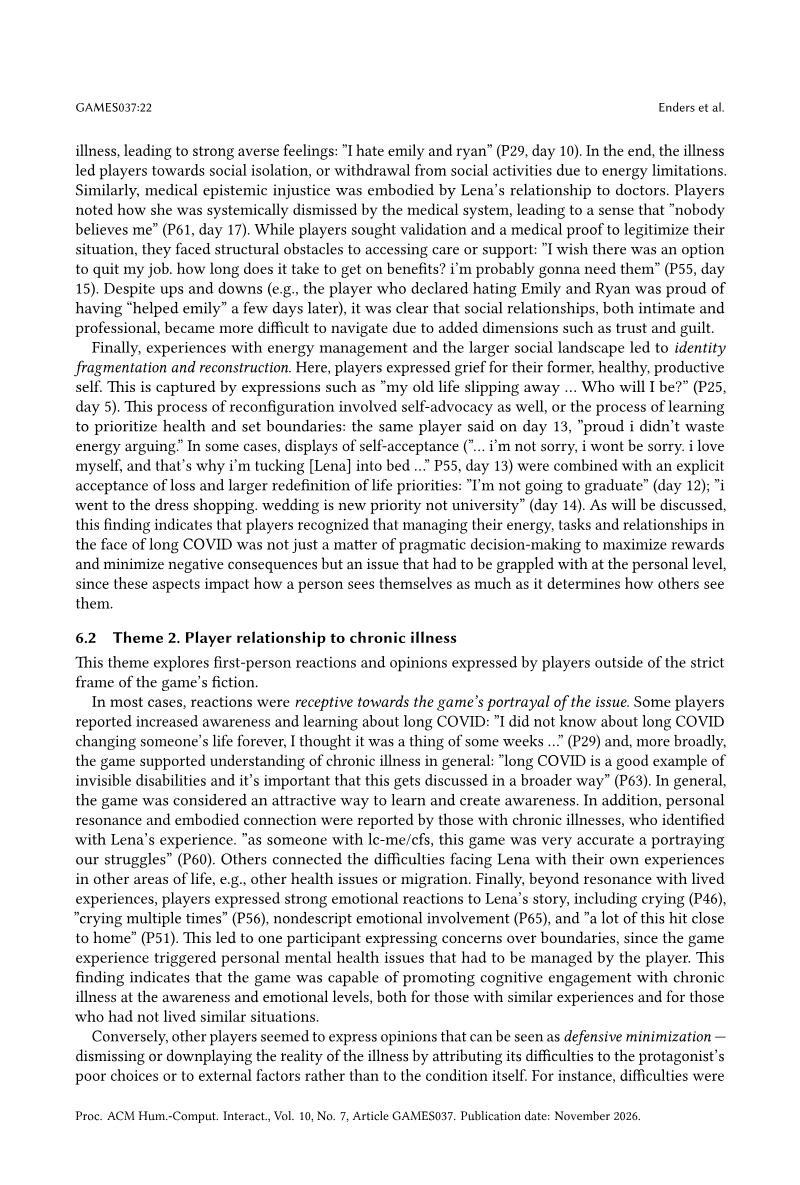
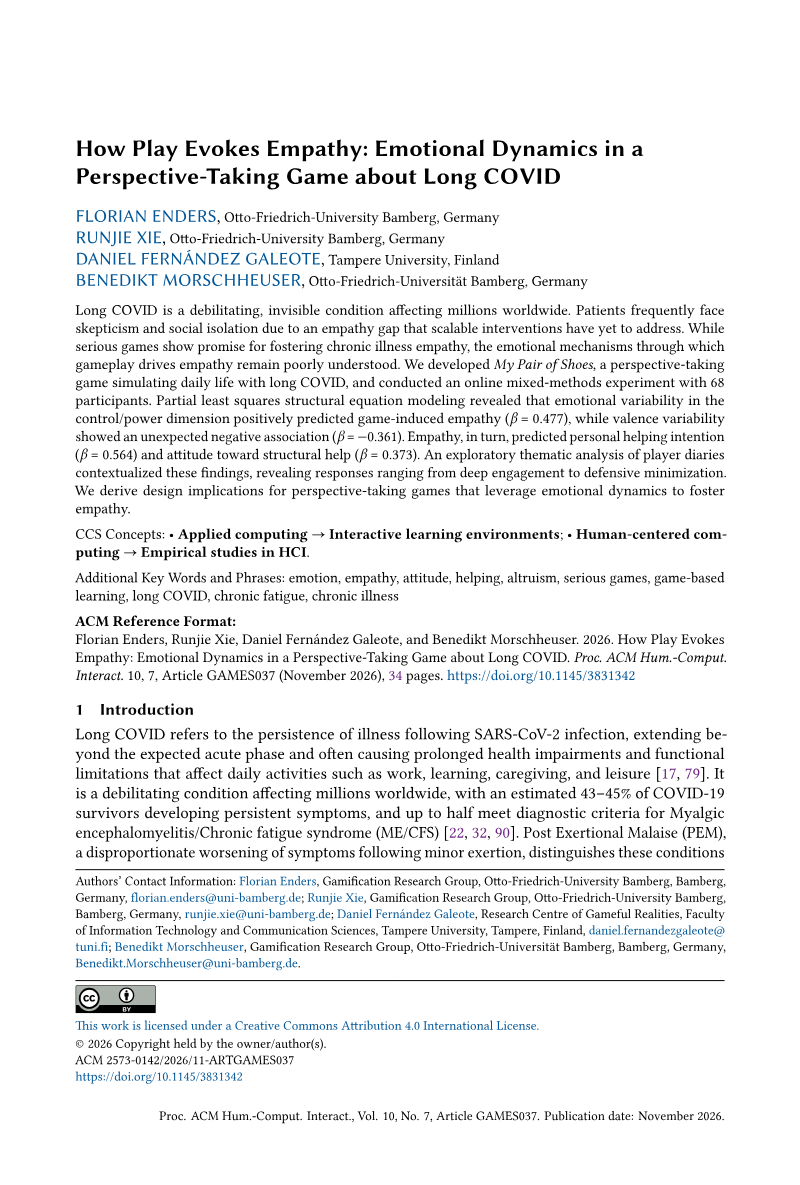
How Play Evokes Empathy: Emotional Dynamics in a Perspective-Taking Game about Long COVID
Otto-Friedrich University Bamberg · 2026
Article
Towards Real-Time Adaptation of a Non-Player Character Companion Using Physiological Signals of the Player
Tampere University · 2026
Whitepaper
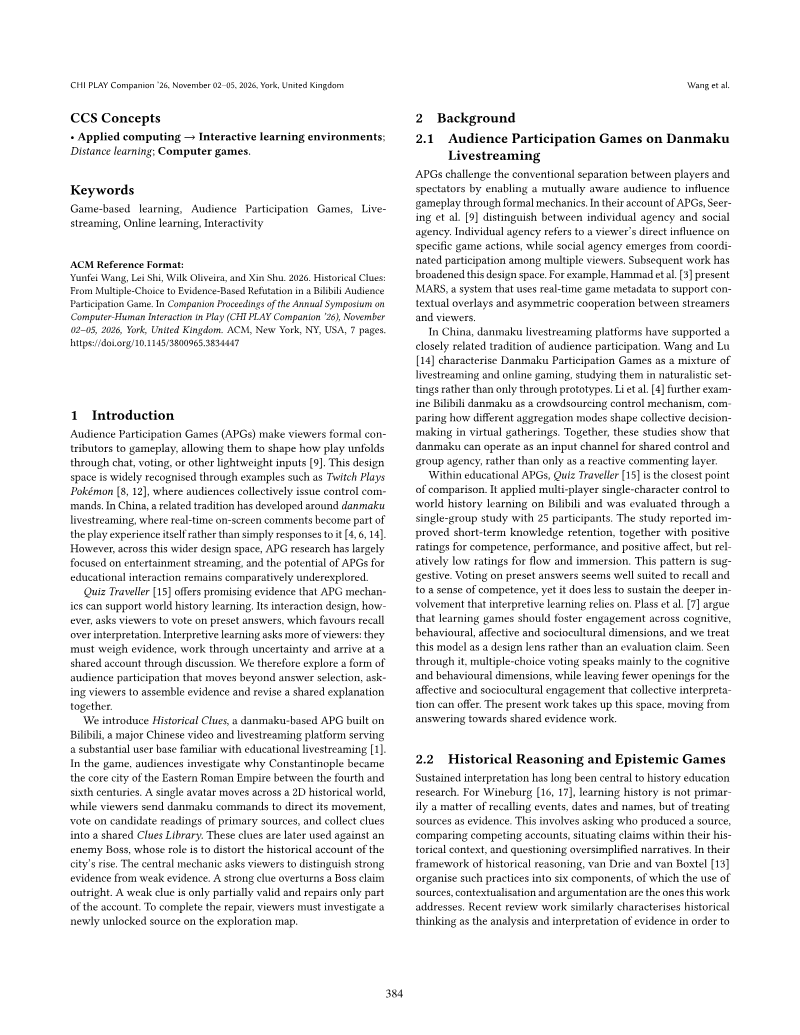
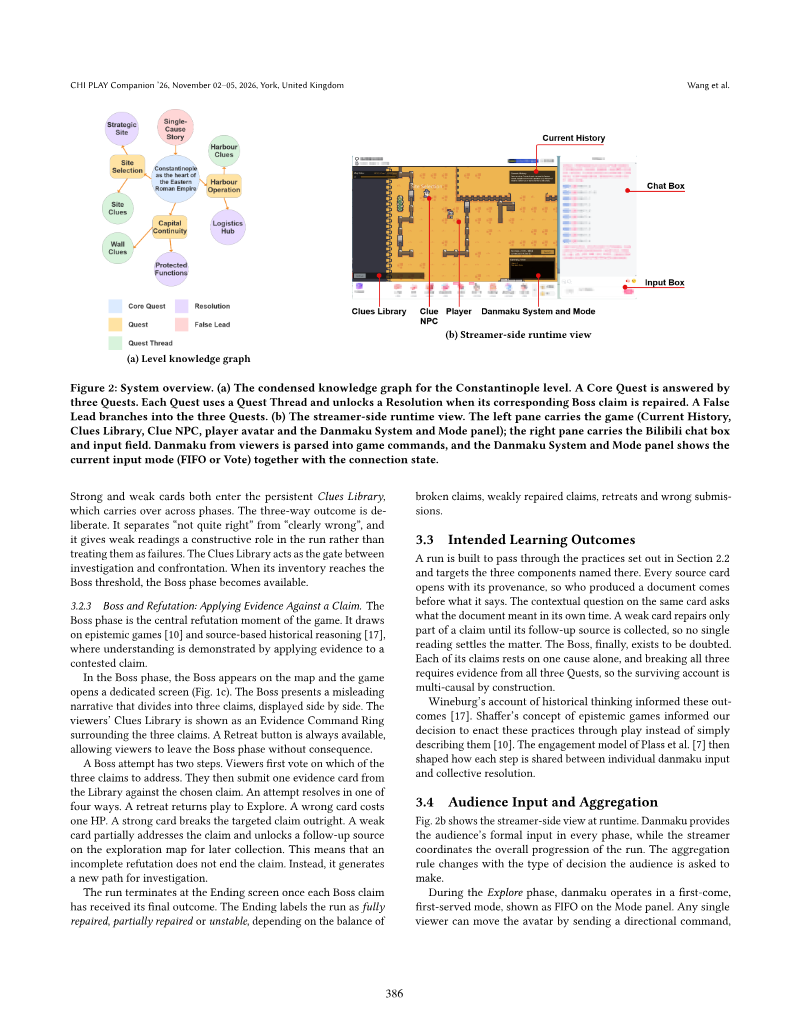
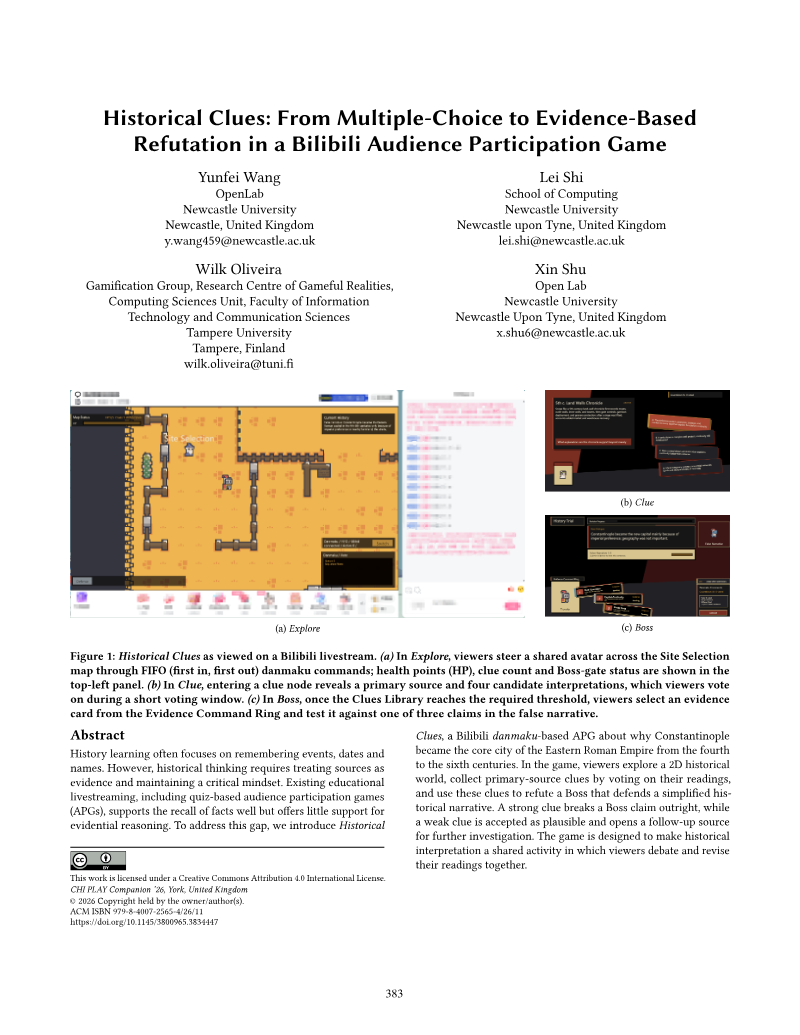
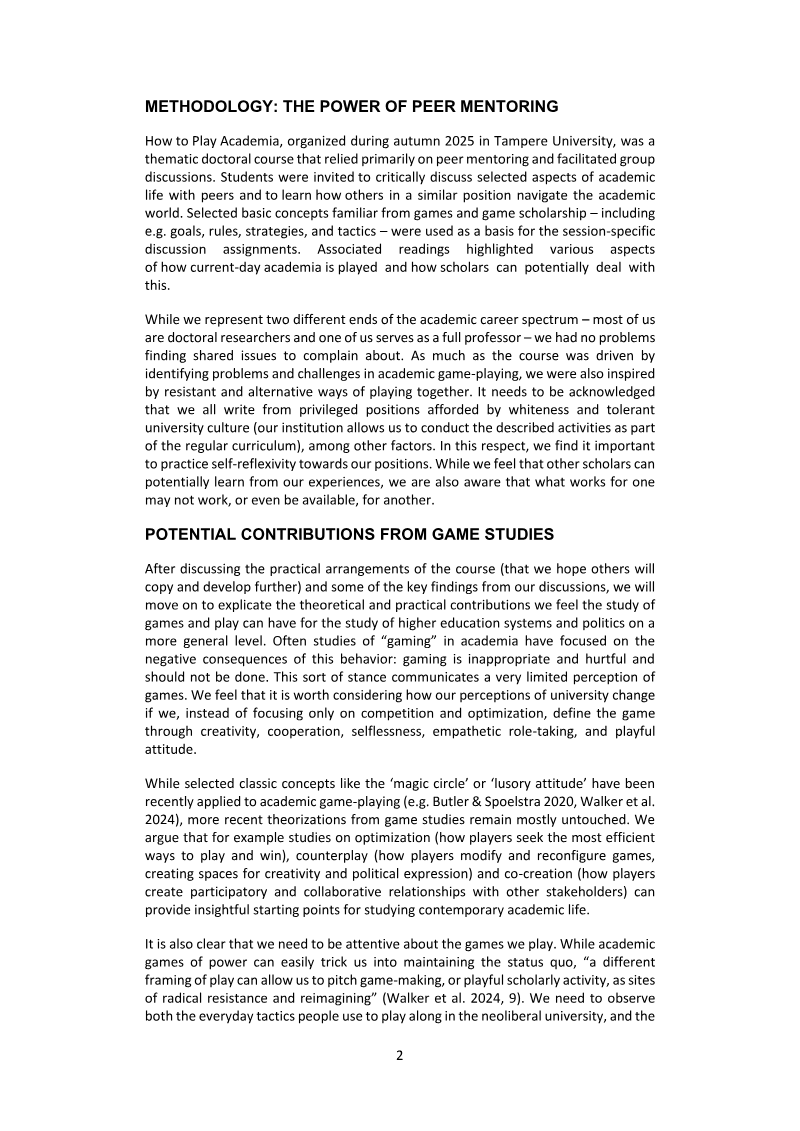
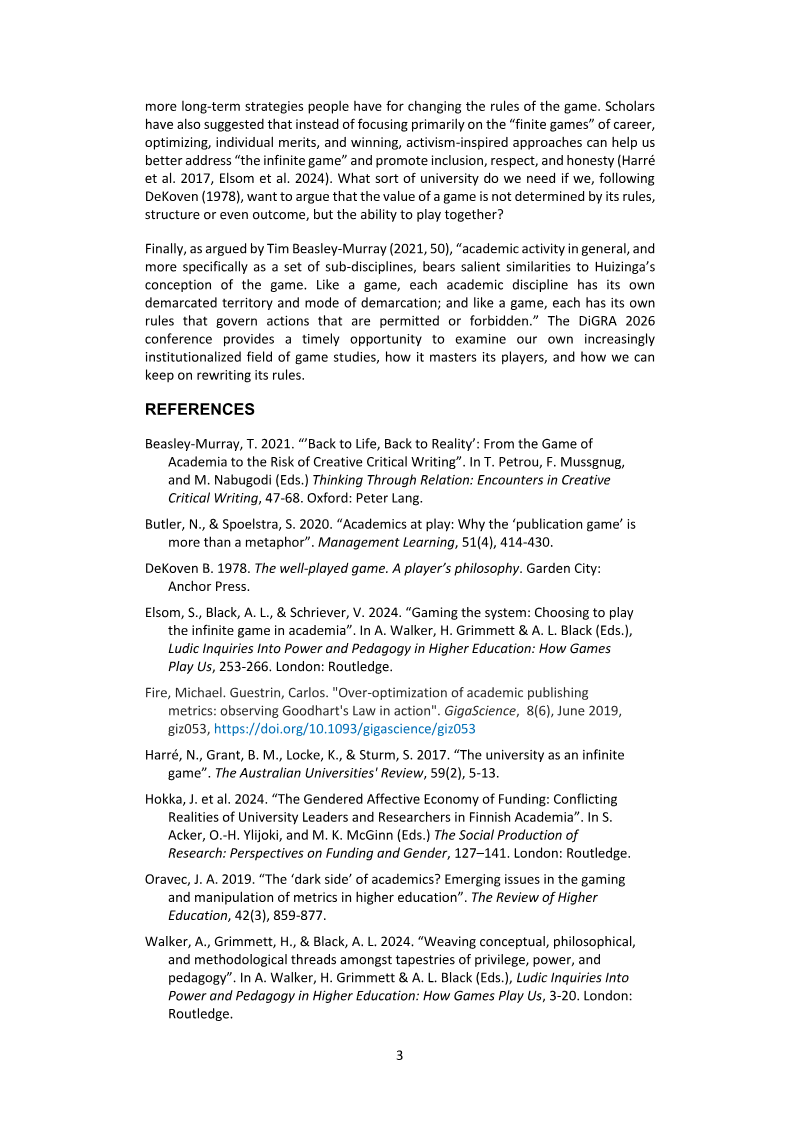
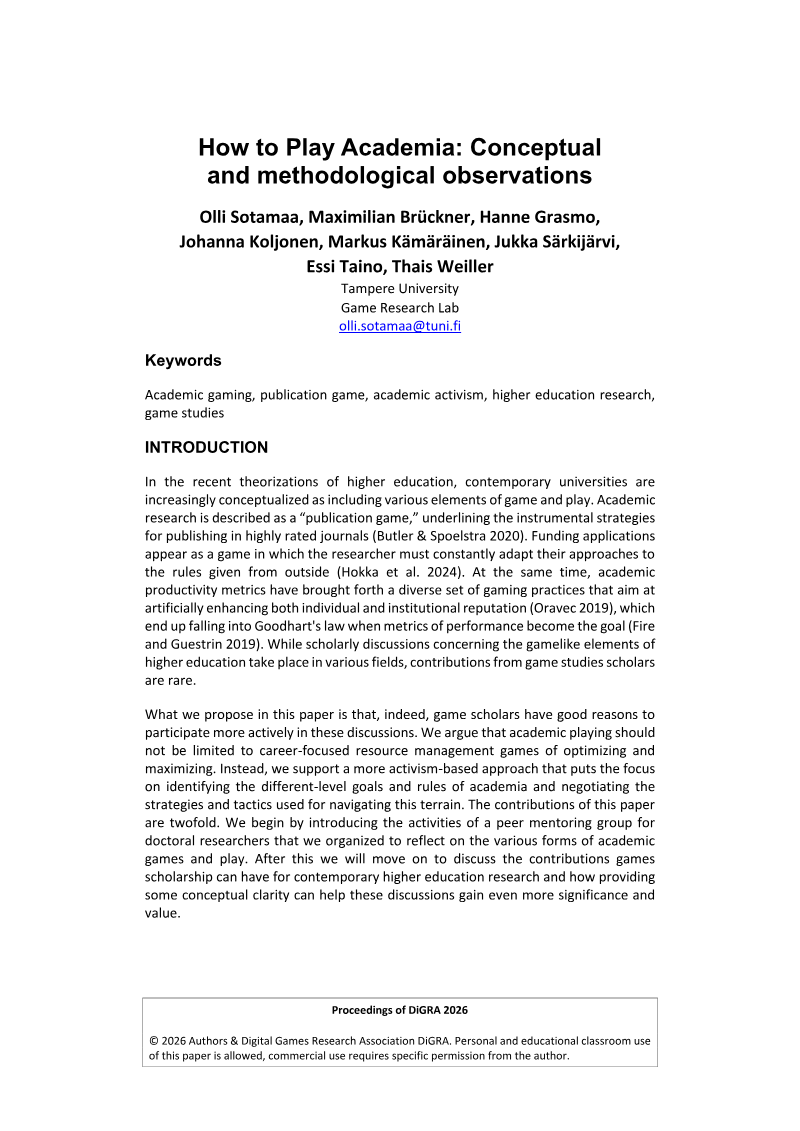
Historical Clues: From Multiple-Choice to Evidence-Based Refutation in a Bilibili Audience Participation Game
Newcastle University · 2026
Whitepaper
How to Play Academia: Conceptual and Methodological Observations
Tampere University · 2026
Whitepaper
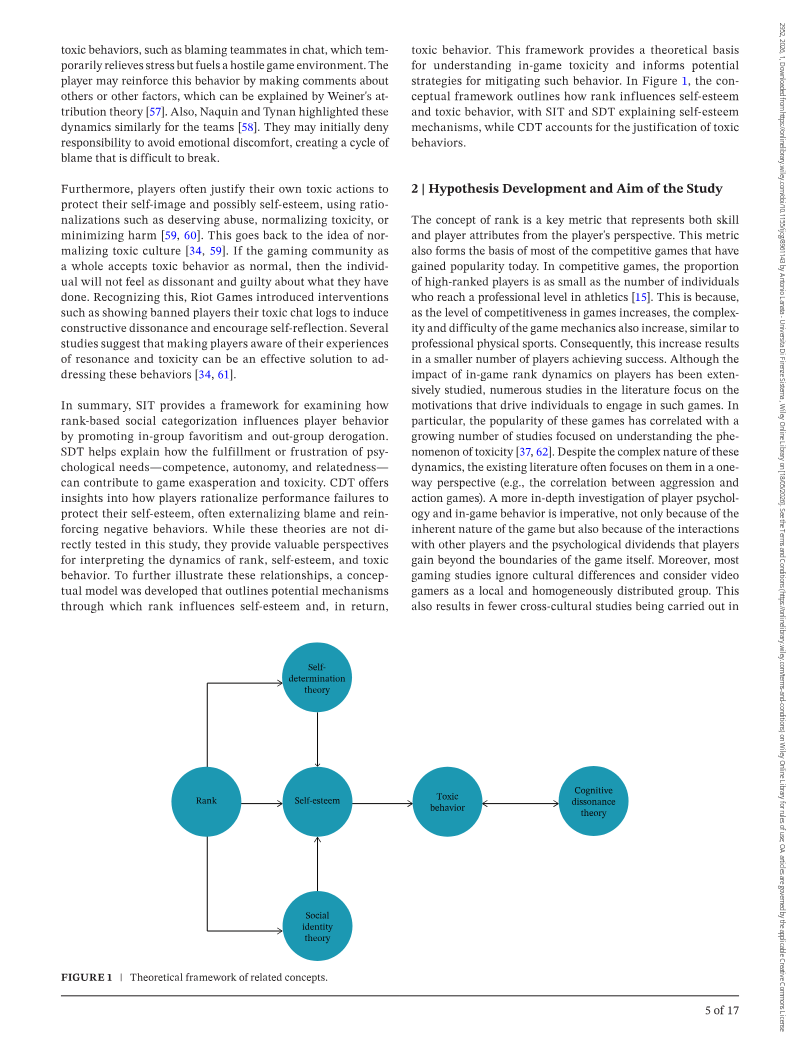
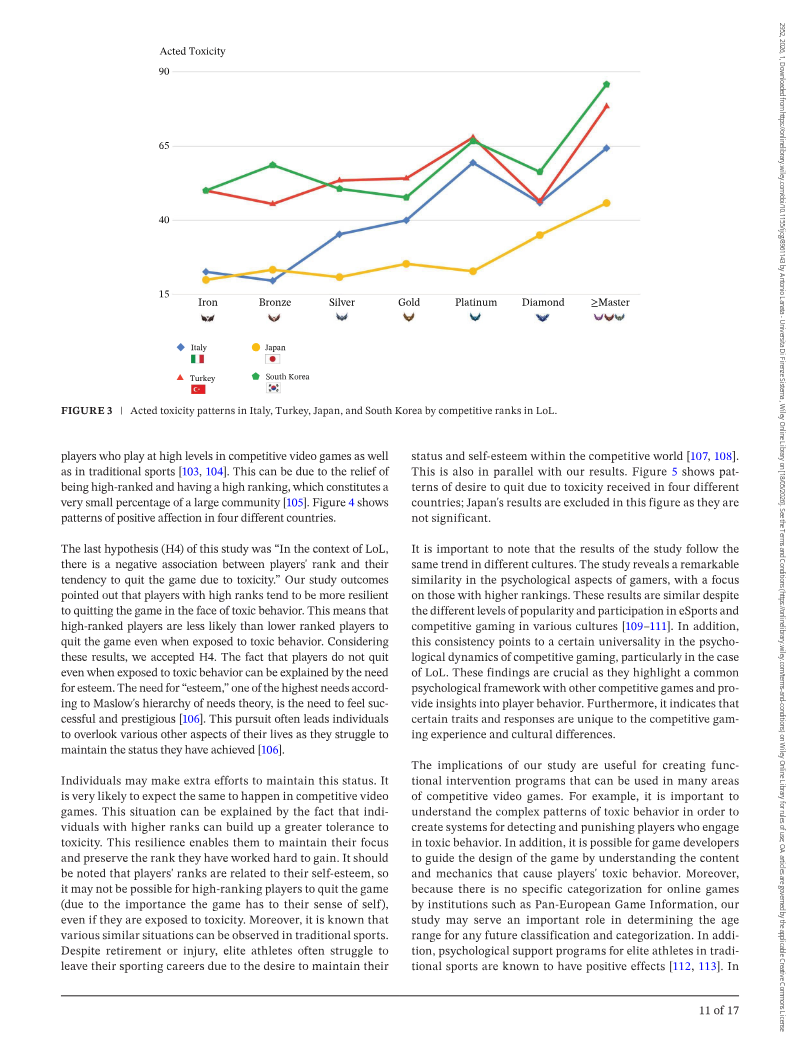
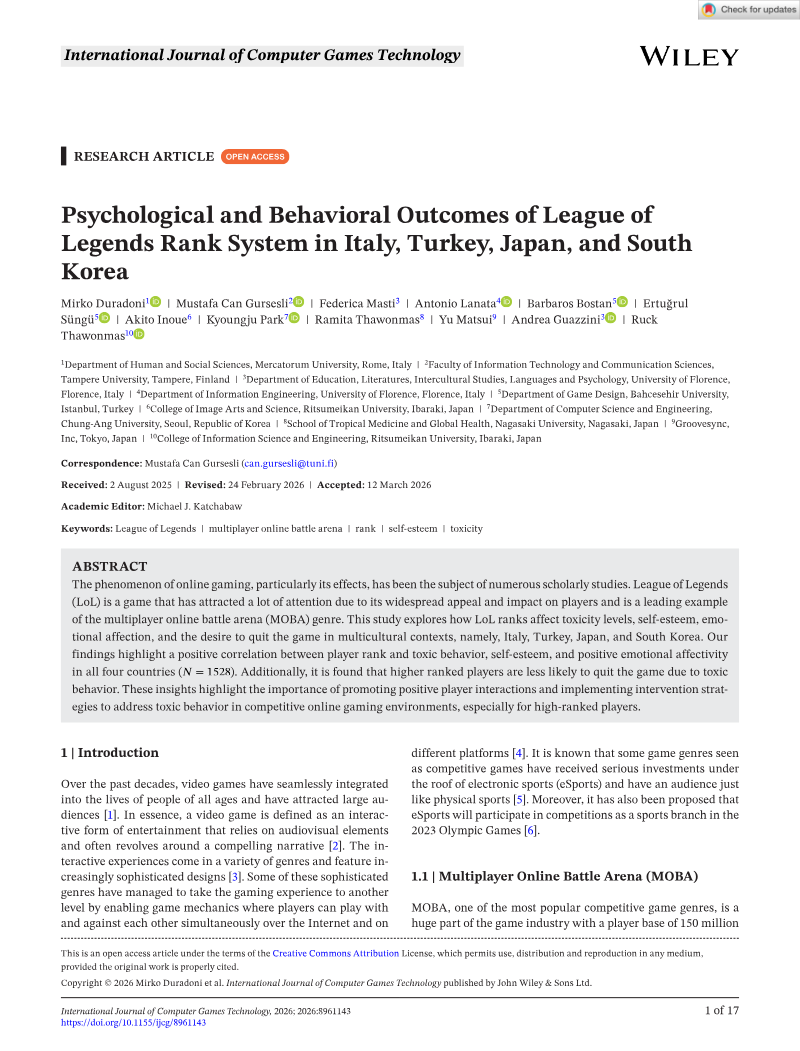
Psychological and Behavioral Outcomes of League of Legends Rank System in Italy, Turkey, Japan, and South Korea
International Journal of Computer Games Technology · 2026
Whitepaper
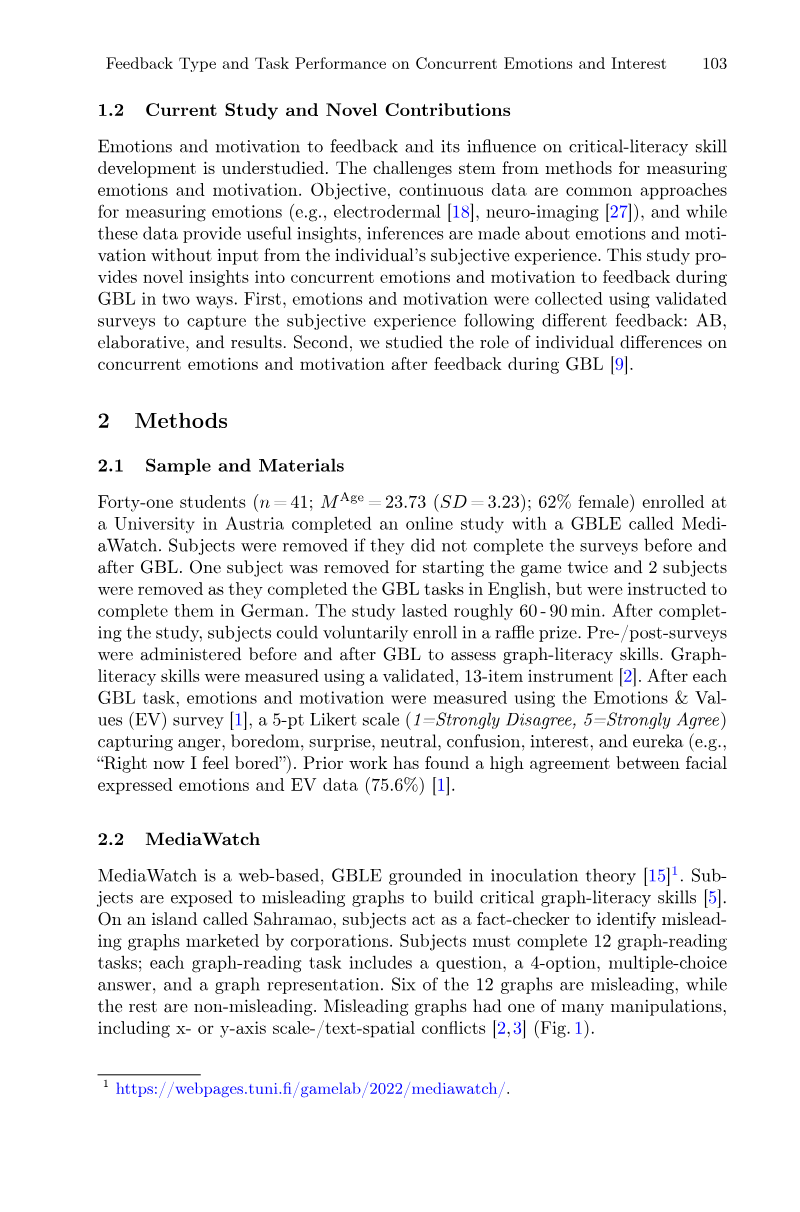
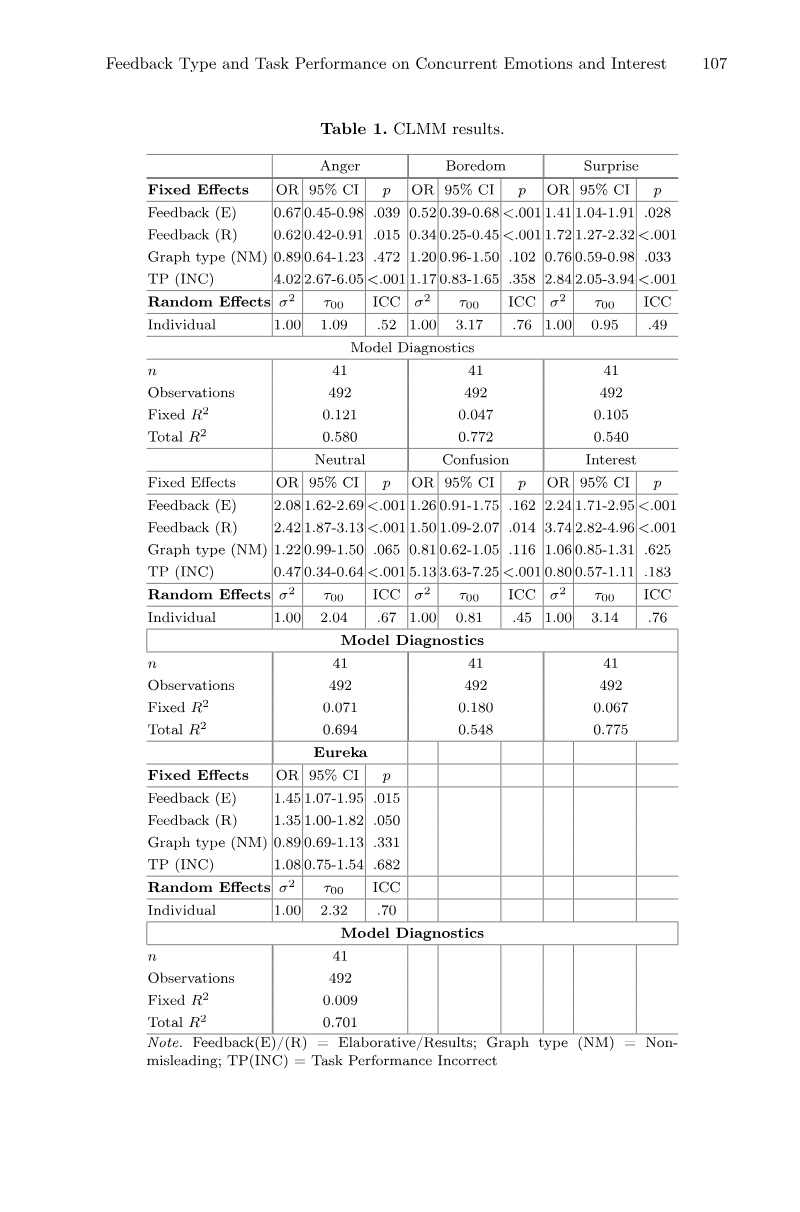
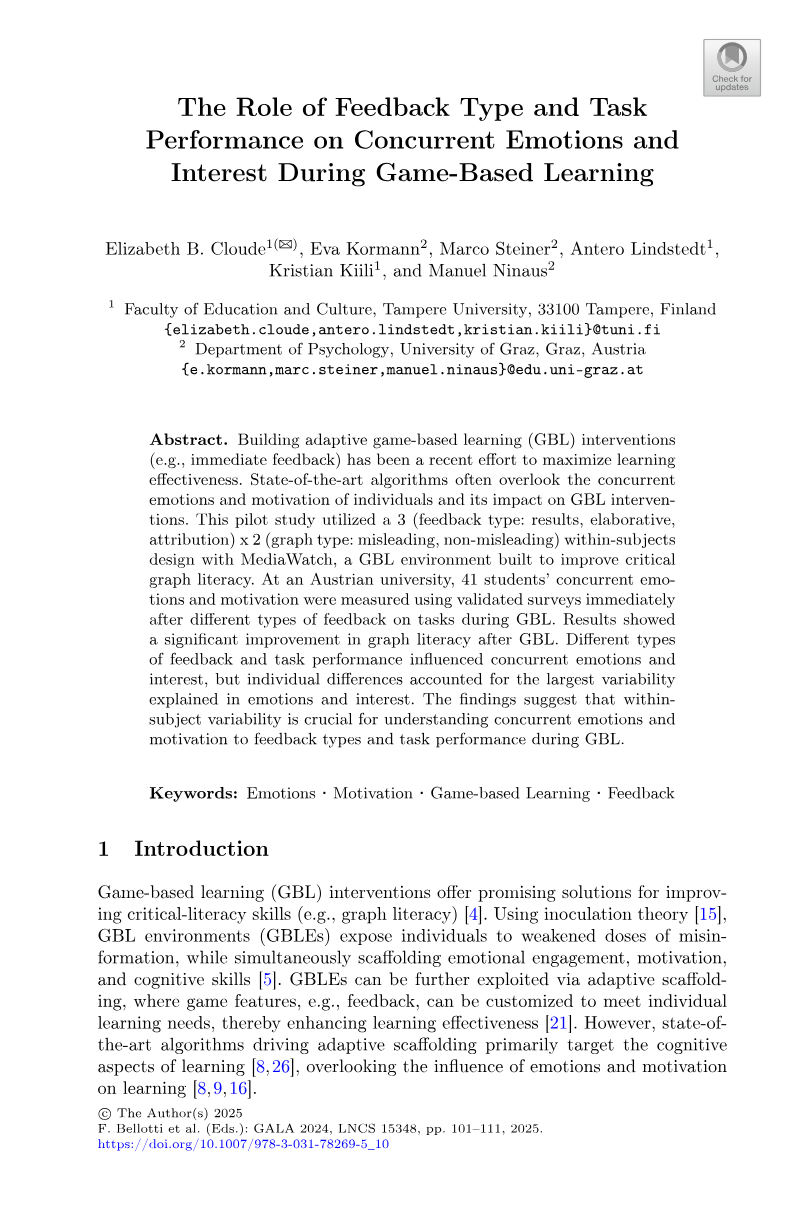
The Role of Feedback Type and Task Performance on Concurrent Emotions and Interest During Game-Based Learning
Tampere University · 2024
Whitepaper
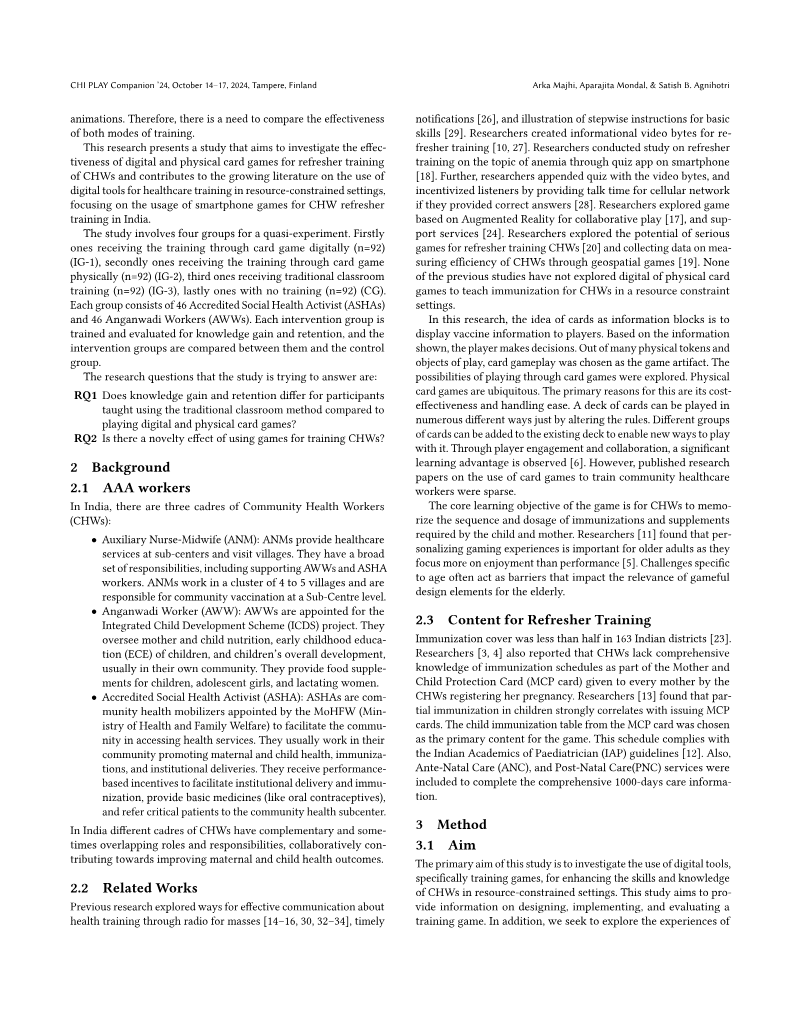
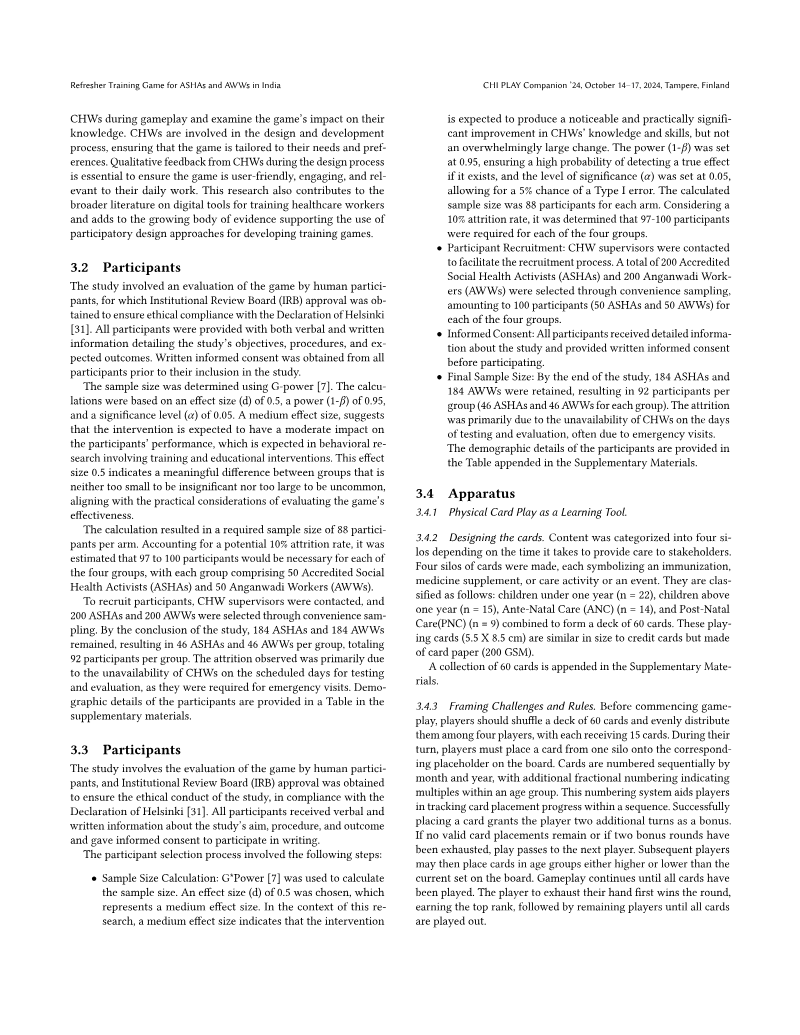
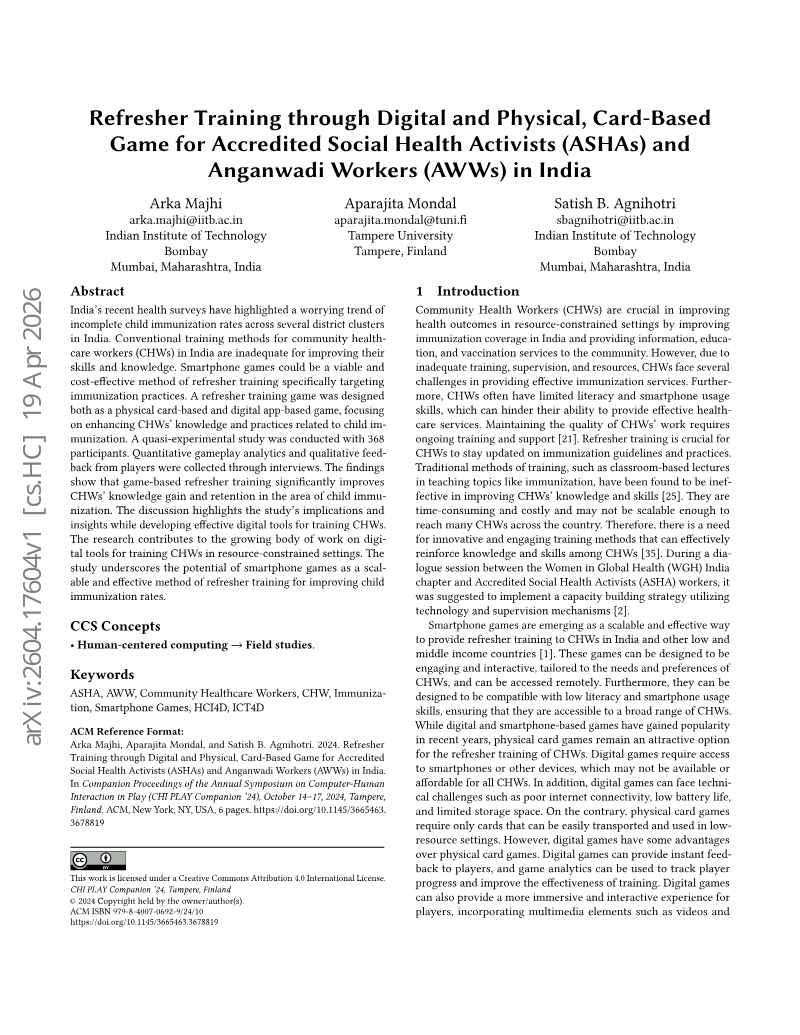
Refresher Training through Digital and Physical, Card-Based Game: India
Indian Institute of Technology Bombay · 2024
Whitepaper
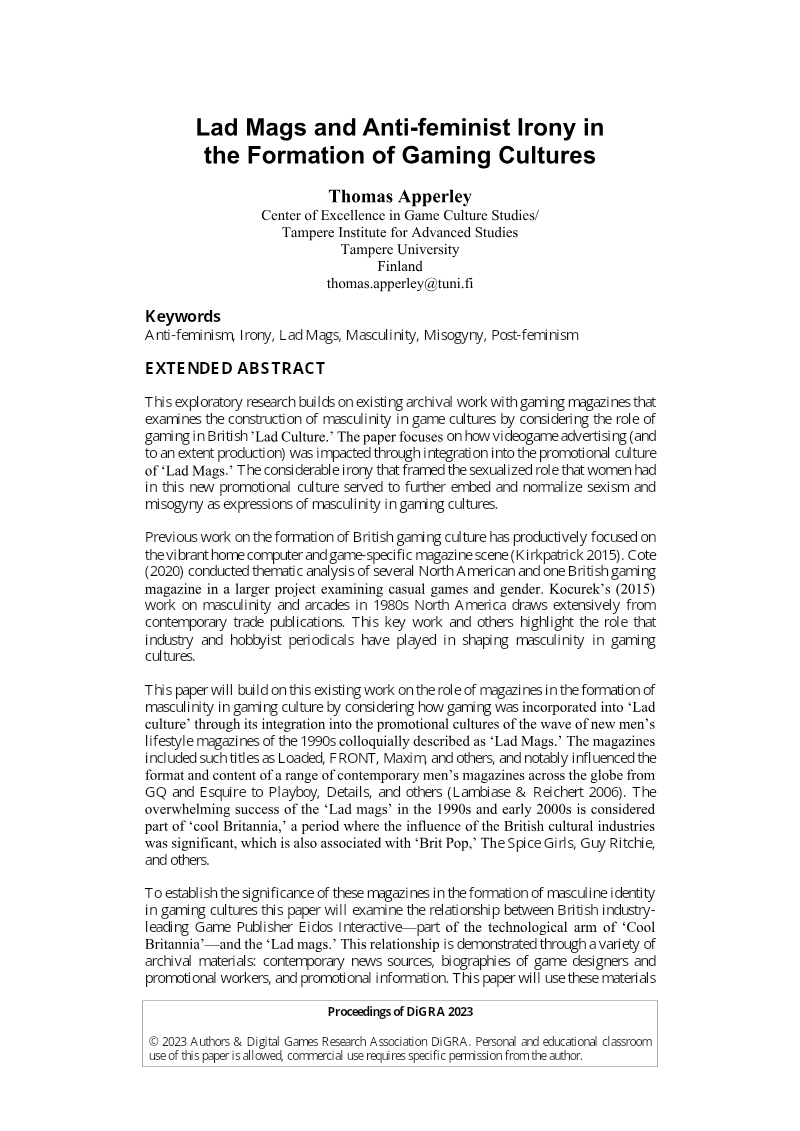
Lad Mags and Anti-feminist Irony in the Formation of Gaming Cultures
Tampere University · 2023

Whitepaper
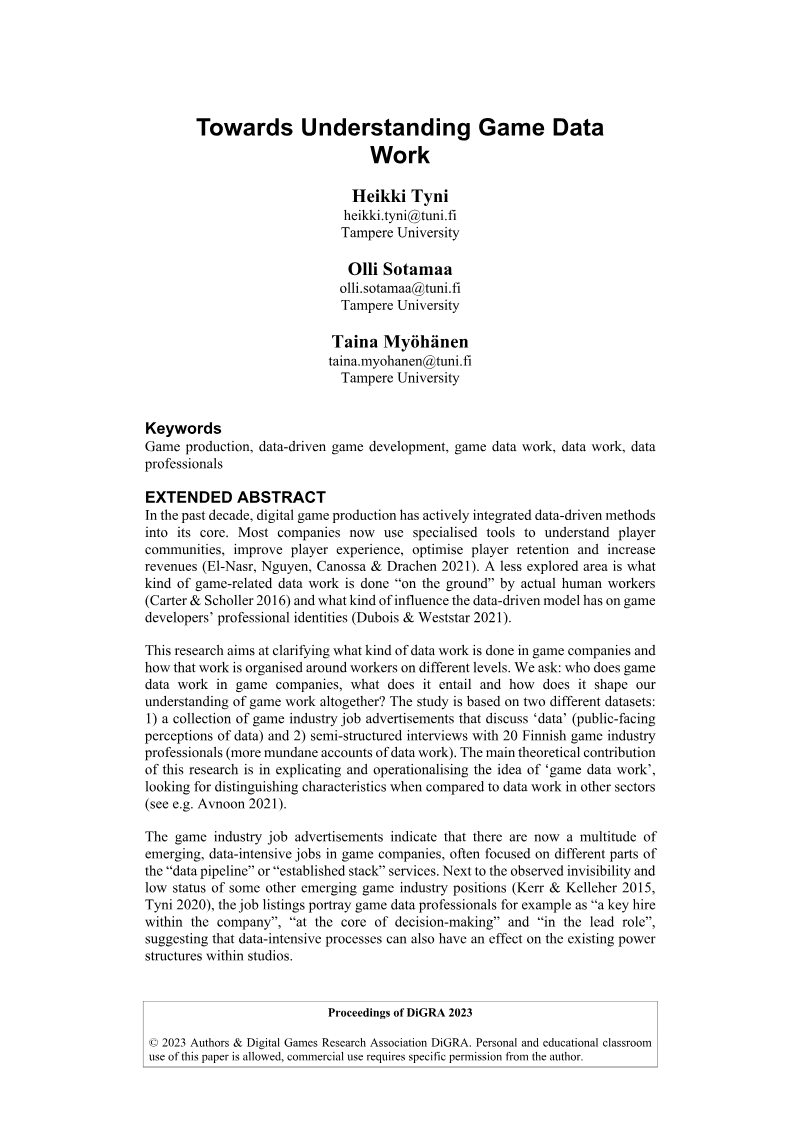
Towards Understanding Game Data Work
DiGRA · 2023
Whitepaper
Kinesthetic Elementary Mathematics: Creating Flow with Gesture Modality
Tampere University · 2016
Whitepaper
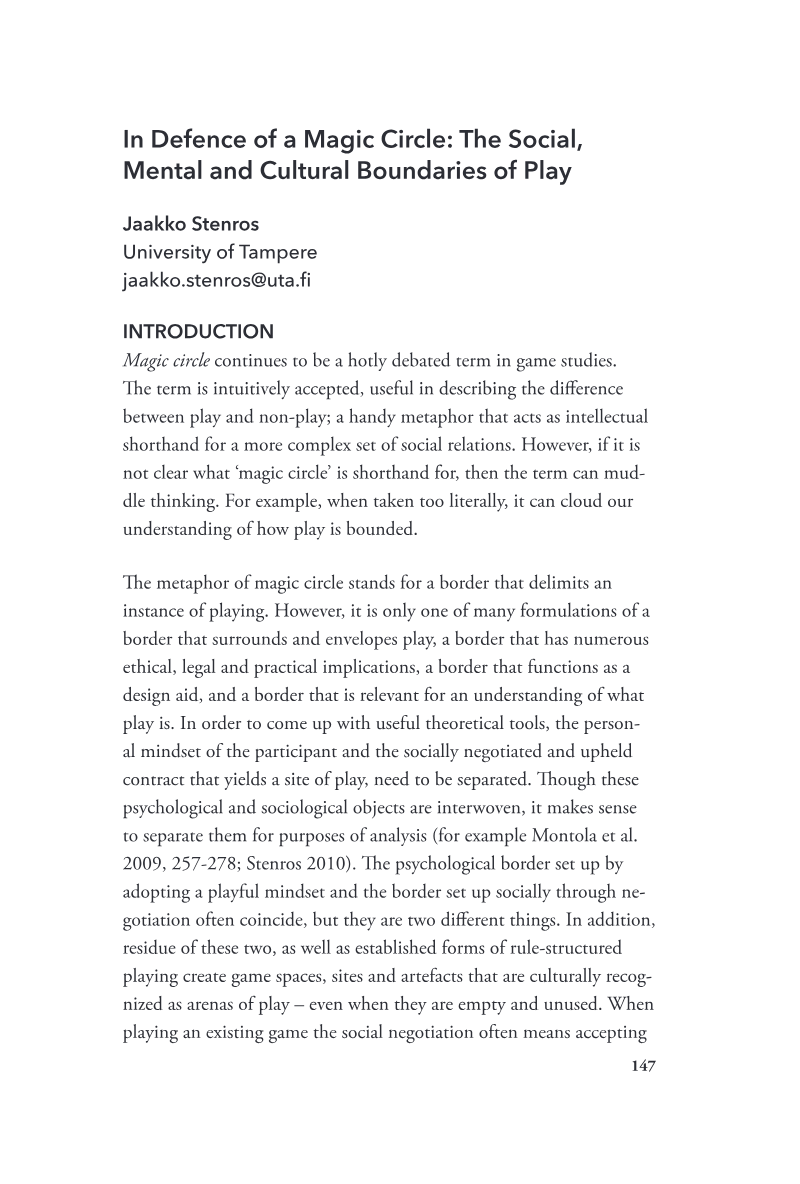
In Defence of a Magic Circle: The Social, Mental and Cultural Boundaries of Play
DiGRA · 2014