1 free read left. Create a free account for unlimited reading + AI research.
Create free accountArticle New Zealand Game Developers Association
1 free read left. Create a free account for unlimited reading + AI research.
Create free accountArticleNew Zealand Game Developers Association
The Game Development Sector Rebate (GDSR) is a strategic initiative designed to bolster the domestic gaming industry. It aims to prevent the migration of studios and talent to international markets.
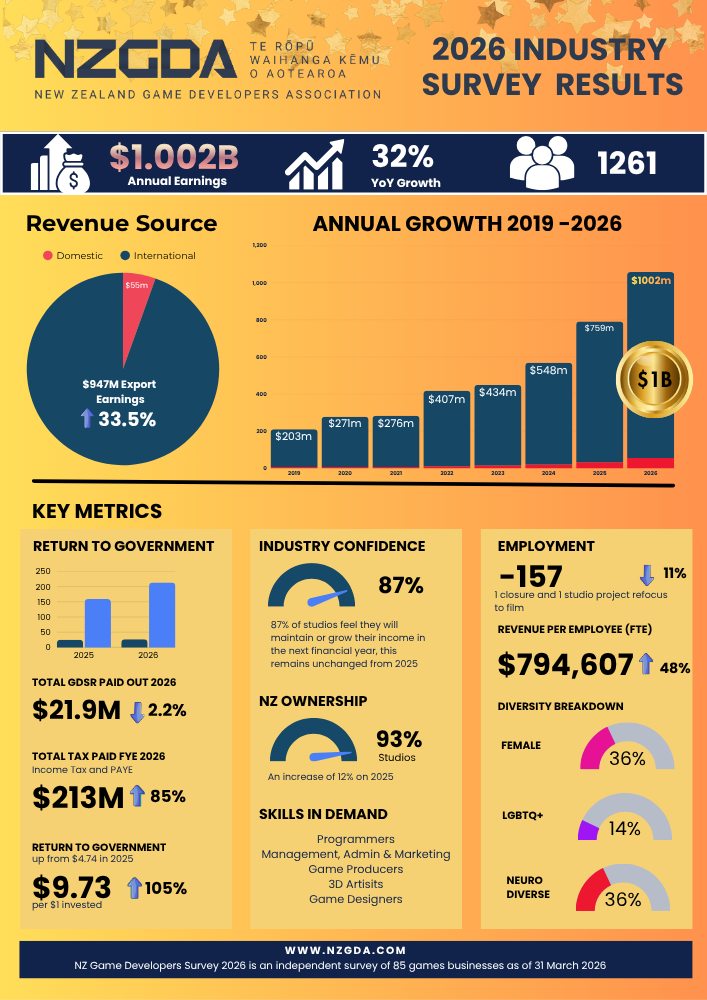
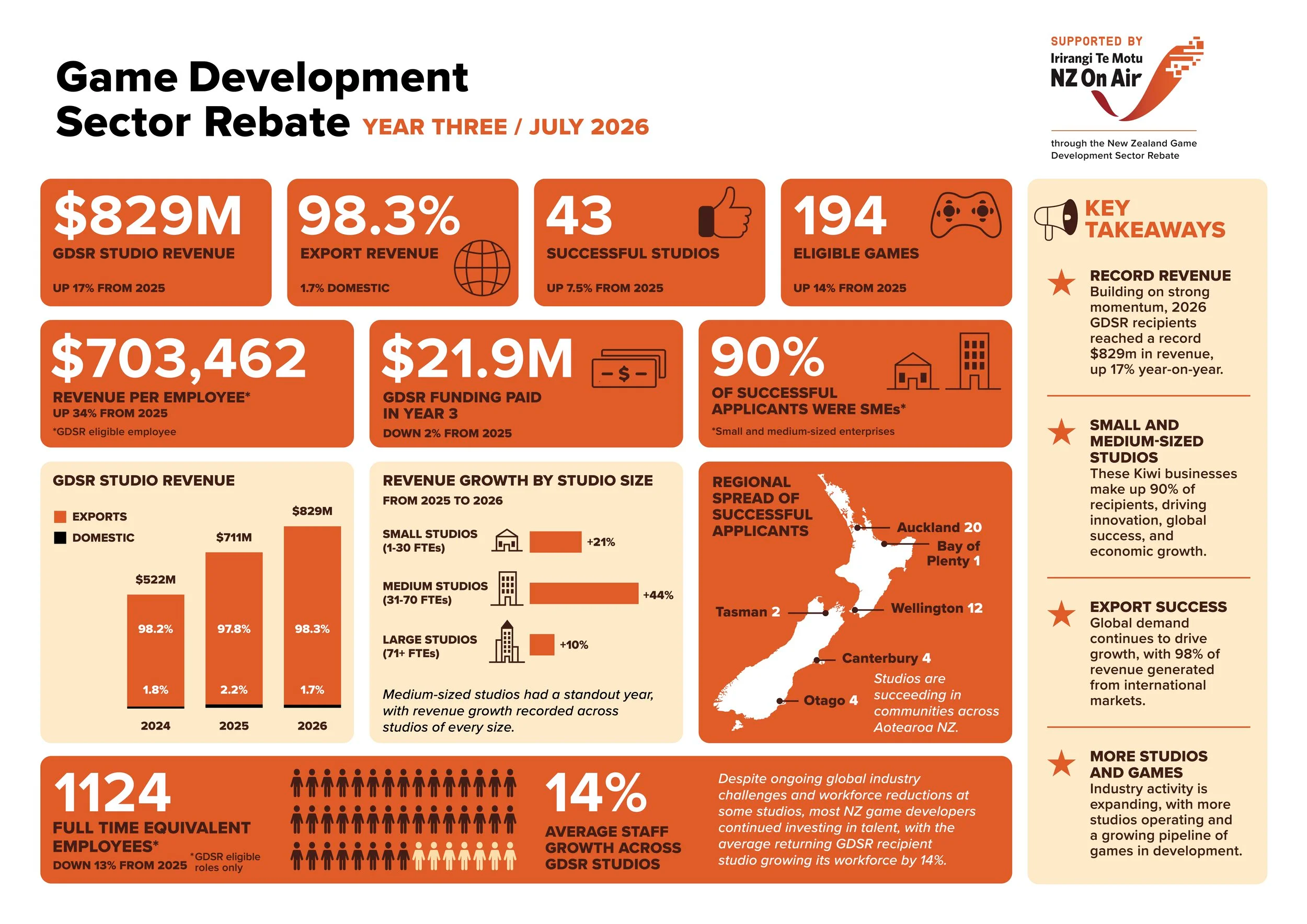
The New Zealand government has officially announced the inaugural recipients of the Game Development Sector Rebate (GDSR), a strategic initiative designed to bolster the domestic gaming industry and prevent the migration of studios and talent to international markets. Administered by NZ On Air, the scheme provides a 20 percent reimbursement on eligible local expenditures, capped at $3 million per studio annually. This first general registration round awarded over $12 million to 32 studios, bringing the total disbursed funding to nearly $22.3 million when combined with a preceding pilot phase.
The program, which is supported by a $40 million annual budget over four years, aims to stimulate economic growth in a sector that currently contributes more than $400 million to the national economy. Industry stakeholders and analysts anticipate that the rebate will facilitate talent retention, support the development of new intellectual property, and enable studios to offer internationally competitive salaries. Projections from the consulting firm Nordicity suggest that this reinvestment could increase the local labor pool by approximately eight percent in the year following the initial funding, while also fostering growth in adjacent sectors such as virtual production, animation, and eSports.
The initiative serves as a critical intervention for the New Zealand game development landscape, where nearly half of all studios previously considered relocating operations to Australia due to competitive pressures. By incentivizing local operations, the government seeks to secure long-term revenue and tax income through the export of digital goods. The Ministry of Business, Innovation and Employment plans to conduct formal reviews of the scheme’s impact at the two-year and four-year marks to ensure the rebate continues to meet its objectives of industry sustainability and expansion.
New Zealand Game Developers Association · 2026
New Zealand Game Developers Association · 2026
New Zealand Game Developers Association · 2026

New Zealand Game Developers Association · 2026

New Zealand Game Developers Association · 2026


New Zealand Game Developers Association · 2026
New Zealand Game Developers Association · 2025

New Zealand Game Developers Association · 2025

New Zealand Game Developers Association · 2023
New Zealand Game Developers Association · 2021
New Zealand Game Developers Association · 2021

New Zealand Game Developers Association · 2020
Jason Schreier · 2026






Comments