
New Zealand Plays
202532 pages~22 min full read
Video gaming has become a mainstream activity across New Zealand households, with the majority of homes now possessing multiple gaming devices. Seventy‑three percent of residences own two or more consoles or similar hardware, and eighty‑one percent of the population engages in gaming, most of them adults; the average player is 36 years old and eighty percent are aged 18 or older. Parental motivations for allowing children to play centre on enjoyment, educational value and problem‑solving, while a strong majority of parents enforce rules around gameplay. Over three‑quarters of parents set limits, and nearly four‑tenths consider those limits “very much” enforced, with a similar proportion applying them “to some degree.” Adult respondents display solid awareness of New Zealand’s game‑classification system, though familiarity drops for the R13‑R16 categories.
The findings derive from a nationally representative sample of 820 households surveyed in May 2025, encompassing 1,309 individual gamers—including 282 parents—and demographic data on 1,731 persons across the sampled homes. The study achieved a 3.5 percent margin of error and collected detailed information on device ownership, playtime, attitudes and knowledge of classification standards. Results highlight the entrenched role of gaming in everyday life, the prevalence of parental regulation, and a generally high level of consumer understanding of content ratings, albeit with gaps for mid‑range age classifications.
Overall, the research underscores the maturity of the New Zealand gaming market, the integration of gaming into family routines, and the need for clearer communication around specific rating bands to support informed parental decision‑making.

Niko Partners · 2026

Anzu · 2026

SpielFabrique · 2026

InvestGame · 2026

Deloitte · 2026

Telekom Malaysia · 2026
Bryter · 2026

Niko Partners · 2026
Newzoo · 2025

SELL – Syndicat des Éditeurs de Logiciels de Loisirs · 2025
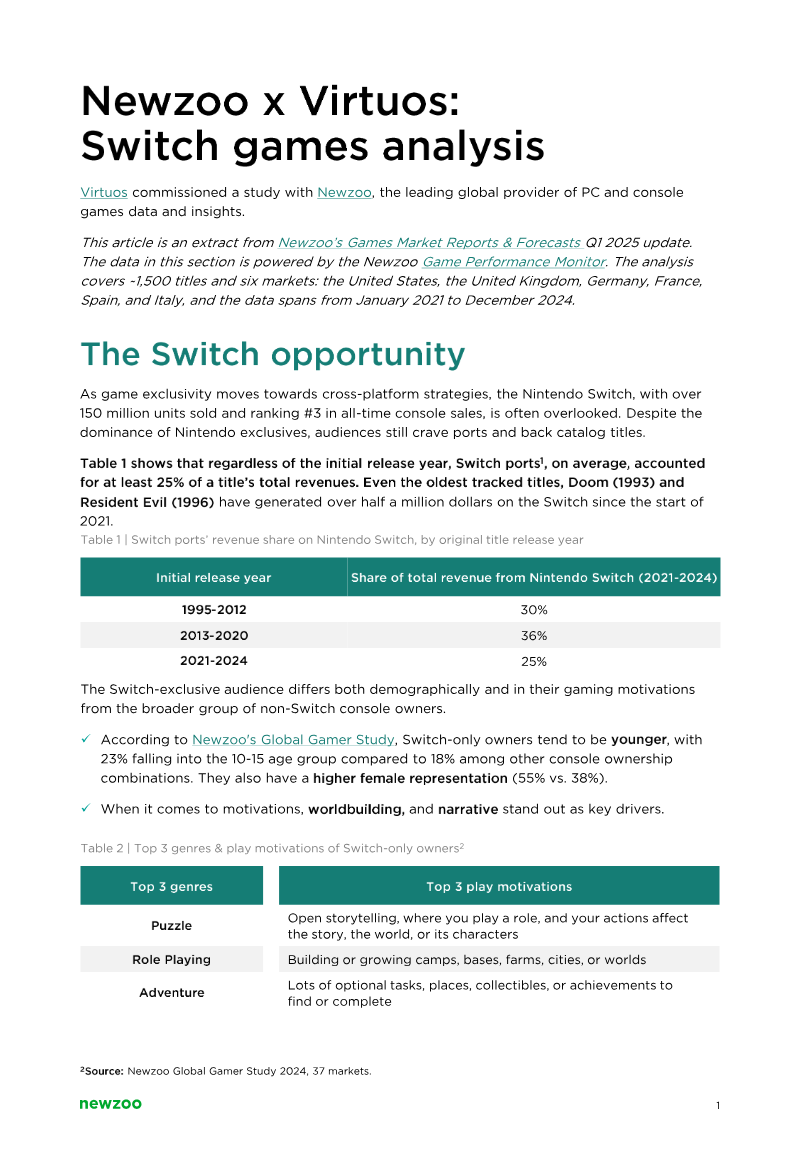
Newzoo · 2025

SELL – Syndicat des Éditeurs de Logiciels de Loisirs · 2025