1 free read left. Create a free account for unlimited reading + AI research.
Create free accountWhitepaper Ludic Language Pedagogy
1 free read left. Create a free account for unlimited reading + AI research.
Create free accountWhitepaperLudic Language Pedagogy
These games facilitate language learning through immersive, student-centered interaction.
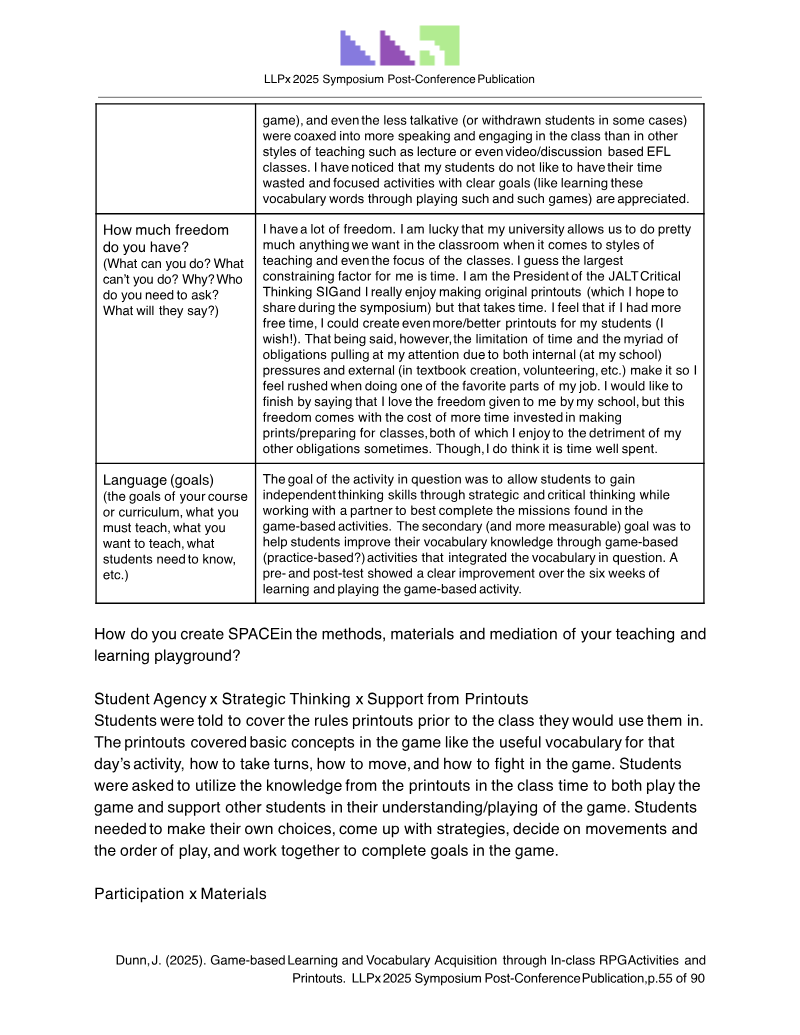
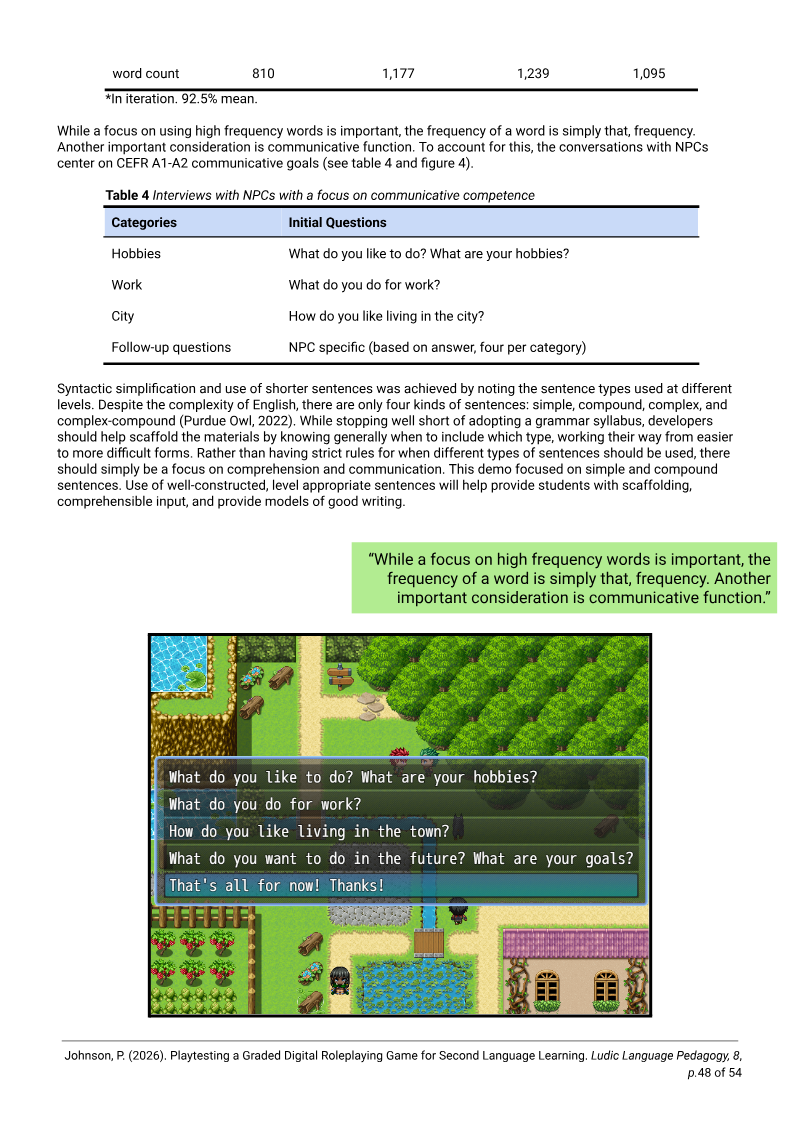
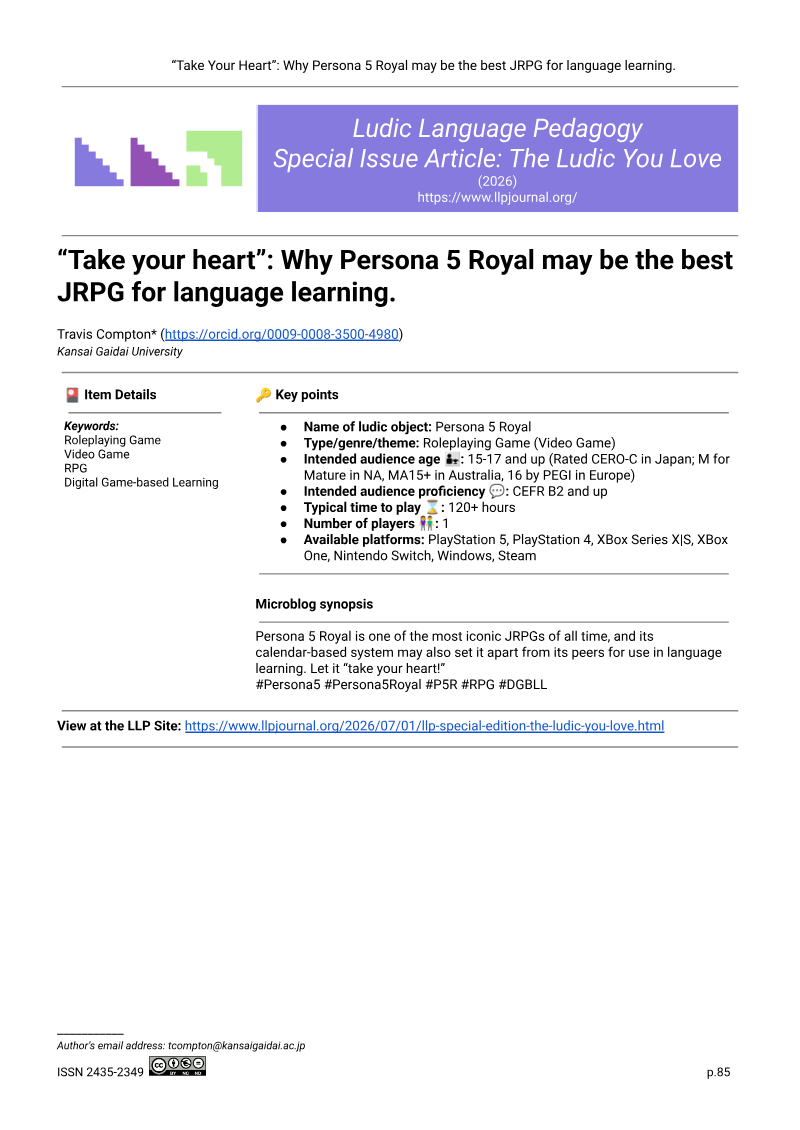
Role-playing games serve as a potent, under-researched medium for extensive reading in language pedagogy, offering a compelling alternative to traditional literature. By leveraging high text density and immersive narrative structures, these games satisfy core pedagogical requirements for learner autonomy and pleasure-based engagement. While previous academic focus has largely centered on the social dynamics of massively multiplayer online role-playing games, single-player titles provide a distinct, controlled environment that effectively facilitates language acquisition through sustained, student-centered interaction with complex, multimodal content.
The proposed pedagogical framework, Extensive RPGing, shifts the focus from traditional comprehension testing toward a model of immersive, experience-based learning. This approach requires educators to act as facilitators who categorize games based on linguistic difficulty and guide students toward titles that align with their proficiency levels and personal interests. By integrating these digital narratives into the curriculum, teachers can foster deeper engagement among students who may otherwise struggle with conventional reading materials. The framework prioritizes the student’s voluntary, enjoyable interaction with the text, which is essential for long-term linguistic development.
Ultimately, role-playing games represent a viable, multimodal tool for modern language programs, provided that educators actively model and support the gaming experience. Although the current findings establish a strong theoretical basis for this integration, the practical implementation of such programs requires further empirical investigation. Future research must address logistical considerations, including the cost of software, the efficiency of game-based learning compared to traditional methods, and the scalability of these programs within diverse educational settings. Despite these remaining questions, the shift toward digital, narrative-driven media offers a promising evolution in how language acquisition is fostered in the classroom.
Ludic Language Pedagogy · 2026
Ludic Language Pedagogy · 2026
Ludic Language Pedagogy · 2026
Ludic Language Pedagogy · 2026
Ludic Language Pedagogy · 2026
Ludic Language Pedagogy · 2026
Ludic Language Pedagogy · 2026
Ludic Language Pedagogy · 2026
Ludic Language Pedagogy · 2026
Ludic Language Pedagogy · 2026
Ludic Language Pedagogy · 2026



Ludic Language Pedagogy · 2026
International Journal of Role-Playing · 2026