Key insights
6 slides
Key number
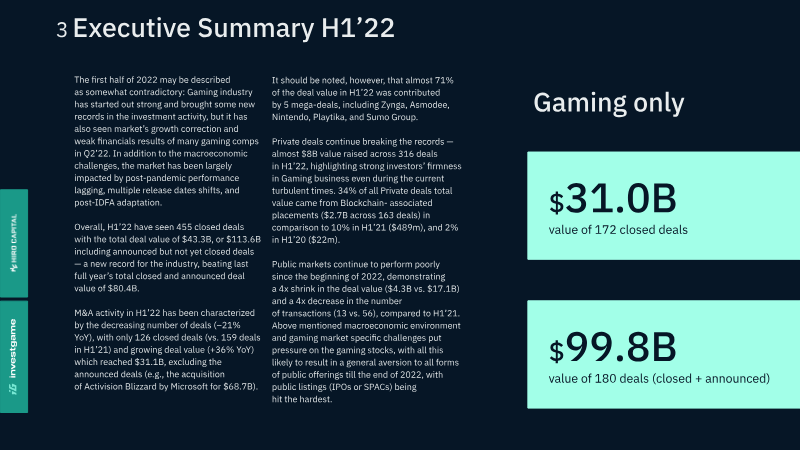
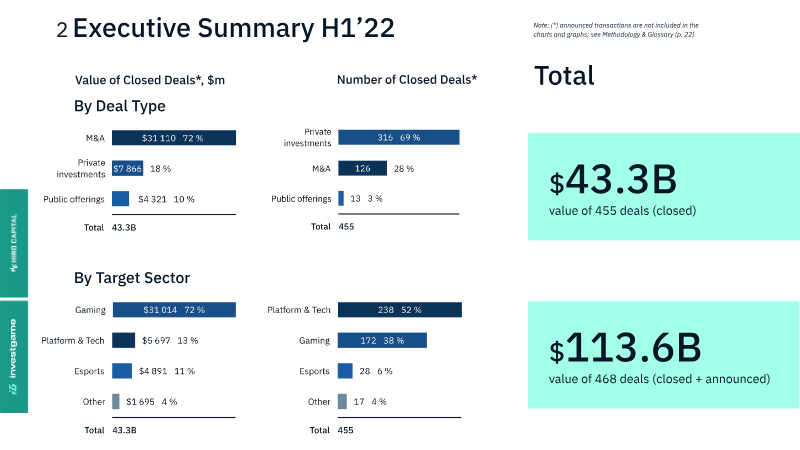
Gaming deal value reached a record $113.6 billion in H1 2022.
Total deal value hit $113.6 billion during the first half of 2022. This occurred despite a decline in overall transaction volume.
Market split
M&A, private investments, and public offerings shaped the deal mix.
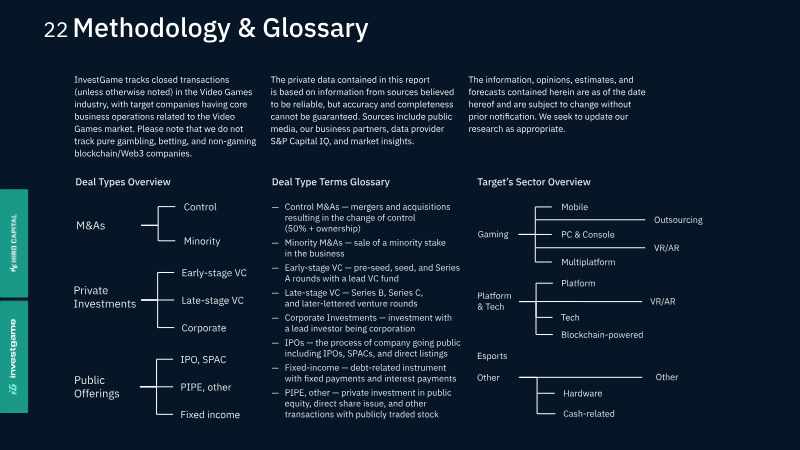
Closed deals were categorized by type and target sector. M&A and private investments were key components of the activity.
Strategic focus
Investors shifted toward mobile acquisitions and content-driven blockchain gaming.
Investment strategies are shifting toward mobile-focused acquisitions. The blockchain gaming sector is maturing, moving away from speculative models toward content-driven development.
Governance gap
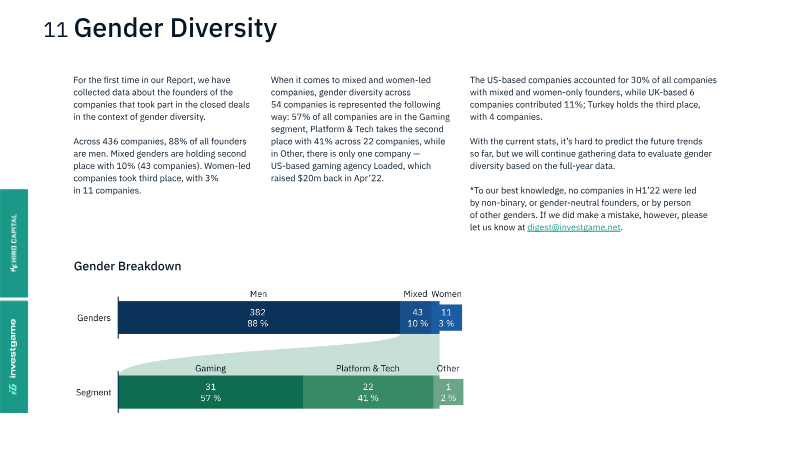
88% of company founders in the sector are identified as men.
Corporate governance data reveals a significant lack of gender diversity. 88% of company founders in the sector are identified as men.
Institutional confidence
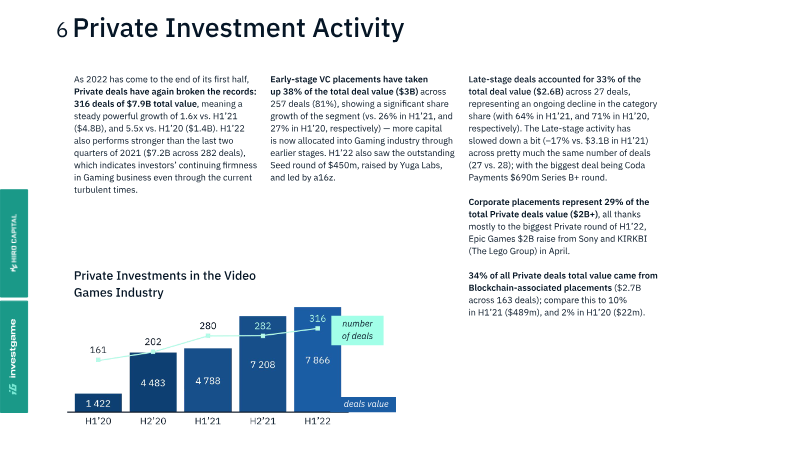
Institutional confidence remains high as capital concentrates in large-scale deals.
Institutional confidence in gaming remains high, evidenced by capital concentration into large-scale acquisitions. Strategic private investments also support this confidence.
Quality over quantity
The industry prioritizes long-term viability over pandemic-era rapid expansion.
The industry is experiencing a flight to quality as investors prioritize long-term project viability.
1 / 6
Ask AI about this report