Games and companies in this document


Connections
Each row is a game or company this document names, each column a document, oldest first. A mark means that document names it. Select a row to see those documents.
More from Games and Culture
View all
Article
Coziness in Games: Homes, Audiences, and Esthetics
Games and Culture · 2025
Whitepaper
“You Feel Like You’ve Found a Place Where You Belong”: Symbolic Interactionism and Online Social Video Games in the Age of COVID-19
Games and Culture · 2024
Article
Scale and Technologies of Hope in Taiwan's OPUS Game Trilogy
Games and Culture · 2024
Whitepaper
From the Ontology of Video Games to the Epistemology of Digital Movements: Towards a Semiotics of Virtual Practices
Games and Culture · 2024
Article
Motivation in Digital Games: The 28 Dimensions of Play
Games and Culture · 2024
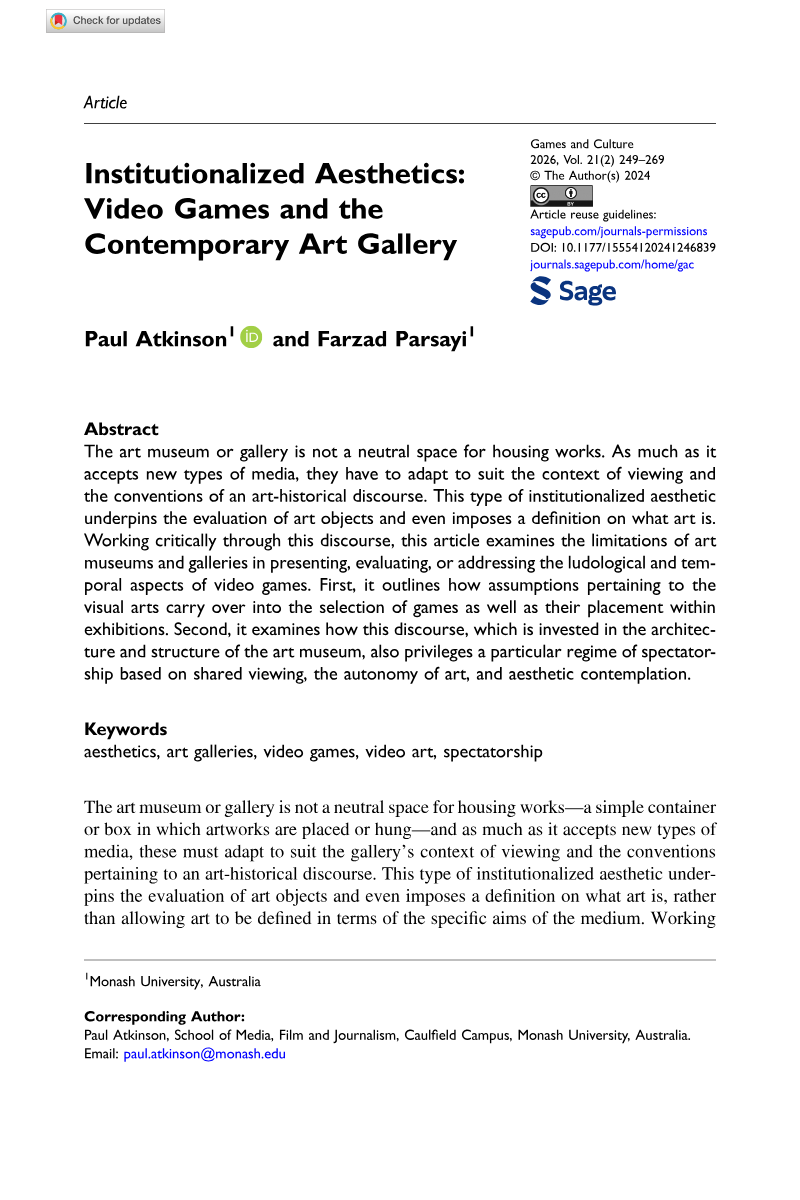
Article
Video Games and the Contemporary Art Gallery
Games and Culture · 2024
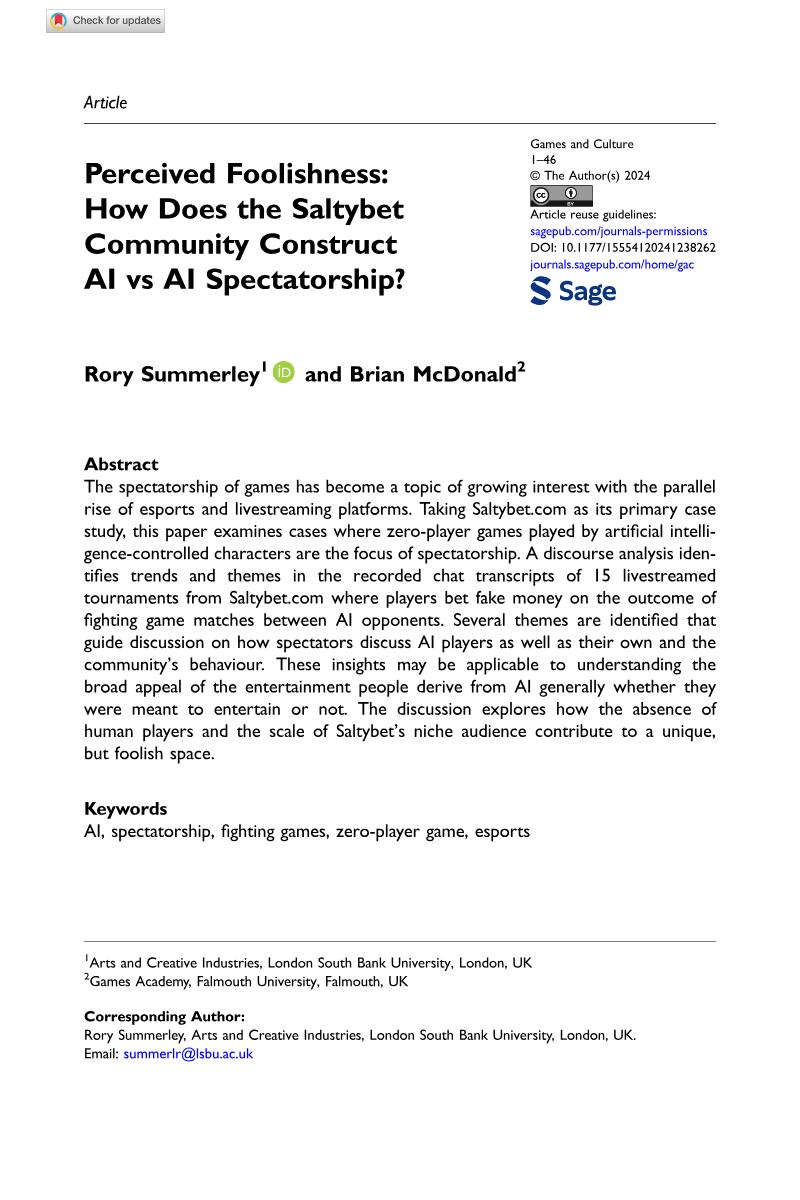
Article
How Does the Saltybet Community Construct AI vs AI Spectatorship?
Games and Culture · 2024
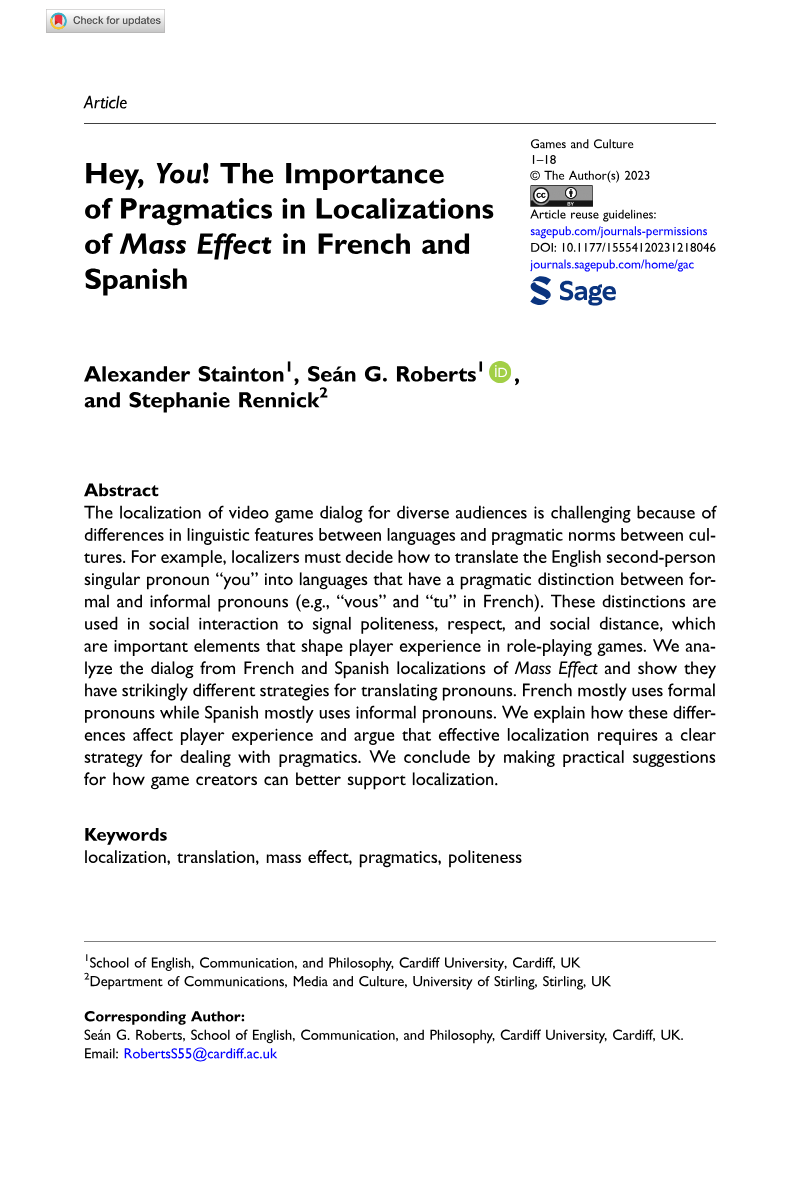
Article
You! The Importance of Pragmatics in Localizations of Mass Effect in French and Spanish
Games and Culture · 2023
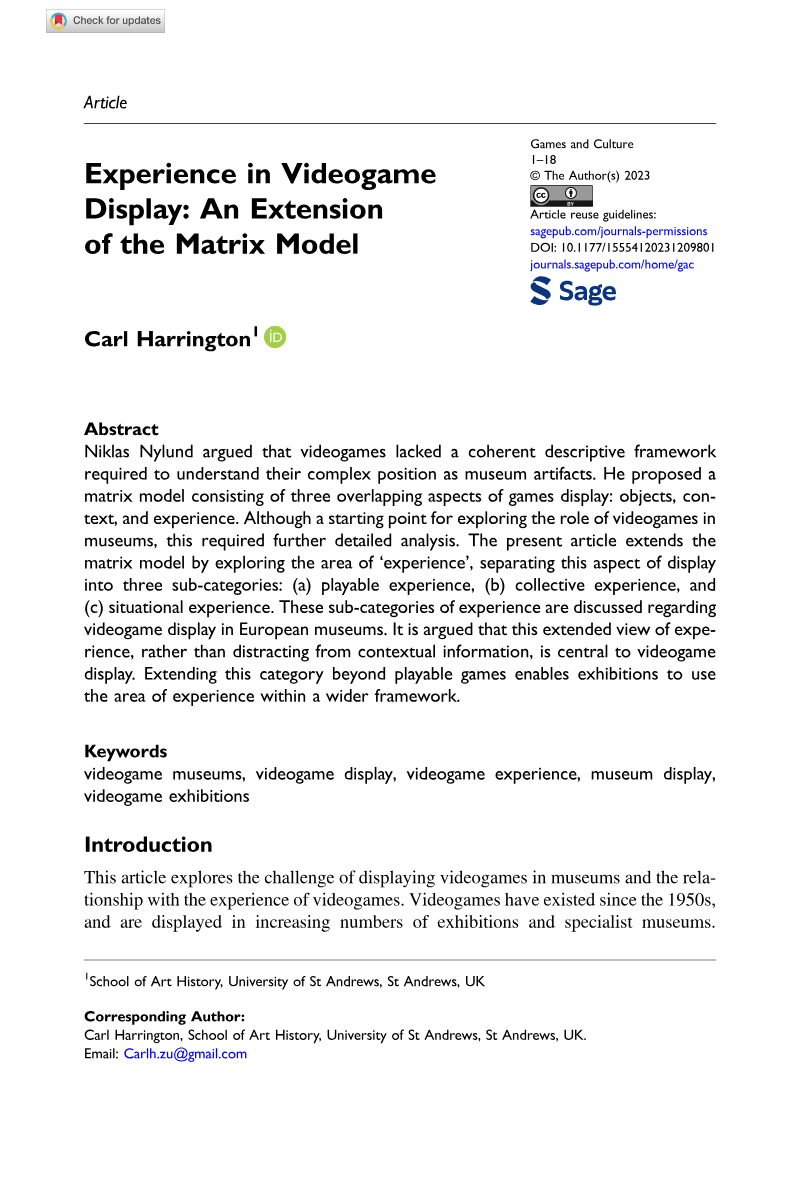
Article
Display: An Extension of the Matrix Model
Games and Culture · 2023
Article
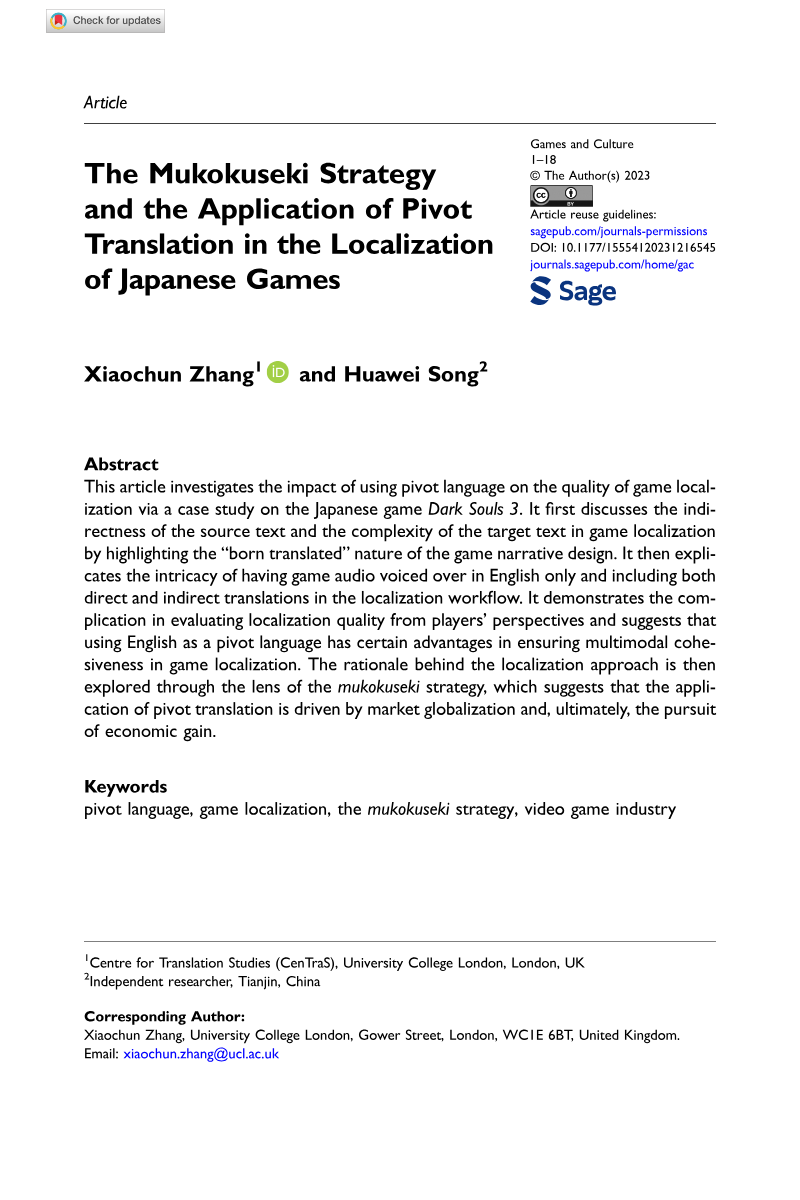
The Mukokuseki Strategy and the Application of Pivot Translation in the Localization of Japanese Games
Games and Culture · 2023
Whitepaper
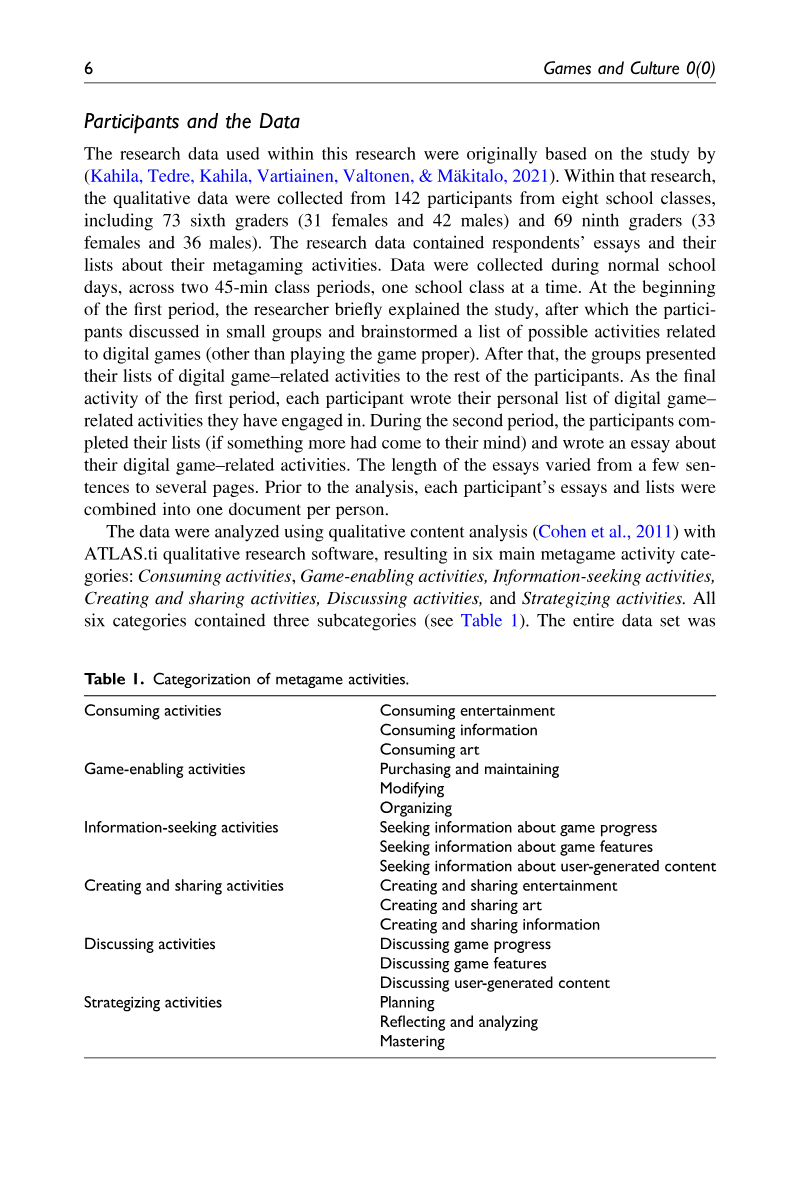
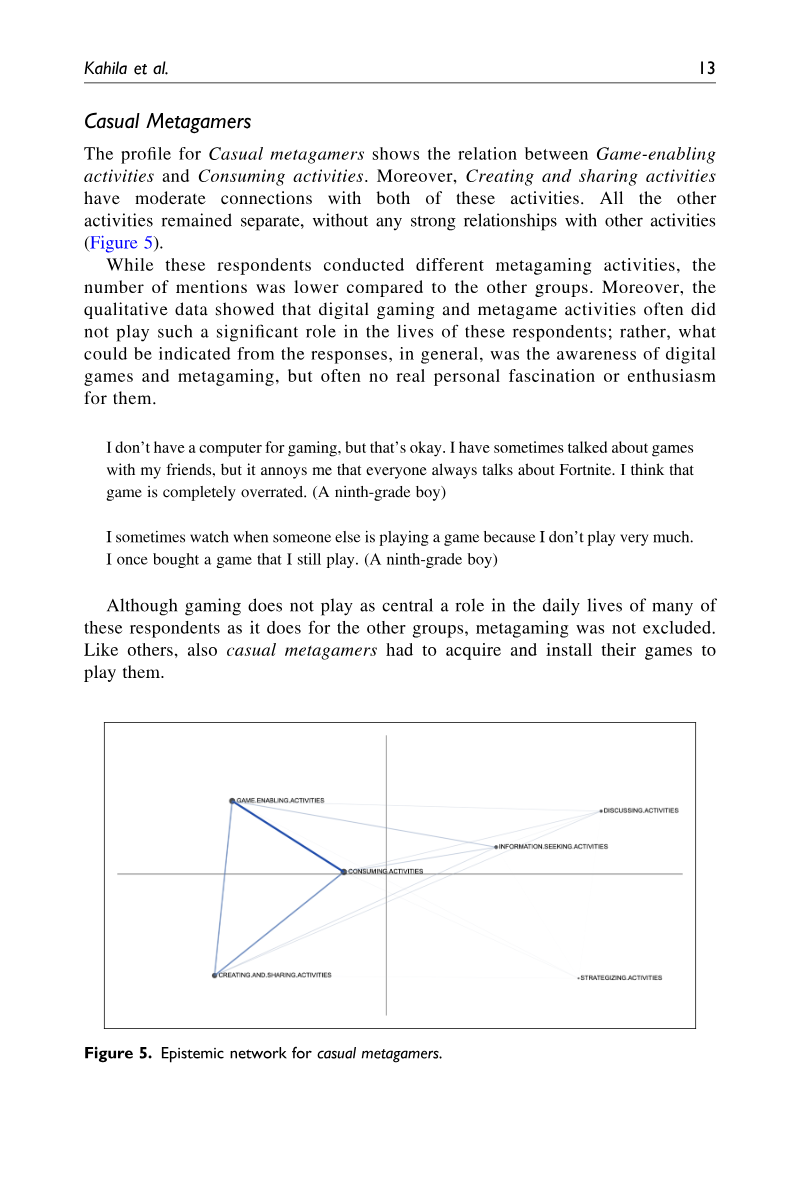
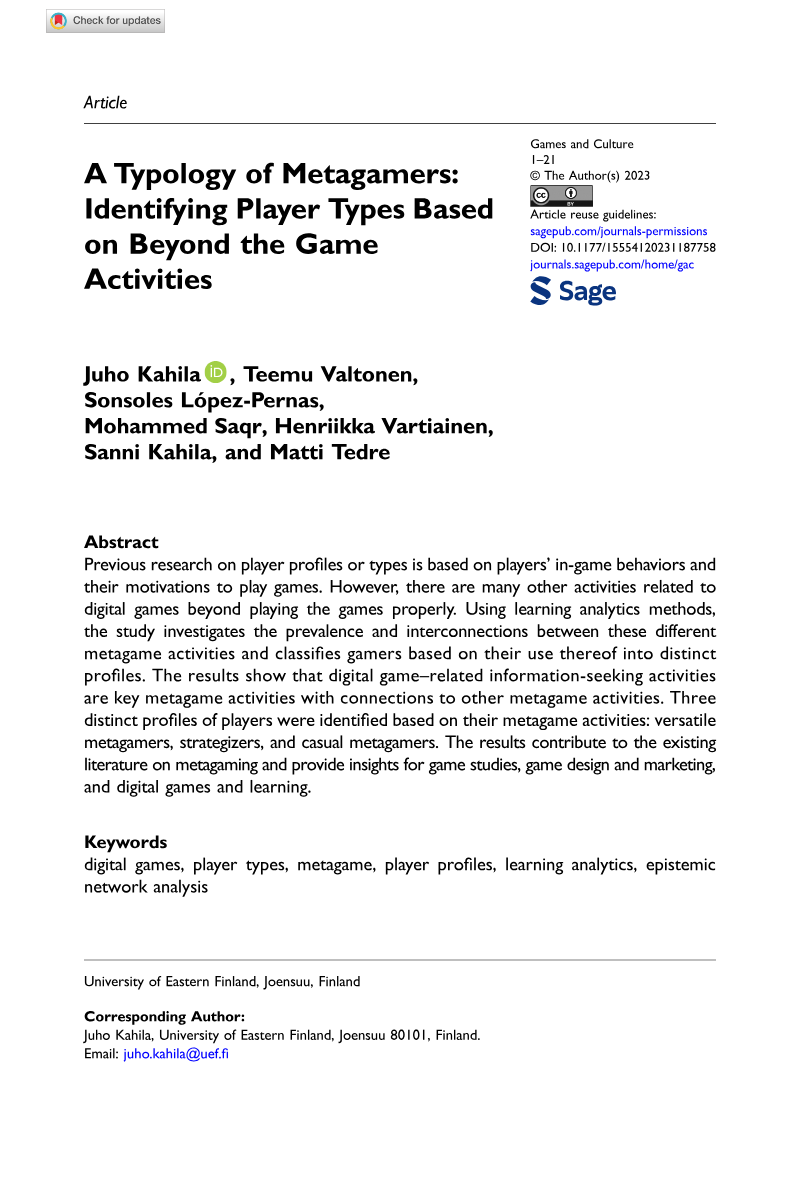
Identifying Player Types Based on Beyond the Game Activities
Games and Culture · 2023
Article
Aesthetics of Agency and the Rhythm of Gameplay
Games and Culture · 2023