1 free read left. Create a free account for unlimited reading + AI research.
Create free accountWhitepaper International Journal of Serious Games
1 free read left. Create a free account for unlimited reading + AI research.
Create free accountWhitepaperInternational Journal of Serious Games
This structured approach integrates non-digital, human-centered escape rooms into higher education curricula.
Structured design. The escapED framework provides a clear, six-step guide for creating educational escape rooms.
The escapED framework establishes a structured methodology for integrating non-digital, human-centered escape rooms into higher education curricula. By shifting the focus of game-based learning away from purely technological solutions, this approach emphasizes the development of essential soft skills, including leadership, communication, and collaborative problem-solving. The core thesis posits that physical, team-based interactive environments provide a more inclusive and engaging pedagogical alternative to traditional digital tools, effectively fostering student motivation through immersive, narrative-driven experiences.
To facilitate the implementation of these games, a six-step framework—comprising participants, objectives, theme, puzzles, equipment, and evaluation—provides a comprehensive guide for educators. Practical application of these guidelines, such as the development of portable, suitcase-based prototypes for undergraduate research training, confirms that the framework is adaptable and capable of producing self-contained, high-impact learning experiences. Even when design processes deviate from the suggested sequence, the underlying structure remains effective in supporting the creation of cohesive educational content.
The efficacy of these interactive environments is supported by psychological research, specifically the Balanced Measure of Psychological Needs scale, which serves as a critical tool for assessing participant motivation. Pilot studies involving university staff and students consistently yield positive feedback, characterizing these experiences as both innovative and educationally rigorous. By prioritizing physical interaction and team dynamics, this framework offers a scalable model for enhancing student engagement across diverse academic disciplines, proving that low-tech, high-interaction games are a viable and necessary component of modern pedagogical strategy.
International Journal of Serious Games · 2023
European Conference on Games Based Learning (ECGBL) · 2022
International Journal of Serious Games · 2022
International Journal of Serious Games · 2020
International Journal of Serious Games · 2020
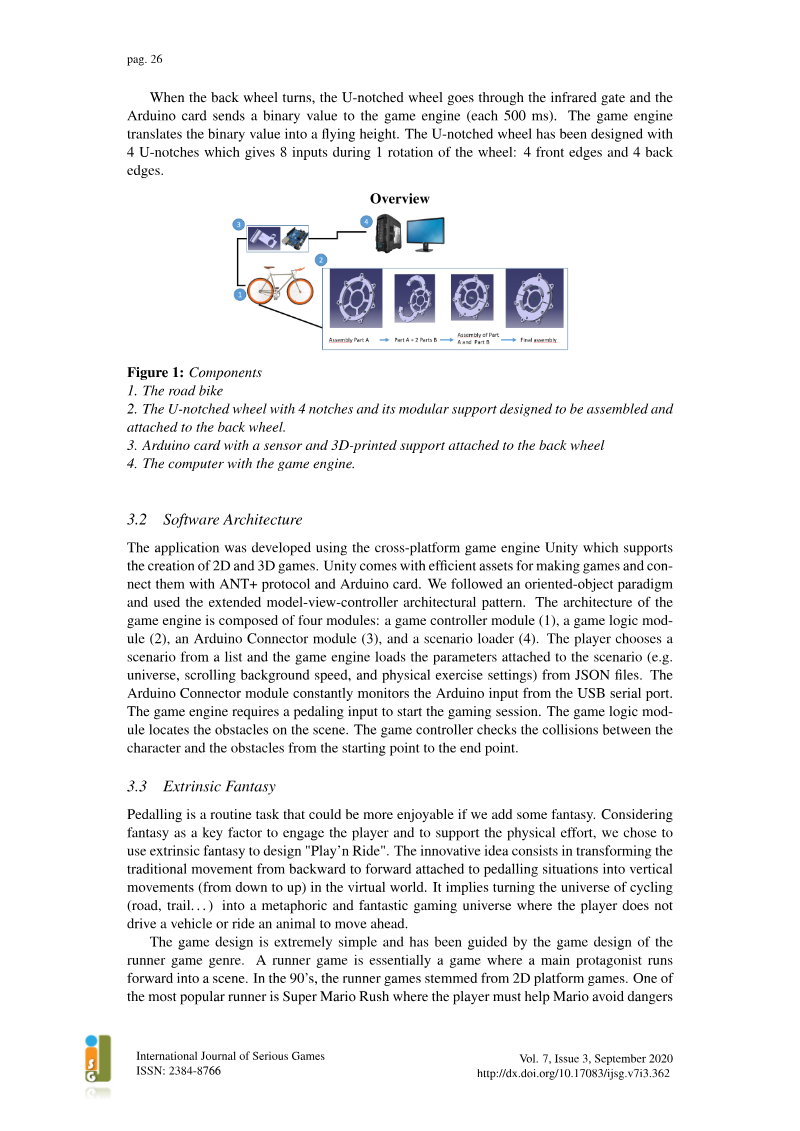
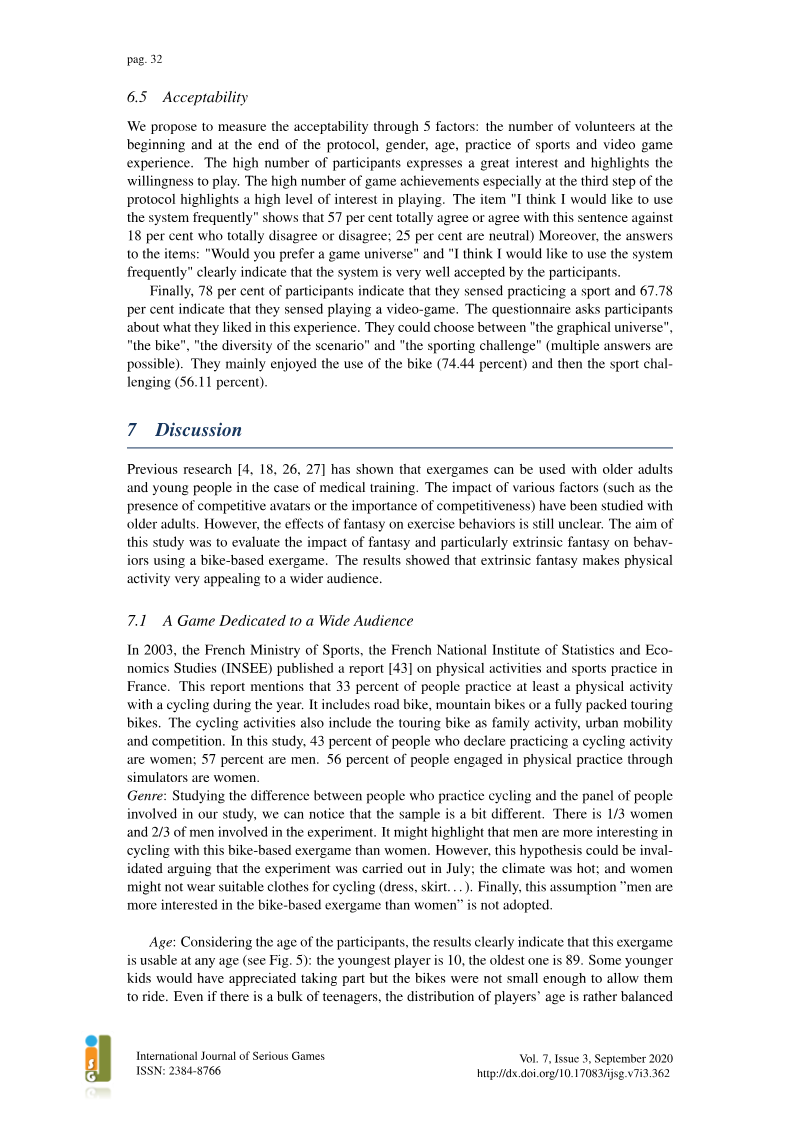
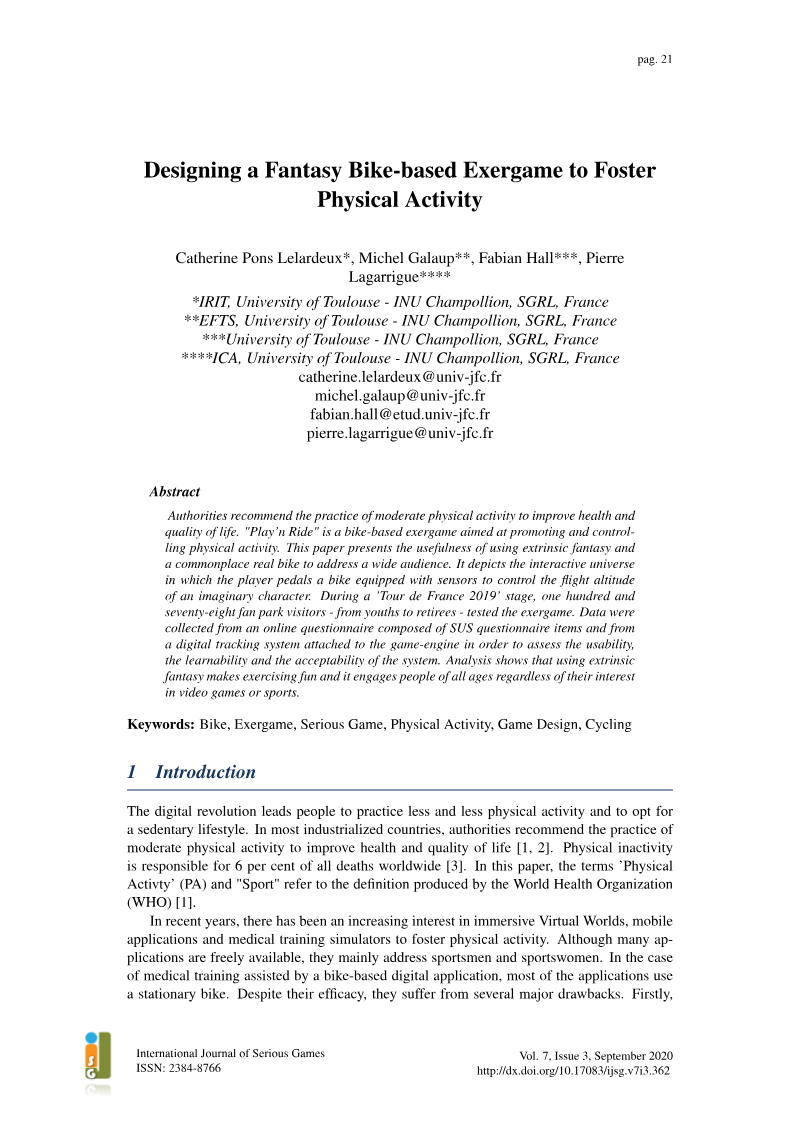
International Journal of Serious Games · 2020
International Journal of Serious Games · 2020
International Journal of Serious Games · 2020
International Journal of Serious Games · 2020


International Journal of Serious Games · 2020
International Journal of Serious Games · 2020

International Journal of Serious Games · 2020
European Conference on Games Based Learning (ECGBL) · 2026