1 free read left. Create a free account for unlimited reading + AI research.
Create free accountWhitepaper DiGRA
1 free read left. Create a free account for unlimited reading + AI research.
Create free accountWhitepaperDiGRA
This paper develops an analytical framework for studying interaction in virtual worlds, using the 1999 massively multiplayer online game EverQuest as its primary case. Its central proposal is a terminology that is specific enough to describe concrete worlds yet general enough to compare across them. The author argues that virtual worlds involve four basic agents (players, NPCs and informative objects, manipulable objects, and world rules) and four basic interaction forms (navigation, manipulation, social interaction, and information retrieval). The framework is explicitly presented as a work in progress, with the in-depth empirical analysis reserved for later publication.
The paper situates its approach within existing debates on interactivity, noting that many scholars define the term too vaguely to serve as an analytical tool. It draws on Jens F. Jensen's three paradigms of interactivity (sociological, media and communication, and human-computer interaction) and on the ludology-narrative debate, arguing that virtual worlds contain elements from all of these paradigms at once. The author links the framework to Bartle's player typology and to two forms of immersion, spatial and temporal, and presents a grid mapping which agents can perform which interaction forms for which player types.
The stated purpose of the grid is to guide an interactional analysis of the EverQuest interface, examining which action forms the interface encourages and which dominate player experience as characters advance in level. Anecdotal observations, such as players grouping more at higher levels, are offered as hypotheses for that analysis rather than as findings. The paper also raises the question of how such interaction might produce "tellable" events in Marie-Laure Ryan's sense, suggesting that the framework could inform future design of emergent narratives in multiuser environments.
Each row is a game or company this document names, each column a document, oldest first. A mark means that document names it. Select a row to see those documents.
DiGRA · 2016
DiGRA · 2016
DiGRA · 2016
DiGRA · 2016

DiGRA · 2016
DiGRA · 2016
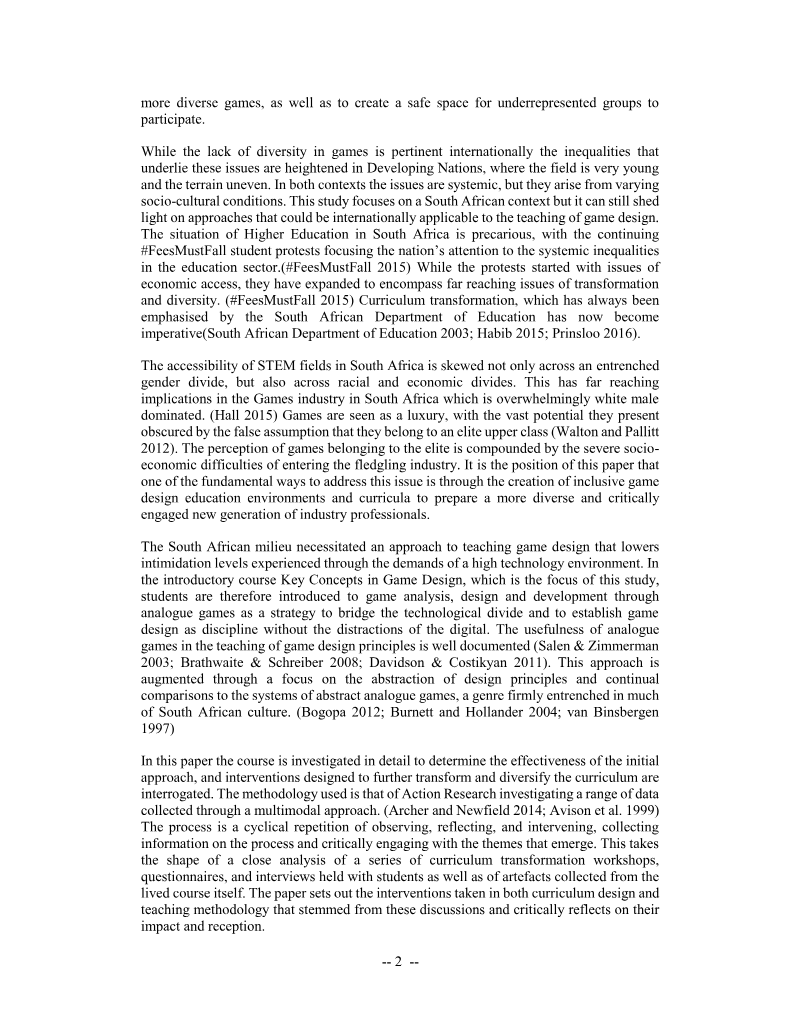
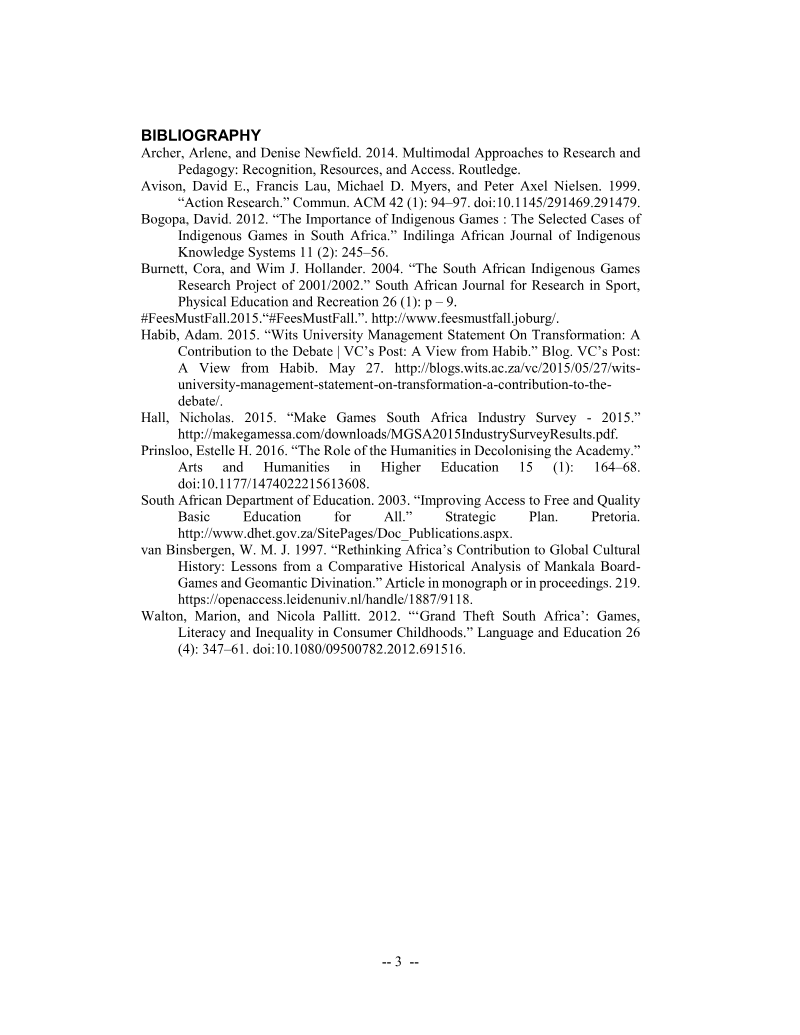
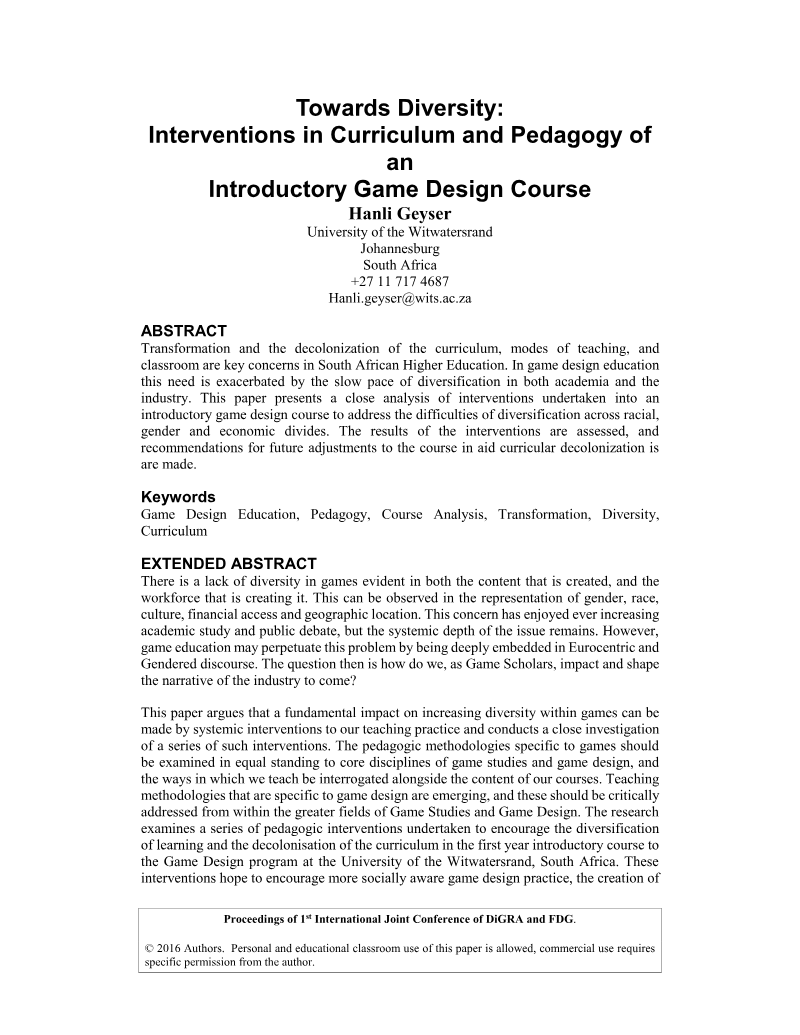
DiGRA · 2016
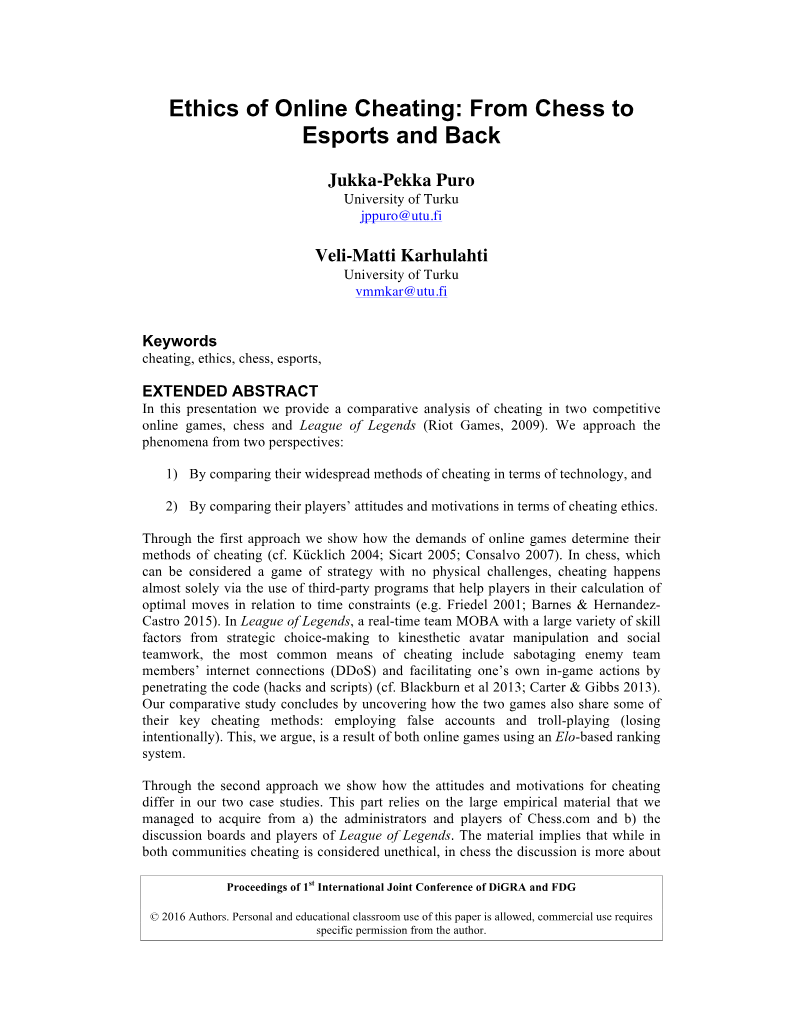
DiGRA · 2016
DiGRA · 2016
DiGRA · 2016
DiGRA · 2016

DiGRA · 2016
DiGRA · 2002