1 free read left. Create a free account for unlimited reading + AI research.
Create free accountWhitepaper DiGRA
1 free read left. Create a free account for unlimited reading + AI research.
Create free accountWhitepaperDiGRA
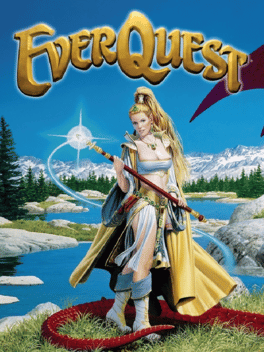
Eddo Stern's essay argues that magic and technology, though often treated as opposites, share a long historical bond that shapes the narratives of massively multiplayer online role-playing games. Tracing the genre from Dungeons & Dragons and early text adventures through Meridian 59, Ultima Online, EverQuest, and Asheron's Call, the essay situates these neomedieval fantasy worlds within the commercial and technical conditions that produced them. By late 2001, Ultima Online had roughly 250,000 subscribers and EverQuest between 400,000 and 700,000, figures that signal the scale of the phenomenon. Stern contends that the genre's dominant titles, controlled by a few large corporations, operate as indefinitely continuing services rather than finishable products, a structural shift that defers narrative resolution indefinitely.
The essay's central analysis distinguishes diegetic elements, such as backstory, non-player characters, and metaphorically "patched" artifacts, from extra-diegetic anomalies. Stern finds that backstories and NPCs are largely redundant to play, since players tend to ignore the former and treat the latter as dispensers of information, a pattern he presents as evidence that conventional narrative approaches fail for software-narrative hybrids. Designers, he argues, conceal technical delays and server processes through metaphors such as magical tunnels and the "camping" save system, preserving immersion while masking the underlying machinery.
Further sections examine how these worlds handle time, space, and language. Magic portals and teleportation spells establish a power hierarchy in which magic, technology, and power become functionally equivalent, while server downtime and geometry bugs disrupt players' sense of immersion and control. Stern shows that in-game vernacular, drawing on acronyms and borrowed military terms such as "Tank" and "Nuker," evolves through community practice beyond corporate censorship, making language the arena where players hold their most uncontested authority. The concluding analysis turns to macro software and third-party overlays such as Show EQ, which reveal a tension between first-person immersion and the god's-eye control of strategy games, and which players often frame as a David-versus-Goliath contest against corporate power.
DiGRA · 2016
DiGRA · 2002