1 free read left. Create a free account for unlimited reading + AI research.
Create free accountWhitepaper Board Game Studies Journal
1 free read left. Create a free account for unlimited reading + AI research.
Create free accountWhitepaperBoard Game Studies Journal
The study aims to combine archaeological finds, written sources, pictorial material, and commercial records into one critical account.
Ingram Braun's study examines the history of domino in Europe, a subject the author argues has never been systematically researched. Its central aim is to assemble and critically evaluate the scattered evidence for the game's early European development, combining archaeological finds, written sources, pictorial material, and commercial records into a single account. The work is published in the Board Game Studies Journal and is framed as a foundational contribution to a field that has relied largely on unsupported claims.
The study's principal findings concern origins and chronology. The oldest evidence for domino comes from China, though a claimed twelfth- to fourteenth-century set lacks verified archaeological provenance. In Europe, surviving archaeological pieces are rare, with the oldest known example a limestone piece from Einbeck dated to around 1500, followed by bone pieces from the Mary Rose (1545) and Southampton, whose dating remains disputed. Written references appear from around 1760 in France and Germany, where French sources describe an upper-class competitive pastime and German sources initially treat it as a children's game. The first European printed rules date to 1786 in France, and the author challenges the popular claim of an Italian origin, finding no Italian source before 1825.
The study also addresses material culture and etymology. Early sets were often made of bone or ivory, sometimes with blackened wooden backs, and were produced commercially in centres such as Mèru in France, as well as in English prisoner-of-war workshops during the Napoleonic era. Standard European sets of twenty-eight tiles coexisted with larger configurations. The author argues that the name derives from "dominoterie," the trade in marbled and devotional papers, rather than from priests' garments, while acknowledging that the evidence base is too sparse to be fully representative and cautioning against uncritically trusting some printed sources. The work's scope is primarily German, French, English, and Iberian-Italian, covering roughly the 1500s through the mid-nineteenth century, and it concludes with an extensive multilingual bibliography.
Board Game Studies Journal · 2025
Board Game Studies Journal · 2025
Board Game Studies Journal · 2025
Board Game Studies Journal · 2025
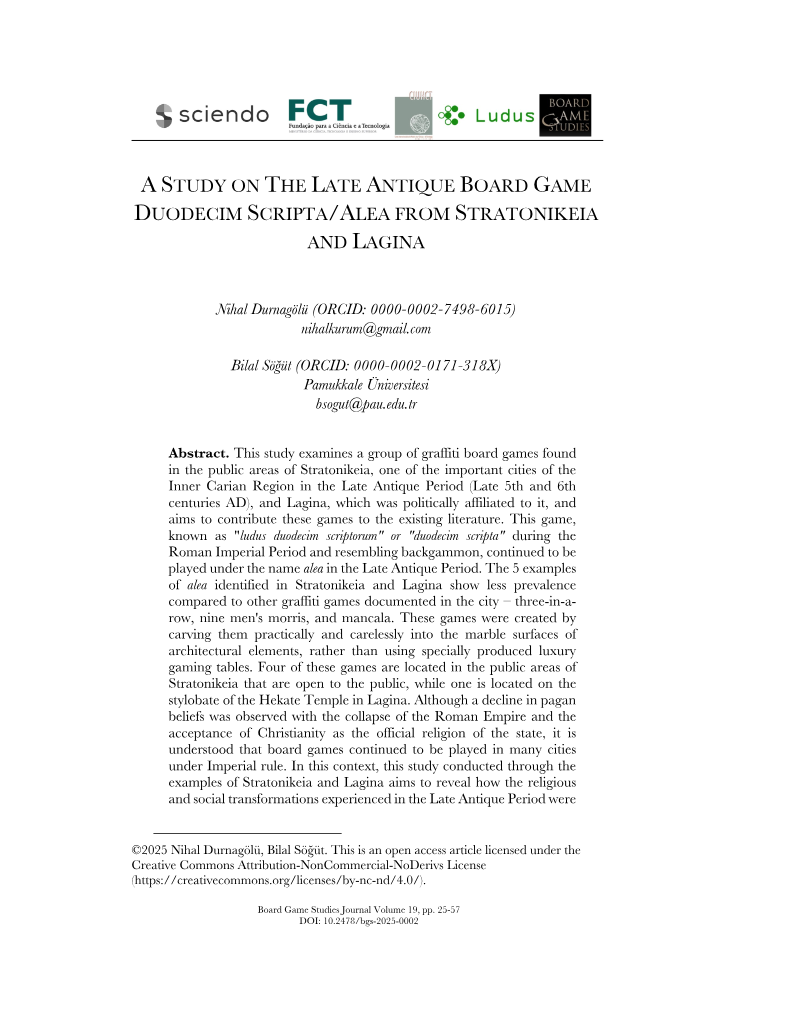
Board Game Studies Journal · 2025
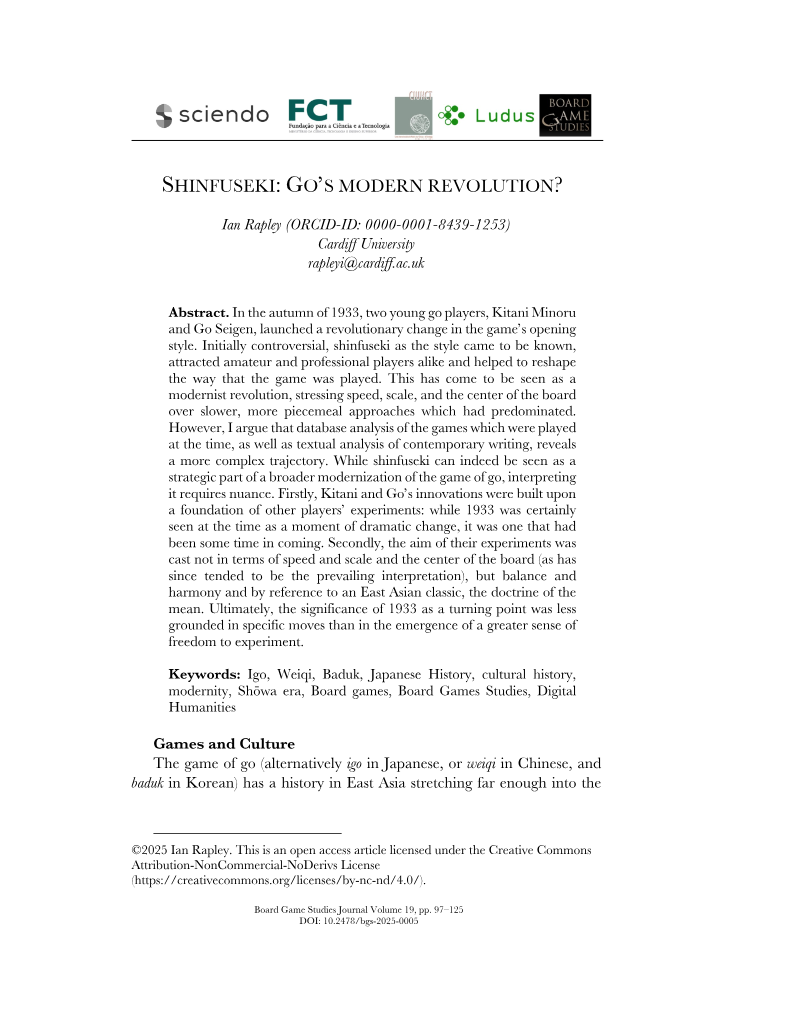
Board Game Studies Journal · 2025
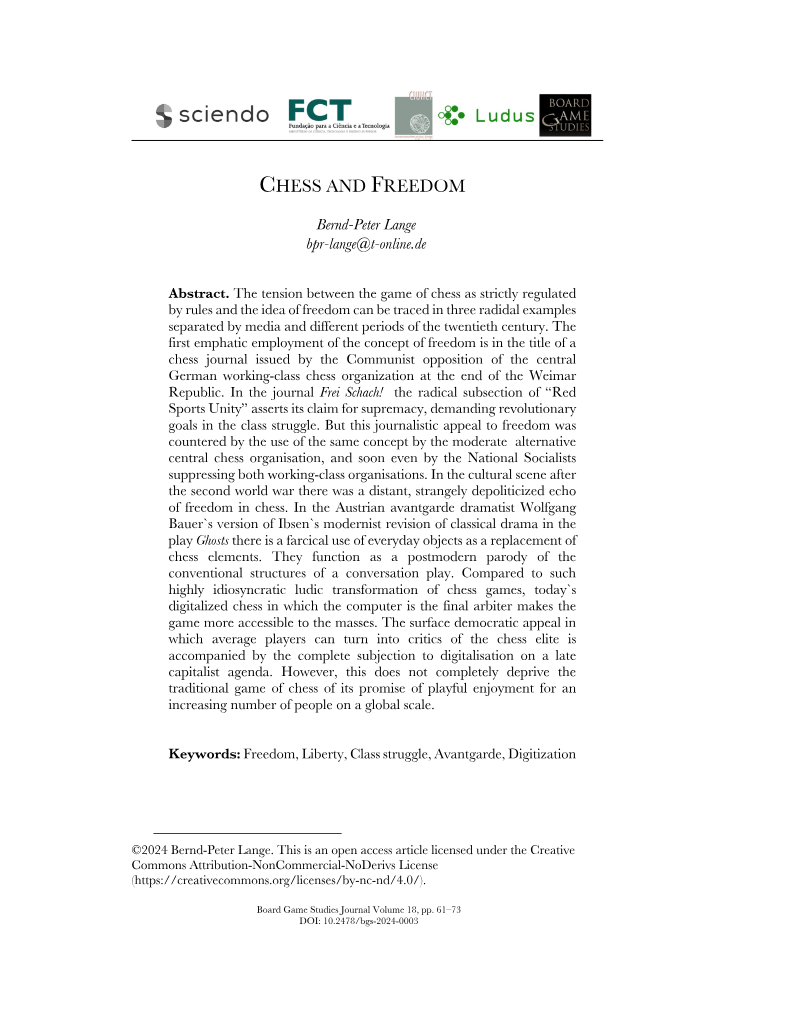
Board Game Studies Journal · 2024
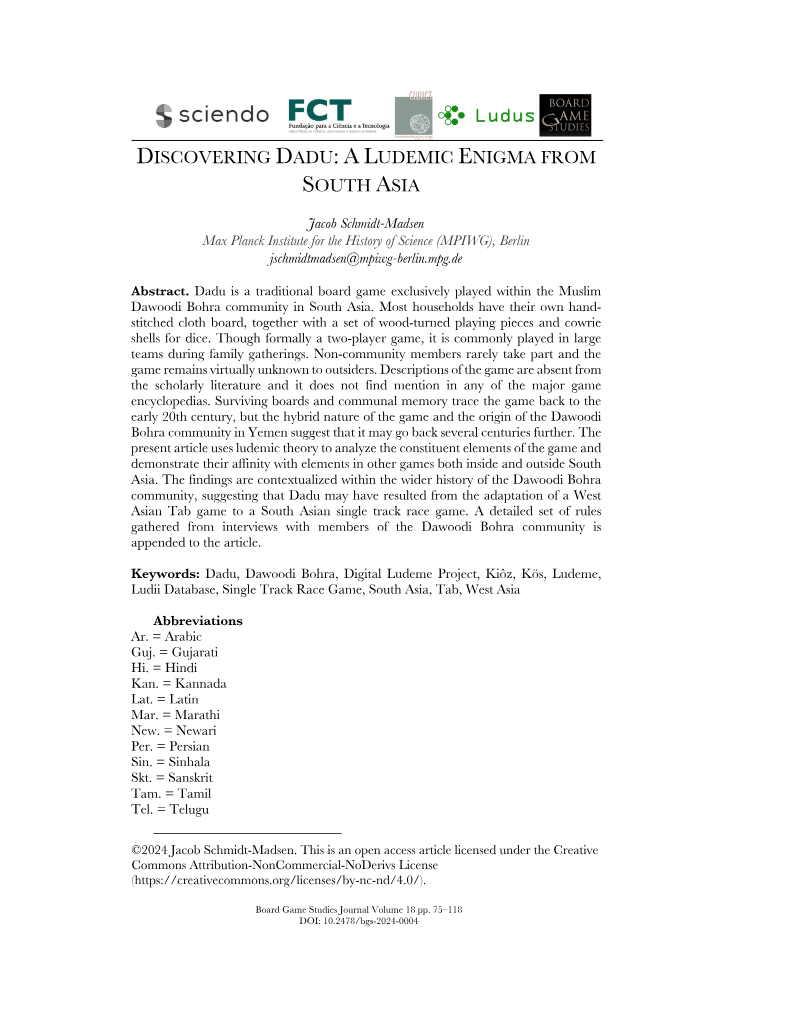
Board Game Studies Journal · 2024
Board Game Studies Journal · 2024
Board Game Studies Journal · 2024
Board Game Studies Journal · 2024
Board Game Studies Journal · 2023
Board Game Studies Journal · 2022



European Conference on Games Based Learning (ECGBL) · 2026



European Conference on Games Based Learning (ECGBL) · 2026