1 free read left. Create a free account for unlimited reading + AI research.
Create free accountArticle gamevironments
1 free read left. Create a free account for unlimited reading + AI research.
Create free accountArticlegamevironments
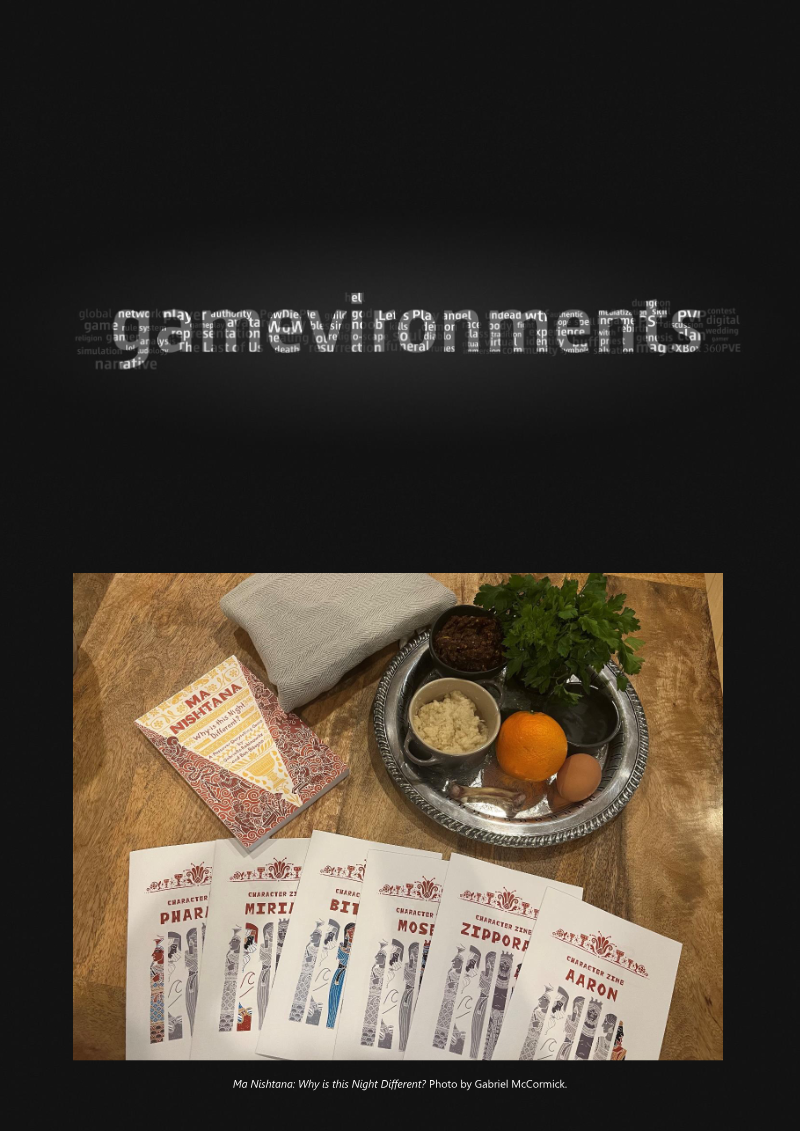
The 2023 special issue argues that a game can be authentically Jewish or ethically meaningful beyond surface content. It frames this as a corrective to stereotypes.
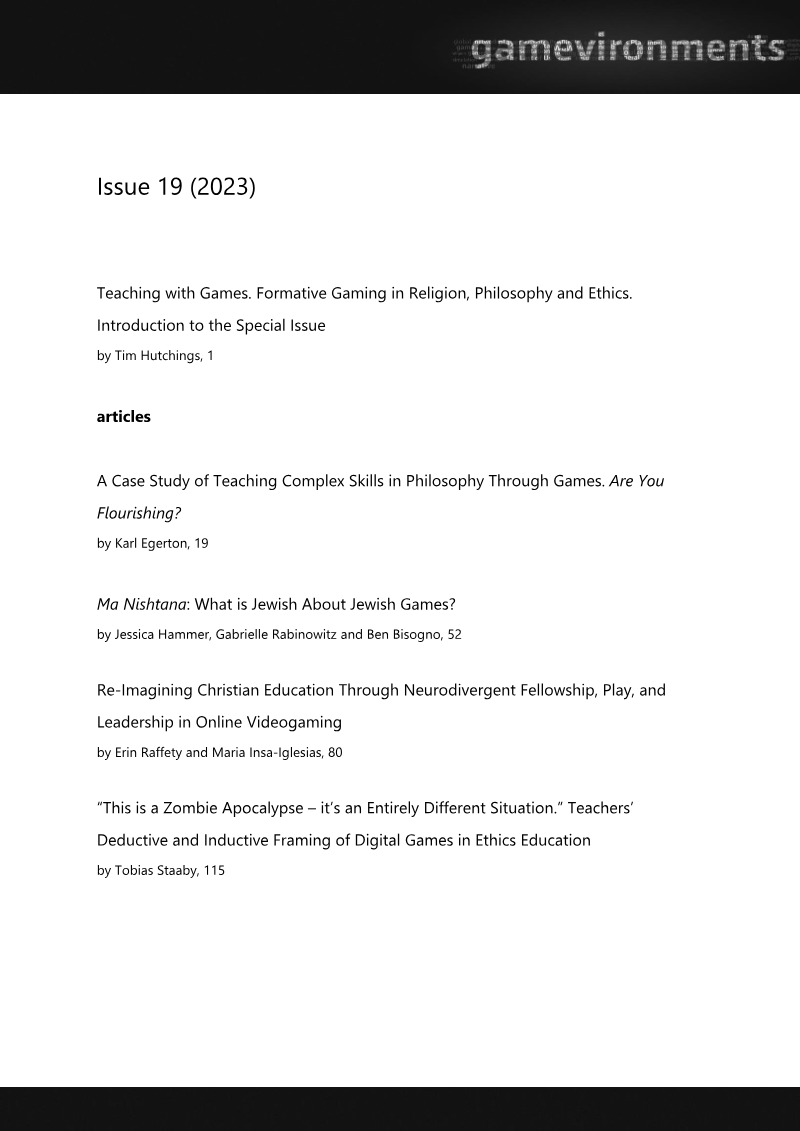
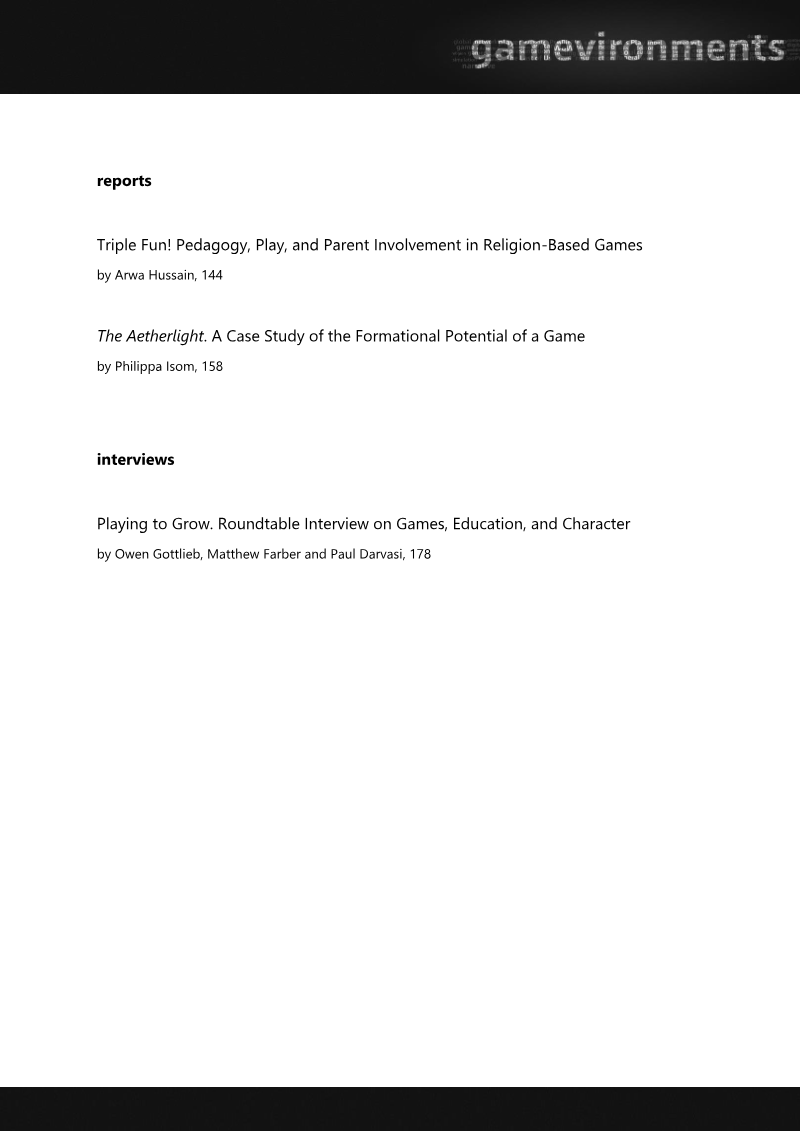
"Teaching with Games: Formative Gaming in Religion, Philosophy and Ethics," a 2023 special issue of Gamevironments edited by Tim Hutchings, examines how games can serve as pedagogical instruments for religious, philosophical, and ethical education. Its central thesis is that a game can be authentically Jewish, or religiously and ethically meaningful more broadly, not merely through surface-level content but through how its design engages the transmission of tradition via text, ritual, and culture. The issue frames this argument as a corrective to stereotypical representations of Jewish identity, such as the "bagels and bubbies" trope, which obscure Jewish diversity and reinforce Christian supersessionist assumptions.
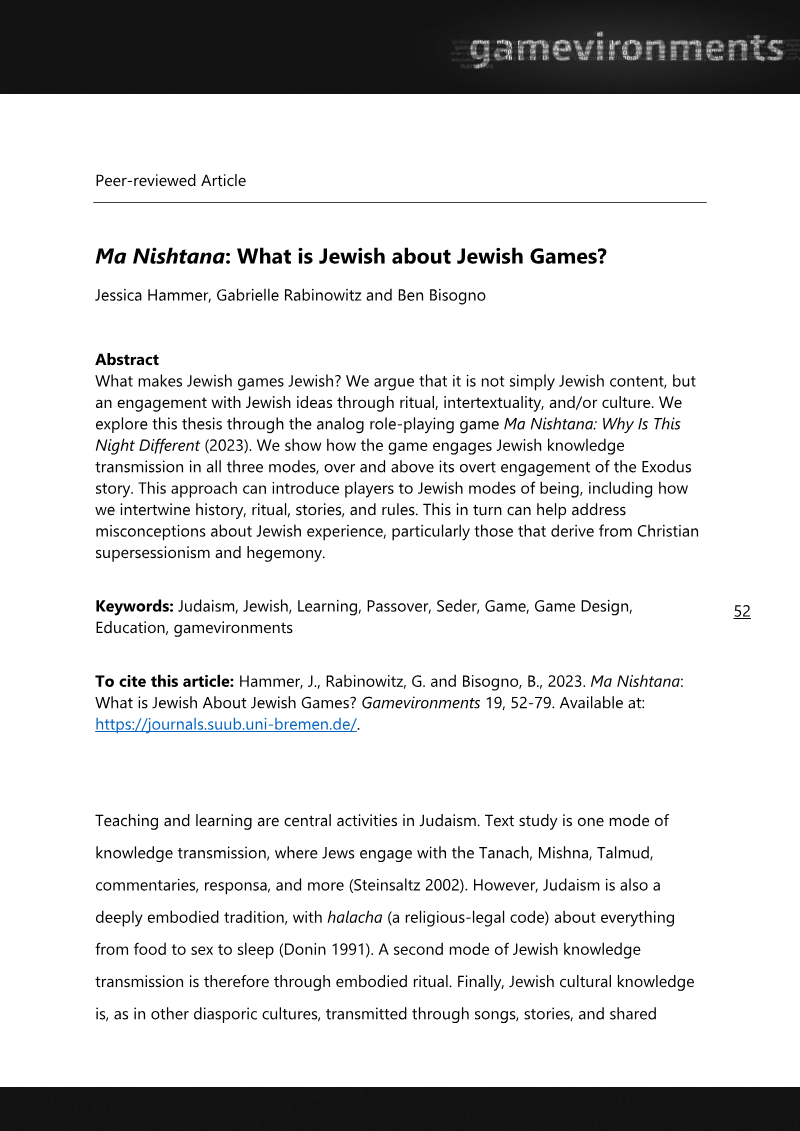
The featured analysis centers on Ma Nishtana, an analog role-playing game structured around the Passover Seder. Its authors argue that the Seder's embodied, transformative, and interpretive principles correspond closely with role-playing mechanics, and that the game adapts ritual respectfully for both Jewish and non-Jewish players. Its design draws on the Jewish interpretive traditions of parshanut, bibliodrama, and midrash, expressed through features such as character-based intertextual reinterpretation, imperfect heroes, a humanized portrayal of Pharaoh, and recognition of non-Jewish righteousness through the Noachide laws. Mechanics such as the "WAIT WAIT WAIT!" move and a post-play reflection ritual modeled on the Four Questions are presented as tools for constructivist and reflective learning.
The issue's conclusions emphasize that the game's Jewishness resides in its design rather than solely in its content, a claim that allows the approach to transfer to other traditions and settings. Its theoretical grounding draws on game studies frameworks, including Fernández-Vara's rules/play/culture model, and on learning science, such as the ICAP framework, which together position active, empathetic engagement as superior to passive knowledge transmission.



gamevironments · 2026



gamevironments · 2026



gamevironments · 2026

gamevironments · 2026



gamevironments · 2026



gamevironments · 2025

gamevironments · 2025



gamevironments · 2025



gamevironments · 2025

gamevironments · 2025

gamevironments · 2025
gamevironments · 2025












Comments