1 free read left. Create a free account for unlimited reading + AI research.
Create free accountArticle gamevironments
1 free read left. Create a free account for unlimited reading + AI research.
Create free accountArticlegamevironments

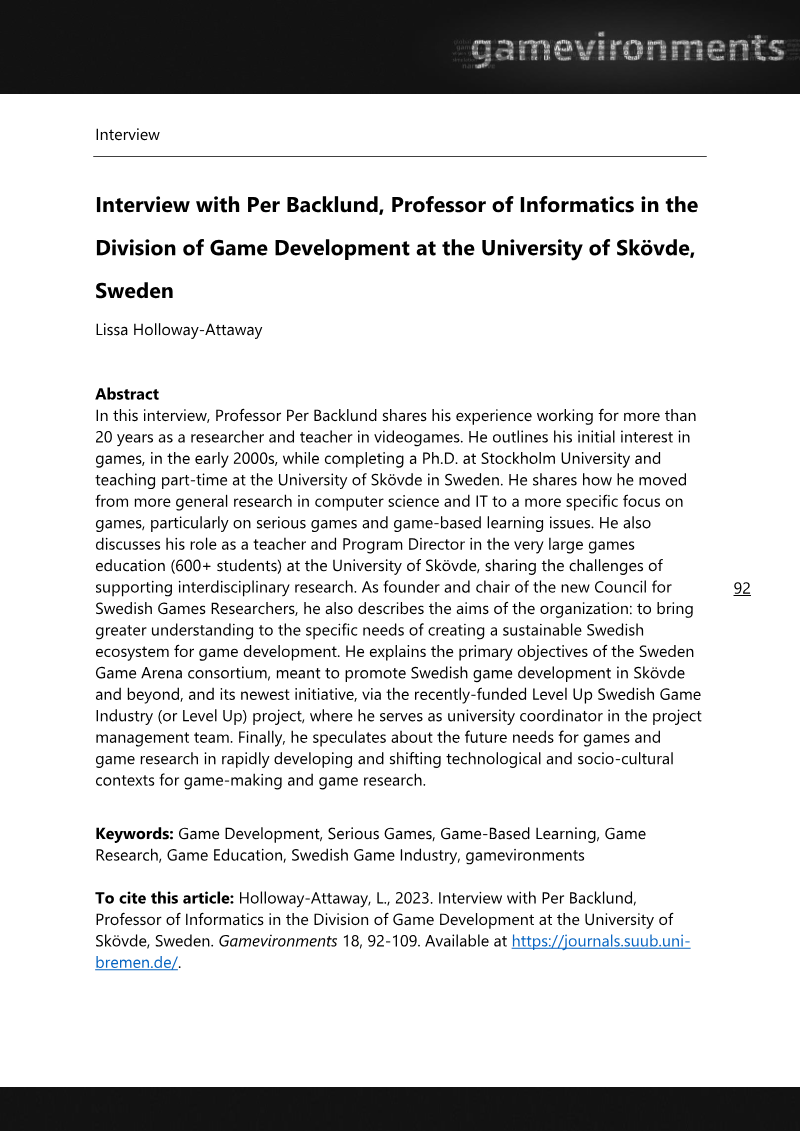
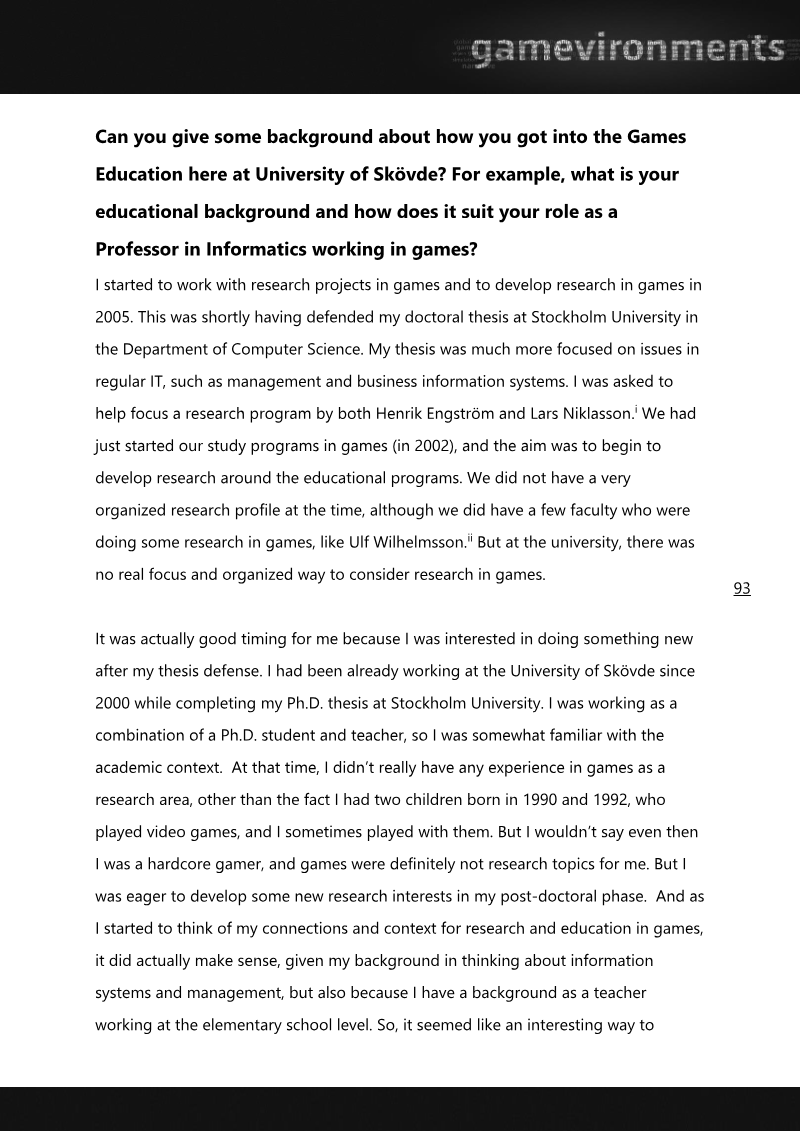
The University of Skövde shifted its research from IT and management toward serious games around 2005. It launched what is believed to be the first serious games master's program in Europe in 2008.
Professor Per Backlund of the University of Skövde traces the development of game-based learning and serious games at his institution, along with the growth of Skövde's game development ecosystem in Sweden. His account centers on how a small university built a focused profile in games research and education, and how regional collaboration helped turn a modest local base into a recognized national hub. The interview documents a shift from IT and management research toward serious games beginning around 2005, and notes that Skövde launched what is believed to be the first serious games master's program in Europe in 2008, with a games education program now exceeding 600 students.
The ecosystem he describes grew from essentially no studios in 2002 to roughly 20 to 30 by the time of the interview, most of them small teams of 10 to 40 people, many founded or staffed by University of Skövde graduates. Backlund credits the Sweden Game Arena consortium, formed with regional, university, science park, and municipal partners, and the Sweden Game Conference, which grew from a small event in 2010 to more than 900 attendees at a sports-arena venue from 2016 onward. The Level Up project, running from 2023 to 2026, extends these efforts to a national scale.
On the research side, Backlund describes the founding of the Council of Swedish Games Researchers, which had about 50 members at the time of the interview. Its stated aims include mapping game research scattered across Swedish departments and advocating for games to be funded as a primary research area rather than as a secondary addition to broader funding calls. He also identifies future priorities, most notably studying how technologies such as AI reshape organizations and job roles, and he calls for stronger integration of academic perspectives into industry-focused events. The material is largely narrative and attributional, with the project's funding and partner organizations, including the European Regional Development Fund, Västra Götalandsregionen, Skövde Municipality, Lindholmen Science Park, Science Park Skövde, the University of Skövde, and RISE, operating under the Sweden Game Arena brand.



gamevironments · 2026



gamevironments · 2026



gamevironments · 2026

gamevironments · 2026



gamevironments · 2026



gamevironments · 2025

gamevironments · 2025



gamevironments · 2025



gamevironments · 2025



gamevironments · 2025

gamevironments · 2025

gamevironments · 2025

Modern Times Group · 2026




Comments