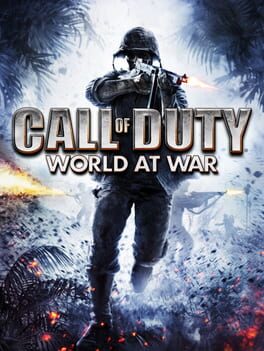
Call of Duty: World at War
GameBy Treyarch · Released Nov 2008
Call of Duty: World at War immerses players into the most gritty and chaotic WWII combat ever experienced. Players band together to survive the most harrowing and climactic battles that led to the demise of the Axis powers on the European and Pacific fronts.
Connections
Each row is a game or company named alongside Call of Duty: World at War, each column a document, oldest first. A mark means that document names it. Select a row to see those documents.
About the game
- Released
- Nov 2008
- Developer
- Treyarch
- Publisher
- Activision
- Genres
- Shooter, Adventure
- Platforms
- PlayStation 3, PC (Microsoft Windows), Xbox 360
Game data from IGDB.com
Documents about Call of Duty: World at War

Fixing Call of Duty: Inside Activision’s Modern Warfare 4 comeback plan
Activision is fundamentally restructuring its approach to the Call of Duty franchise in response to declining player engagement and a 50 percent drop in European launch sales for recent titles.
- Activision is restructuring the Call of Duty franchise to address declining player engagement and a 50 percent drop in European launch sales for recent titles.
- The strategy for Modern Warfare 4 prioritizes long-term brand health over immediate sales by shifting to a grounded, cinematic experience and reintroducing popular modes like DMZ.
- The U.S. gaming hardware market has reached its lowest August sales levels since 2013, with all major console manufacturers reporting double-digit declines.
Digital Historicism: Archival Footage, Digital Interface, and Historiographic Effects in Call of Duty: World at War
Jaimie Baron's analysis examines how Call of Duty: World at War deploys embedded archival World War II footage to generate what she calls an "archive effect," lending its cut-scenes a powerful sense of historical authenticity.
- Jaimie Baron argues that Call of Duty: World at War uses embedded archival WWII footage to create an 'archive effect' of historical authenticity, but tightly controls that footage through editing, animated graphics, and voiceover.
- The game presents history as linear and teleological, with player interactivity unable to alter the outcome, which Baron contends reinforces a conservative historiographic model under the banner of 'digital historicism.'
- Baron contrasts the game's rapid, militaristic cut-scene rhythm, which forecloses reflection and implicitly legitimizes player violence, with the Labyrinth Project's Tracing the Decay of Fiction, which uses untimed, reflective interactivity, chance, and layered archives to present history as multiple and unstable.
Companies behind it

As the documents state it.