1 free read left. Create a free account for unlimited reading + AI research.
Create free accountWhitepaper DiGRA
1 free read left. Create a free account for unlimited reading + AI research.
Create free accountWhitepaperDiGRA
The paper argues that loop structures shape how players experience agency and story progression. It notes that prior work on this has been largely theoretical.
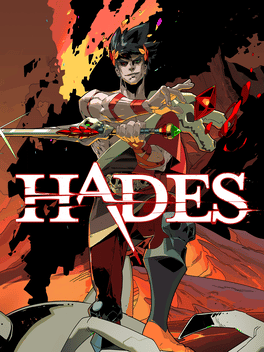
This study examines how loop structures shape narrative time and player agency in two narrative-driven games with contrasting time treatments: Hades, a roguelike that offers unlimited time within each death-and-restart cycle, and Twelve Minutes, a time loop mystery that imposes a strict twelve-minute limit before each reset. Its central argument is that looping mechanics function not only as gameplay systems but also as narrative devices that influence how players experience agency and story progression. The paper positions its contribution against prior work that has largely been theoretical, noting a shortage of empirical attention to how players actually perceive agency in choice-driven narrative games.
The empirical component consists of a qualitative study involving ten participants aged 18 to 30, who were regular gamers with no prior experience of either title. Each participant played for ninety minutes and then took part in semi-structured interviews, with a balanced gender distribution and room for follow-up questions. The sample is small, and the authors acknowledge this, framing the results as exploratory rather than generalizable.
The findings indicate that narrative time significantly shapes decision-making and engagement. Twelve Minutes players generally felt they could meaningfully influence the story and exercise agency, while Hades players reported the reverse. Imposed time pressure in Twelve Minutes produced more rushed decisions than the open-ended structure of Hades. Participants' perceptions of playtime were unaffected by the presence of a loop mechanic, and over half reported little emotional connection to either game, a result the study treats as unexpected. The authors caution that differences observed may reflect broader distinctions between the two games rather than time structure alone, and they call for further research across a wider range of titles and contexts.
Each row is a game or company this document names, each column a document, oldest first. A mark means that document names it. Select a row to see those documents.

DiGRA · 2026

DiGRA · 2026



DiGRA · 2026



DiGRA · 2026



DiGRA · 2026



DiGRA · 2026



DiGRA · 2026



DiGRA · 2026



DiGRA · 2026

DiGRA · 2026



DiGRA · 2026



DiGRA · 2026
DiGRA · 2023