1 free read left. Create a free account for unlimited reading + AI research.
Create free accountWhitepaper DiGRA
1 free read left. Create a free account for unlimited reading + AI research.
Create free accountWhitepaperDiGRA
The paper challenges the reliance on Clint Hocking's concept of ludonarrative dissonance. It argues this concept encourages a simplistic binary.
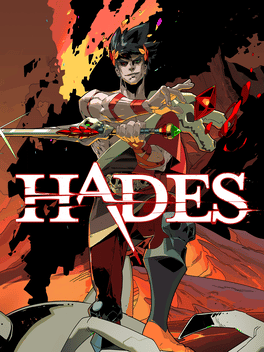
This paper examines the relationship between narrative and gameplay in SuperGiant Games' Hades (2020), arguing that the game achieves a powerful sense of ludonarrative harmony while keeping its narrative and gameplay experiences clearly distinct. It challenges the prevailing reliance on Clint Hocking's concept of ludonarrative dissonance, which the author contends encourages a simplistic binary and treats narrative and mechanics as separable rather than deeply entangled. Instead, the paper draws on Craig Lindley's distinction between "gameplay gestalt" and "narrative gestalt" to show how Hades integrates rapid action and reflective story moments into a unified experience.
The central argument is that Hades uses the permadeath mechanic of the roguelite genre as a narrative engine. Rather than resetting the world after each failed escape attempt, the game frames death as Zagreus' forced return to the house of Hades, allowing every run and every return to contribute to one continuous story of rebellion, bonding, and acceptance. The structure alternates between escape runs and "return home" scenes, with each part shaping how the other is experienced. The author proposes the concept of "enactive narrative focalization," which combines narrative framing with enactive theories of perception, suggesting that players interpret the game world through an implicit understanding of both story and movement dynamics even during fast-paced combat.
The analysis further connects the game's loop of repeated failure and renewed effort to the myth of Sisyphus. The paper examines the figure of Sisyphus as a side character and compares the game's portrayal of persistence and eventual contentment with the existential reading of the myth offered by Albert Camus. The work is primarily a qualitative, theoretical close reading of a single game, drawing on narratology, cognitive theory of perception, and existential philosophy rather than empirical data or survey methods.
Each row is a game or company this document names, each column a document, oldest first. A mark means that document names it. Select a row to see those documents.

DiGRA · 2026

DiGRA · 2026



DiGRA · 2026



DiGRA · 2026



DiGRA · 2026



DiGRA · 2026



DiGRA · 2026



DiGRA · 2026

DiGRA · 2026



DiGRA · 2026



DiGRA · 2026

DiGRA · 2026
DiGRA · 2026