1 free read left. Create a free account for unlimited reading + AI research.
Create free accountReportAESVI
Most firms in the Italian game development sector are newly established.
Early stage. 62% of Italian game development firms were established within the last three years.
The first census of Italian game developers, conducted by the ASK Center of Bocconi University on behalf of AESVI, provides a comprehensive analysis of the domestic video game production sector. The primary objective is to map the current state of the industry, identify key entrepreneurial challenges, and establish a foundation for policy recommendations to foster competitiveness. The research, based on a survey of 72 valid responses from industry practitioners, highlights a young, dynamic, and fragmented sector that is currently in an early stage of development compared to international benchmarks.
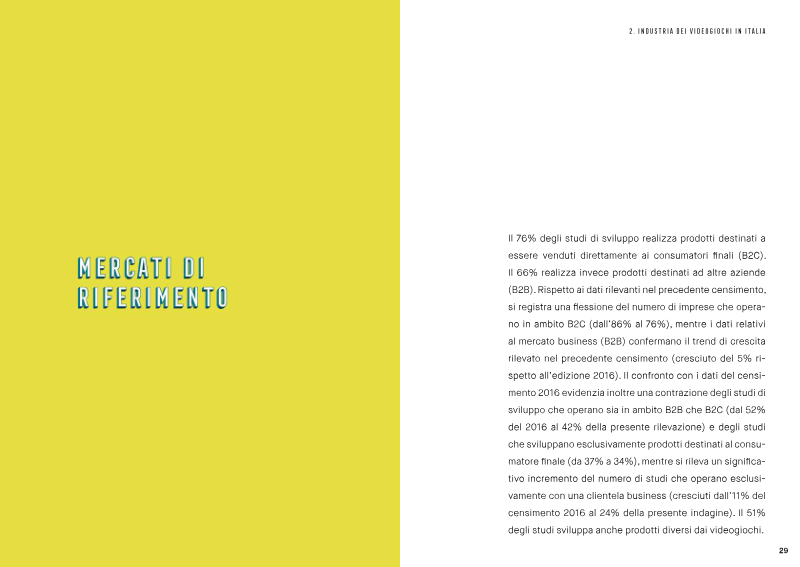
Key findings indicate that the industry is dominated by small-scale entities, with 52% operating as individual enterprises and 62% of all firms established within the last three years. The sector is characterized by a high reliance on self-financing (90%), which acts as a barrier to scaling operations. While the average annual turnover is estimated at 12–15 million euros, most companies remain small, with 37% employing only one or two people. To ensure financial sustainability, 65% of these developers diversify their revenue streams by offering B2B services, such as marketing, communication, and training software, alongside their consumer-facing game production.
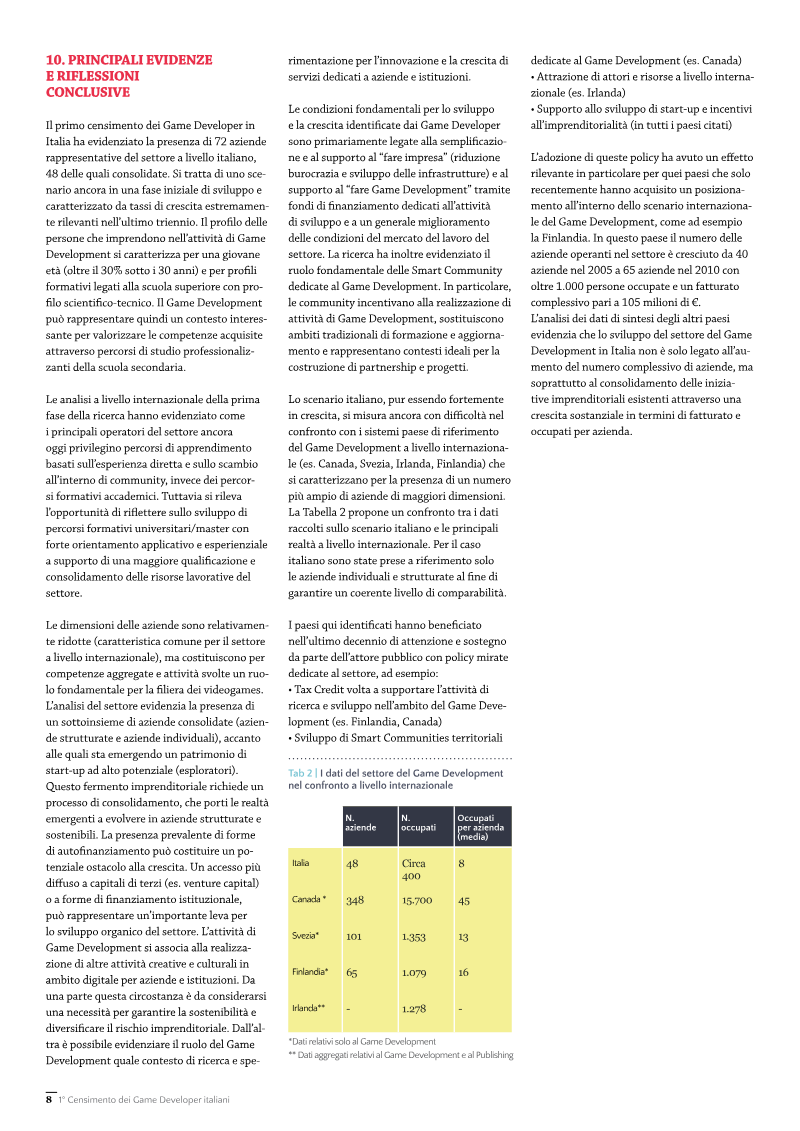
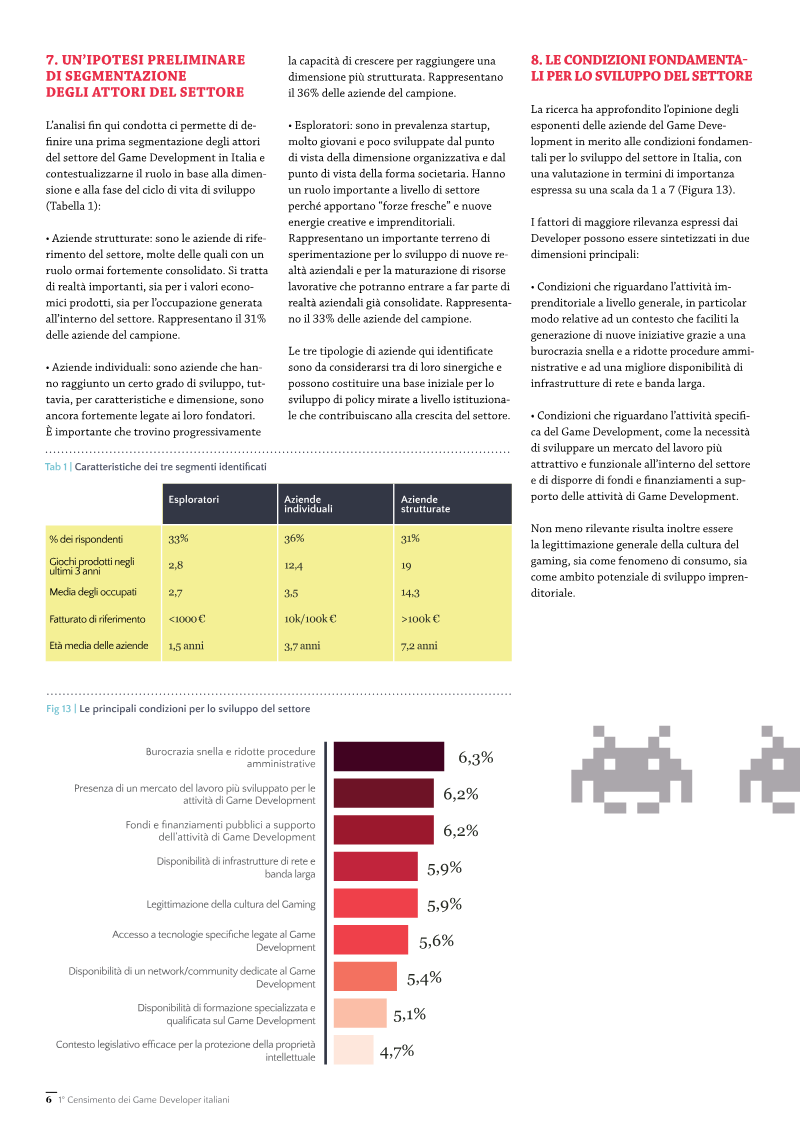
The study segments the industry into three distinct groups: structured companies, individual developers, and "explorers" (startups). The research concludes that the Italian sector lacks the institutional support—such as tax credits and dedicated public funding—that has successfully propelled growth in countries like Canada, Finland, and Sweden. To achieve international competitiveness, the report emphasizes the need for a more favorable regulatory environment, reduced bureaucracy, improved broadband infrastructure, and the development of specialized academic and professional training programs to bridge the gap between creative talent and market-ready business structures.
The Game Business · 2026









Comments