ArticleAppMagic
Building Your Product Strategy Based on Market Research
30 Apr 202014 pages~16 min full read
Key insights
6 slides
Core Principle
Align product strategy by matching genre selection with your studio's existing technical expertise, development velocity, and financial capacity…
Studios must mitigate business risk by matching their chosen genre and niche with their team’s existing expertise, development speed, and financial capacity for user acquisition.
Market Analysis
Identify viable market niches by analyzing cumulative revenue and download trends to find segments where new titles are…
A healthy market niche is characterized by a high share of revenue or downloads generated by new titles.
Competitive Markets
In highly competitive markets, prioritize success by adding innovative meta-gameplay to established core mechanics or by addressing specific…
In broad, highly competitive markets, success often stems from adding innovative meta-gameplay to established core mechanics, cloning underperforming titles to address specific user experience flaws, or leveraging significant capital to scale.
Development Pace
Evaluate the trade-off between rapid, iterative development for smaller projects and high-fidelity development, ensuring the chosen approach is…
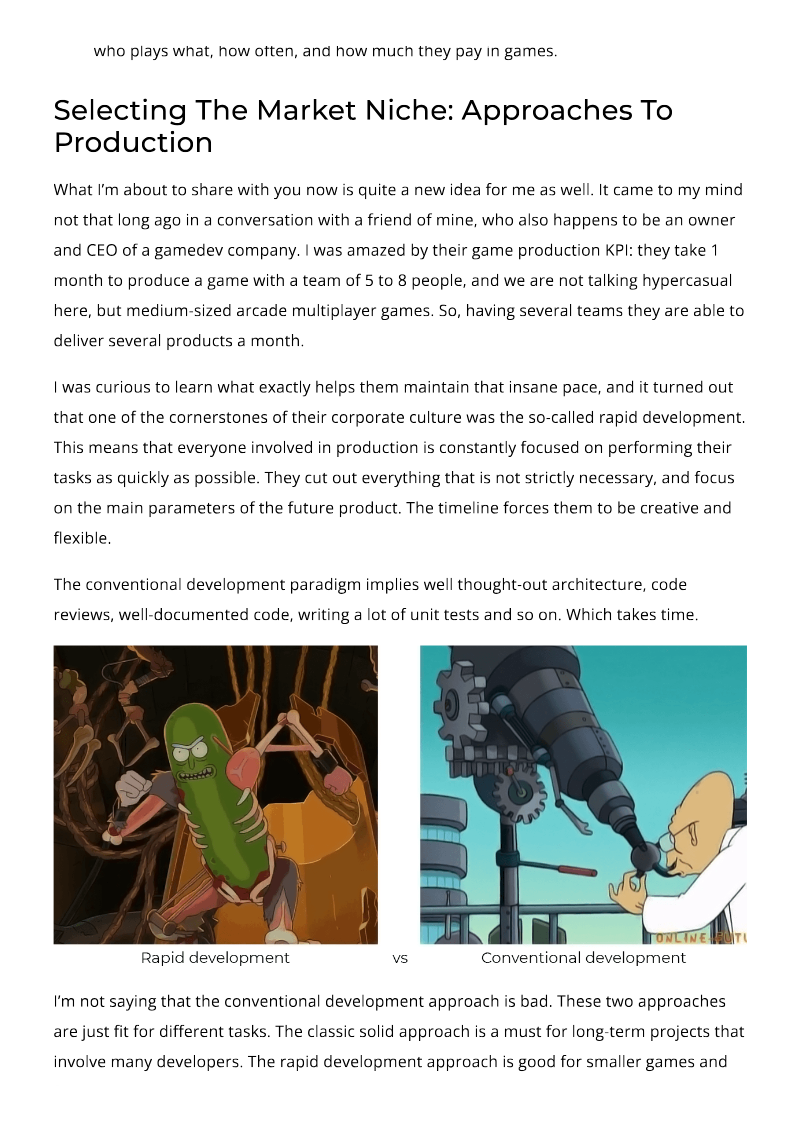
The choice between rapid development—prioritizing speed and iteration for smaller projects—and conventional, high-fidelity development must be consistent across all departments to ensure operational efficiency.
Cost Barriers
Genres with high lifetime value (LTV) typically demand prohibitive development and testing costs, creating significant barriers to entry…
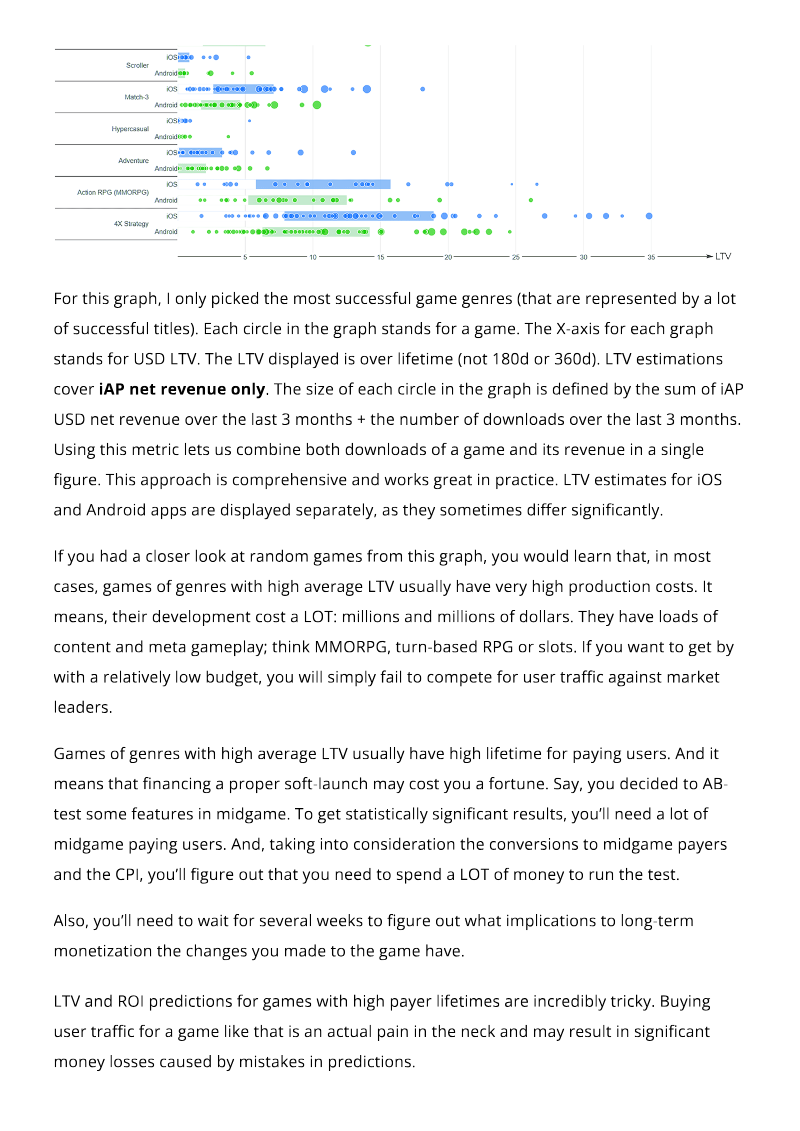
Data analysis reveals that genres with high lifetime value (LTV) often require prohibitive development and testing costs, making them difficult for smaller studios to enter compared to casual or hypercasual segments, which offer faster returns on investment.
Product Gaps
Use quantitative analysis of top-performing titles to identify product gaps, balancing creative innovation with proven market demand to…
By utilizing tools to track trending games and analyzing the top performers within a specific genre, developers can identify product gaps and formulate strategies that balance creative innovation with proven market demand.
1 / 6
Ask AI about this report