1 free read left. Create a free account for unlimited reading + AI research.
Create free account
Bridge Between Marketability Testing & $100m UA Spend: Go-to-market Strategy Optimised for Growth
Key insights
5 takeaways- 01Integrating continuous marketability testing from pre-production through global launch replaces siloed development with an iterative framework that de-risks projects and builds a library of high-performing creative assets.
- 02Independent data collection via web-based testing and simulated store pages mitigates the impact of platform privacy changes like IDFA, enabling more reliable cash flow projections.
- 03This methodology accelerates time-to-market by three to six months by allowing studios to optimize cost-per-install metrics and creative strategies before the game is fully built.
- 04Proactive marketability testing ensures that large-scale user acquisition spend is highly efficient from the moment of global release, moving away from reliance on late-stage soft launches.
- 05Successful global expansion requires structural adjustments to core game design and monetization models rather than superficial localization or reskinning to meet regional player expectations.
Ask AI about this video
Transcript
the superstar session the first two star sessions certainly uh from our uh uh our lovely sponsors uh talking about the bridge between marketability testing and 100 million dollar ua spend which sounds fascinating to me uh i'm the bad hundred million us pen so um i believe we have ivan uh transit who will be discussing this as he with us are you with me hello hello even how are you i hope i am i'm doing great how are you yeah not so bad not a lot of sleep uh hence the massive bags on the eyes but i'm alright yeah i'm always i'm always excited i'd love to i'd love to do these things and talk to uh fascinating people and learn stuff like it's it's usually we're spending uh all the uh yeah spend all my time trying to trying to sell stuff and trying to run the company but this is a great opportunity for me to actually listen and learn so i'm looking forward to this and there you are you're a mobile games awards winner as well look at that i like that
i believe the pg mobile is considered more more prestigious than forbes 30s but no absolutely um how you doing you all ready to go uh yeah yeah cool i'm gonna i'm gonna be here in the background you have your full half hour don't worry i'll come back to the questions and uh off you go uh thank you very much chris uh so well nice to meet you everyone uh i'm ivan uh i'm founder and ceo of superscale and i consider myself a game growth enthusiast it's basically something that i'm doing with passion all of my professional life so uh so i'm very happy to actually after a long 18 copied months uh be back at bgc trek so yeah it's i guess it's like riding a bike but let's see uh it's it's obviously different not seeing you all and not able to interact that
uh that directly but uh but yeah uh let's see how it goes uh so uh you can obviously write me my email or tweets and i'm sometimes there and uh yeah [Music] so a bit about us so we are game growth platform and our goal is to identify growth opportunities uh within the game and across all the game verticals whether it's on us side or ltb side and and then essentially work closely with our partners to implement and unlock this potential what's what's kind of interesting with our concept is that we we really work with studios and games of all sizes from uh from small indie studios like nimble nimble beta to big fashion ea's of the world uh our only metric for concern for partnership is the growth that we can unlock so so this is what we do for five years
already this time so a bit of a glimpse what we're going to talk about uh something uh this is a concept that i'm going to introduce to you guys that we found very useful in last last couple of years and still let's say not very not very widely implemented as far as we can tell and essentially talk about bit more how to create a holistic growth-oriented go-to-market strategy from the concept through a pre-production production testing so spongebob launch and going on and uh and why it is important to essentially avoid some gaps and do these situations as uh continuously as possible we're gonna show like that's the usual approach uh to this uh to the go to market strategy uh from concept to launch and and argue like why why we think uh that's the full life cycle one
is the one you should consider for your next saddle so um why you should be on this call and i should listen and why it isn't value for you so uh as probably you know uh developing uh a scalable mobile channel it's shooting and moving target uh the production time uh takes like could take quite a bit and uh essentially you're hoping that a couple years from now when the product is is finished and scalable you can spend profitable so the thing that we'll focus on is how to the risk this strategy as much as possible how to save the significant ua budget um throughout the process in the long run and how to predictably scale the game to maximize uh the revenue outcomes uh through this so we've um
what we've seen and something that we that we think it's a it's a big value excuse me is that by having a full life cycle uh go to market process it will actually shorten your time to market anywhere from three to six months and actually get you and much higher level of profitable ua spend at the time than if you wouldn't do it in this way so going back to the very simplified framework that we'll be using throughout this presentation so uh so everybody's on board essentially we we can differentiate between game production uh activities or anything which is related to development of the game itself and then growth activities which includes uia so and anything around it and uh for simplified stages pre-production production so sponge global launch and we'll be discussing the different setups and why uh what are the pros and cons
which each of one and then go to what we think it's the best one so first one just to start off very simply something that i would call a yolo go to market strategy it's very straightforward uh essentially um as han solo said he doesn't really need to know the odds before he goes for his asteroid invasion maneuver uh and this is something what could easily happen if you would essentially skip the whole uh marketability testing process and a pre-production or production stage so i would define the your stage as the one where the growth activities are started after you kind of developed a testable prototype of the game and already are at the source launch stage and going to group launch so
if we will look at uh essentially this visualization what we are talking about uh as you can see at the beginning of the pre-production you would create a pitch tag something like the game design document and immediately go to production where you would obviously improve the design design side of the game and try to create this build based on that and really not to do any of the role of activities you could do you would start with some iteration hopefully uh at around the source point which time and then continuously and it will launch uh so why is this approach good actually it's pretty straightforward to implement um i guess this is something that was done for quite some time um but obviously it's a huge risk to go this way to kind of skip the marketability testing of the title um and essentially do not have any uh usable tested assets
when you actually go into the source launch or global launch uh while not even knowing if the game is marketable or viable or if the cps are too high if you choose a niche which is not really stable so this is something which obviously we don't consider really um an optimal way uh may be usable usually for like india our projects where the business success is not the number one concern or something that uh you need to test first second one uh which i would say it's coming to the industry standard is the concept of r direction testing uh which essentially um fixes the couple big issues with the first one uh but still has this one big problem that we that we know since a lot whether it's our smaller bigger partners it's you choose a theme you test it you choose other direction you go for you go to production stage and and at some
point uh you have to develop a prototype or develop a game which you're able to sort out your test suddenly you realize that actually you have no assets uh uh not really anything to put uh on the store page not assets that you can rely on and it was already tested for your launch and sometimes this problem actually goes to a global launch as well that you suddenly need to grow blood for various reasons and you just do not have enough tested answers to go for it and we are going to stand or waste a lot of traffic and a lot of money on unoptimized resources so this is why you're kind of building your game which you're confident that you'll have some kind of strong market fit but because you like these assets when you launch you suddenly scramble to really start testing and start creating uh when you already are launched so um
again post the description you are doing the some qualities you wanted to testing as a part of the pre-production but to see if this game of course of the viewers makes sense um but after you choose a theme and you're happy with it uh you do not you do very little or no growth activities um until you're actually reducing launch and you waste them a lot of time in the source launch to go for it so uh if you look at our uh simplified uh simplified framework uh you see that there's some edit pre-production uh iterations that will help you to choose and validate your theme and move our direction but then again nothing really through the production stage and then scramble through launch and globe launch so um absolutely better than the first one at least your game production is the wrist at this point uh and uh and you have some sense that hey actually you are developing something
that's that uh has an audience or the whole uh has audience and you have some data to break it up and not just for you somebody has your budget or your investors which is nice uh but again the problem is that the production stage would be a long time it could take a long time the whole market can change the ivfa or ios or android can come and whatever data you gathered as your competitors could already entered the market that you that you haven't tested against yet and uh when you find the launch you could be in for a for a bad surprise uh that the data and the scalability benchmarks you're relying on aren't really there and again you're battling with uh very little or no tested creatives and you need to scramble after the launch for itself so it makes the whole uh in our opinion it makes the whole source fundamental just less effective uh so this is something that let's say we we consider we think that it's current market
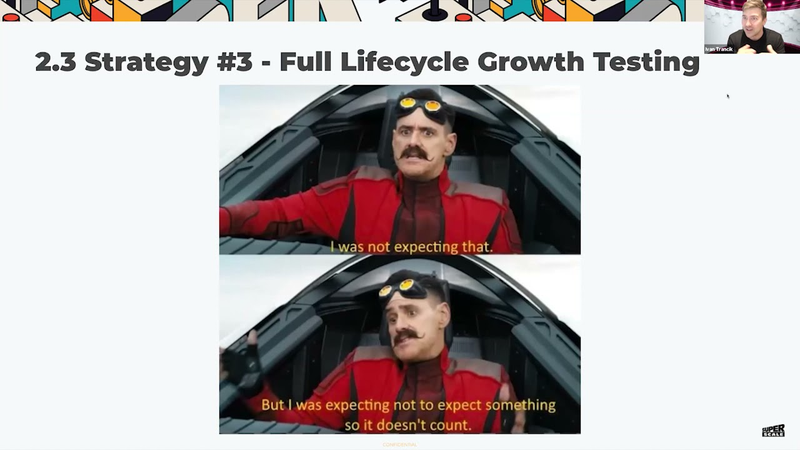
standard you do you do quite quite a bit extra effort at the beginning but uh not really much during the production so we think there's a better way um and this will be called uh full website with road testing or growth optimize go to market strategy um so i'm just looking at some things from what it is and obviously meme comes in uh so why why we love in school life cycle growth testing is that uh when something unexpected comes like i don't know the actual idfa change or redesign app store or whatever payment providers uh available then you're kinda okay because you know that you need to expect the unexpected uh so it doesn't count you're testing all the time are you validating uh together how the market changes where
your product is heading and can make informed decisions to mitigate the progress um so if we if we put it more concisely uh qualitative quantitative testing throughout the whole life cycle reproduction production soft launch launch absolutely seamlessly integrated from the from the early stage to the get-go every stage can contain one to four variants one if you want to just uh just uh kind of kind of sanity test if you're if you're on track uh you know up to four to to always choose very winning approach of these iterations and uh pre-launch it's always based on the evaluation of the previous iteration is it what feeds and defines the next one we'll find an example after this one but again you're always on track whatever changes in the market you you can spot it you can count with it and you can adjust your expectation
and inform your product to make it better um so easily when we put it into our simplified framework you see that there is not really any break between pre-production and soft launcher global launch you have uh your schedule as a clockwork you always testing you're always choosing a winner you're building your library of well that's the face whenever assets even before the game is actually built and why why it is so good um again as i mentioned continuous validation you built the whole library of tested assets uh obviously uh with with some approximation some limitations as you as as as the numbers will a different bit from the market but you still you have you have kind of your destiny in your hands uh your ui budget is much more effective because when the uh obviously we'll need to spend something for the creative testing iterations but
when the soft launch hits we're already attracting players on optimized creatives whether it's on the store or uh or thanks to the new assets and one which i consider very underrated but actually very crucial is where it's time to market your software you can decrease the time necessary time for the soft launch and go to global launch earlier because you already did a bunch of homework and created library of assets during the production which which wasn't really skipped as any other address columns obviously uh this requires a bit more planning um this requires uh kind of a thinking heads uh with this approach in mind that's proposing activities since concept phase and having the team ready having the assets having the resources in sync with the product so um again
something that we've found quite a bit of success with this is the optimal business way or to integrate your growth market strategy into the game production and not get any uh bad surprises when you and it's easy or expensive to fix it so that was the uh that was a kind of roundup uh for the last uh for the remaining couple of minutes uh i will show you like a glimpse uh how does this process uh look like for the full lifecycle production especially in the brief road safe or pre-launch stage uh and and what are the cannibal variables or what is the content of each situation that that you can you could think about and you should design again a perfect market strategy and the real support so again as we see we're testing all the time in conjunction with the production
um when you're looking at an early stage um at the beginning before you just flip a coin as was in the first uh first dance and or or imagine a theme i would like to test it so let's see what the combination of core meta uh game could be a good or better fit for this let's create a couple variants and test it then if we have it let's go to the theme testing if we see a winning team or something that resonates with the audience let's go to the art direction testing and once we have this combo so we so we believe we have some data and we made informed decision uh what kind of combination of gameplay theme our direction we're going for then we still have a lot of lots of tests uh it's the creative optimization of the store pages creating optimization for view assets and looking at the ways uh which formats which aspects of gameplay which game features which tone
will work and will produce uh winning or well performing creative so you can use later on this is something which we can absolutely test uh during the production without waiting for the final game itself and getting ready for that uh to get you some ideas obviously this this iteration can get uh quite complex but something that i would advise uh as well as a checklist or something to think about is uh is obviously before the launch of the actual store you need to create a fake one or something something that serves as a proxy and still you'll have the game ready to launch um you have uh you obviously can use a bunch of platforms or create your own each of them has some advantage or disadvantages but ultimately you will absolutely need fake structures not just for the possibilities you will be use it for the whole pre-launch phase and then switching similarly for the post launch
it will help you to get the cpi and cpi elasticity which means that you wouldn't just spend a budget uh [Music] like let's say a flight budget for a couple days but you will also essentially stress the campaign with the multiples of budgets to see if the cpi's will hold at a higher scale you can use a survey at the time so when the player obviously clicks on the fake app store uh call to action i probably wouldn't just want to waste this click and and say player oh just sorry this game is not available you have an opportunity to ask an engaged player who who essentially saw your ad and went to your uh went to your store page and was absolutely ready to download it so so creating a survey and having some qualitative data on top of that is absolutely a great way to make an informed decision and
uh with this whole ui or campaign strategy during this part how many seconds will you test you can have approach marketing so you can have some interest or some some niche targetings um you can you can play with the budget like platforms uh channels absolutely dependent on the game title and and the means that you go for uh but ultimately each iteration will give you a winner it will give you some idea if uh if this direction you're going to make sense which of these options that you've considered actually uh has the highest chance to become scale model successful and something that i i'm a fan of uh it will help you to create a cash flow projection model that is used to get more budget or to raise some money from investors or from stakeholders but because you actually gathered quite a bit of data even before the game was live uh so again just a quick uh example how this
could work it does the core uh format the game and theme then our direction and then various creative angles at each point essentially you've chosen a winner that can improve your cpis incrementally hopefully uh maybe you found out that none of the variants work or they're super close but again fight as well and then uh this all essentially gives you over time a significant total uplift and uh and the kind of this worksheet of well-performing creatives with uh with optimized apis that you are able to absolutely use once the game goes live uh even on a single country on a single platform for software you already are ready to to use much better qualities when you just start so again simplify flow and how does it switch at the beginning at the pre-launch stage
you have your ad which actually looks like a ua ad you go to the tech gap store which looks like which resembles the real one if the player clicks you get some data for the survey uh when essentially your store page launches or your game launches you are able to switch the traffic seamlessly to the real store page with the assets you've already tested and you can just seamlessly start to evaluating the efforts from the game itself um so long story short uh this full lifecycle growth testing will help you to to risk the whole game uh developing lifecycle even yeah even when the market changes even when new competitors into the market uh you'll be able to using a bit more budget for testing at the beginning will save you a lot of
time and budget in soft launching global launch and will absolutely help you to predictably scale the game and maximize revenue outcomes because you never missed a beat on the website during the production and again you can get anywhere three to six months faster time to market or to global launch which could mean a great uh difference between success and fail uh whatever whatever your voice and uh at that time using this approach you can actually get multiples of profitable spend than if you were again scrambling after you've launched a game to try to actually start testing and finding out these winning assets on the store so uh that's that's all for from me uh wow that was really good my god there's a lot in there i i don't have to do this as a day job but i'm i'm quite glad because it
sounds like you're very involved but um sounds like a lot of work but no that i think this is a sensual essential uh kind of reading um people who haven't got to see it yeah i hope that we'll make sure they get six i think it's a great very detailed uh sort of both argument and and and and advice for the people running those those kind of campaigns um i've i've got time for a couple of questions so i'll try and run through through a few what one thing that i was also kind of interested in um uh and this is a general theme i guess of the week is is how how the strategies you advised and and the way you're approaching uh sort of ua and and marketing generally how they're being impacted by the recent changes both to idfa and 14.5 and the new features that are coming at some point apparently to ios 15 are they are they having has there been kind of any radical change to the way you were those structures you're going was it just we're still too early to say really uh yeah so thank uh thank you chris for
this so this is absolutely something that that you will be happy with our partners that we have this ongoing testing uh even during these productions in mind because uh again you could test it uh obviously that let's say the general theme or the problems with these changes you can uh let's say no they are coming you know they will impact you somehow but you know how much will be you know will your cps start character five times or for your game it won't be that much the first strategy is to go you know more broad and you know do not rely that much on top standard hunting uh will you be okay so so in this sense if you're talking about the pre-launch strategies where you where you are essentially not really affected by this change with it because generally what you do you create a campaign to go to the store page which is a web page where you can get all the data you want without even attribution partner or anything yeah of course web
links and so on so actually in the pre-launch you're getting it's irrelevant yeah right pre-launched just which is single enough yeah uh all the data you could ever need and and and and still i do believe that the fundamentals are still the truth if the topic of the funnel of your uh what you're doing optimizing topic of the funnel metrics for creatives and you definitely are choosing the better ones then you would just scramble when the launch came and okay and this is this is why um the pre-launcher thing is not yet affected but you're still useful to to find the winning rate is which is the one single biggest variable you can integrate you can control right yeah which i've got a question i've got a couple of specific questions one question on that is uh question was how many creative concept variations would you advise developer to be testing typically initially as lava was there obviously it's mainly a b any one point but how many abs is the question i think that makes sense to you but like yeah i mean you're talking about constant iterative testing but you know with the broad concepts do you you know
did you come in with a lot of different approaches initially um yeah that's that's a great question and actually also extremely dependent on the title you're trying to make and on the budget you're going for so so you have you have you have some things to consider um if you if you if you try to invest a lot of resources into too many uh variants you may not have enough budget to actually invest to see the difference between them and vice versa if you if you would just rely on on one it maybe just a sanity check so but still much better if you wouldn't do it so let's say one extreme example even if you have one concept in mind go and test this one uh this one but properly and periodically will give you inside how how healthy is this as a concept but uh but again i would absolutely argue to going for at least two to three um and let's say on the on the higher end it's up to four beyond
four uh it's getting a bit more complicated because obviously at this stage you don't have any assets you need to create everything from scratch so it's a lot of production issues so i think two to three are reasonable and obviously you can change during the time and sometimes you see a clear winner so we are like oh gosh you know this this theme is absolute absolutely badass or this article is mouth open it's a as icon that's the way forward right yeah they're okay that's cool it's cool um i'm trying to get through two more there's a very specific question here from developer if your game has been well established in one market but but not broken through in others should you really just focus double down on that one market or or keep testing and tweaking until you have a you know go for an overall global appeal i mean i guess that's again depends on the game's specifics but the market's pretty you know fragmented and pretty sizeable now what do you think it's best to just dominate your space or or or you know should you kind of go for a try and go for global appeal uh yeah like the global appeal is
is that's a bit elusive because you can imagine a lot of things if you want to have a number one game in japan in korea china and and i don't know us and africa it's uh it's a bit problematic but but maybe i would start with with something that we see with this kind of west to east or east to west exports is starting with the not yet with the marketability but with the actual game game design and game is a product itself so if your game contains uh you know mechanics like let's say japanese developers and japanese titles are are their approach to monetization and to gotcha is very different for something that the western audience would expect so so so something that's you know it's hard to you know improve just by let's say re-skinning or remarketing the title um but but i think first of all understanding the game positioning uh before even before the marketability so something to be let's say at least aware of like if this
uh if this game will have a chance yeah it's a product the first one and then you go if you are too far uh too far from uh from the target market uh benchmarks to be successful on that and yes sometimes you find out that you need to create let's say a different version of a type or change some mechanics and obviously then change and then go for the uh for the art art change uh but some but sometimes uh again maybe just let's say the uh the ipv or the market value change but i think usually it's that you are if you're very successful in one single market maybe you are focusing on something which is pretty unique yeah that segment so it there's uh so you need to be aware of that no no amount of reskinning could help it's um yeah no no i get that's very specific um there are more questions here but i am going to have to move move along so maybe you want to you can feel
free to browse through and answer a couple live if you want in in in the chat room and if people want to approach uh ivan directly um they can do so um they can get involved each match or in the chat um in the uh discord and and yeah um uh great uh great insight obviously he's he's he knows what he's talking about he knows it wouldn't be hard to know more than me but he he he's clearly shared a lot of uh useful data there so definitely i definitely come back and pour through his uh his slides again and watch that thank you so much even thank you for sponsoring the track and thank you for your very informative really uh uh sort of deep deep dive just kick us off so i'm gonna now send you into the ether and and move along something quite different cheers thanks chris bye bye
Summary
A full life-cycle go-to-market strategy integrates continuous marketability testing from the earliest stages of pre-production through global launch, replacing traditional siloed development with an iterative, data-driven framework. By validating core gameplay, art direction, and thematic appeal through web-based testing and simulated store pages, studios can de-risk projects and establish a library of high-performing creative assets before a game is fully built. This methodology effectively mitigates the impact of platform privacy changes, such as IDFA, by leveraging independent data collection to inform investment decisions and build reliable cash flow projections.
Adopting this approach accelerates time-to-market by three to six months, allowing developers to remain agile in an increasingly volatile industry. Rather than relying on late-stage soft launches, studios can optimize cost-per-install metrics and ensure that user acquisition spend is highly efficient from the moment of release. This proactive stance transforms the development process into a continuous loop of growth activities, ensuring that creative strategies are refined long before the global rollout begins.
Successful cross-market expansion requires a fundamental evaluation of game design and mechanics rather than superficial localization or reskinning. Because player expectations and monetization models vary significantly across global regions, developers must be prepared to adapt core product features to meet local demands. By prioritizing these structural adjustments alongside rigorous marketability testing, studios can achieve sustainable growth and maximize the return on large-scale user acquisition investments across diverse international territories.



















Comments