1 free read left. Create a free account for unlimited reading + AI research.
Create free accountArticle International Journal of Esports
1 free read left. Create a free account for unlimited reading + AI research.
Create free accountArticleInternational Journal of Esports
The study examines associations in Austria, Denmark, Finland, France, North Macedonia, the Netherlands, Sweden, and the United Kingdom.
National esports associations across Europe are actively working to legitimize and advance their respective national esports scenes, demonstrating both common objectives and significant operational divergences. The primary purpose of these organizations is to serve as the authoritative voice for esports within their countries, fostering growth and recognition. However, their approaches vary considerably, particularly along two key dimensions: their level of engagement with commercial esports entities and their overall power and influence within their national esports ecosystems and broader societal contexts.
The study, focusing on eight European countries, reveals that while overarching aims are largely consistent, the pathways to achieving legitimacy and impact differ. Some associations, such as those in France and North Macedonia, exhibit strong early involvement with the commercial sector, leveraging industry partnerships to gain traction. Conversely, associations in Nordic countries often initially prioritize grassroots development and government recognition, building legitimacy from the ground up before attracting significant commercial interest. This evolution highlights that "early adopter" associations frequently originate from passionate community efforts, gradually professionalizing and expanding their scope.
Ultimately, the effectiveness and future trajectory of these national associations are intrinsically linked to their ability to navigate the complex interplay between community-driven initiatives, government recognition, and the growing influence of commercial esports. While all aspire to be the definitive representative of esports, their actual legitimacy and impact vary, with some, like France Esports, achieving high levels of recognition from both public and private sectors. The analysis suggests that as the esports market continues its expansion, commercial entities will increasingly shape the landscape, necessitating adaptive strategies from national associations to maintain and enhance their influence.
International Journal of Esports · 2026
International Journal of Esports · 2026
International Journal of Esports · 2026
International Journal of Esports · 2026

International Journal of Esports · 2026
International Journal of Esports · 2026
International Journal of Esports · 2025
International Journal of Esports · 2025
International Journal of Esports · 2025

International Journal of Esports · 2025
International Journal of Esports · 2025
International Journal of Esports · 2025
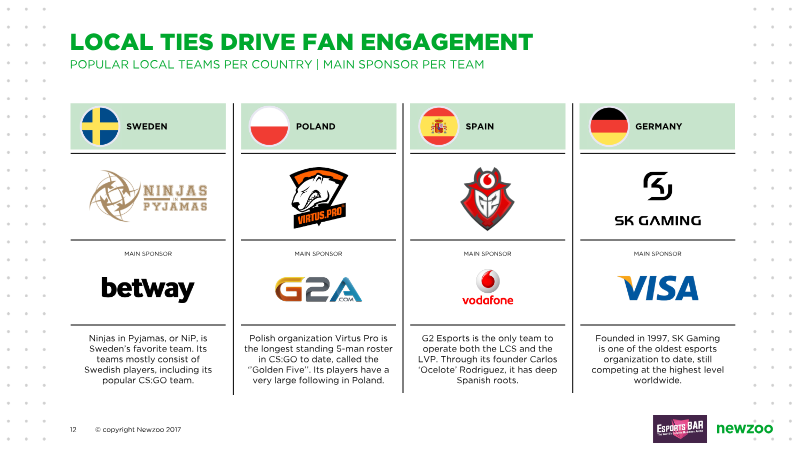
Newzoo · 2017