1 free read left. Create a free account for unlimited reading + AI research.
Create free account
Being a truly international player in the games industry
Key insights
6 takeaways- 01Entering the Chinese market necessitates strategic local partnerships to navigate a complex regulatory environment and a highly fragmented Android distribution ecosystem.
- 02Success in the Asia-Pacific market requires balancing core Western design strengths with localized meta-game mechanics and marketing strategies, such as adjusting for the specific weekend engagement spikes common in China.
- 03Western developers should maintain their unique creative identity rather than attempting to mimic local aesthetic styles when expanding into the Asia-Pacific region.
- 04Entering the Japanese market requires a nuanced understanding of domestic market gaps to compete effectively against established, risk-averse local incumbents.
- 05Long-term viability in these regions depends on building deep, trust-based professional relationships through face-to-face networking and consistent attendance at industry events like ChinaJoy, the Tokyo Game Show, and G-Star.
- 06Developers must prioritize high-quality localization and achieve strong day-seven retention metrics as essential prerequisites before committing to full-scale regional launches.
Ask AI about this video
Transcript
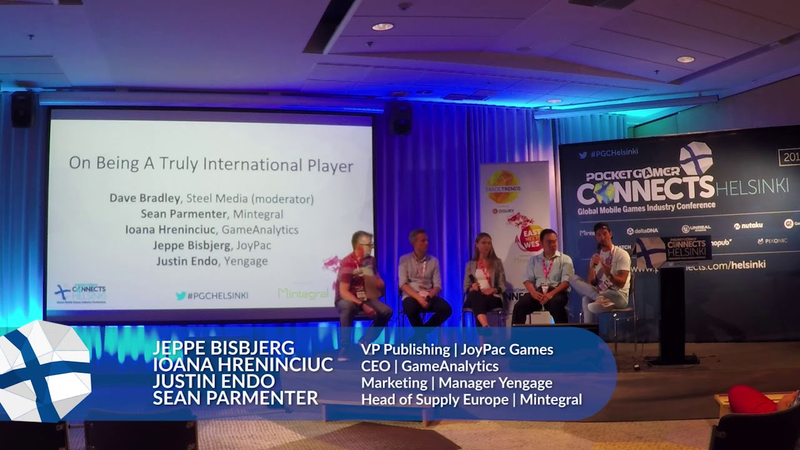
[Music] so I've got a I've got a panel here I'm going to invite them to introduce themselves well we're going to be talking about how to be a truly international player we've got some experts here from a range of companies with insight into different territories and and what I think probably will be will be best so they know their companies better than anyone if we kind of go down the line and maybe you can say who you are and maybe a few words about your company and your focus of your business definitely is this on yeah so my name is yepper and I work as VP publishing at joy Pak it's a new mobile startup that's focusing on publishing games in China and the APEC region in general so my focus is on finding Western developers that wants to get their games published in China great hi yeah this works as well so I'm the CEO of game analytics we are you know game
analytics company specialized in mobile we work with about 50 thousand game developers we track almost a billion players all over the world now so we kind of have great insight into what works and what doesn't all over the world yeah so we're here to shared that hey my name is Justin I'm from you engage we're a Japanese advertising agency that specializes in helping foreign games market in Japan so we do everything from performance marketing user acquisition obviously uh PR influencer marketing and then a little bit of creative production and services as well cool hi guys I'm Shawn I'm the head of supply admin cycle Motoko focuses on helping Western app developers grow their their revenue they had revenue in the APEC region primarily in China we do this through our own ecosystem that we built over the five years we've been around in the market and and yeah that's what we do great
well um why don't we start by kind of identifying where some of the opportunities are where are the the big international opportunities right now is it is it too simplistic to say China what should we say let's with some of you we spoke about China you introduction there what's a weather where are the opportunities of course China is it's a big significant part of it being the largest gaming market in the world but I think in general if you look at the APEC region countries like Indonesia for example Japan obviously Korea India is definitely emerging market as well and that's just looking at the Asian region yeah yeah interesting yes you want to take that question as well yeah so I guess the reason China is interesting that we've seen in the industry is in the past two years eCPMs in advertising have risen sharply so it used to be that you got like five dollars ten dollars eCPM and now you get like solid Tier one $30 eCPM in China for good games so because of
that after the US it's now the biggest market for some of our developers in terms of revenue and they are trying to grow that actively to grow their traffic over there because most of them are now realizing like man there's like real money here and and my game needs to be further optimized to cater to that audience so yeah I'd say definitely interesting market obviously with China rising their markets in the same region are going up as well right so the whole region is now going for a process of growth it's not the only one but it's the only one where we've seen this level of accelerated growth in terms of eCPMs and interest okay that's great I'll come back to talk about Japan in a minute if I might say but I'm integral are a part of a Chinese company right so again yet on that I was one of the things that I thought was interesting earlier on in one of earlier talks was that there are more mobile gamers in China than there are people in the USA right that's it so
you wanna put yeah is it China from your perspective obviously as well but what's your insight into that yeah absolutely I mean there's and there's several elements to answered that question I think China is definitely definitely main topic I think over the course of eight years or six years I think has grown from like 18 million to 100 million gamers to what it is now which is just shy of 600 million mobile gamers in in a market alone and if you could have take that away from you know 85% being Android and a 15-percent being the iOS are still you know what millions of iOS gamers right now by accessible to to Iowa's developers obviously it's not just about the the AIPAC market but also different products and different creative formats so be looking as well so yes the apec mark is a really big market but also people are doing a lot more for better targeting you may have heard the expression in her petit bidding could be flying around every now and again and also more creative formats I think for most a very key for app developers to
increase their yield and also increase their attention for games as well so much more like playable words you know interactive end cards the AR video maybe a you a 3d video for example and people such as me take you all identified that this is a this is a big problem in a way that there's not much creative atom being involved in advertising so far so we're looking to change that interesting interesting let's talk about your panel for a moment as well because that's kind of an interesting case all by itself right so what's your experience with that ever sure so I mean I'm gonna say Japan's a really interesting place but that's cuz we specialize in Japan but seriously if you look at the top 10 grossing games in Japan they haven't really changed the domestic ones right it's still gonna be your massive strike puzzle dragons for example but the ones that have entered into that top 10 grossing or all foreign right there you have Nettie's knives out that came out or of course Pokemon go with Japanese IP
but you know it's still not a Japanese game so what we've seen is was actually a lot of opportunity for foreign developers to fulfill a need in Japan Japanese studios are really risk-averse they aren't really making new kinds of games that stick to the old tried-and-true or just stick with their existing game their existing games that they already have out so there's an opportunity for foreign games to fulfill this need you see like hidden object games those like the might onna or g5 does premium in object games that are killing it in Japan they're doing great and they're fulfilling a need that Japanese studios too didn't think about I'll come back and talk about how to market to Japanese audience in a minute but actually you know I just wanted to say if I understand right your company has an office in India as well right we saw is that is that correct did you um yes that's correct yes we just had a talk mediately before this about the Indian market is there there any insight there as well as a lot
it's a very populous nation is had also of interest to people it's quite it's quite different right so yes very populous nation market is also very fragmented but in terms of free-to-play it's not I don't see it kind of the growth happening at the same rate or at the same speed probably definitely I mean definitely an interesting market to follow up on like maybe two years from now it will be the next China but right now advertising values are still low so if I were to kind of advise on where to go from like with a successful Western game I would probably advise China Japan before India because the afraid of marketing is still pretty high but the returns are now lower it might be it may be that a market like Indonesia actually probably may have better returns because players tend to be I guess to behave more likely reason to west for some reason right I'm actually with one of
the things that that I wanted to speak about was the how the fact that the Chinese market that we saw just there is a great opportunity is kind of notoriously difficult to enter maybe Ferg for companies in the West and you know traditionally hasn't had Google Play and is dominated by the network providers not to mention the fact at the moment that it's quite hard to get certified it again release so how do people overcome those challenges maybe as I started this end of where we're back so what are the challenges of getting into China and how do you tackle that yeah I mean yeah good question I think I think but there with the big freeze at the moment where app developers find extremely hard to publish a game in China I mean this is not only just for Western app developers but also for the cars like $0.10 and and you know a Nettie's for example I think everyone's feeling the pinch there I think the I think will be me to understand when you can launch a game out there is is what kind of return investment you're looking to get when you release a game on third-party app platforms because all
the money you're spending all the time that you take in Sochi localize the game and make sure they she's fitted for the markets you need to know if you're gonna get a good return on that so you also you do need to work with the right people as well right so with the right public and partners in China India Japan whatever it may be these are the experts so you need to kind of learn from them and find out exactly what they've done in that market and and take their take their advice on board and then you need to kind of launcher there that's that's what I would do anyway and do you concur down here as well is getting into China yeah I think from a developer perspective it's also a matter of finding out what what is your strategy gonna be in China right there's there's multiple ways to go to go about it essentially it can be anything from working very closely with a partner in China or you can say I think a lot of developers right now are looking to essentially just sell their game to China not really care what they want to do with it there but I think it's more about finding a partner that's willing
to put in the commitment to to do the localization to do the culture ization the graphical changes that are needed and that understands and has the relationships with the different channels there right and you know would you agree with that is anything to add on that China well we we work with many many Indies right and I think it's it's clear to me that these Studios do not have the capability of launching a game in China the regulatory environment is very difficult to navigate you literally have if you want to go Android you have to literally integrate like 20 different SDKs at the tooling a lot of the tooling is very specialized there's no proper documentation you're gonna make a little bit of money from each so if you only do part of them you're probably it's probably not gonna be worth the effort so really if you can give it to somebody and they take care of it for you and they do it I definitely recommend to go that route for a studio that is like 10 20 30 people it's not worth doing doing
get otherwise a lot of Studios self-published on iOS and then go with a partner for Android or h5 and that can be worth it but usually if you want to have like a trusted relationship I would say just trust the partner to do your localization do your creative adaptation so you have a consistent experience and also be willing to wait and test it out like if you just give it to somebody who will not give you transparency and will say oh we'll take it and you don't have to worry you probably do have to worry like those those words just ringing alarm bells I feel like these people I don't have no idea what these people are gonna do with my game money doesn't come easy right generally so you should be willing to put in the effort to unlock this market because it is bigger and more worthwhile than probably any other market at this point right right right absolutely before we move on to talk a little bit more about that Justin is Japan is similarly difficult to launch a game and imagine their localization issues but just in terms of red tape is it so no
there's obviously so Japan you can polish iOS and Google Play without a problem there I mean there's issues about the localization or sometimes you think about cultural izing some of your assets Japan is a difficult market as well but yeah nowhere near the headache sorry no no no where they pay the difficulty that China is oh so on that note then can we can we either sort of identify then just talking about games for a little bit some kind of international trends not all much you know markets respond to the same games there are some things that are popular at the moment Battle Royale is a huge is a huge genre but is that true everywhere are all what a what a kind of popular in different territories let's let's run down the line and see we've got some insight there I mean the obvious one for China specifically is of course they're known as a competitive market so a competitive multiplayer traditionally does really well strategy games simulation games traditionally does
really well but I view China and a lot of other countries in APEC as countries that actually consume a lot of different game genres they're very interested in Western games now they are very interested in games that look and feel different from what they typically see so in my opinion those markets are big enough to sustain that and there are starting to have a more global sense as well so that would be the obvious one for China at least for Japan I know it's much more about cooperative gameplay whereas China is competitive right right right so your kind of advice there was you don't necessarily have to create a Chinese style mobile or something in order to have a successful game in China you could do that with us as a Western developer I would actually recommend against it I would say stick to what you know and what I see right now is that casual games which is something that the West specializes in quite a bit is starting to get a lot more traction in
China as well so don't try and copy what it is that they do but just learn from your your partner there instead you know what can we do from a culture isolation aspect you know work in local IPS or met a system that work well in the market but don't try and do the same I mean be a Western developer you know is that does the data that your company purchases bet bear that out is there you know can we you identifying different trends in different territories for game types yeah so we do we did some genre analysis right at the beginning of this year right and we found that the top five is very very similar across it's like action-adventure you know casual games so I don't think there's any difference there obviously you know there is this kind of preference for MMO games and but I agree with what the episode if I was gonna start launching and launch a game in China I would go with a simple title first because if you
want to localize something like either like a triple-a type of experience right with like characters in complex mechanics complex economy it's gonna take forever and you may have to tweak it for years before you get it right with a casual game you literally can find out in like three months we found this interesting trend where players in China turned from many games during the week and come back to certain games on the weekend okay so if you manage that and there's like a stark difference like during the wheat retention half almost half of what it is for Western games and and at the weekend it spikes so if you can be one of the games that people come back to you on a weekend you can make again good money but then you have to put in the effort to test and become one of those games and I think this is why we see the magic kind of quality of the Chinese market where people are like our game works we don't know why our game doesn't work we don't know why so I think it's because people don't realize that just the time
that people put in during the week versus weekend is different and they need to make sure they become one of their favorite games yeah which may take more work that's that kind of thing where people kind of graze on certain games but other games are their hobbies exactly yeah sorry but I wanted to say the easier this is the fewer variables you have to work with like the simpler the game the easier you can fine-tune them so obviously hyper casual casual are much easier to go with yeah yeah and also is the simplistic visuals of games like that or translate more easily rather than think and what about Japan is that what kind of games do particularly well over there and does it is it different from the rest of the law Japan is a little bit different in a lot of ways you look at the top charts in Japan you see Japanese RPGs JRPGs do really well less of an emphasis on that like they said about competitive played is more cooperative and then also in match 3 or casual games do well but the ones that are doing most of the time but do the best have some sort of RPG element involved so that casual plus a
deep meta game something that does really well in Japan but as you said don't don't don't try to do something that's not to your strengths as a studio don't try to make a game I highly recommend against making a game for a Japanese consumer unless you grew up in the culture and everything else is better to make your game they are you're good at and then trying to introduce that game whether it's a different genre or different characters or whatever to the Japanese market and be successful that way and you'll have yeah you'll have more success I'm sure when we spoke a little bit earlier on about approaching a Chinese publisher to take a game or deny having a partner in in China what kind of thing Chinese companies looking for from Western developers yes we look for two things so we look for the developers that are keen to learn about the Eastern Market I think you know as the China
market and as the Japanese market and Korean market in Southeast Asia could have grows and grows and grows I think people will become a lot more aware of this market and what the opportunity is there so that's one type of people have a Dudek after and the other type is that people that do launch games and don't know they have Diu in these markets but I know how to monetize it well which is is it's like it's like a waste of money for me in a way because you know they could be doing so much more in these markets but I don't know how to so these are the guys aren't currently working with so giving example the geyser it's a tactile for the cookie cats game the cookie cats you know because he's got the world cookie and cats in it is doing as you can do well in China so but they don't know how it's gonna monetize it well they think that a simple Western solution would actually do well across the whole could of all right you know ecosystem whereas generally not a case you've work with especially within areas then you can increase your revenue unless you even make the most of their
users out there does anyone wanna weigh in on that for I mean generally I would say that the Chinese publishers are looking for Western games that feel Western right and this is what we talked about earlier hyper casual translates really well because it's at its core it's just good gameplay and simplistic art that's universal right so I think also Chinese publishers have realized that they shouldn't be scouting the West for hot core titles that they're capable of producing themselves they're scouting the West for casual games that feel Western indie games paid games you know these are the things that they're looking for and it's inherently because they they don't know how to produce them the same way that a Western company does and we're talking here about being a truly international player when you mentioned so the indie games there it's the big games like you know the so $0.10 game in pub cheese and so on that you get the press is there a thriving
international indie seen in all the territories where you guys will work is that is there new talent coming up through the through the indie scene I'm gonna I'll take I won't know in Japan so just generally generalizing a little bit but as a general rule in Japan we graduate college okay let's go for the u.s. you graduate you work for a triple-a it's the goal may be after 10 years you quit start your own studio and that's the goal you want to you know become an indie indie developer maybe create on studio with some of your friends in Japan it's graduate work for a triple-a and then retire from that triple-a after how many years so I mean you look at the but the best performing indie games in Japan right now are all from the West right okay interesting and what about other churches is that true of China or what's the indie scene like in other territories where you you were I'd say that in China well I don't it's hard to speak for the whole market in terms of Indies right it's not necessarily the
market where we see the most amount of Indies from my experience but it's the copycatting is very common in terms of in these not not necessarily just coming up with creative IP and so on but I couldn't tell you that I play like all the games in the Chinese app store and so on it's more it's more what what I see I don't know if you know more about that Sean no rely but I'll give it a good go so I think you know in the indie scene in China I think it does depend gotta Bob Papa sure you can work with so you know it seemed to what the cause I you know voodoo do and also the developers that they publish as well that you know even but even the developers that they work with they're getting a good name for themselves as well because he Fuji so good work so it potentially would be potentially the same thing in China as well but I've not got much to add to that okay well let's talk about marketing a game when you when you're launching a new game you
know you you have to be aware of different local tastes but there's also you know lots of competition and and how do you do market games in in diverse territories let's talk about Japan because that's your that's your primary business but then let's also talk about you know the other territories to and how you bring a game to much alright so for the Japanese market establishing hype and credibility is extremely important whether domestic or foreign and there's a couple ways to do that most of the top was you know using the grossing charts as a benchmark top hundred are using TV ads of some sort and it's kind of a quick cycle from a game as advertisers on TV so people think it's popular so then they'll download it and then it becomes popular there's it's kind of a self-fulfilling prophecy in that sense it's not really that hipster like oh I discovered it first Japanese people would rather go oh everyone's playing that I should play it get generalizations or exceptions but that's just kind of how the market is so for mid-sized studios - Indies that we help with you know TVs sometimes well
most of the time out of the budget retries pretty it's a pretty big investment right but there are ways to establish that hype and credibility we can do PR influencer marketing is becoming really popular now in Japan and then if you haven't launched in Japan you can also do a pre-registration campaign as well to kind of create that hype and desire to play it it hasn't been launched yet and which you know people want what you can't have right so I mean even like Pokemon go delayed their launch in Japan and had you know I mean obviously it's slightly different they have a major IP but yeah Crenna quitting that hype in credibility beforehand was really important and what about other terraces you know do what's virtual experience have had a you know market a game in other territories what do we what do we know about China for instance is it the same kind of activities that work over there so some of the ad formats are different definitely like we saw for instance of what works in China is banner ads they would apparently works really well and
compared to other territories I'd say right now it's becoming quite competitive to attract an audience especially for iOS audiences because it is a more centralized platform so obviously people tend to go iOS first that has left an opening for kind of I guess android games but on the Android side you do have to compete that you have to you're dependent on the channel partner a lot they their own tools so if you do want to get people in the channel you have to be ready to work with a channel so again a partner is like a good partner is priceless and the other interesting thing that we see is now h5 games right html5 apparently there are like 300 million users now gaming players on WeChat so you getting those players in itself is is a challenge it's not my domain of expertise but right now we see people going I oh s and then html5
instead of iOS and Android just because it's somewhat cheaper to get those players but you can engage them and you can retain them and you can make revenues off them at very high scale so I would suggest definitely going for those those platforms and Yepes is that the same how did joy pack promote games yeah I'd say generally when you look at China the same marketing trends that you see in the rest of world rings true but it's just with added complexity because for example social media marketing is a lot more difficult there's a lot of different channels that you're not used to from from a Western perspective so whereas we use Facebook in the West you have a lot of different opportunities WeChat QQ you know they have their own versions of everything in terms of that but other than that you know the basic practices from the west brings true you know follow there are specific times a year where it's really beneficial to do marketing campaigns where you see you
know in relation to Chinese New Year for example you see Chinese players play much more right so that's a good opportunity for marketing your game and then obviously local IPS is is very very important you know bringing that in and that's why I ask you you're on a mentioned you need that local partner right right right and we're doing a four time I think we're gonna will we started a little bit late as well but before I carry almost all my questions I don't want to miss an opportunity to take any from the audience so does anyone have a question for the for the panel No it's okay if you do put your hand up and I'll crack on and then it my colleague oh well we can run you over a mic here if anyone has anything to say so so let's let's talk a little bit about about what it's like working for an international company this the the topic of the panel here is how to be a truly international player and all four of you work for companies that have interests all over the world sure maybe you can start you work for it you know obviously you're you're you're a Brit I think and and but you know
[Music] integral is a Chinese company so what is it what are the challenges are working for it an international company that branches sees the West I think I think is more there's war always a lot more pros and cons I would say the pros are kind of working for a truly international companies such as min cycle is about that you get to work and a completely different culture that what you're not used to so provider this I was working for a UK based company called super awesome for a UK in Chad in the US and they've had a joint venture in Southeast Asia which is actually fantastic to get to understand how they issue work but which they work very closely in the same cut away as well the West but anyway but when I joined with with min take where you get to know exactly how they work what's their mentality was the products are currently going on right there as well also you know the time difference plays a massive part but you know just like any kind of global company you compromise in terms of you know starting they've early or finish later how urgent need to be but you need to understand the culture as well so you need to understand exactly
how each market works different holiday days or she may vary like Chinese New Year it's not an 31st of December some end of February you know so so you need to kind of bear this in mind when I see you communicating with different colleagues who are based in different markets yeah and the rest of you say is that your experience as well what does it like working for a company that works in different times those and has different objectives around for departments around the world yeah I'm gonna agree with Sean you know it's the the basic practicalities you know just being in different time zones different cultural habits different vacation their structures but I think you know it's it's much more interesting basically and I'm from Denmark right so it's it's a fun combination to be able to talk with people has a completely different mindset in terms of gaming I think that exchange is priced as something that I wouldn't be without so from that sense it's it's very rewarding even if it's a practicality hassle you know yeah yeah and the same for you both I guess
obviously nobody wants to say anything bad about their boss or so but nah but the truth is there are differences on one hand I think people who don't have a Chinese investor or owner or whatever will definitely have one at some point like MIT says maybe I like I live in London and it's like half owned by Chinese companies the whole city so it does happen right it companies are hungry and are investing and they're coming down and doing deals so definitely I think just people should be get used to the fact that this will be now part of life in normal the other thing is work culture in China is very different so when you do work with Chinese companies you will get messages on the weekend like that will just happen you for like actually at some point the time difference will work in your favor because they will eventually have to go to sleep you will get message well you would get messages at 10 p.m. right it doesn't mean people are unreasonable they get it that you have a personal life actually they're quite good they don't necessarily expect you
to work the same hours at them but you will get messages you will see them you know that they go really hard you know so you will feel like obviously you need to keep up so there's definitely that feeling which you need to be prepared for this being said it's a very trust based culture so once you develop trust you feel like you're in the circle right like you can much more easily get things done and they want to move fast they want to give you things they want to support you so it's it's very much it does feel like once you're in the family the family does everything they can to push you forward and advance you so that's why it is completely worth it and they do move fast and there's a lot for us as Westerners I think which were we were used to be like you know ruled world I think that competition is very welcome and learning to do things in a new way so yeah it's not always easy but it's interesting competitive and I think it's very worth it and this and as your experience from
working with Japan and the West sim yeah so we're young gauge is based in California but we have a parent company in Japan uses their Japanese team and the only thing I mean time zones pain like that those are all you know pretty standard I think across the industry the only thing I would mention is for Japanese companies just not even our company but partner companies face to face meetings and interactions or a lot it's a lot more important than it is in the West we know we're much more used to Scott sorry slack or whatever but in Japan you know we our parent company use T our team actually goes and visits client like you some of our domestic Japanese clients and partners because even if you know it could be sent in an email having that face-to-face meeting is still important it's a part of the tradition and it's important for the culture actually if so on that note meeting people in person that's it's very interesting that has cultural significance I think it's actually just a good thing to do from a business perspective anyway what are the international events that people should go to in order to learn more about the
market obviously poppin payment connects if you're in in the West Bill heard of that in the what about in these special people I mean Tokyo Game Show scum your game shows next next week said already next week and two weeks very soon as long as yeah two weeks because biggest one in Japan it's like III but I mean it has a consumer persephone consumer focus as well but in terms of business and meeting with all the the major Japanese companies yeah Tokyo Game Show for sure what about the Chinese market which people be taken there and definitely recommend China joy if you can stand the heat of Shanghai in the summer it's it's a huge experience a lot of very interesting companies attend there's a big consumer part as well but it's business oriented and there is so much interest from Chinese companies right now in the West that it's definitely recommended to go so Finnish developers British developers they they'd have a great time over there would be very useful thing for them yeah I think you most developers will find it very easy to find meetings that are relevant for them so yeah that's a big recommendation from
here at least great um is that also your experience do you know do you have any other events in mind that you think people should go to there's definitely g-star Korea yes so that as well I know our our team loves that there's the one in India as well that's in November I'm trying through they changed the name this year it's NASSCOM something yeah there's there's also a comfortable that's right no they just changed his name didn't it wasn't a scar I think that's called but it's change it tested so I think that's what that one is also very good one sorry didn't want to steal your thunder thunder happening right now so yeah I mean there's a lot more kind of APEC focused companies coming over to to Europe because I understand Isabel so for example mint a car all coming here to Pocket Gamer yep and also some other I'll buy mention because they will hit me but in terms of other companies around Europe they they generally do
attend because they know that the European market is huge for them so rather than you come into China joy or you know Tokyo or wanting career as well India then they'll come to you such as what we're doing now and then it makes it easier for us to can they communicate fantastic thank you well I think we probably got sort of a little over five minutes left not quite short that's plashing I think that sir we start again we started a little bit late so we're gonna we're not gonna be in a rush to close but we should probably just see if there's any um oh you okay yeah thank you so that we've got the Petra culture in here next but we're we're okay for a few minutes we started late so are there any questions from the the owners we've got some experts here in in how to take your game international if anyone here would like to ask a question we'll throw you a mic it was beef standing up to ask question Chris no okay I can carry on but if anyone has anything they want to ask about about taking the game elsewhere in the world that's probably this is probably a good opportunity if not I should say these folks are here for both days looking them up on the meeting system it's that you know they're ready to meet and discuss so in
that case let's let's in in the final few minutes we have listen let's kind of go around here we'll start with you yep and say finally from if you had just one piece of advice for a small company maybe someone here who wants to look outside Europe and take the game what's the first thing they should do why should they start a day should start by attending the conferences that are relevant in the country that they they want to move their game too I think that's that's step one just researching what is out there you know finding that partner I think is key and I also think it's it's a good idea to look carefully at your game and then you know understand what is it that it does well and what is it that it definitely doesn't do well and then find a partner that suits that suits then yeah cool right you know yeah I'd say obviously everybody still wants to publish successful games so if your game is not working in the West nobody will want to publish it in the east so it is what it is right so get it working first and if you have a promising prototype yes you can get it over you can do like a global launch at the same time that's perfectly
fine but you need to have some numbers to show that the game is doing great and still people look at retention they one day seven day fourteen day seven for China like I said is super important because of that weekend trend so you want to watch that one particularly carefully but yeah grow your retention numbers grow your day seven retention and when you hit like good numbers when you pass like fifteen percent and they seven retention you can go to either global publisher or publisher that specializes in a pack and you're pretty much good to go they'll be able to give you feedback on how to localize and all that from there that's fantastic thank you so it Japan's a little tougher Japan's tough to get a publisher just like anywhere an alternative route I was one piece of advice I would have is self-publishing is an option the localization is relatively inexpensive and most of the time your strengths as a game is going to be the fact that it is
coming from the west and it's something different and unique so as long as you have that high quality localization then you can look at you know doing some tests test budgets either on your own or with a partner right Facebook is relatively easy you a see it's pretty easy to run on your own and then after that point you can look to with partners to try to scale that weather you know giving a ASO or some other paid campaign great thank you and yeah sure one last piece I think I think knowledge is key I think before we could have reached now but if you if your game was success and if you've been to the conferences and and if you could've done all that and no and you've got a good solution then I think you need to understand how each market works from the experts that do work in their markets understand exactly what is trending out there what's the current market how's it going look are there current similar games in these markets that that you know are similar to yours and how well they're
doing are they doing well in terms of revenue retention in our purchasing or poor gather all this information and these this information it's not only just from us also from the EPI adroit back from game analytics from you engage for example these guys are the experts within what we do so I speak to them get advice make sure you do all your research and then soft-launched potentially in a in a similar market to see how it goes wonderful thank you very much I think we're reaching the end of the day there so I'm gonna thank my panel which I think we're fantastic so yay from joy pack Yona from game analytics just in from Indy engage and Shawn from integral so thanks for a round of applause for them and their insight thanks folks [Music]
Summary
The Asia-Pacific region, particularly China and Japan, represents a critical frontier for Western game developers seeking sustainable growth. These markets offer massive player bases and rising effective cost-per-mille rates, yet they demand a sophisticated approach that balances global brand identity with regional nuance. While China provides unparalleled scale, its complex regulatory environment and fragmented Android distribution ecosystem necessitate strategic local partnerships. Japan, while more accessible through standard app stores, requires a nuanced understanding of domestic market gaps and a willingness to compete against risk-averse local incumbents.
Success in these territories hinges on a strategic synthesis of core Western design strengths and localized execution. Rather than attempting to mimic local aesthetic styles, developers should focus on adapting meta-game mechanics and marketing strategies to align with regional player behaviors, such as the distinct weekend engagement spikes observed in Chinese markets. Prioritizing high-quality localization and establishing robust day-seven retention metrics are essential prerequisites before committing to full-scale regional launches or seeking distribution partners.
Building a sustainable international presence requires more than technical adaptation; it demands deep investment in cross-cultural professional relationships. Navigating the high-intensity, trust-based business culture of China and the face-to-face networking requirements of Japan is vital for long-term viability. Engaging with major industry events like ChinaJoy, the Tokyo Game Show, and G-Star serves as a foundational step for conducting market research and fostering the partnerships necessary to navigate these complex landscapes. Ultimately, the most successful international players are those who maintain their unique creative identity while leveraging local expertise to bridge the gap between Western design and regional player expectations.


















Comments