Key insights
7 slides
The spending drop
U.S. video game consumer spending fell 15% year-on-year in January 2025.
Console hardware and content spending experienced sharp drops.
$4.5 billion
U.S. video game consumer spending in January 2025
- Year-on-year decline
- 15%
- Console hardware decline
- 45%
Platform shifts
Meta is de-emphasizing exclusive virtual reality requirements for Horizon Worlds.
The strategy prioritizes broader accessibility via desktop and mobile. It is supported by a $50 million creator fund.
The visibility gap
Smaller high-quality titles struggle to gain visibility in a saturated market.
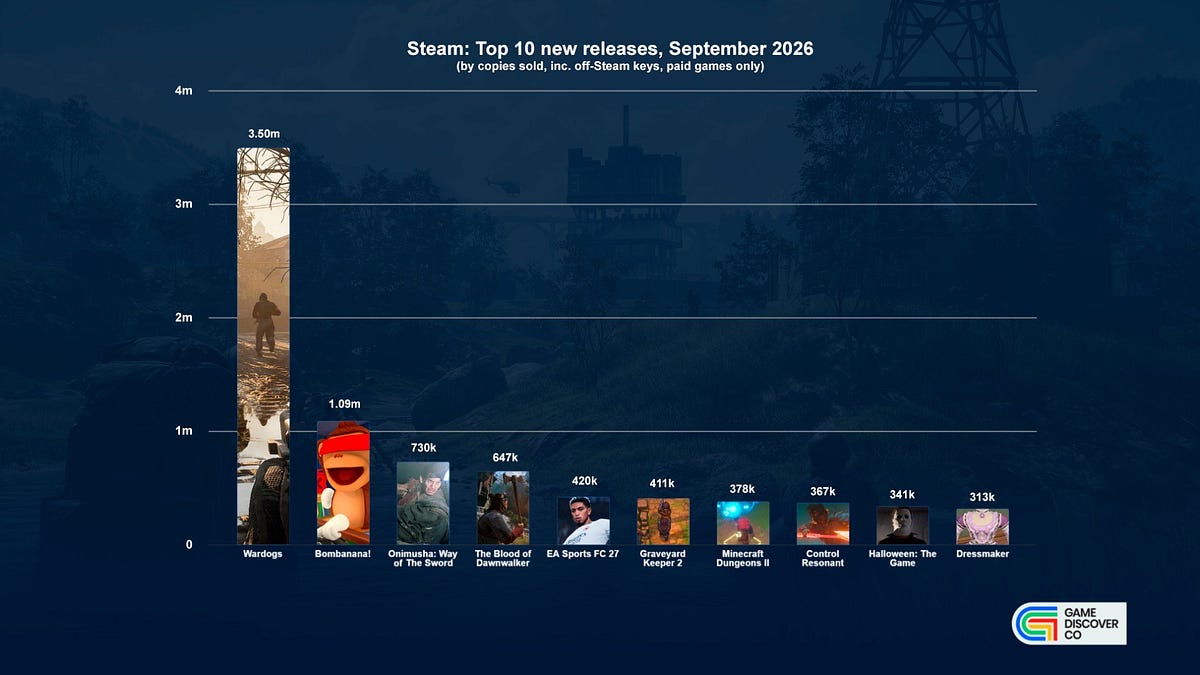
Major releases like Avowed and Pirate Yakuza achieve significant initial traction on Steam. Smaller games face severe discovery challenges.
Insufficient efforts
Traditional polish and marketing efforts are frequently insufficient to guarantee success.
Market saturation has made obscurity the default state for new releases. Developers often face commercial failure despite adhering to best practices.
Identity matters
Masocore platformers that fail to establish a distinct identity struggle to gain traction.
Games failing to commit to a specific identity struggle to capture an audience. Identities include memetic and absurd or refined and atmospheric.
Identity struggle. In the 'masocore' platformer genre, titles that fail to establish a distinct identity consistently struggle to gain audience traction.
AI and UGC
Major publishers are exploring generative AI and user-generated content platforms.
Rockstar Games is exploring the integration of generative AI for environment creation. The industry is focused on shifting dynamics of user-generated content.
The takeaway
The industry is focused on emerging trends to navigate market volatility.
Traditional console gaming faces a difficult period.
Trend focus. The industry is increasingly focused on emerging trends, including the integration of generative AI for environment creation.
1 / 7
Ask AI about this report