1 free read left. Create a free account for unlimited reading + AI research.
Create free accountWhitepaper DiGRA
1 free read left. Create a free account for unlimited reading + AI research.
Create free accountWhitepaperDiGRA
Concurrent and cumulative viewer counts reinforce the dominance of popular channels and support advertising revenue.
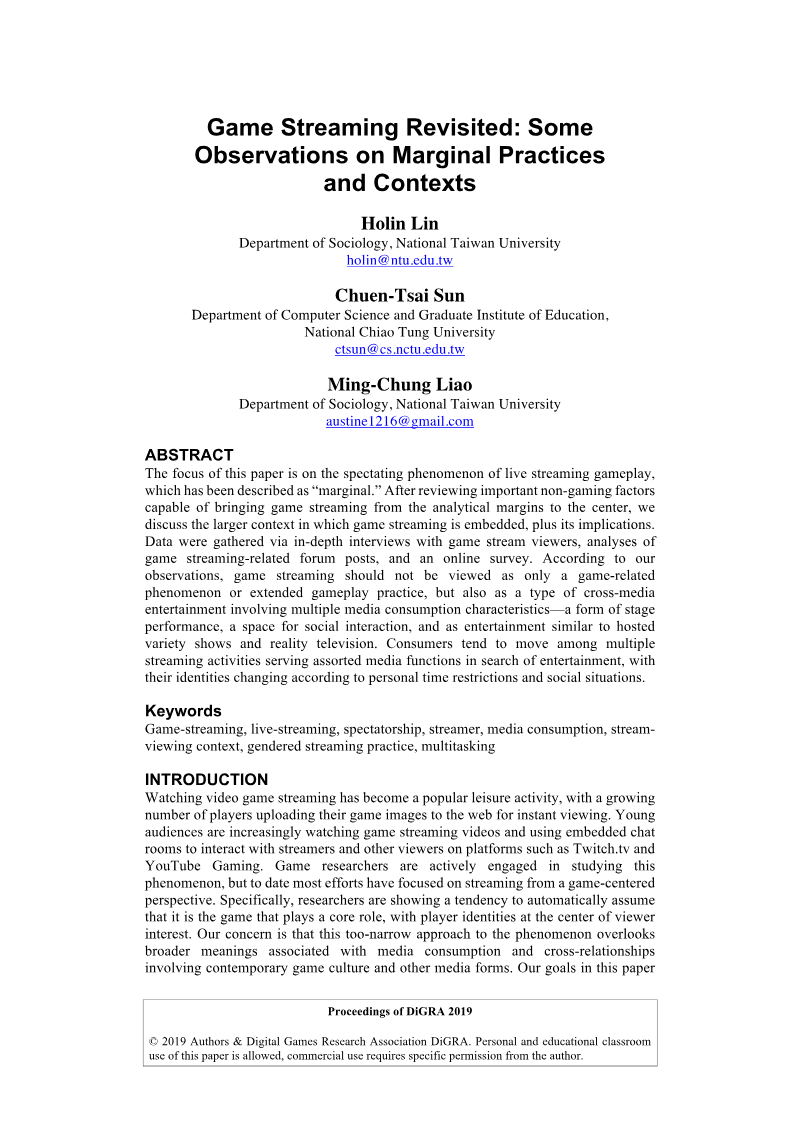
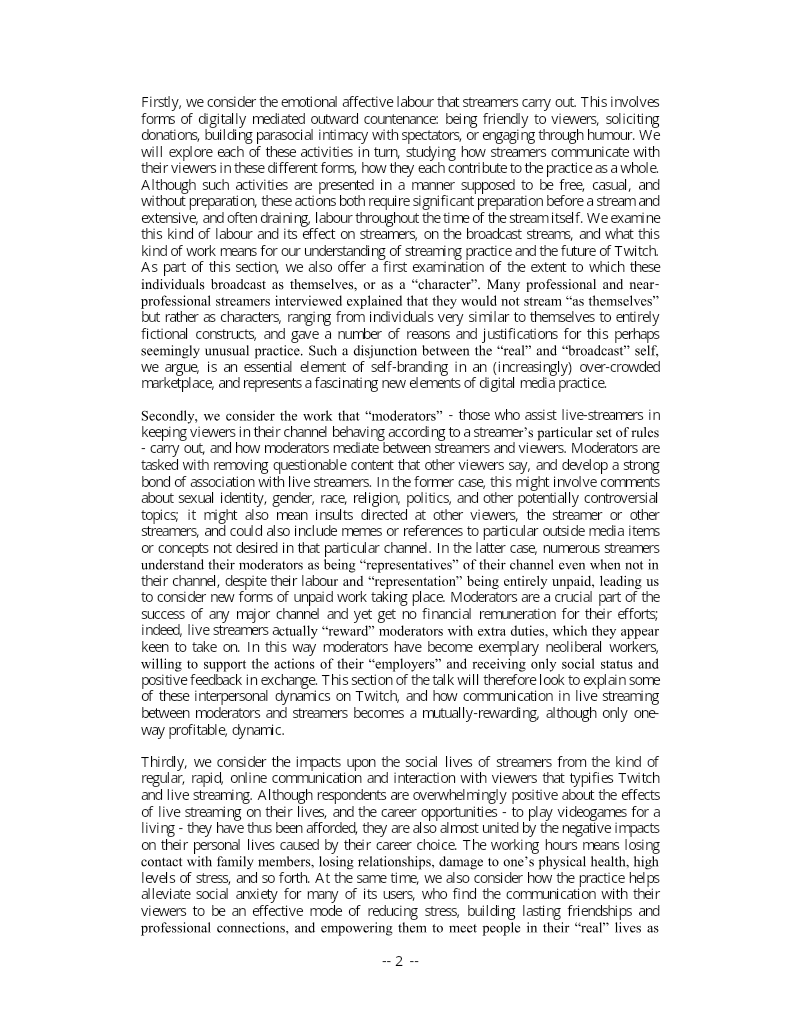
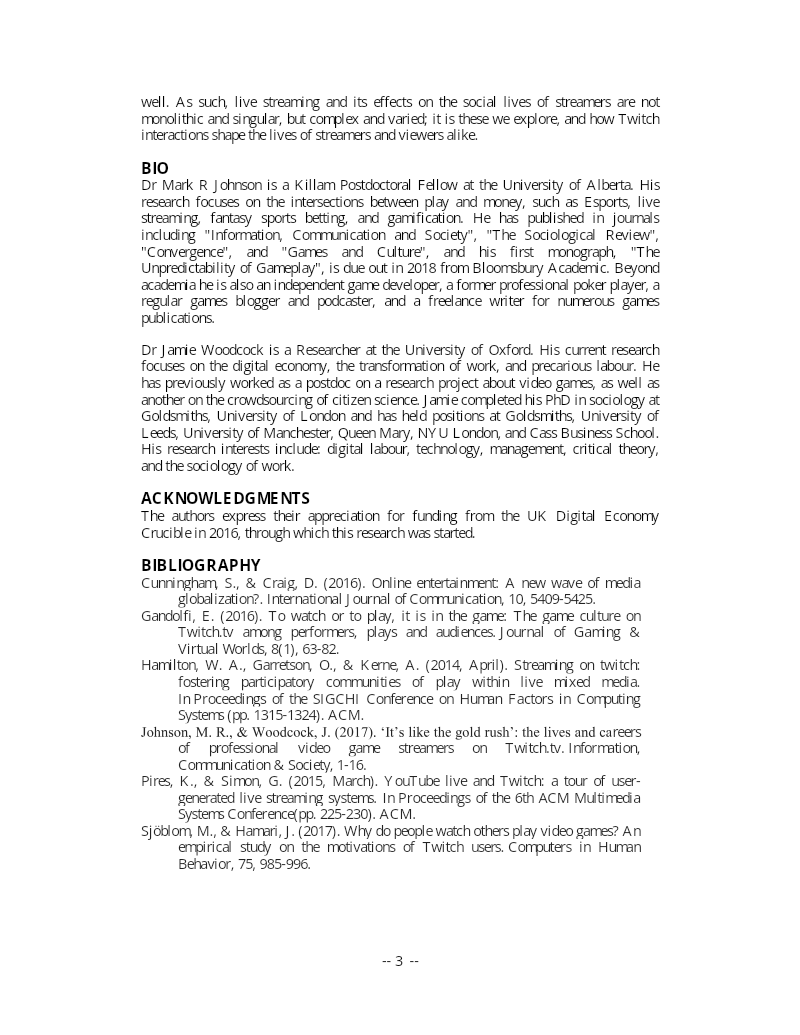
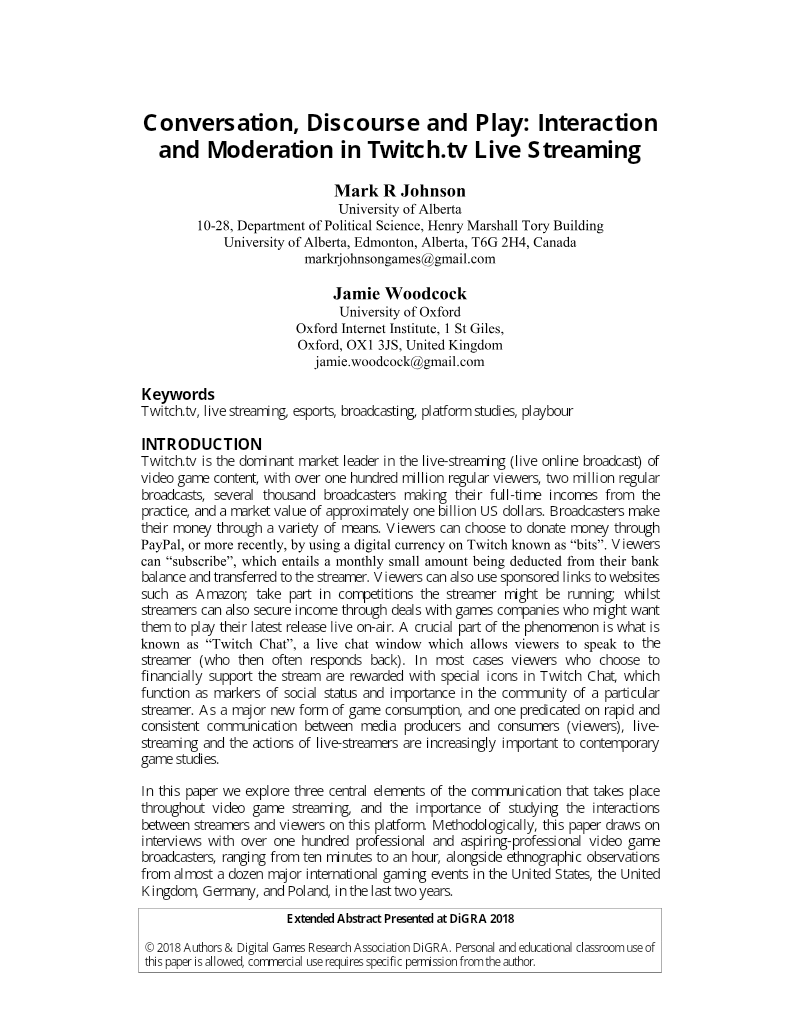
This paper argues that viewers on the Twitch live-streaming platform are not passive recipients of content but active participants whose "audiencing" generates considerable economic value. Drawing on Bratich's concept of audience power and autonomist and Marxist media theory, the authors contend that the interactive features of the platform are central to how gaming content is experienced and monetized. The work positions Twitch viewership as a continuation of the spectator dynamics previously examined in physical e-sports tournaments, emphasizing that spectators shape any gaming context.
The authors identify several mechanisms through which audience labor is commoditized. Concurrent and cumulative viewer counts are used to rank streams, reinforce the dominance of popular channels, and support advertising, with the minimal work of viewing aggregated into platform value. The chat window is presented as the most prominent avenue of participation. In high-traffic streams, messages move so quickly that few can be read, yet the chat's speed functions as a proxy for crowd noise at live sporting events and signals moments of excitement, thereby altering how the broadcast is received. Emotes and badges further structure participation, distinguishing insiders from casual spectators and ranking viewers by volunteer moderation labor or by subscription payments.
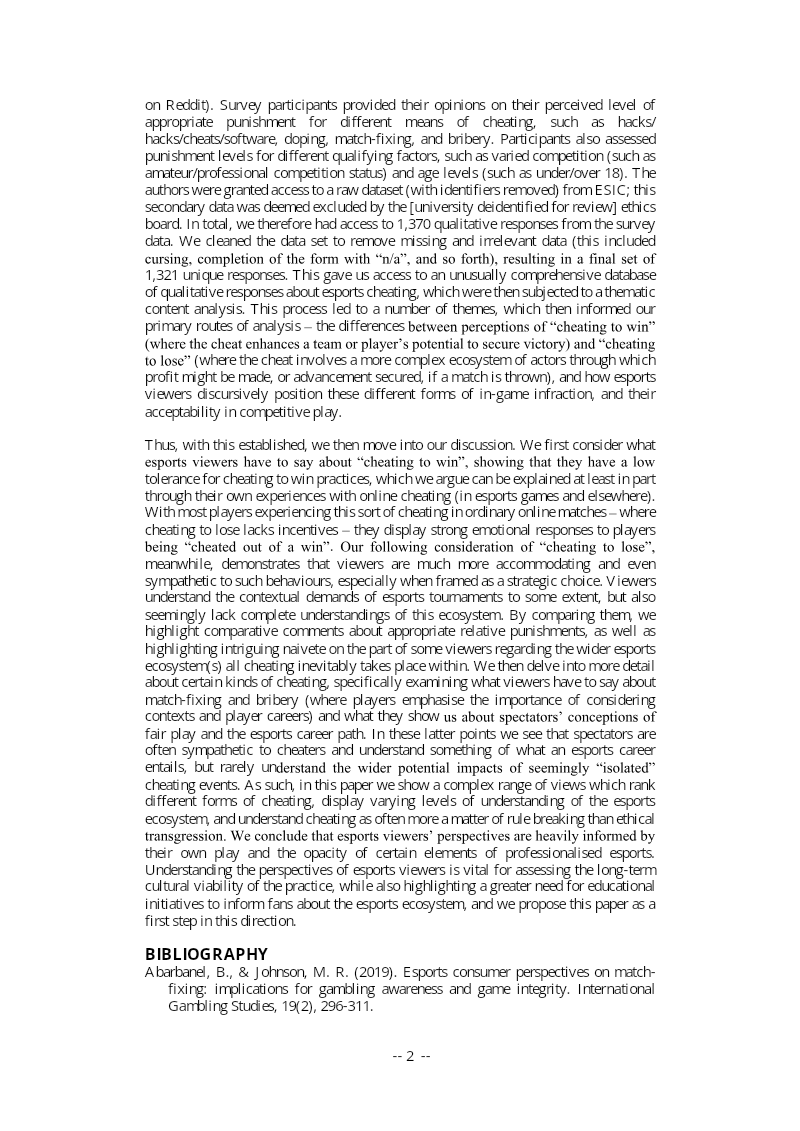
The analysis is qualitative and illustrative rather than empirically large-scale. It draws on observations of popular streams, particularly those of DOTA 2 and PUBG (referred to as Battlegrounds), and on prior academic literature, and it is presented as a conference abstract without a stated sample size or systematic data collection protocol. The paper notes Twitch's scale, citing over 100 million monthly visits, as context for its significance. Its conclusions are framed as theoretical propositions connecting online live-streaming to research on physical gaming tournaments.
Each row is a game or company this document names, each column a document, oldest first. A mark means that document names it. Select a row to see those documents.
DiGRA · 2020
DiGRA · 2020
DiGRA · 2020
DiGRA · 2020
DiGRA · 2020
DiGRA · 2020
DiGRA · 2020
DiGRA · 2020
DiGRA · 2020
DiGRA · 2020
DiGRA · 2020
DiGRA · 2020
DiGRA · 2020