Loading the document
Key insights
5 slides
New approach
A low-cost surround display system enhances player immersion.
This system uses a standard projector, a hemispherical mirror, and warp-mesh software. It offers an accessible alternative to specialized virtual reality systems.
Key innovation. A new low-cost surround display system significantly increases player immersion compared to traditional 17-inch LCD monitors.
1 / 5
- 01A new low-cost surround display system using a standard projector, hemispherical mirror, and warp-mesh software significantly increases player immersion compared to traditional 17-inch LCD monitors.See it on page 1
- 02Participants using the surround display reported a statistically significant reduction in perceived time (P = 0.0051), a metric that correlated positively with higher engagement and enjoyment.See it on page 7
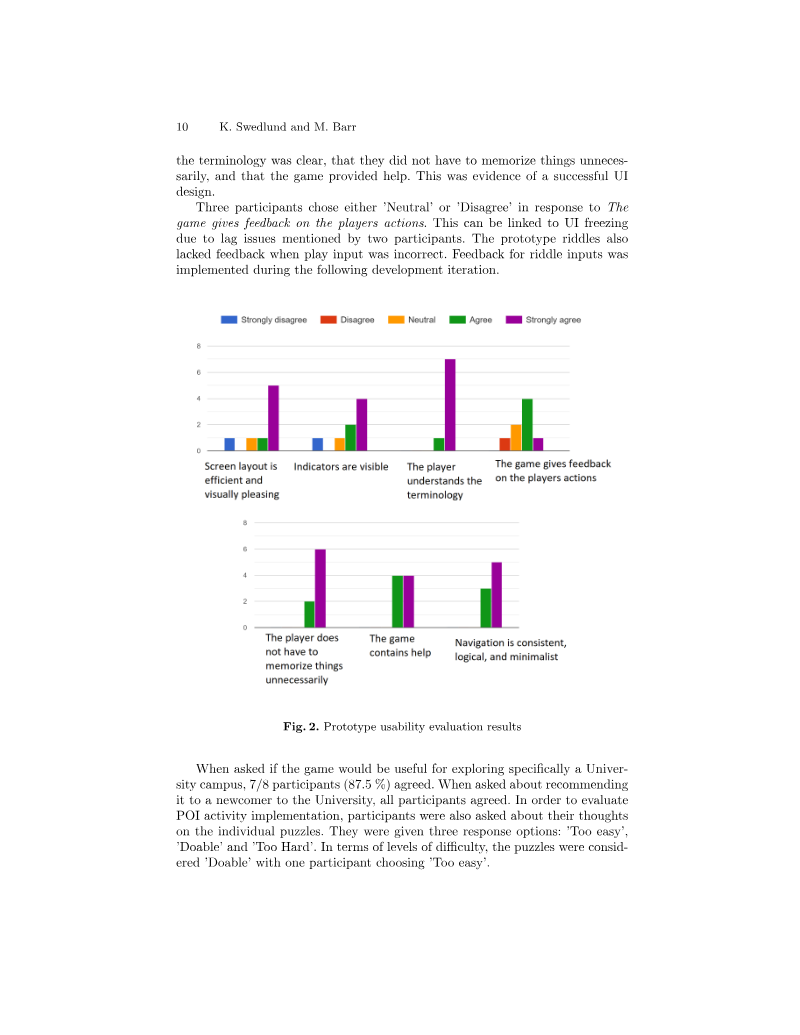
- 0391% of study participants preferred the surround display over traditional monitors, citing a heightened sense of presence within the virtual environment.See it on page 10
- 04While the prototype successfully enhances immersion, it currently suffers from lower brightness and image clarity compared to standard LCD monitors.See it on page 10
- 05The software is built on open-source CaveUT and VRGL frameworks, allowing for real-time image calibration without requiring advanced programming expertise.See it on page 4
- 06Future development plans include improving image quality, adding support for DirectX-based games, and integrating head-tracking and stereo virtualization.See it on page 10
Ask AI about this report
Summary
This research introduces a low-cost, accessible alternative to expensive, specialized virtual reality systems like CAVE environments or head-mounted displays. By utilizing a standard digital projector, a hemispherical mirror, and custom warp-mesh software, the system enables immersive, wide-view projection on irregular surfaces. The software, integrated into the open-source CaveUT and VRGL frameworks, allows users to interactively calibrate and distort images in real-time, facilitating surround-display experiences for home entertainment and educational settings without requiring advanced programming expertise.
The study evaluated the efficacy of this prototype through a pilot experiment involving twelve participants who navigated virtual environments using both a traditional 17-inch LCD monitor and the surround display. The research utilized the differential between actual task duration and perceived time as a primary metric for immersion. Findings indicate that participants experienced a statistically significant (P = 0.0051) reduction in perceived time while using the surround display compared to the traditional monitor. This "time loss" effect correlated positively with higher levels of reported engagement and enjoyment.
Qualitative feedback reinforced these quantitative results, with 91% of participants expressing a preference for the surround display, frequently citing a heightened sense of "being in the game." While the prototype demonstrated clear advantages in immersion, participants noted that the traditional monitor maintained superior brightness and image clarity. The study concludes that interactive warp-mesh correction is a viable, cost-effective method for enhancing player engagement. Future development aims to refine image quality, expand compatibility to include DirectX-based games, and explore the integration of head-tracking and stereo virtualization tools.