1 free read left. Create a free account for unlimited reading + AI research.
Create free account
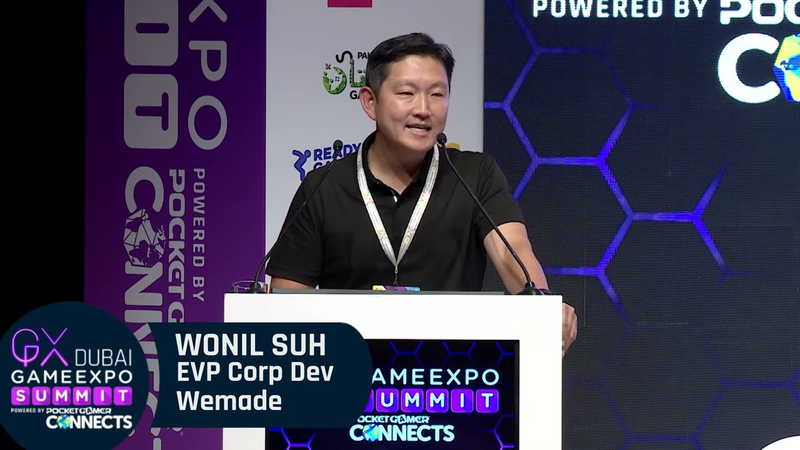
Critical Lessons Learned From Launching 30+ Web3 Games! - Wonil Suh, Wemade
Key insights
6 takeaways- 01Wemade, a public company with 1,700 employees, has launched 28 Web3 titles to date and is targeting a total of 60 games by the end of the year.
- 02Wemade’s infrastructure strategy focuses on interoperability through tokenomics rather than NFTs to support third-party developers on their platform.
- 03Successful Web3 gaming models require a strategic balance between hardcore users who drive the economy and casual players who prioritize entertainment.
- 04To stabilize token prices and foster a circular economy, Wemade has shifted toward implementing decentralized swap pools across its platform.
- 05Tokenomics must be integrated as a core game design mechanism rather than a financial feature, as excessive initial supply causes inflation while overly restricted supply stifles liquidity.
- 06Gameplay quality is the primary driver of retention, as evidenced by Wemade’s data showing that only 15% to 30% of their active player base currently connects a digital wallet.
Ask AI about this video
Transcript
I think pretty much every South Korean mobile games company has sort of understood the the the future power of of blockchain and is uh adopting it um and I guess maybe uh we made is not particularly well known I'm sure uh uh Woolen will simply tell us all about it um but I think probably they are the most uh active blockchain game publisher so so we have a great uh title of the talk critical Lessons Learned after launching more than 30 web free games so plenty of data there hi everybody uh great to meet you John Juan uh I'm the EVP of Corp Tav that we made uh EVP of courtev I worked with third-party developers I work with uh Publishers I work with companies that are generally interested in working on with our chain trying to put their games
on our platform so uh yes I do a lot I talk with a lot of third parties so uh this session I'm going to be talking a little about some of the stuff that we've learned and I'm going to talk a little about my company a little about myself so you guys have a good idea of where I'm coming from and if if in fact I do know what I'm talking about which a lot of times I don't but hopefully with 30 games or so I do have a little more experience that I can share uh so uh you know I I started my career uh in early 2000 late 90s and you know that's when internet started happening internet connectivity for games and so before that you know you'd buy your games from a CD-ROM or a retail store you'd buy Nintendo cartridges but when the internet happened it enabled two things and uh this was when I was Smackdown in the middle of the industry in Korea where it allowed different ways to pay so instead of just going to a retail store and buying it for twenty thirty dollars you would actually go you can pay for it online through time by the minute or by the hour or you can do
it by your ID your register ID or you can even pay per IP which is a internet cafe model which we started out in Korea and so the different ways to pay actually create a new business opportunities for companies for developers and it brought new types of entertainment for for the players and another thing that changed during that time was microtransaction because of internet connectivity a lot of uh companies were able to uh make content and you know try and charge people not the 20 30 but the 20 cents 30 cents and so uh this was actually the first uh microtransaction game in Korea worldwide so this was in 2000 some uh late fall uh this was a game we were a lot we launched in Korea I was this is a game uh with uh through Nexon and I was working there and we launched this game you know it was a subscription model I think four or five dollars per month we we had about ten thousand eight thousand ten thousand concurrent users in the game which wasn't bad we were doing
about twenty thousand dollars a month in Revenue not bad uh but you know we we wanted to get it bigger so what we did was we tried something new we made a microtransactions possible so if you look at the menu you'll see some items you'll see a character you'll see people on the on the top on those little buckets some of them are naked and some of them have clothes some have cool sunglasses and these are things you could buy this is like your avatar and we tried this in 2000 at you know we one fall morning we opened the servers we let it rip nothing happened the first 10 20 30 minutes the first hour uh we didn't see any transactions so we thought okay I guess this model really isn't popular a little did we know a couple leaders down the road uh Korea Telecom KT called us and said hey we got some problems with with server connectivity because they weren't expecting that much traffic from this little game and so that first month from twenty thousand dollars we hit about two hundred thousand dollars so we hit about 10 times Revenue just going microtransactions
and uh at that time we realized hey if we have more people coming in to play the game for free we'll have more people buying so instead of the subscription model we got rid of the subscription so I think we were about a little under 10 000 and within about a month we we hit 70 000 uh concurrent users so these are things that we tried back in Korea and this was the summer of the fall of 2000 so 23 years back I'm talking about this because this has brought so many changes and you know a lot of uh Asian companies and Korean companies started doing this rarely on because we saw the potential behind it and uh and I think blockchain and web3 is the same thing it's it's happening now I think it is slower to take off and I think a lot of people have had expectations but it is slowly happening because as I've seen the changes that's made uh all of these things possible because microtransactions you know are like free to play well that's not mainstream there's still a lot of console gaming but I mean if you look at it like downloadable content DLCs Skins season passes they're all variations of
uh microtransactions so I feel like what's what's happened in in Asia or in Korea 20 something years ago it took about 10 15 years to get to mainstream and you know it might be a certain amount a similar amount of time for blockchain to get there but it will get there so now a little about we made the company that I work with so uh a couple news about us so uh I think we're the only company that Microsoft has backed uh they've uh not through a front of theirs but they've invested directly in their company we're a public company in Korea uh and uh so we have about 1700 people uh where we've been in business for about 23 years so we're not a new web 3 company trying to make games or trying to sell nfts uh that's that's not our game our game is we want to make good content we want to make good things for users and uh we we started this and you know the 1700 and the people in the company about half of them are game developers we actually you know we still
have a lot of game development teams internally but the rest half are focused on web3 and blockchain Technology we develop our own chain we have a stable coin we we have a platform we have a tech stack so our goal is to become the steam of web 3 games so and I'll talk a little bit about this so one of the things that we have is we have a portal wemixtplay.com and on this site we've launched about 28 games I know the title says 30 games uh hopefully I I thought we were going to be launching 30 by the time this week came around but you know a game the delays are happening so it'll be 30 next week but so far we only have 28 games that we've launched so it's but it's close enough so this is a screenshot of the of our site this morning so you'll see we have a fishing game that we launched about two three weeks ago and uh here we have about 315 000 concurrent users on the players that are playing our games on our platform uh you know we
we started this because we have a game called mere four uh which is which is the the game right over there um you know three years five years ago we invested in a blockchain technology team and we saw those guys develop through well in about two years ago we launched our uh mirror game outside of Korea with blockchain it was there was a p2e component but it wasn't real earning I mean you couldn't make millions of dollars or tens of thousands of dollars maybe you'd make fifty dollars or a hundred dollars you buy yourself a nice meal but uh that game did phenomenally well for us and we realized through the use of blockchain technology and depending on how you implement this in your game that you could have new users uh playing the game because there is some value that they're getting out of it and we decided that we want to make this technology available for other developers so we have a tech stack we have tools for developers to bring their web 2 games onto our platform uh we will we'll work with you guys uh on
developing uh tokenomics for your game and all you know we have 28 games a lot of different genres so depending on the genres tokenomics is different we've made a lot of mistakes and we still haven't found the Holy Grail I think we are getting closer but uh so this session I'm gonna be talking about some of the things that we've learned uh yeah these are the different type of games that we have so web3 tokenomics a lot of words on blockchain technology I've been in gaming for about 23 four years I I'm not an engineer so there's no need to know any of this except I think maybe tokenomics and web3 I think web3 is is I think a lot of people understand it or have a better understanding of it than six months ago but what what enables web 3 obviously is the technology and in the web 3 gaming I think there's two ways that users or players can have some value one is through nfts and other through is tokens and a lot of our games we focused on tokens because I'll be realized or we thought that you know interoperability
of nfts in different games through different different engines different genres much easier said than done I don't think there's any any cases that we've seen but with tokenomics you can derive value from one token and you can translate that to a another medium and then put through that Medium go to another game and so we've this is our uh dining philosophy uh yeah so uh you know token tokenomics is token economics uh game developers have developed uh in-game economics for 30 40 years Diablo every every game that we we like we've heard of there's always uh in-game economics that that makes the game funders game balance you know if the game doesn't have good economics you know the game's gonna fail so you know I think a lot of Korean companies have had experience making this because we've started out with online gaming and when you make online games you're playing with other people so the interaction of the game is it's not just you and the game it's you and all the other players
out there so I think in that sense Korean developers have have had an edge uh designing game economics and so I in in that sense I think we do have a little uh Head Start and I think as John mentioned earlier today uh come to us great company we made uh you know we're we're the two bigger companies in this space in Korea and it's not because uh we're special we're smarter it's just that we've decided that we think that this technology will change the world and so we've put a lot of development behind it uh these are some of the things that I've seen the last three years uh you know the different generations of tokenomics uh you know first generation you know there's gameplay there's tokenomics and there's users uh you know gameplay quality is getting better I think a lot of people mistake game play quality as better graphics which which is not uh you know I go to different conferences and every year people are saying oh this game looks so great I mean it would do so well with on blockchain which you know Graphics don't determine the qual the success of the game at all so
you know when I see when I when somebody tells me I've got a great looking game I say you know that's probably not the right approach tokenomics as well I think early early stage you know it was all about learning you put some money in you know and you know in hopes of getting something in as a reward back there's a financial incentive I think now a lot of developers have realized that model is not sustainable and I think we're getting closer to actually having uh tokenomics that are part of the game which which gives some value to the users and you know the end goal is not to become rich I mean if that is the goal then you know this is not the type of game you want to play you want to go to Vegas you want to do some other kind of games and the users I think have come around because I think before the people that were playing some of the earlier web 3 games axes and and the like we're focused on they don't really care about gameplay it was all about the money but I think now as we'll see stronger and better games people realize hey I think
it's it's not just about earning money and that that should be a smaller part of the the experience okay now going to some of the the lessons that we have uh these are some examples of of tokenomics designs we have for our games uh you know we usually look at it from a light user and a hardcore user perspective because a lot of like core users are the ones that feed the system so that hardcore users can you utilize the tokenomics so when we look at game design sorry token design for for new games these are some of the things that we look at here uh in case say you know one of the earlier games it took us about it took a user about 10 days to get a token within the game in case b it took about three days you know we're doing these different things and designing different things because we we don't know what works what works better and so yeah we've got KC case d uh yeah we've got different models for different games different genres one of the more
interesting I want to point out is a case f which is a game that we launched uh earlier this in March I think but what we did about this game was instead of using one coin if you look at the if you look at the graph on the right you'll see there's coin a which is a coin that's received earned through the game but then there's coin B which is part of a coin which is a coin that's from another game predecessor of this game so it's like a series uh it's Legend of mere four then Legend of mirror M so it's a Series game in the second part of the series we've acknowledged the users that have been a loyal fan in the earlier game so once they've earned a certain amount of tokens they can come into this game and have some privilege we're giving them some acknowledgment hey thanks for being a fan of this game now you can use that token and take it with coin a because you still have to do play this the new version of the game and then you'll get Queen C and with coin c you have some say in how some of the events that are run so like we have governance programs where like how often do you want the
dungeons to be open how big do you want the guild rates to be we have these things and uh you know this has been something very interesting for us because us we haven't had you know a lot of game developers or Publishers web 3 companies talk about interoperability uh take my nft put it in your nft you know in reality it is very difficult but what we've done with tokenomics is we've actually brought that token into a new game and then you know we've seen numbers uh we've seen old users or from the previous game be seated into this new game so some of the new things that we're trying now is can we bring games that are not from the same universe not from the same Series so maybe from an RPG to a casual game or from a casual game to an RPG so you know because we have a lot of games I think we're going to be trying more of this and some of it's going to work some of it's going to fail and we've made a lot of mistakes but I think the fact that we're trying these things I think it'll make the whole industry a little better because you know any anybody can play our games and no and if you play enough you'll get to understand this economics
so there's no secret here uh other other learning is actually I think this is one of the things that's very interesting so I'm going to be talking about four type of games here and how tokens apply how you mine or you get the tokens within the game versus the trading volume how they affect uh the token price so this is a game a we launched supplies the yellow curve a lot of Supply from the very beginning and so there was a lot of trading volume great but then you know it didn't work out because a lot of Supply you know uh you know crap Point crash coin price crash second game so we're like all right let's limit Supply so instead of getting a huge supply from the very get-go you know we limited Supply and so obviously with limited Supply there's limited trading volume and so with limited trading volume you think hey you know there should be a healthy balance well this is what happened like why why did this happen and so our analysis of
this is because there wasn't enough enough uh token out there for the hardcore users of the whales to actually buy tokens in the game from other users so there wasn't that it wasn't a circular system so because the supply was so limited so that that was probably a big reason that we think it didn't work so the next iteration is the same as uh game type A you know we had a huge supply of uh a token elements from the very beginning tokens from the very beginning a big trading volume yeah but it crashed but what I do want to point out about this graph is you look at what's happened in November and January you'll see a little bump that goes up there and you see the trading volume goes go up as well but Supply amount didn't change what we did here was uh you know we we've analyzed this game and we thought let's try something so we added something new into the game we added a new system or a little little something that users actually needed to get in order to bring their tokens out
of the game and so for about two and a half months the the price roughly doubled and then it went back down but it's still 50 of what it was before we implemented the system and uh we were looking at it saying hey is there backlash from the community because we changed the tokenomics is there you know and you know the community there wasn't a lot of issue behind it and so we felt like hey you know this is a model that might work if you've designed a game and there's something wrong with it and the coin price goes down how can you get that coin price back up and by changing some parts within the game so this was an exercise in that and uh the finally this is a one of our more ladder games so we launched this game in February so you can see that Supply amount started out really low it's gradually progressing but then you see the trading volume being way up high there and it's like how can this be if there's no Supply like somebody has to come up earn the tokens within the game to actually sell it to other users what we did was uh we created a swap pool a sizable enough
where even there wasn't enough tokens that were mined within the game they could get it from our decentralized exchange so or pool and so we tried this and uh you know this is uh this is a couple months old but you still see that compared to the other games the token prices are it's a lot more smoother fluctuation isn't as bad and uh so we think we found something with this uh this this killer this this tactical thing that we've done and so uh you know moving forward all of our games are launching after this we've created swap pools and you know how big is the swamp pool how much users do you expect to trade I mean you know and it depends on the game there's a lot of things to think about but this is a thing something that we've done and I I think this is you know it's a working model anyway I've got about two minutes left so these are the lessons that I've learned uh so I have beautiful token graphs are a rare thing I mean they're very hard two you make Supply easy and
then you know there's inflation restrict Supply early and there's not enough transactions there's not enough volume going around and if there isn't enough volume it's there's so much volatility uh token prices will fall but even just small amounts of uh uh Trading so that part you know we we monitor every every day every week we see token prices we have guys looking at it seeing if there's anything we can learn from it and finally this is this is the thing that I want to stress out point out is a lot of people think that good tokenomics can make your game good or there there could be some value there but it actually isn't it's part of gameplay it's a game design mechanism so if you have a pretty crappy game this is not going to help at all and I you know I think a lot of companies have learned or are still learning this because I I talk with developers wanting grants uh you know they come to me and say hey we've got this game it looks good uh you know we think you'll do well can you give me a grant we don't look at it from a web perspective we look at it as a game is
the game fun well it's thick will it work and you know that's how we evaluate games there's a whole bunch of things that we're doing right now I'm short on time but I do want to show show you where we've progressed in the last 15 months so last year in March we had seven games you know one platform 25 games now uh 15 months later we've signed 100 games on our platform we've launched uh 28 live games you know different regions uh different genres so you know this is where we've been coming coming through and I think give us by the end of this year our goal is to have a 60 live web 3 games so as John was saying earlier uh you know I think we'll still be on top of that of his list of most web3 games launched all right I think that's time for me uh thank you everybody if you have any questions if you want to get in touch uh you know that's my email up there so feel free to reach out all right thank you good stuff always stay out there always love a good a good graph
um with different axes on um so uh any questions to kick the uh keep the afternoon off I have a question if no one else does so um if you haven't got one I've got one um so so I really like the experimentation you're doing um that's always a good starting point is to is to be humble and look at the data um I guess there's two there's sort of two obvious things that sort came to mind where you're launching games with the tokens and then saying tokens are sort of liquid and you can do things to sort of interrupt interrupt make an interop interoperable um obviously one way of doing it which I think is more come to Us's view is they launch their games without blockchain and then sort of add the blockchain in sort of later on or sort of an alternative option would be just user typically just use a stable coin like your own stable coin or or a usdc or something like that we sort of you know takes away some of the sort of fun and the trading bit but equally allows sort of it gives you a bit more control over economies in the early stages so have you thought about that sort of stuff at all yeah we've done that with our latter games we do have a
stable uh stable coin uh US dollar backed so I mean uh you know we use that for some of our ladder games so we we do have that component so there's less volatility and a lot of our games are games where you just download download off the app store or Google Play there's no web3 you don't need a wallet to start a game you just download the game and play as is at a certain point in time level five level 50 at a certain point in time there's functions if you want to access that function you want to connect your wallet you don't have to they're out of the 100 uh the the user the demographic only about 30 of the users actually have connected wallets even for our biggest game so 70 of the users don't have a wallet they don't care about the wallet but 30 and do and this is for bigger games on average it's it's in the teens it's under 20 of our users that have actually connected wallets and our gamers are Gamers but they know crypto but still I mean majority of our users are not just playing for crypto I would say 20 20 is pretty impressive to
be honest we work hard at it we try to get the number up yeah and a very quick question again so um obviously you're operating through Apple and Google you don't have any issues we have not had any we do have I mean we're a platform so there are games that we public we developed and we published their third-party games that we just provide sdks and they're they onboard to our platform and so those individual developers might have issues uh some of them because it's not anything with web3 it's some of their policy stuff that I think Apple has said no we can't allow it so there were maybe like two games that's only on Google Play but uh I mean you know we try to buy by all the rules and we tell our guys hey you abide by the rules of the platform that's just how it is with Google and apple excellent thank you very much it was very good right thank you lovely
Summary
The evolution of Web3 gaming mirrors the transition to microtransactions and online connectivity observed in the South Korean gaming market two decades ago. As the Executive Vice President of Corporate Development at Wemade, Wonil Suh argues that while blockchain integration is a slower, more complex process than previous industry shifts, it represents a fundamental evolution in digital entertainment. Wemade, a public company with 1,700 employees, currently operates as a major Web3 publisher, having launched 28 games on its platform with a goal of reaching 60 by the end of the year.
The core thesis emphasizes that tokenomics must be treated as a sophisticated game design mechanism rather than a standalone financial feature. Through the analysis of over 30 titles, the company has identified that excessive initial token supply leads to inflation and price crashes, while overly restricted supply stifles trading volume and liquidity. To address these challenges, Wemade has moved toward implementing decentralized swap pools to stabilize token prices and foster a circular economy. Furthermore, the company advocates for a "Web2-first" approach, noting that only 15% to 30% of their active player base currently connects a digital wallet, suggesting that gameplay quality remains the primary driver of user retention.
Methodologically, Wemade utilizes its own blockchain infrastructure and tech stack to support third-party developers, focusing on interoperability through tokenomics rather than NFTs. The company’s findings suggest that successful Web3 models require a balance between hardcore users who drive the economy and casual players who prioritize entertainment. Ultimately, the data indicates that while blockchain technology provides new avenues for value exchange, it cannot compensate for poor game design, reinforcing the necessity of prioritizing fun and engagement to ensure long-term sustainability in the Web3 ecosystem.