ArticleGame Developers Conference
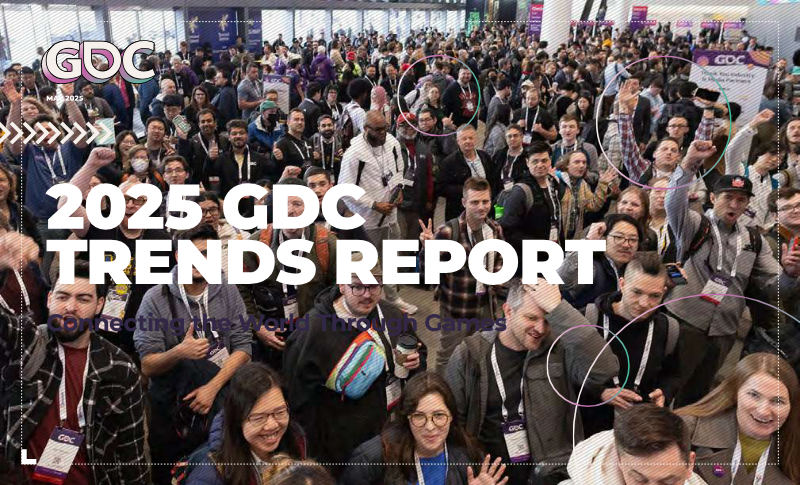
2026 GDC Trends Report: 5 Insights on the Future of Game Development
1 pages~4 min full read
Key insights
6 slides
Production model
Studios increasingly rely on co-development models for modern production.
Co-development helps studios manage the resource and staffing demands of modern game production.
Mobile strategy
Mobile developers prioritize long-term retention over new user acquisition.
Developers are shifting toward dual monetization strategies. This prioritizes long-term user retention over aggressive acquisition.
AI maturity
Generative AI focus shifts from feasibility to implementation strategies.
Assistive tools are easily accessible, moving the industry to practical implementation. The focus is now on ethics and implementation strategies.
AI implementation. Generative AI has reached a level of maturity where assistive tools are easily accessible, shifting the industry focus from technical feasibility to the ethics and implementation strategies of AI in…
Financing gap
Indie game funds bridge financing gaps for developers.
Larger studios struggle to secure funding for early-stage prototypes. Specialized indie game funds are emerging as a vital source of capital.
Indie funds. Indie game funds are becoming a critical financial bridge for developers as larger studios encounter increasing difficulty securing funding through traditional proof-of-concept prototypes.
DEI reevaluation
Marginalized professionals report negative impacts from DEI reevaluation.
Advocacy and diversity initiatives are undergoing reevaluation. This leads to increased concerns regarding workplace equity for LGBTQ+ professionals and older workers.
Workplace equity. Marginalized professionals, specifically within the LGBTQ+ community and older age demographics, are reporting negative impacts from the industry's reevaluation of diversity, equity, and inclusion (DEI) policies.
Report scope
Five critical themes shape the 2026 game development sector.
The report synthesizes insights from sessions, panels, and expert interviews. These findings reflect strategic priorities and operational challenges for studios, developers, and investors.
Five themes. The report identifies five critical themes currently shaping the sector.
1 / 6
Ask AI about this report