Shift
CompanyJapan
Documents about Shift
Extra Credits8 min
Saving the World with Games - Citizen Science and More - Extra Credits
Games serve as powerful tools for citizen science and real-world problem-solving, moving beyond entertainment to facilitate tangible contributions to medicine, urban planning, and physical therapy.
- Gamified citizen science projects leverage human pattern recognition to solve complex research problems faster than traditional algorithms, such as when 57,000 Foldit players deciphered an AIDS-related enzyme structure in three weeks after a decade of scientific stagnation.
- Large-scale crowdsourcing through games can mobilize massive participant bases, exemplified by EyeWire engaging 250,000 players to map complex neural circuits.
- The United Nations’ Block by Block initiative has utilized Minecraft across 35 countries to facilitate community-led urban planning and identify local safety concerns.
Extra CreditsMay 2020
Extra Credits8 min
Games You Might Not Have Tried - ep 17 - New Games to Learn From! - Extra Credits
The seventeenth installment of the "Games You Might Not Have Tried" series focuses on identifying unique, experimental, or unconventional titles that offer valuable design lessons rather than traditional entertainment value.
- Experimental game design succeeds by focusing on a single, elegant premise and executing it with high precision rather than attempting to include excessive features.
- Developers can achieve significant emotional or intellectual impact with minimal resources by prioritizing economy of design and thematic maturity.
- Non-competitive mechanics, such as those found in the art-focused MMORPG Occupy White Walls, can effectively foster positive and creative online communities.
Extra CreditsNov 2018
Game Developers Conference32 min
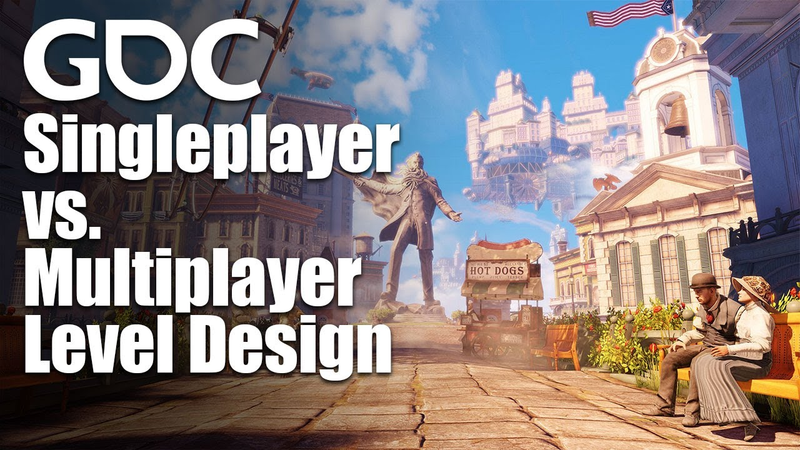
Level Design Workshop: Singleplayer vs. Multiplayer Level Design: A Paradigm Shift
Designing effective game environments requires a fundamental shift in priorities depending on whether the experience is intended for single-player narrative exploration or competitive multiplayer engagement.
- Single-player level design focuses on immersive storytelling and guiding players through narrative beats using visual landmarks known as 'weenies'.
- Multiplayer level design prioritizes competitive integrity and movement fluidity, requiring rigorous management of sightlines to ensure fair outcomes.
- Asymmetrical layouts are preferred over strict symmetry in multiplayer design to improve map readability and player orientation.
Game Developers ConferenceJul 2017