
International Journal of Serious Games
Open-access peer-reviewed journal of the Serious Games Society on the design, use and assessment of serious games.
Documents

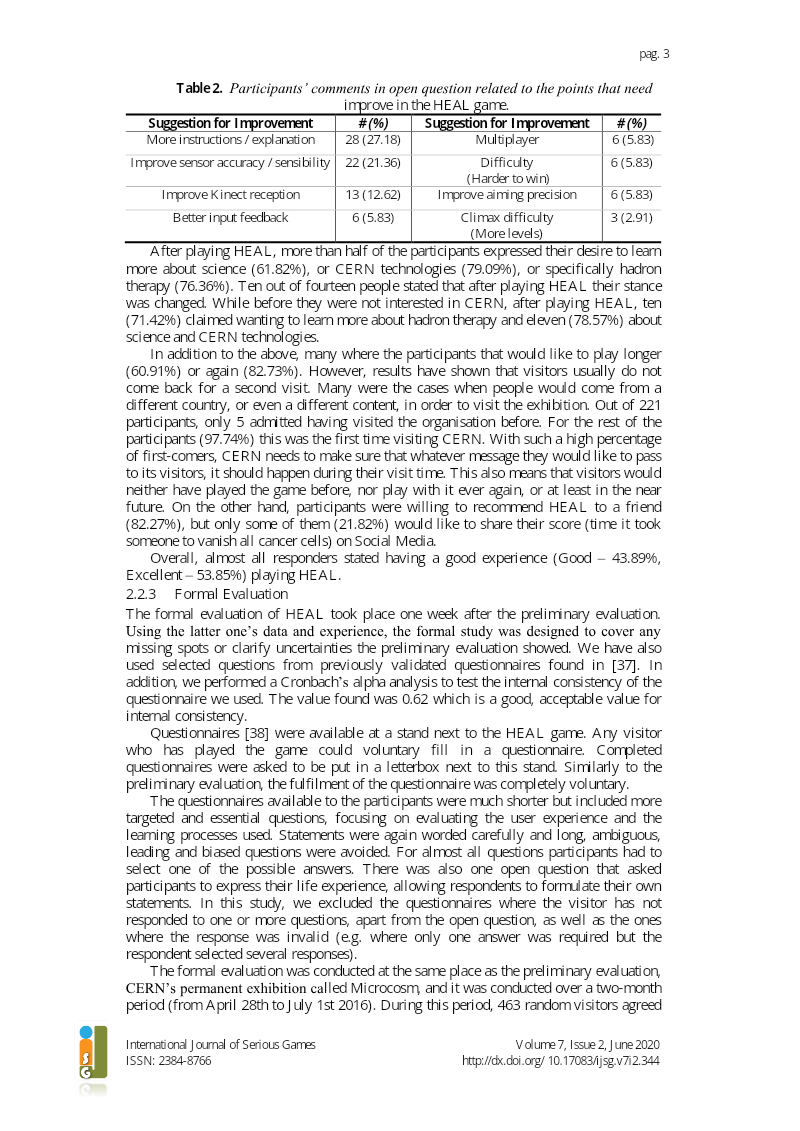
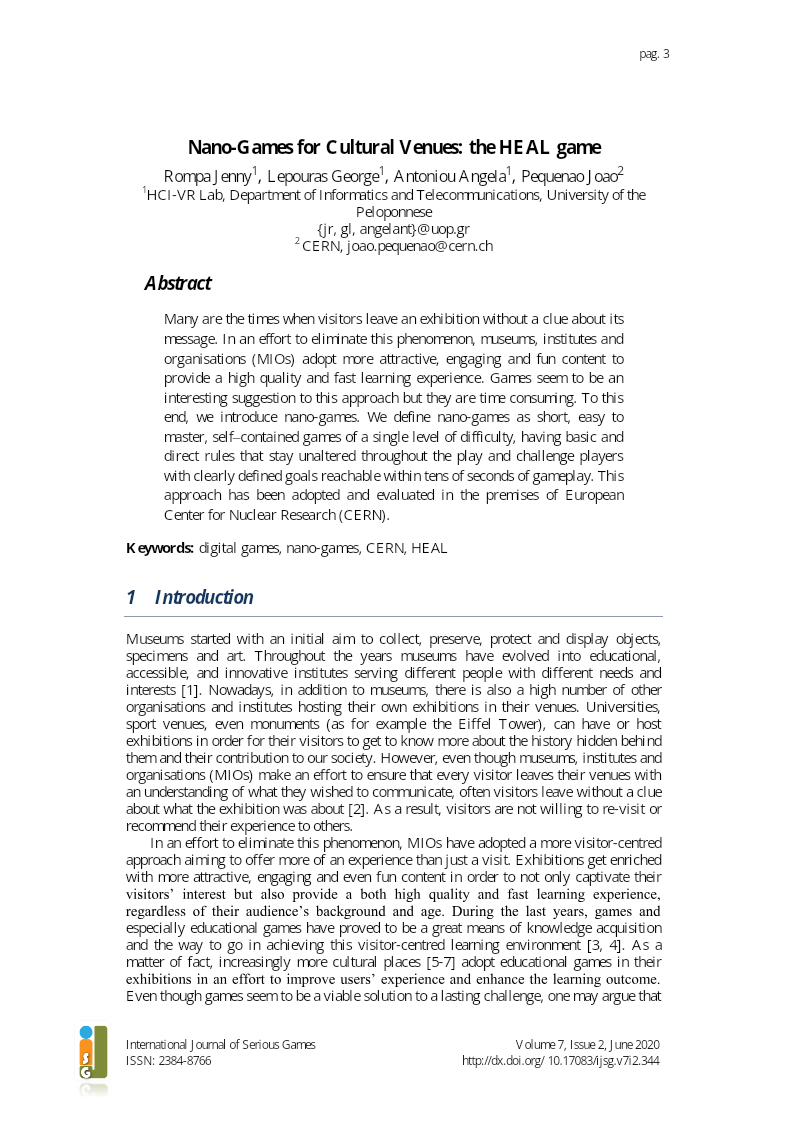
Nano-Games for Cultural Venues: The HEAL Game
Nano-games represent a strategic solution to the pervasive challenge of visitor disengagement and time constraints within cultural and educational institutions.
- Nano-games effectively communicate complex scientific concepts like Hadron Therapy to diverse audiences through short, intuitive, and gesture-based interactions.
- Evaluation of the HEAL game at CERN’s Microcosm exhibition showed that 80 percent of 221 participants successfully internalized the presented scientific information.
- Learning outcomes occur rapidly, with data indicating that users grasp core concepts within the first minute of interaction.
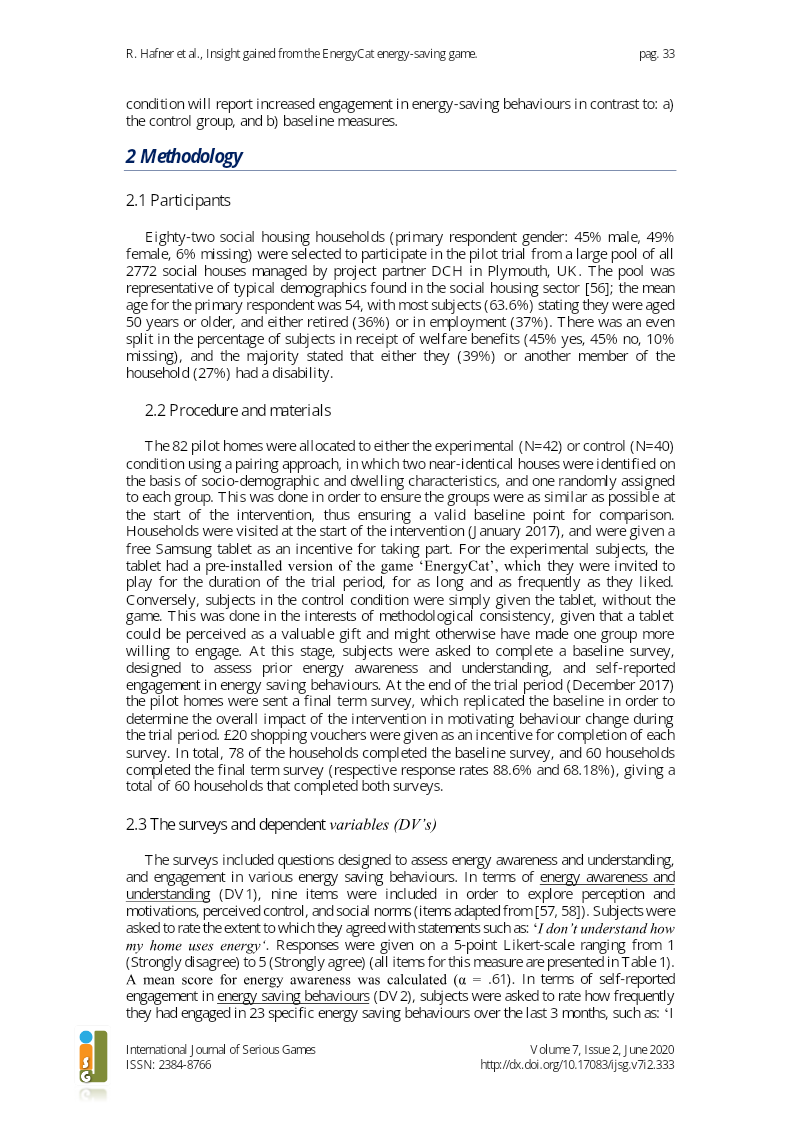
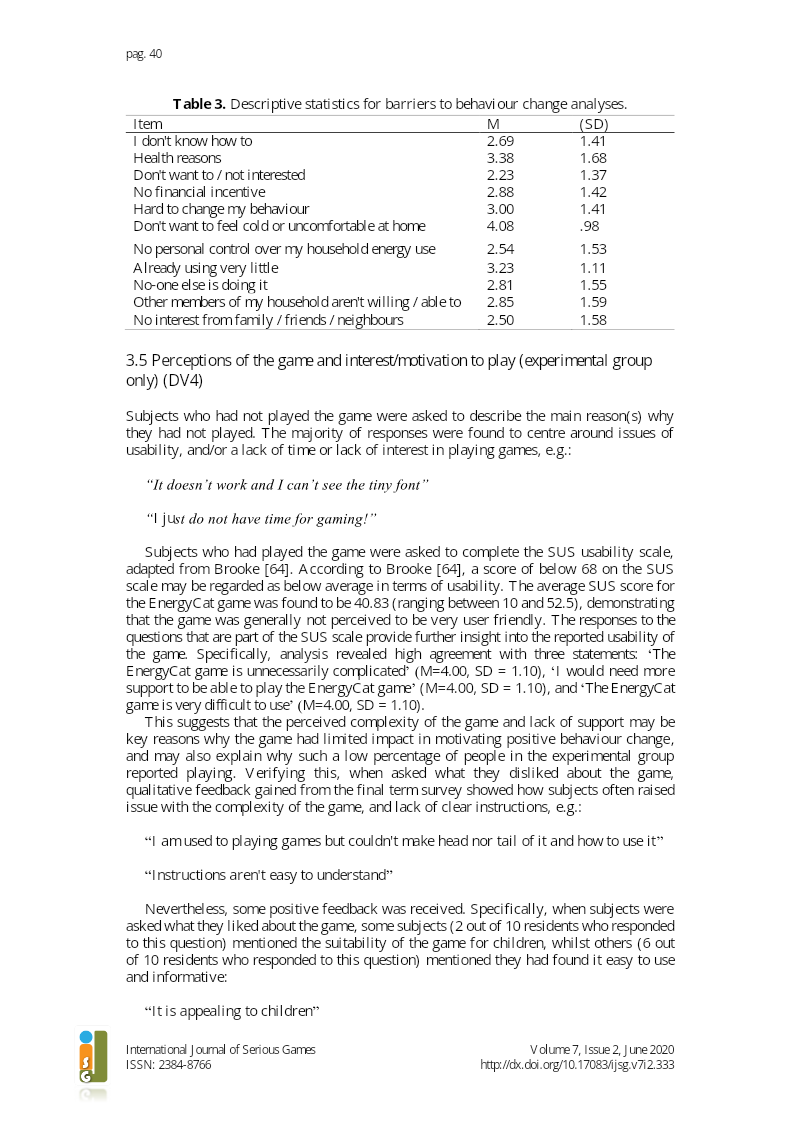

Results and Insight Gained from Applying the EnergyCat Energy-saving Serious Game in UK Social Housing
The EnergyCat serious game initiative sought to evaluate whether gamified interventions could effectively promote energy conservation among social housing residents in the United Kingdom.
- The EnergyCat serious game failed to produce statistically significant changes in energy usage or awareness levels among the 82 participating UK social housing households over the 12-month study.
- The software received a poor System Usability Scale score of 40.83, driven by design flaws including excessive complexity, small font sizes, and unclear instructions.
- Low IT literacy and usability barriers significantly hindered engagement, preventing the game’s mechanics from effectively influencing user behavior.
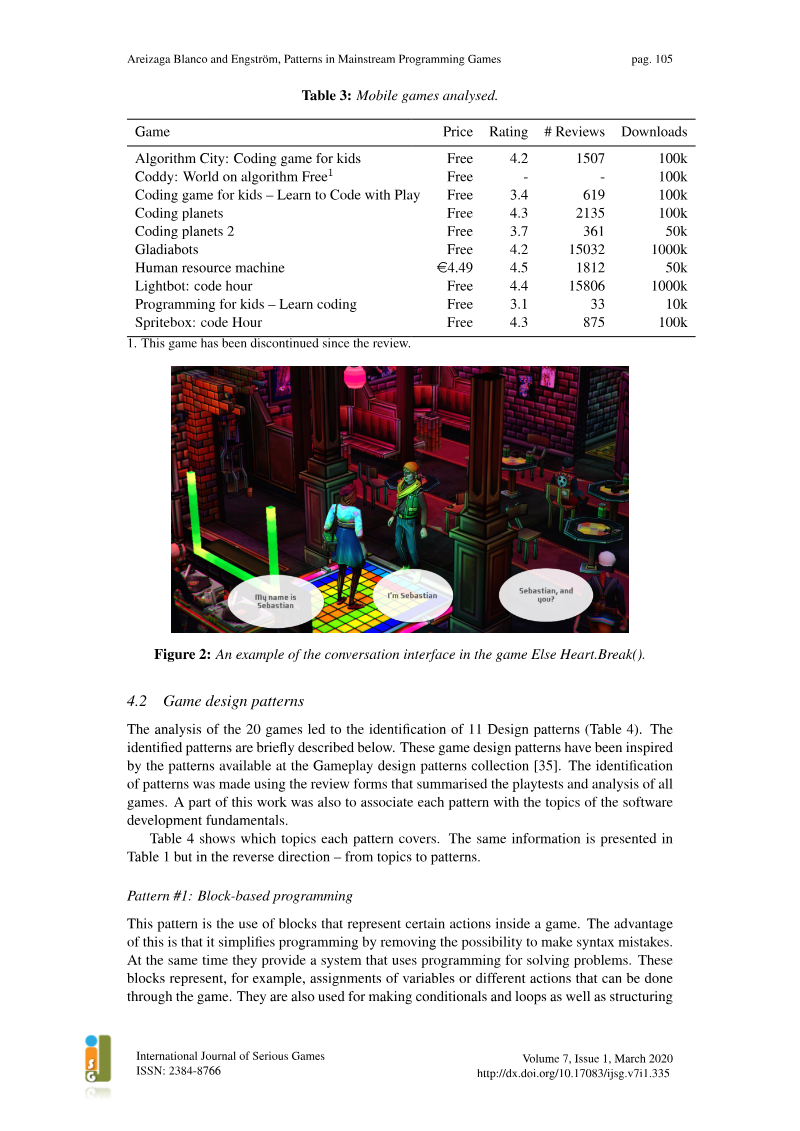
Patterns in Mainstream Programming Games
Mainstream programming games serve as a bridge between entertainment and technical education, utilizing specific design patterns to introduce software development fundamentals to a broad audience.
- Mainstream programming games rely on eleven recurring design patterns, such as block-based programming, register representation, and device hacking, to teach software development fundamentals.
- An analysis of twenty commercially successful titles on platforms like Steam and Google Play confirms that puzzle-based mechanics are the primary vehicle for teaching logic, debugging, and control structures.
- Current programming games prioritize player retention and accessibility, which leads to a significant educational gap regarding complex data structures, advanced algorithms, and software design principles.


Location-based Games as Exergames: From Pokémon to The Wizarding World
Location-based games function as effective tools for promoting mild physical activity, primarily through casual walking, though they generally fail to facilitate moderate or strenuous exercise.
From Design to Management of Digital Epistemic Games
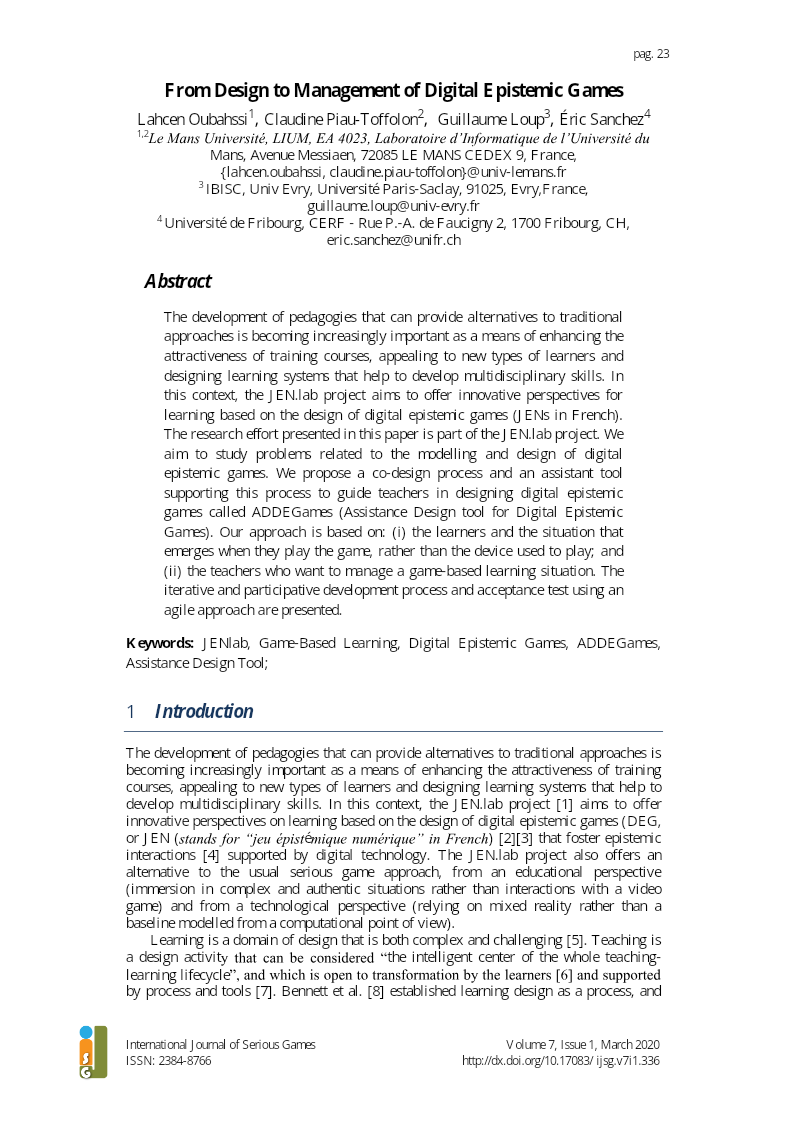
Digital Epistemic Games represent a pedagogical evolution in serious gaming, shifting the focus from static digital artifacts to the dynamic interaction between learners, educators, and complex, authentic professional contexts.
- Digital Epistemic Games shift the focus of serious gaming from static software to the orchestration of dynamic, multidisciplinary scenarios that mirror authentic professional challenges.
- The JEN.lab project utilizes a Design-Based Research methodology to bridge the gap between theoretical game design and practical classroom implementation.
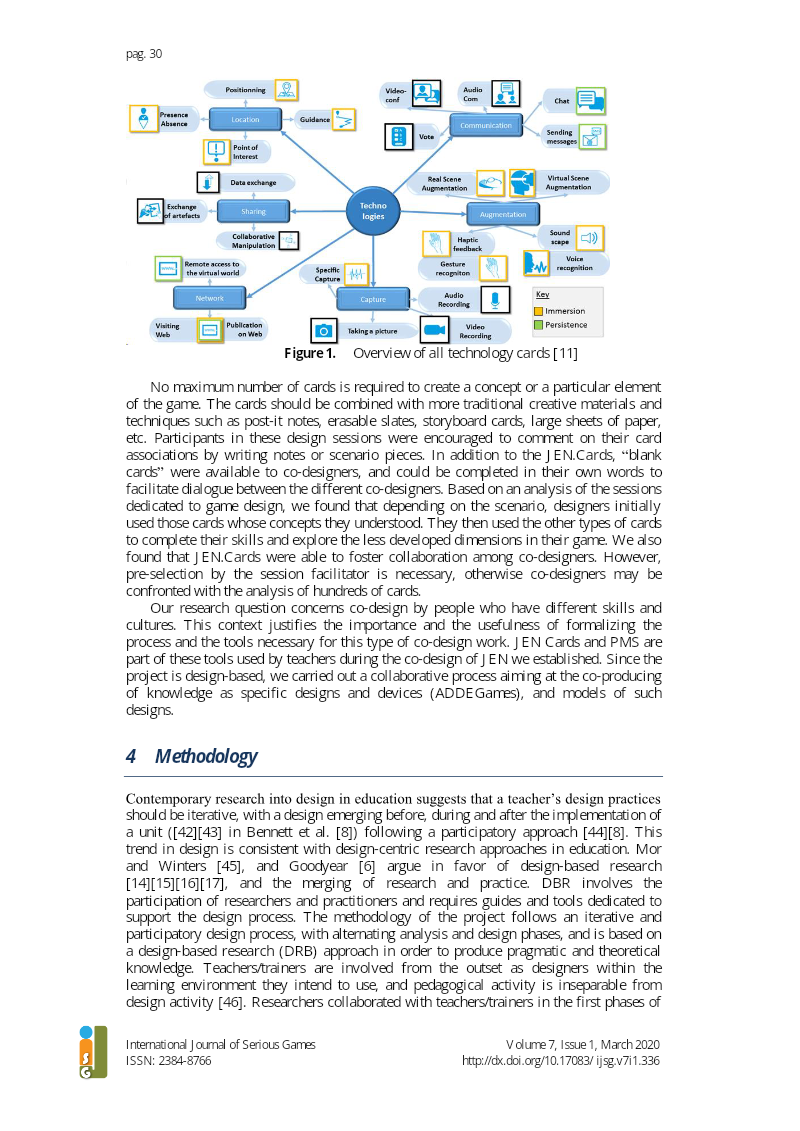
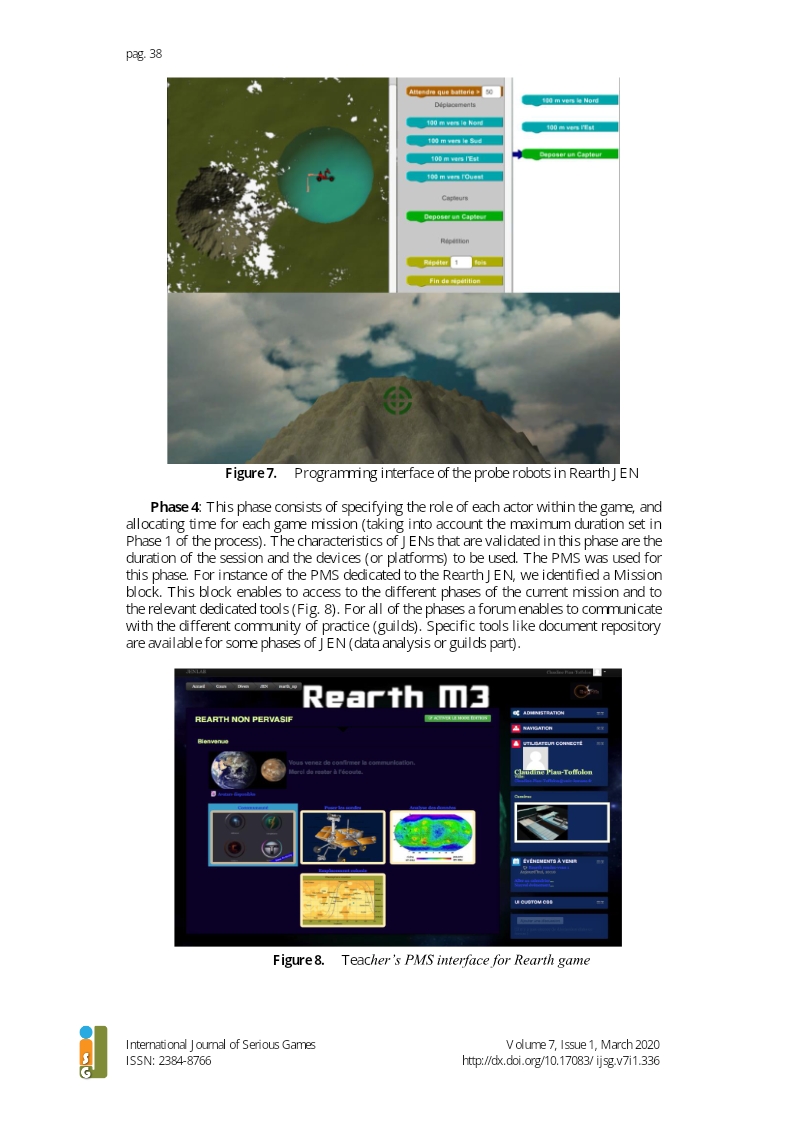
- The JEN Model provides educators with a structured, six-phase framework to design, manage, and adapt complex learning environments.



Serious Gaming of Logistics Management in Pediatric Emergency Medicine
Pediatric emergency departments face significant operational challenges, particularly regarding patient flow management and the mitigation of systemic overcrowding.

The Active Video Game Paradox
The Active Video Game Paradox centers on the persistent commercial underperformance of games designed to promote physical activity compared to their sedentary counterparts.
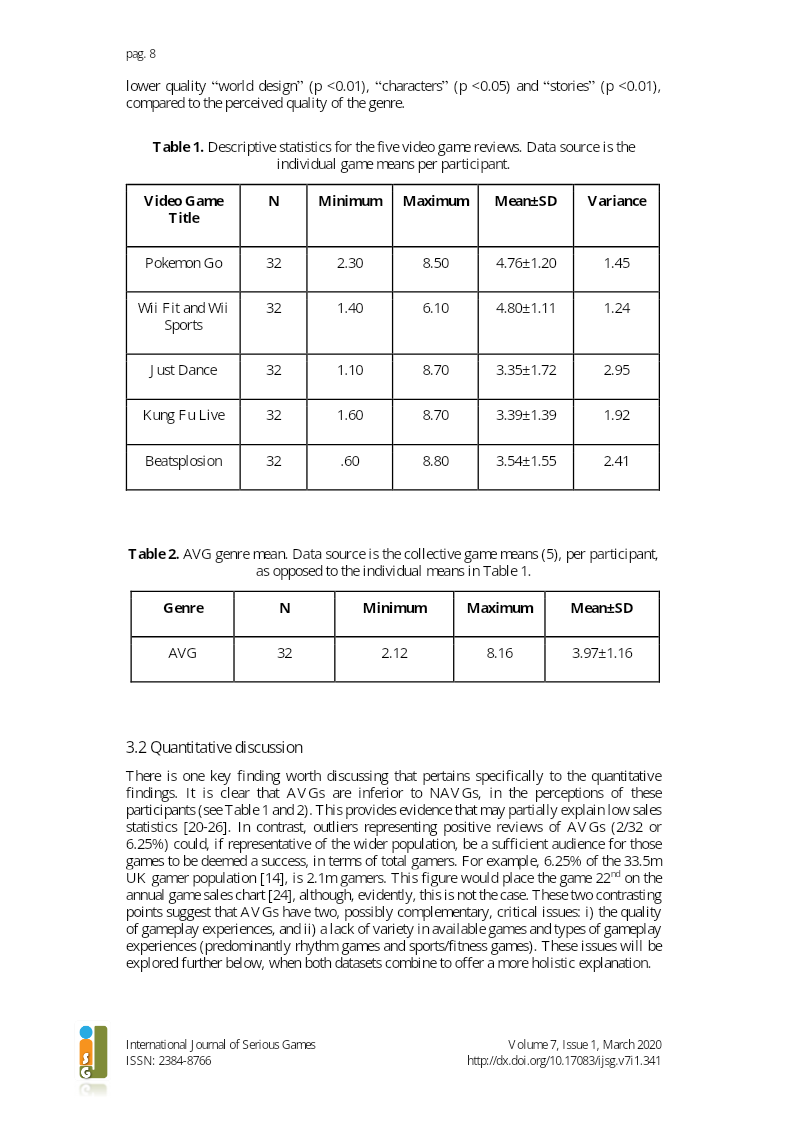
- Active video games consistently underperform commercially compared to sedentary titles because they prioritize health outcomes over the production quality, narrative depth, and mechanical variety required for long-term engagement.
- Research conducted between 2009 and 2019 indicates that players reject active titles due to restrictive, 'on-rails' gameplay that lacks the autonomy and world-building found in traditional gaming.
- The genre currently fails to align with established Gamer Motivation Models, relegating active games to a niche, casual, or family-oriented status rather than a high-quality entertainment segment.


Can Digital Games Serve as Potential Intervention or Suicide Risk?
Digital games and mobile applications represent a promising, cost-effective frontier for mental health intervention, particularly for addressing the global crisis of suicide.
Autonomy Motivators, Serious Games, and Intention Toward ISP Compliance
The Decisions and Disruptions tabletop game serves as an effective pedagogical tool for enhancing employee compliance with information security policies by fostering intrinsic motivation through autonomy.

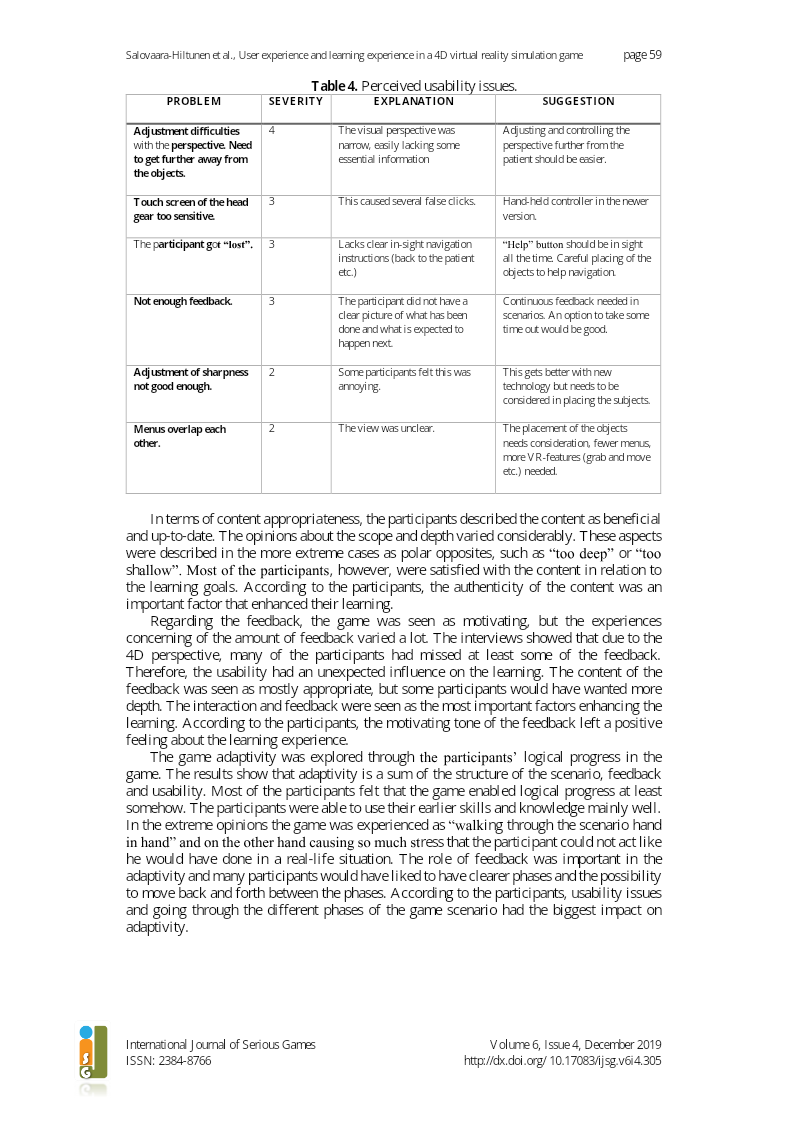
User Experience and Learning Experience in a 4D Virtual Reality Simulation Game
4D virtual reality simulation games represent a transformative approach to healthcare training, specifically regarding the mastery of high-stakes resuscitation protocols.
Computational Thinking Development and Assessment Through Tabletop Escape Games
Tabletop escape games serve as a potent pedagogical medium for cultivating computational thinking among K-12 and university students.
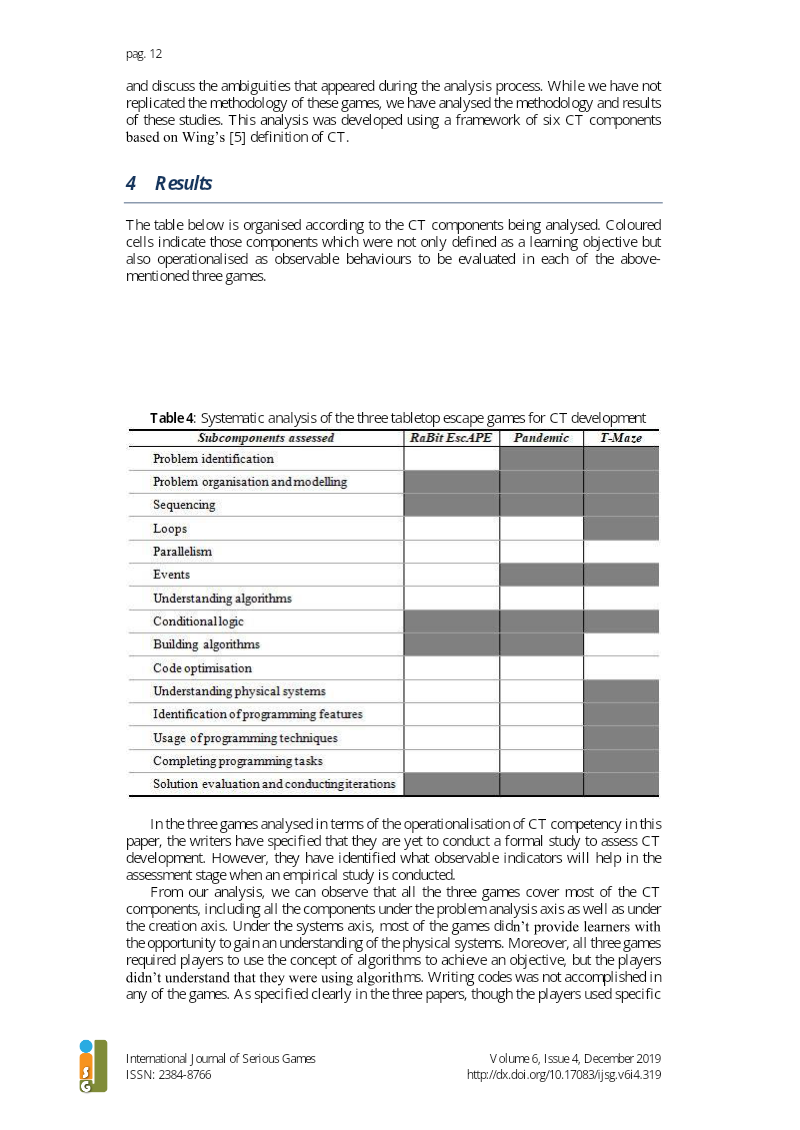
- Tabletop escape games like Pandemic, RaBit EscAPE, and T-Maze effectively foster computational thinking skills such as algorithmic thinking, simulation, and debugging in K-12 and university students.
- A significant pedagogical gap exists where students successfully execute in-game mechanics but fail to translate these actions into a conceptual mastery of formal computational theory.
- Current assessment methodologies are insufficient for measuring the full scope of learning outcomes, necessitating the development of standardized, formative, and summative frameworks.

ALF: A Framework for Evaluating Accelerated Learning in Industry
The Accelerated Learning Framework (ALF) provides a structured methodology for evaluating the efficacy of game-based learning within industrial environments.