Back to Writers
International Game Developers’ Association
Organization
70 documents
Documents
Whitepaper
Bylaws of the International Game Developers’ Association, Inc.
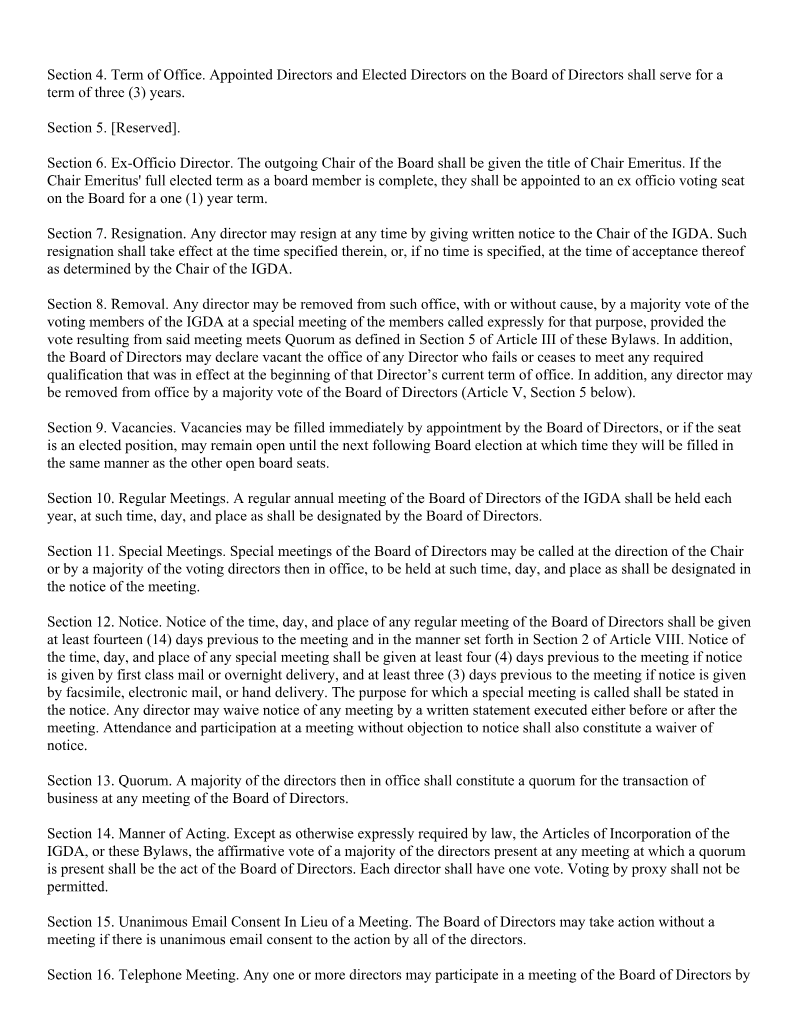
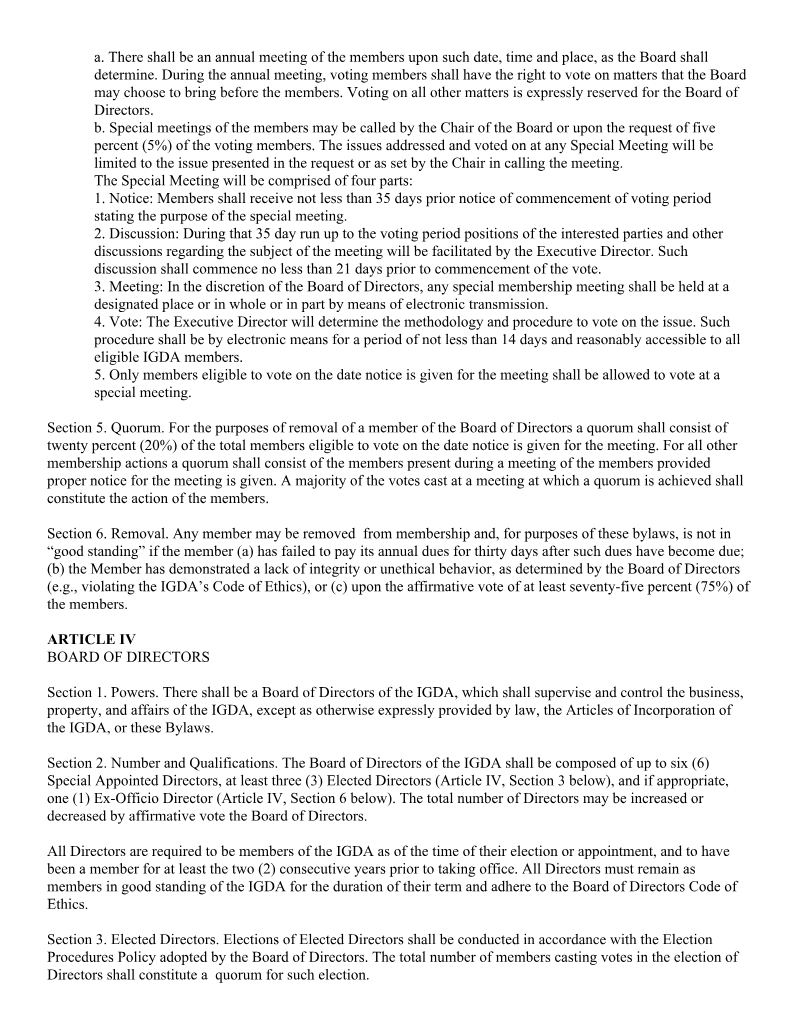
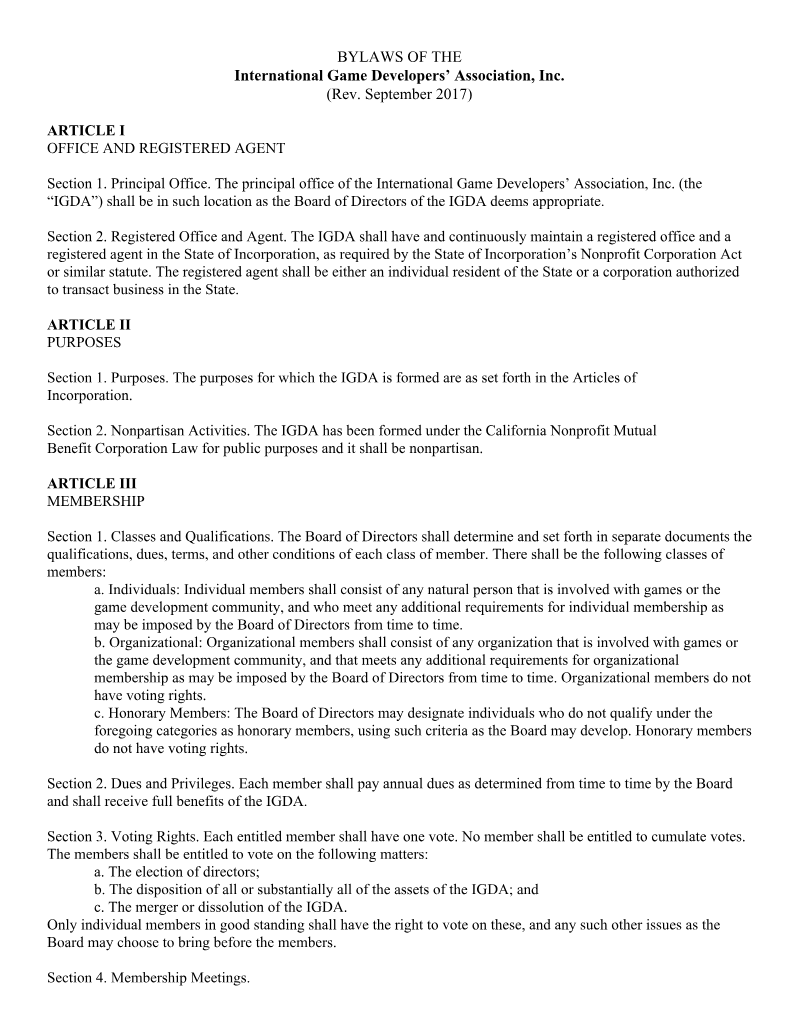
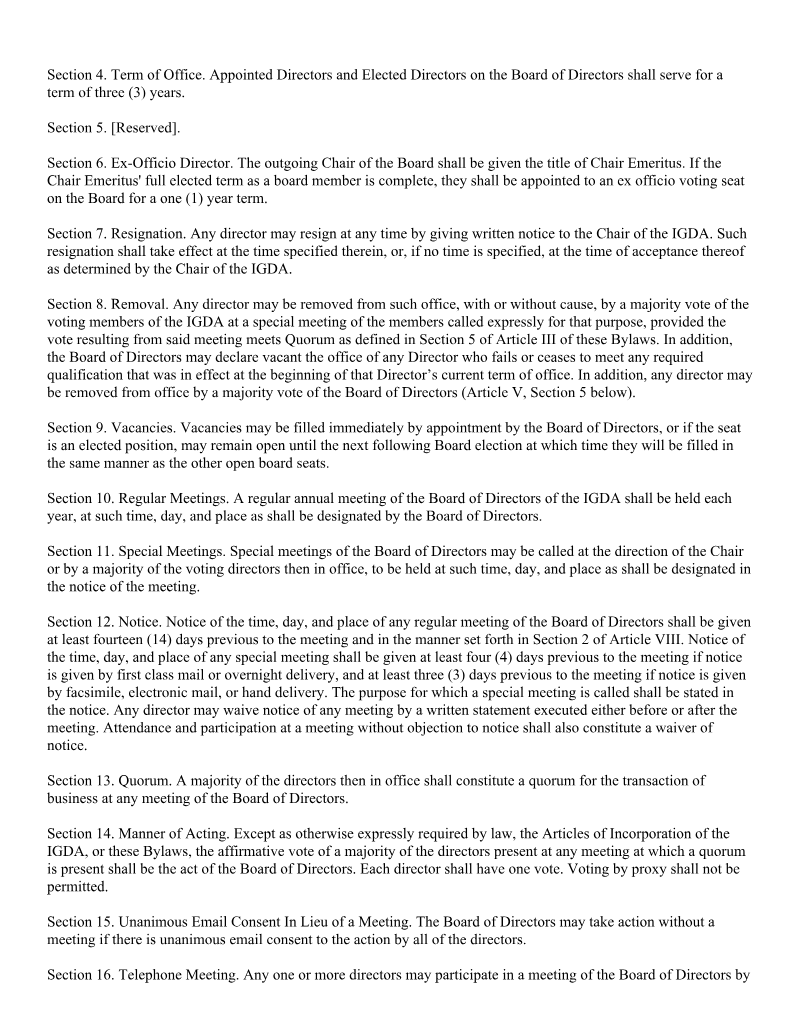
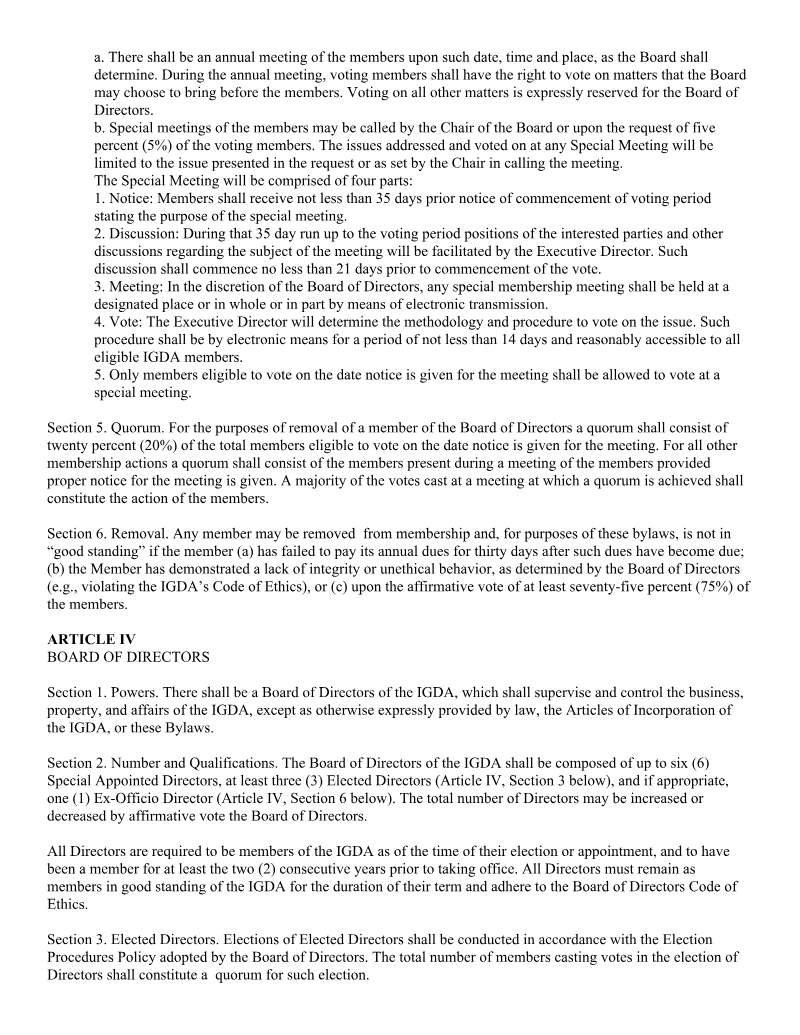
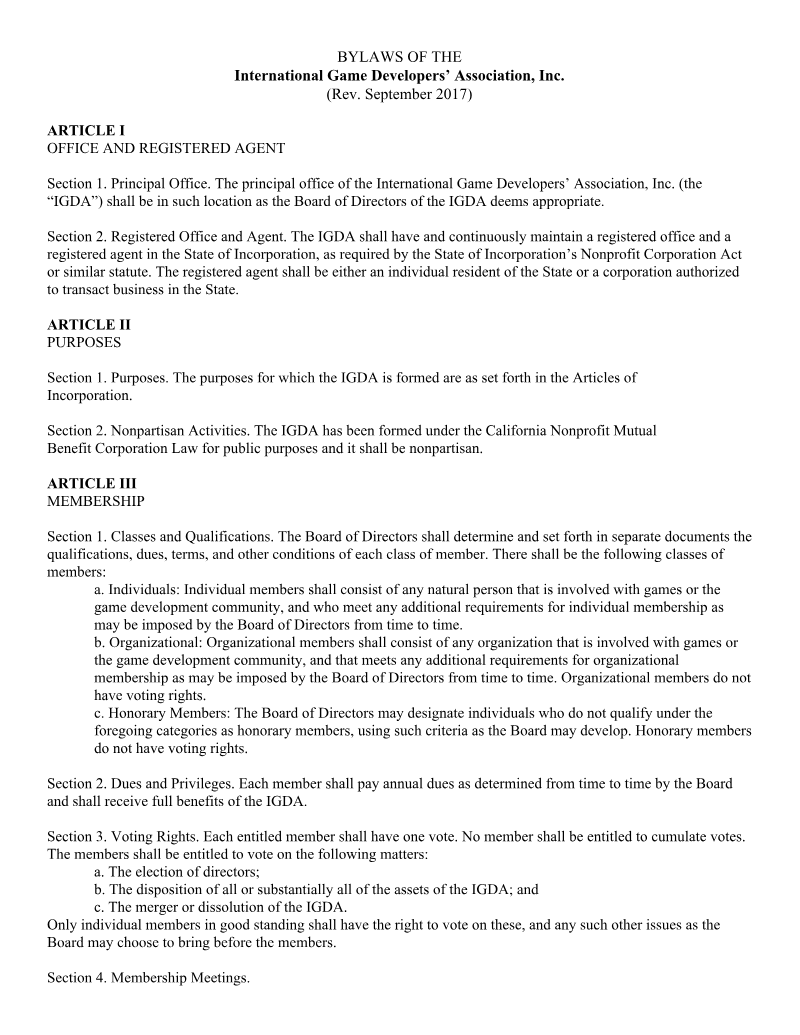
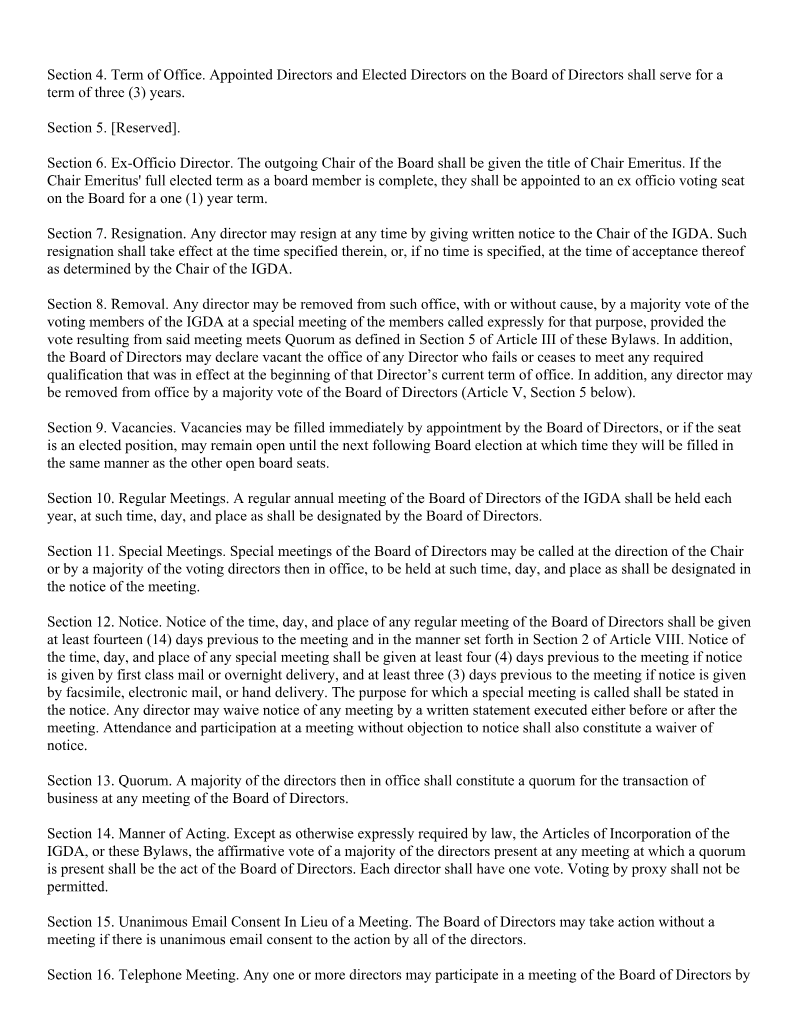
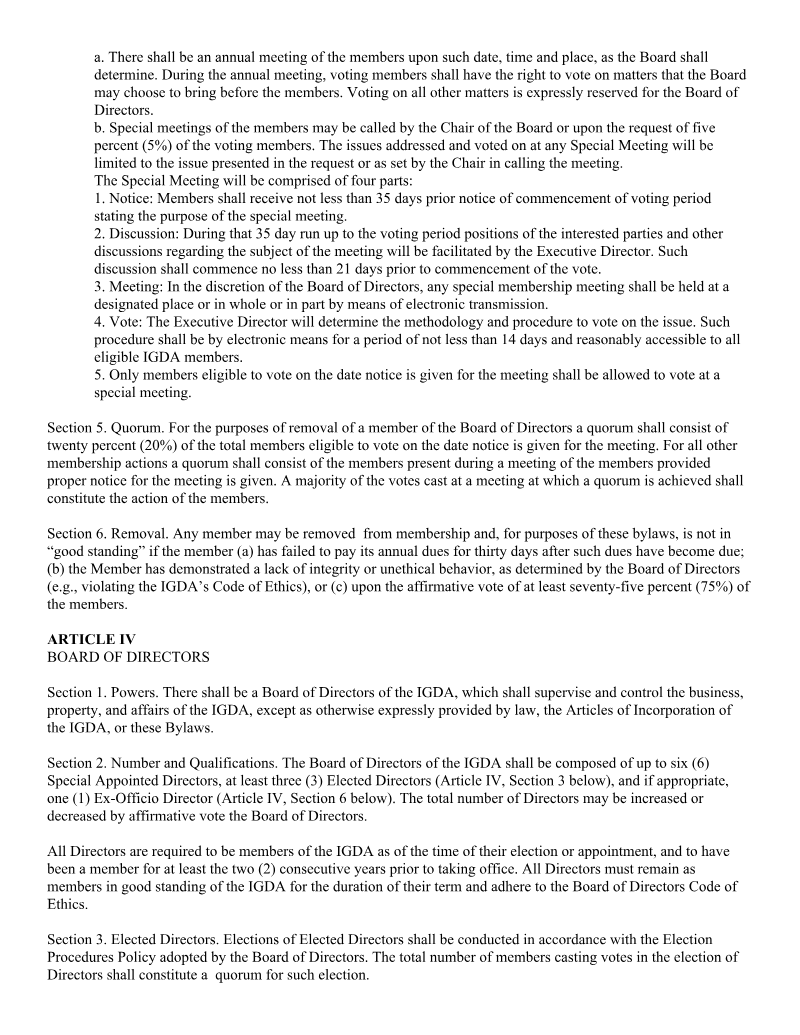
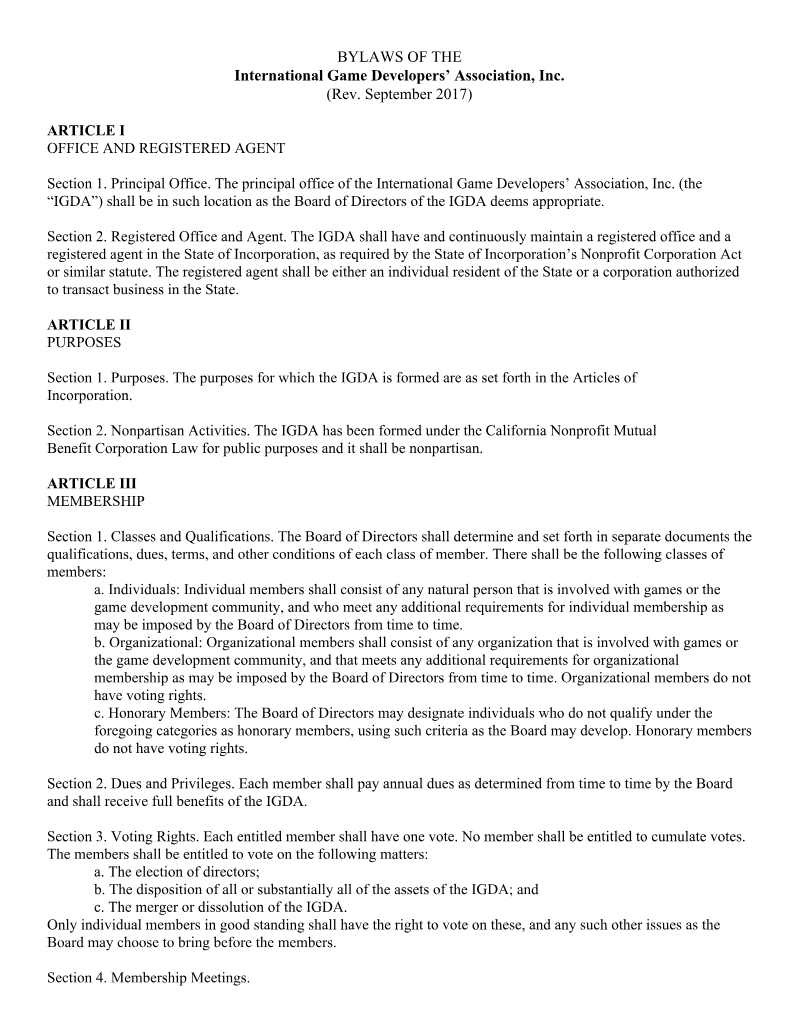
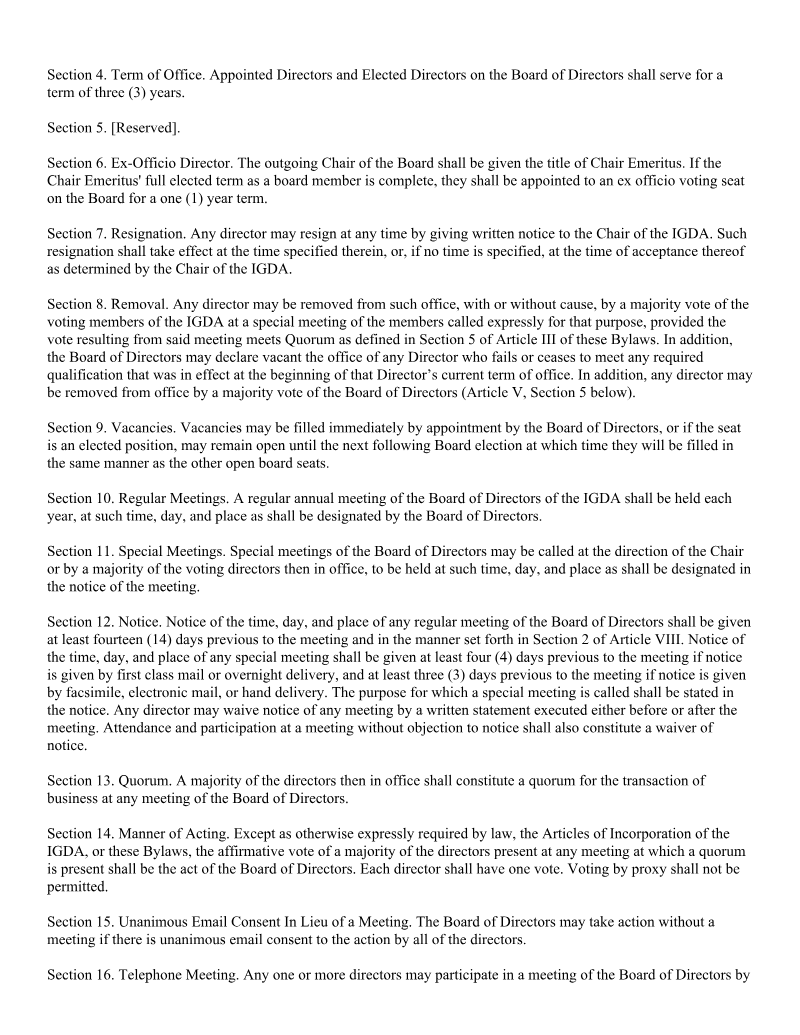
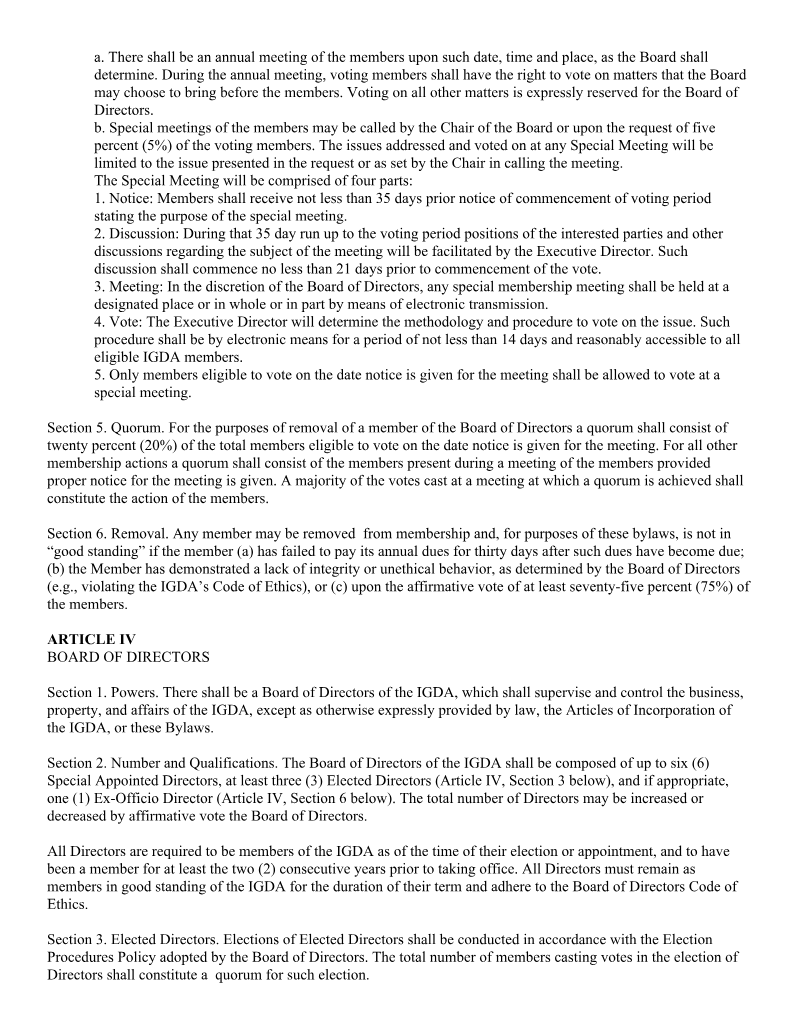
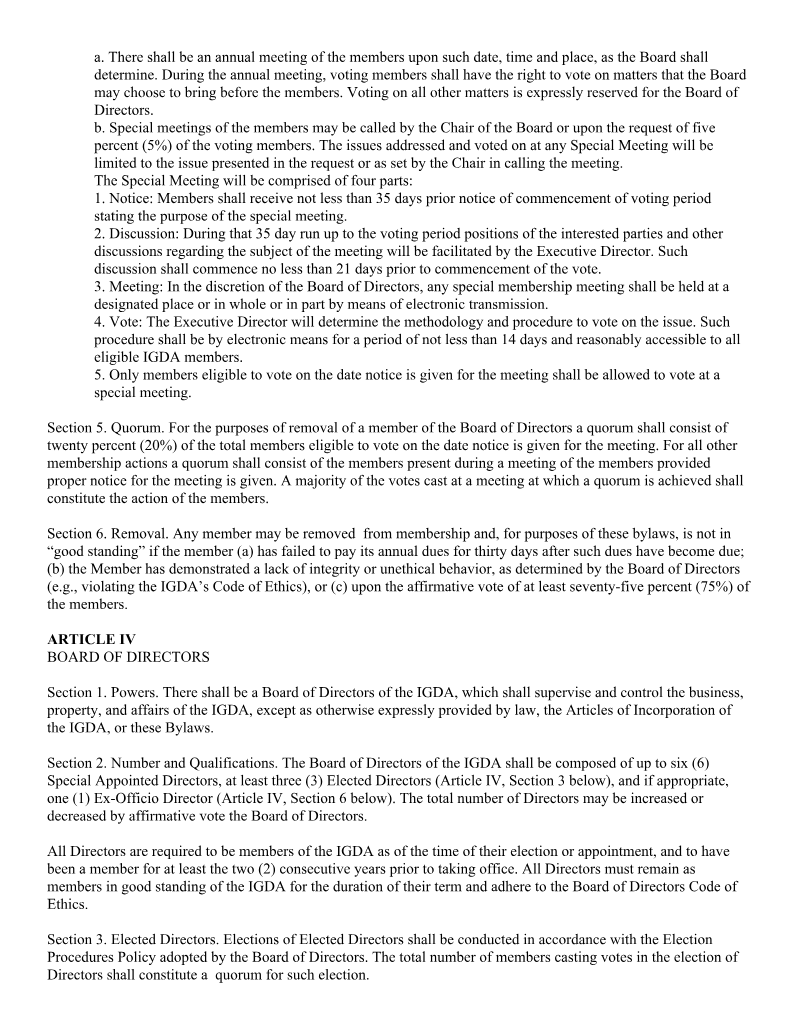
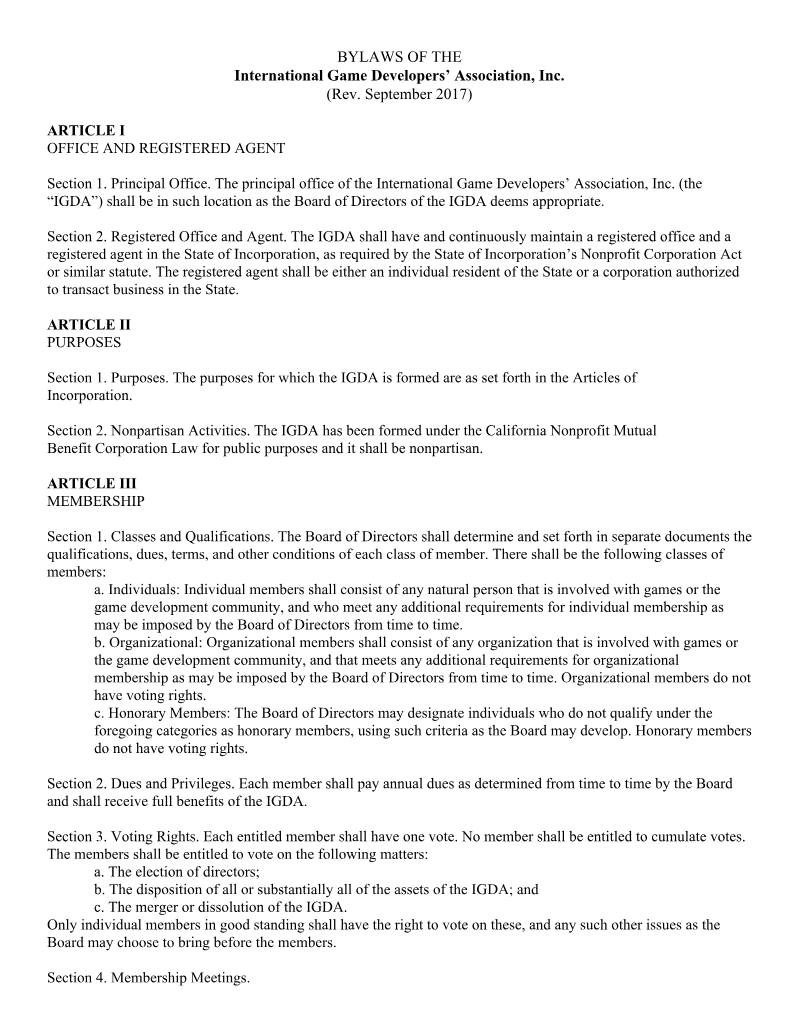
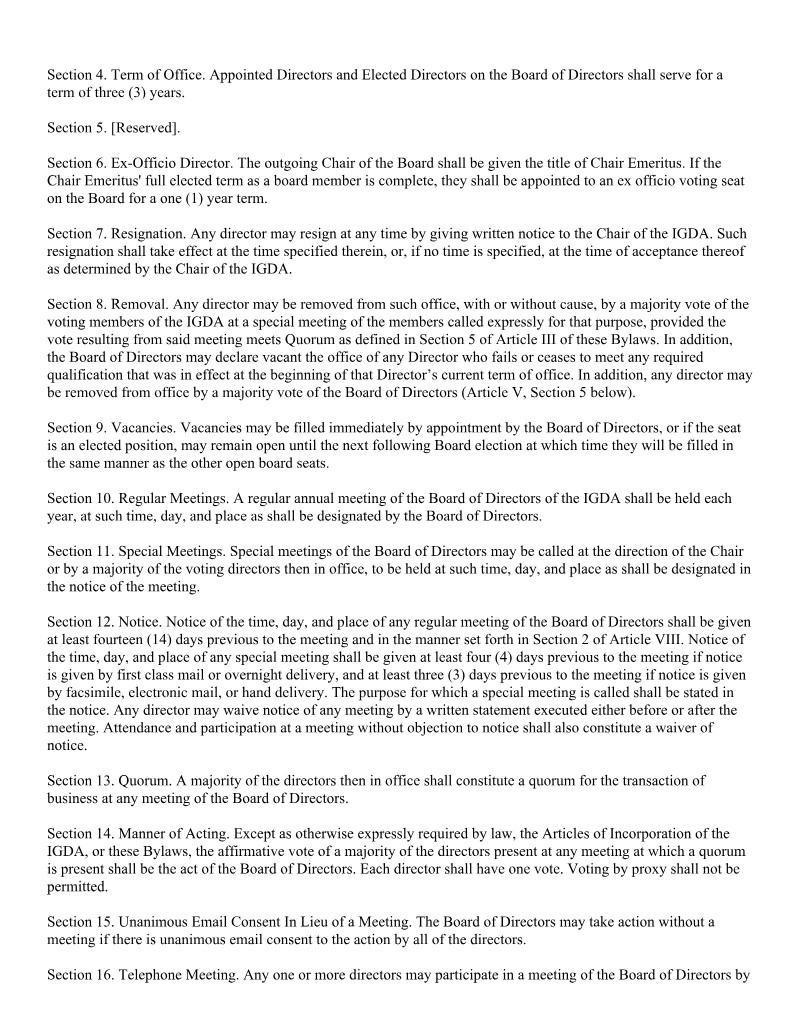
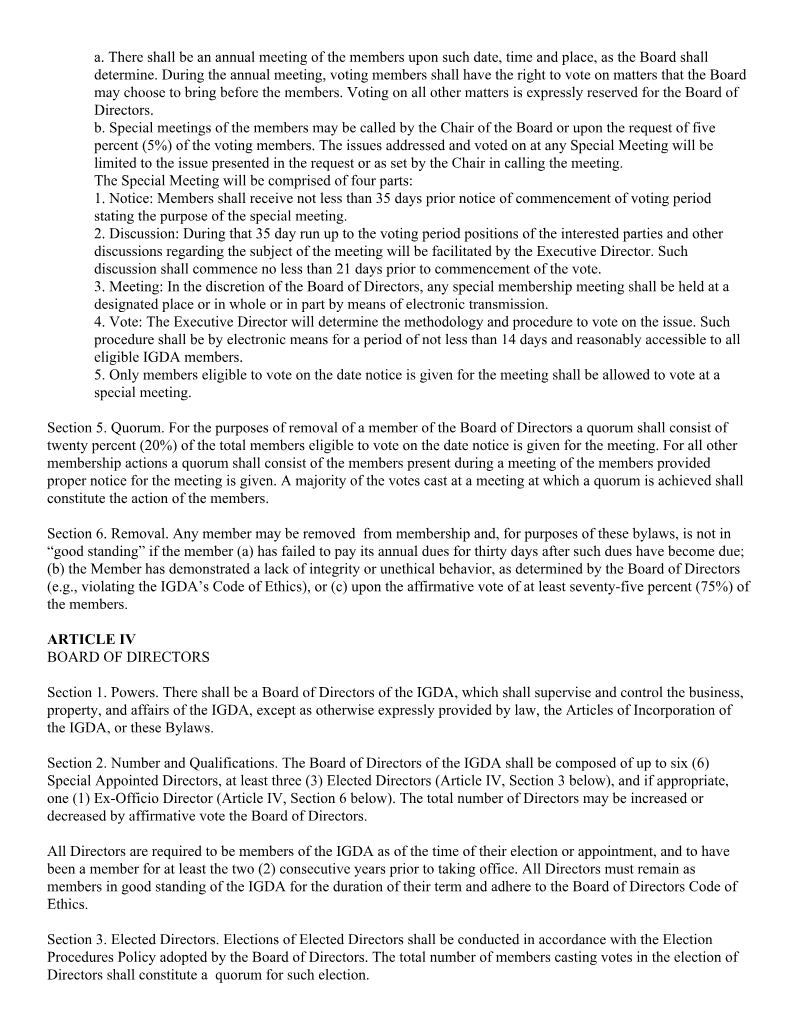
The bylaws establish the governance framework for the International Game Developers’ Association, Inc., a California nonprofit mutual benefit corporation. The organization’s principal office is determined by the Board of Directors, while a registered agent must be maintained in the state of incorporation. The bylaws outline membership categories—individual, organizational, and honorary—with voting rights reserved for individual members in good standing. Annual dues are set by the Board, and membership meetings include an annual gathering and special meetings that can be called by the Chair or a 5 % member petition, with detailed notice and electronic voting procedures. The Board of Directors may consist of up to six appointed directors, at least three elected directors, and an optional ex‑officio director. Directors serve three‑year terms, must be members for two consecutive years, and are subject to removal by member vote or Board action. Officers (Chair, Vice‑Chair, Secretary, Treasurer) are appointed by the Board; the Chair leads all business and may sign contracts. Committees, including an Executive Committee composed of key officers, can be formed to exercise board authority between meetings. The bylaws provide for fiscal year alignment with the calendar, notice requirements, conflict‑of‑interest disclosures, and indemnification provisions for directors, officers, and employees. Amendments may be made by majority vote of either the membership or the Board. The document serves as a comprehensive operating manual for IGDA’s governance, member engagement, and organizational conduct.
International Game Developers’ AssociationSept 2014
Whitepaper
Bylaws of the International Game Developers’ Association, Inc.
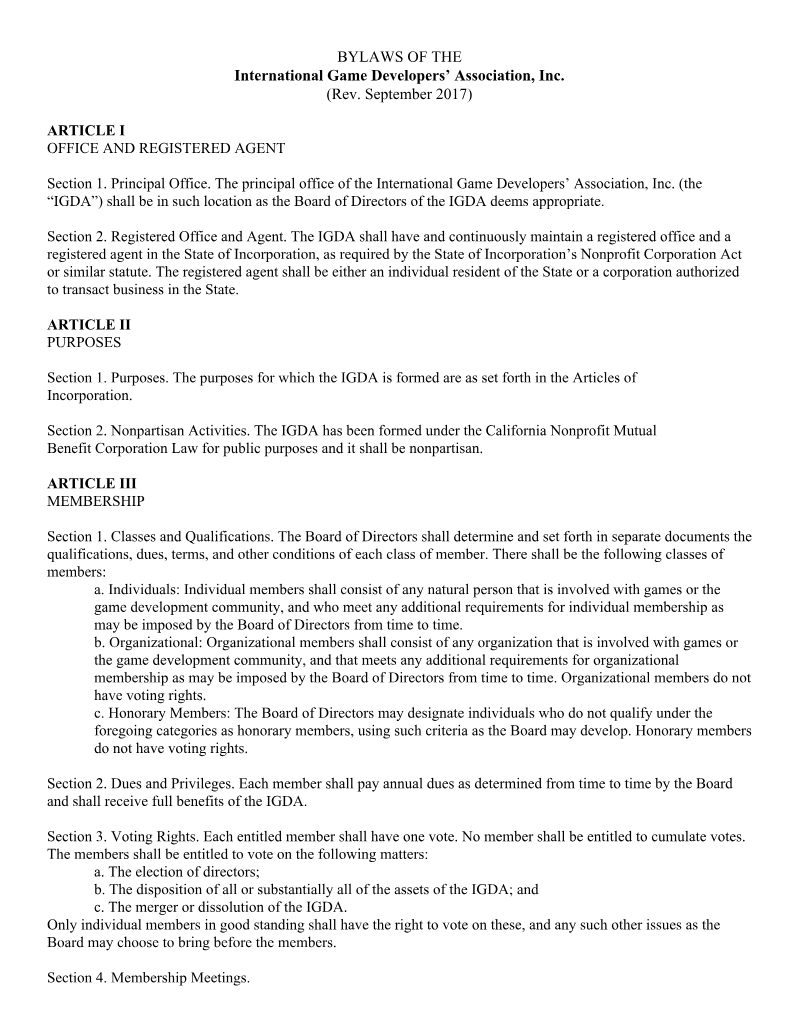
The bylaws establish the International Game Developers’ Association, Inc. (IGDA) as a California nonprofit mutual benefit corporation with a principal office determined by its Board and a registered agent in the state of incorporation. The organization’s purpose is to serve public interests within the game development community, remaining nonpartisan and governed by a Board of Directors that supervises all business affairs. Membership is divided into individual, organizational, and honorary classes. Individual members in good standing hold one vote each on key matters such as director elections, asset disposition, and merger or dissolution. Organizational and honorary members receive benefits but lack voting rights. Annual dues are set by the Board, and membership meetings—annual or special—are governed by detailed notice, quorum, and voting procedures, including electronic participation. Removal of members requires nonpayment of dues, ethical violations, or a 75% member vote. The Board may consist of up to six appointed directors, at least three elected directors, and an optional ex‑officio director. Directors serve three‑year terms, must be IGDA members for two consecutive years, and are subject to removal by member or Board vote. The Board appoints officers (Chair, Vice‑Chair, Secretary, Treasurer) whose terms and duties are specified; the Chair directs overall operations and may sign contracts. Committees, chapters, and special interest groups are authorized to assist governance but cannot amend bylaws or dissolve the IGDA. An Executive Director, selected by the Board, acts as chief executive officer and is compensated by the IGDA. The bylaws set fiscal year to the calendar year, outline notice procedures, prohibit private inurement, and provide indemnification for directors, officers, and employees. Amendments require a majority vote of either the voting members or the Board.
International Game Developers AssociationAug 2014