Back to Writers



International Game Developers’ Association
Organization
70 documents
Documents
Whitepaper
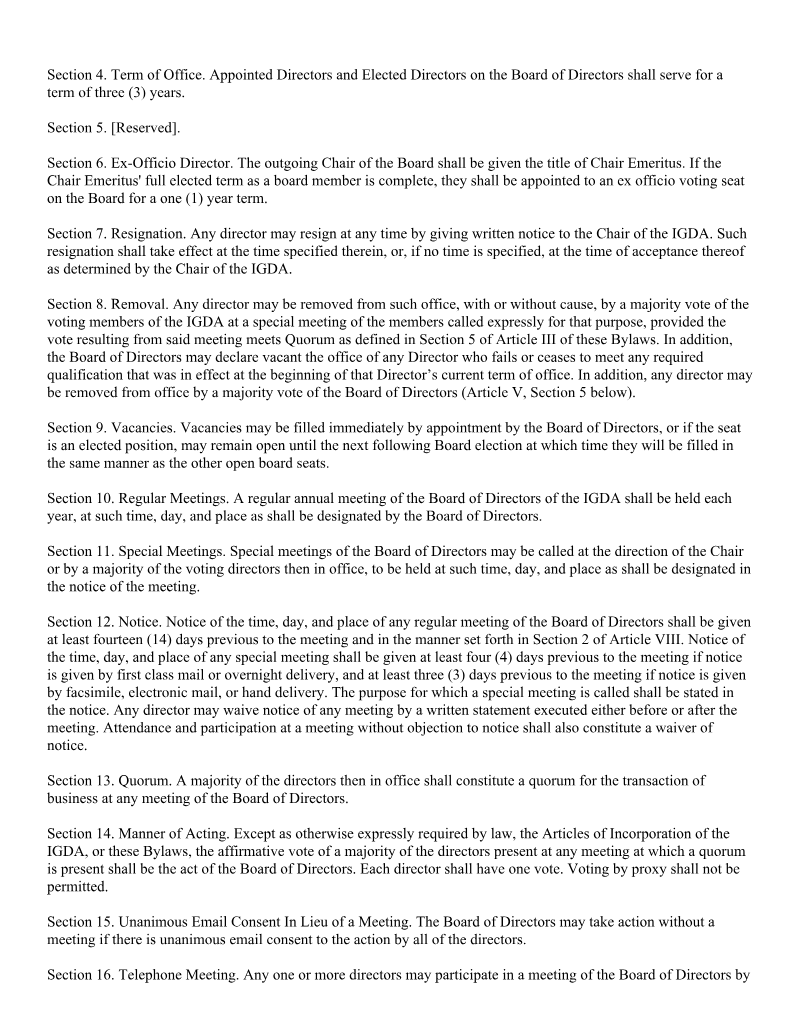
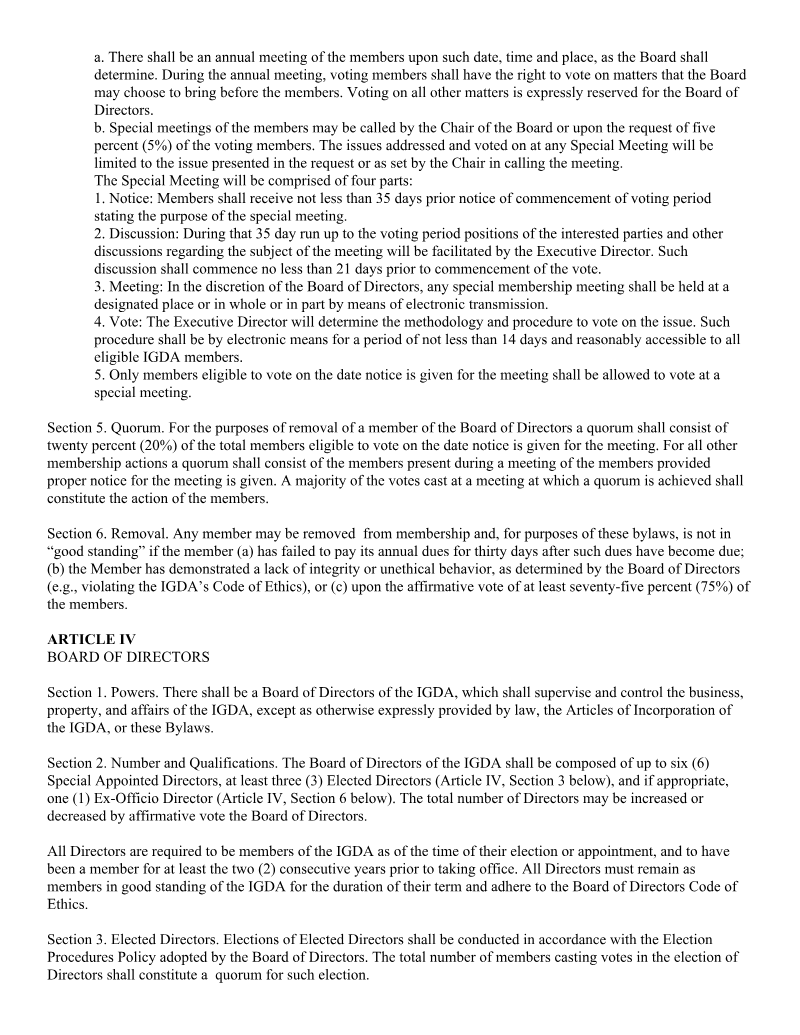
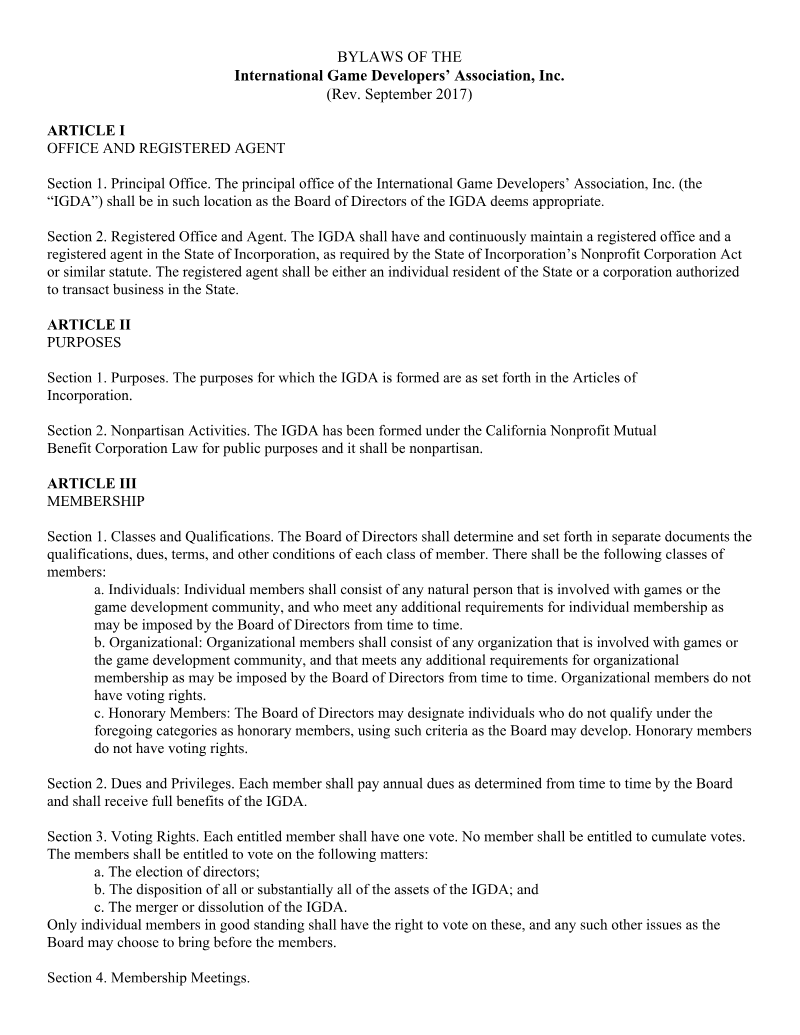
Bylaws of the International Game Developers’ Association, Inc.
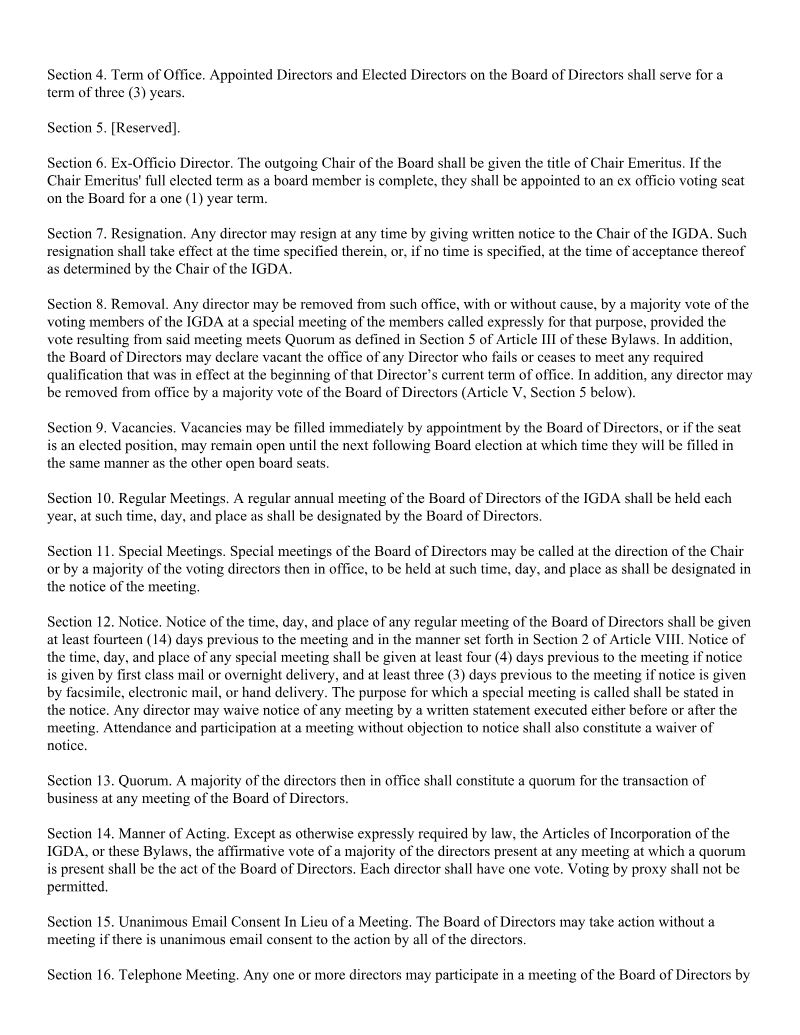
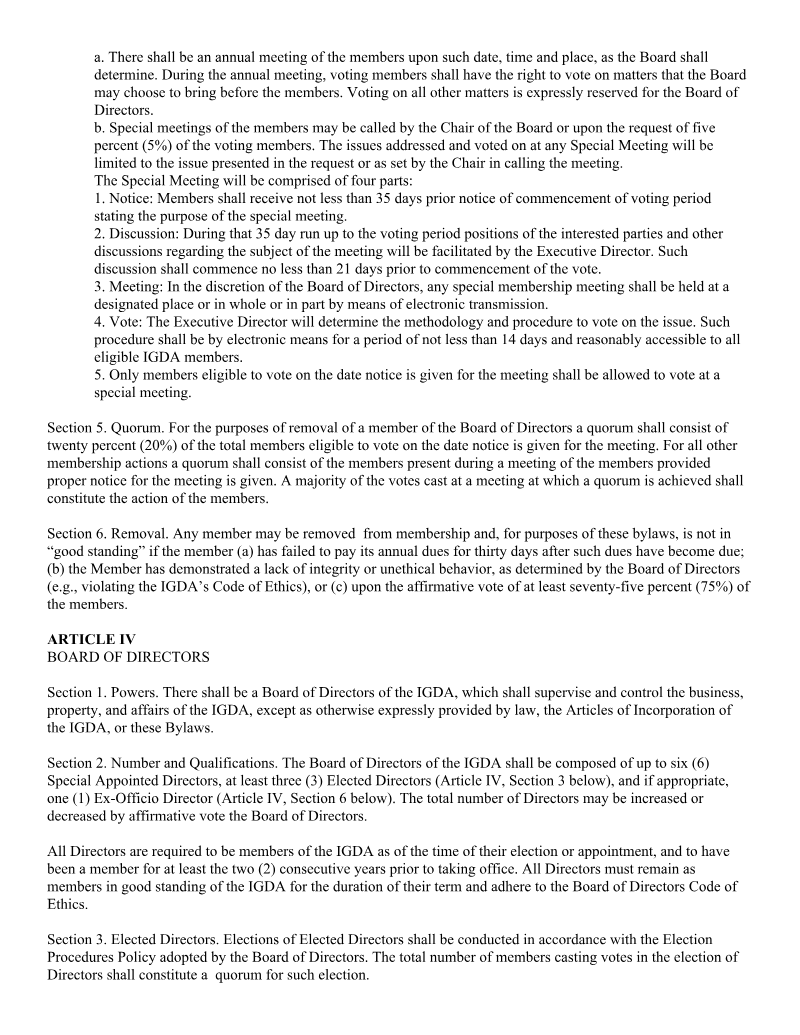
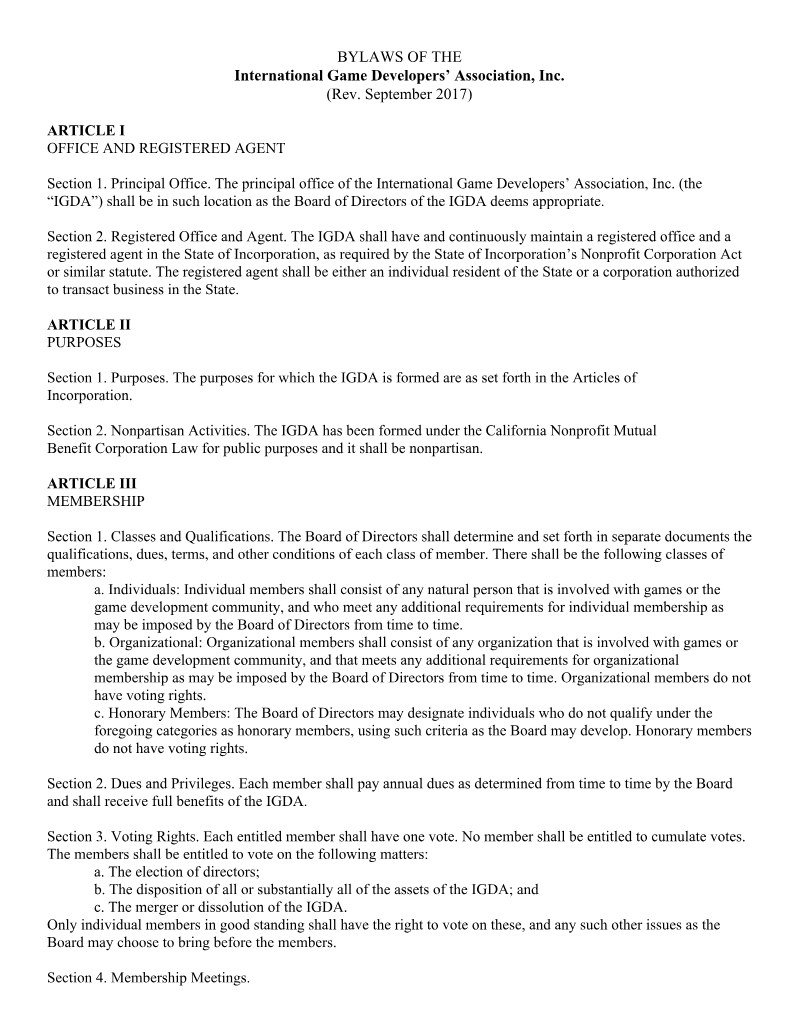
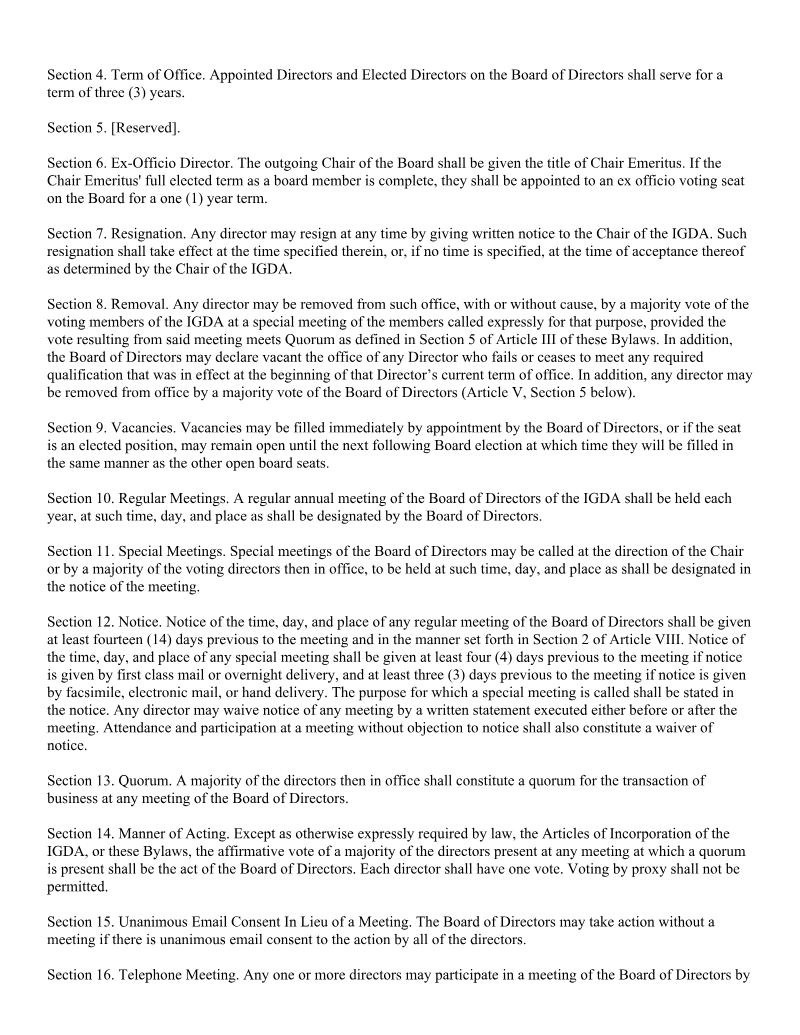
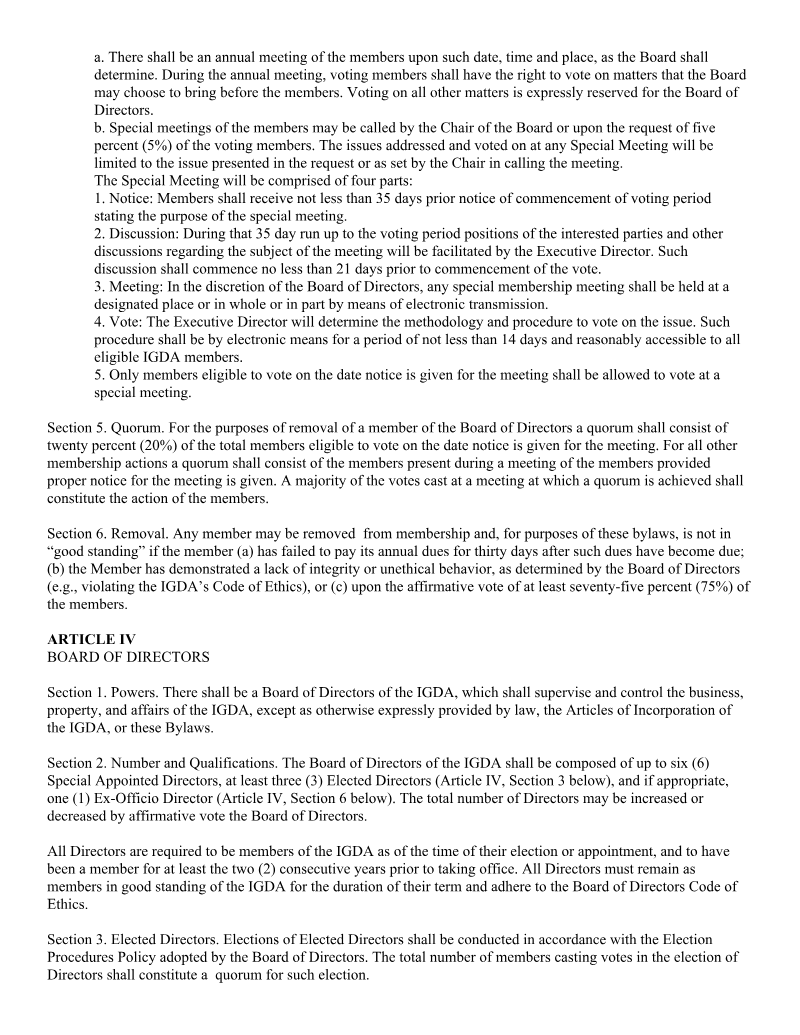
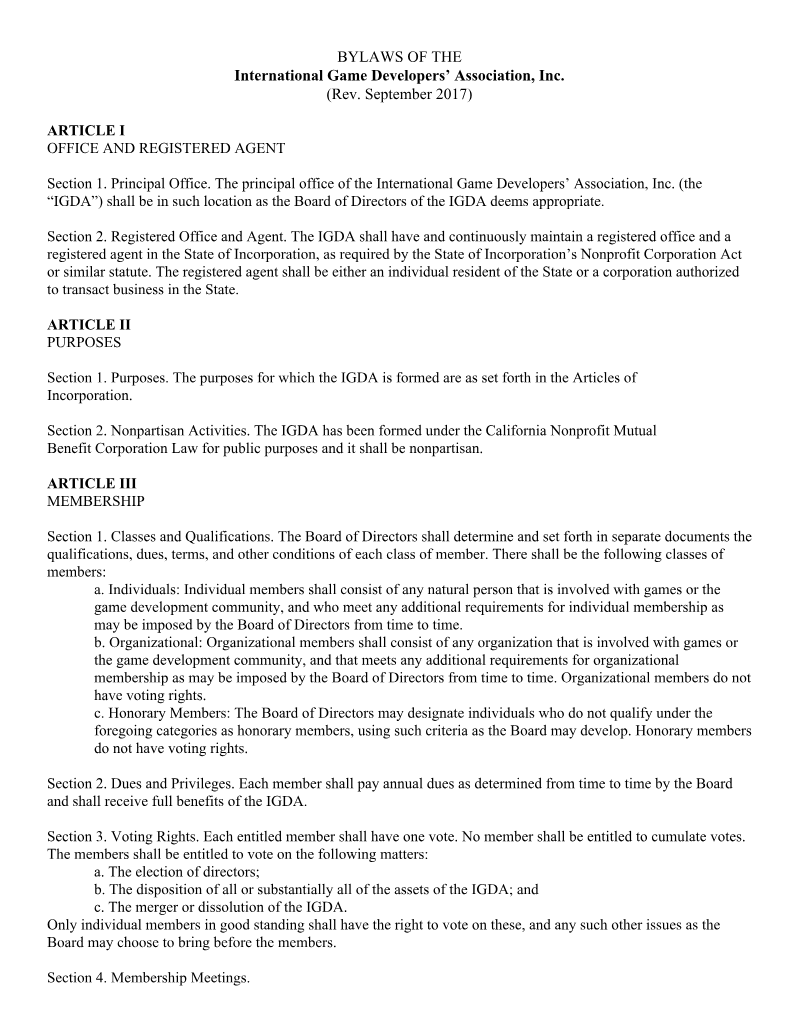
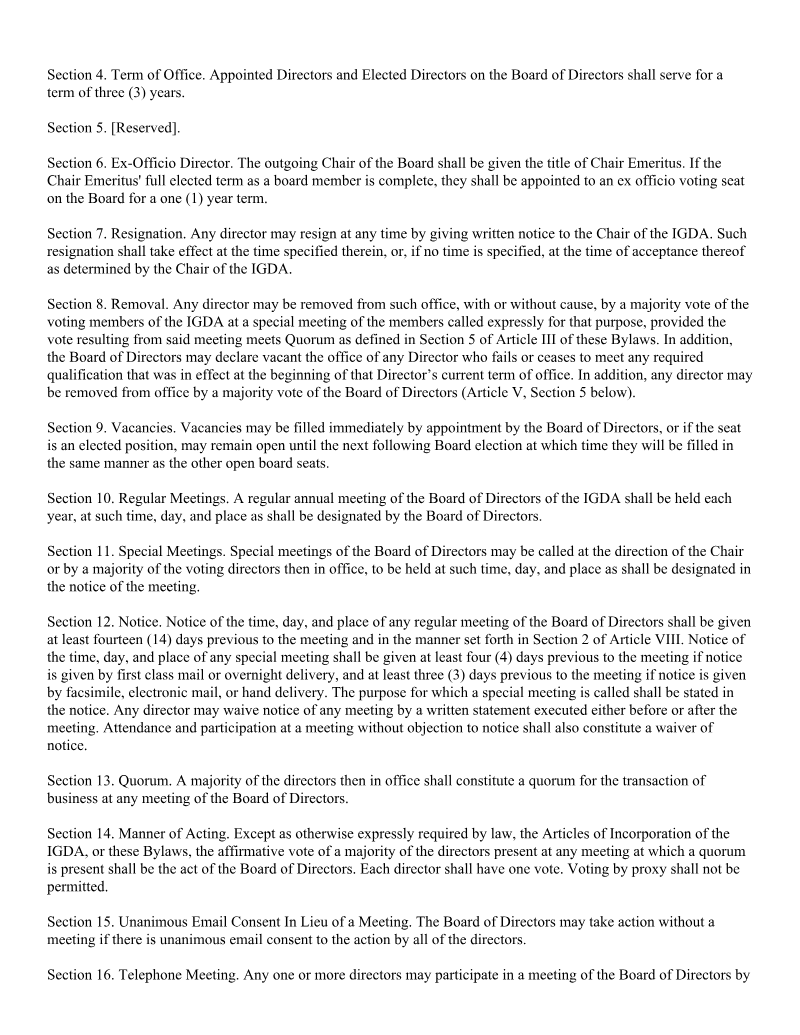
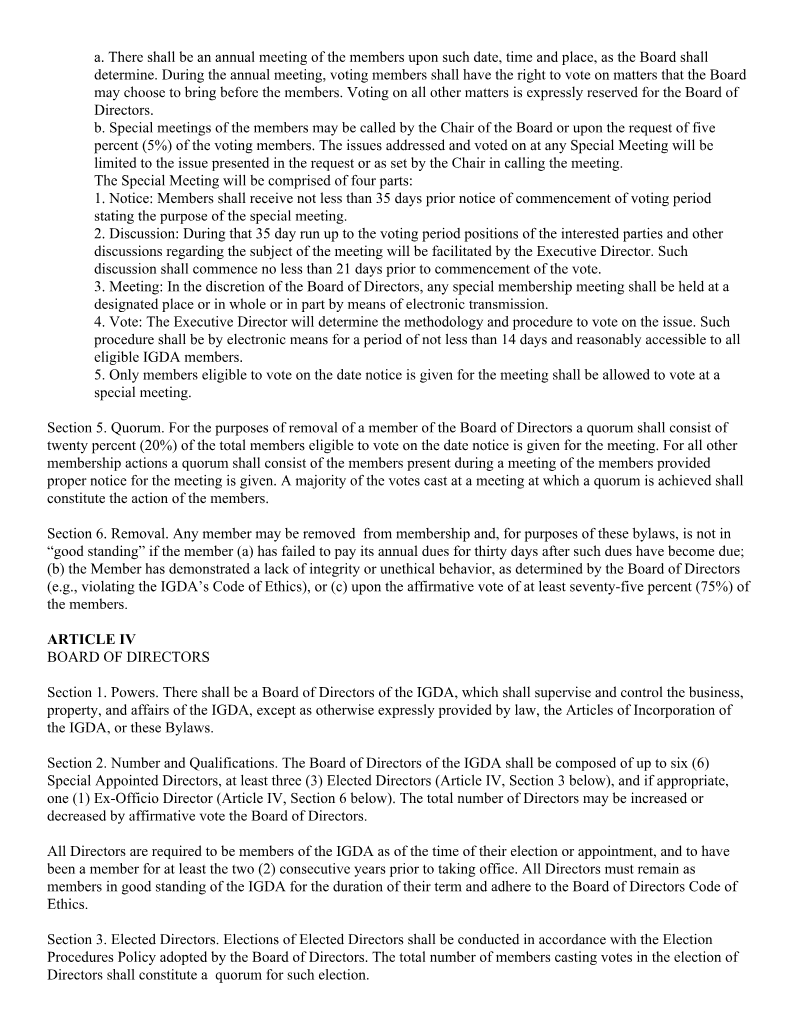
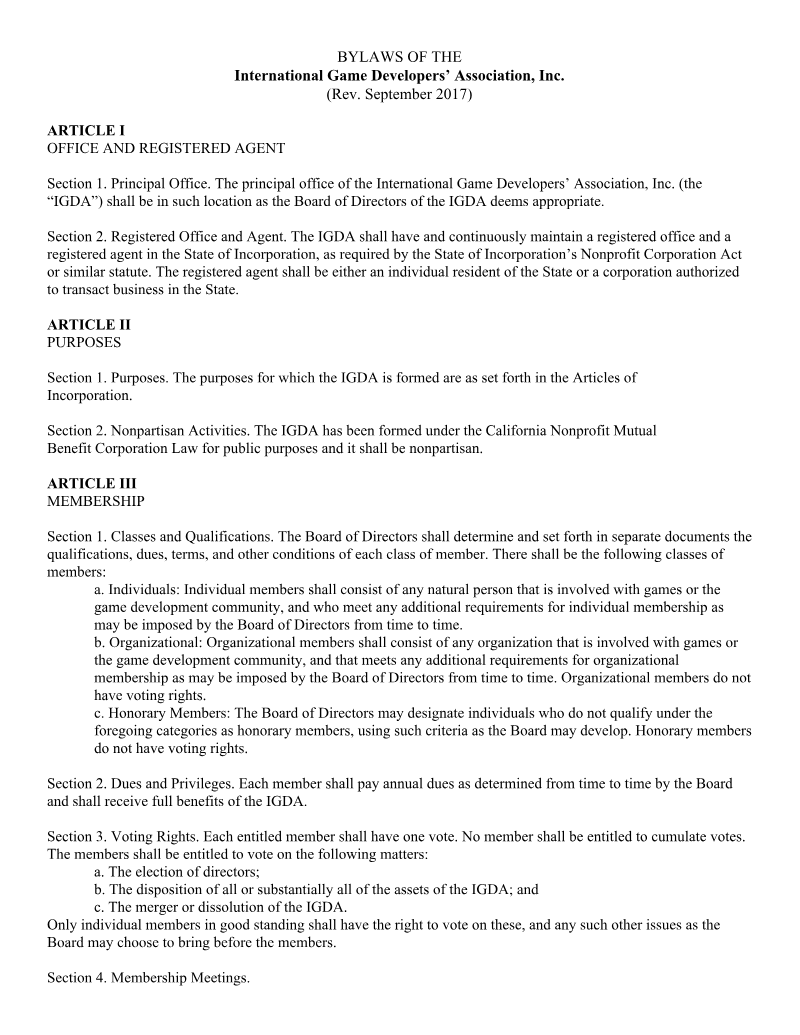
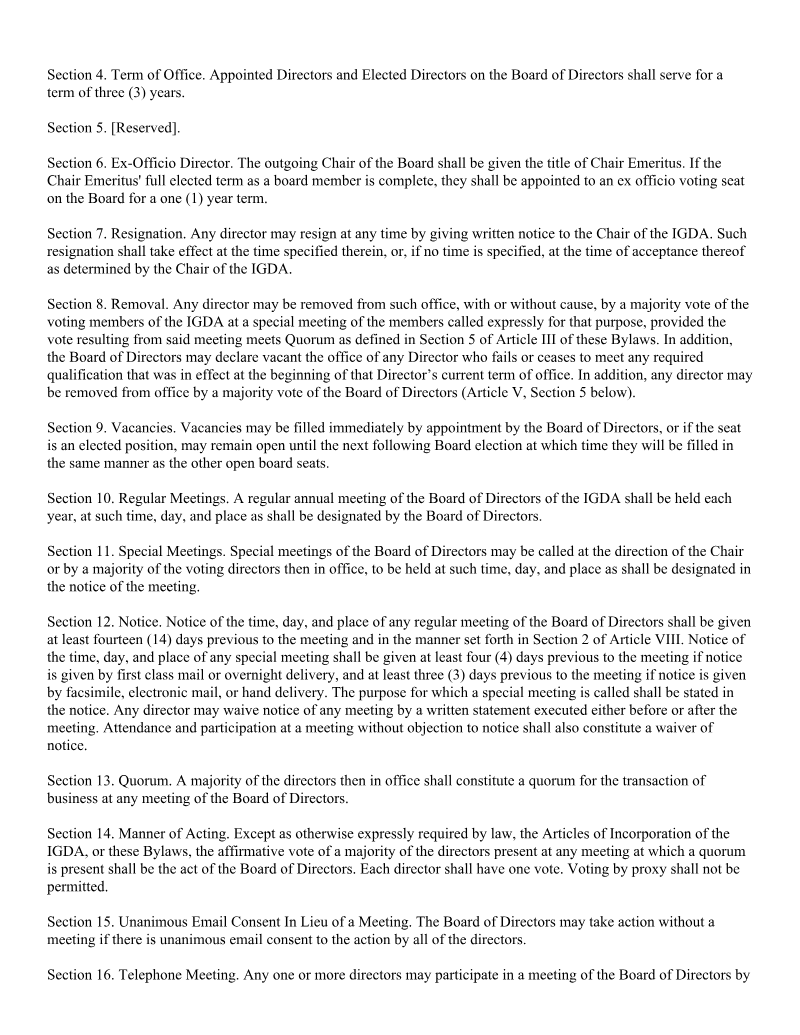
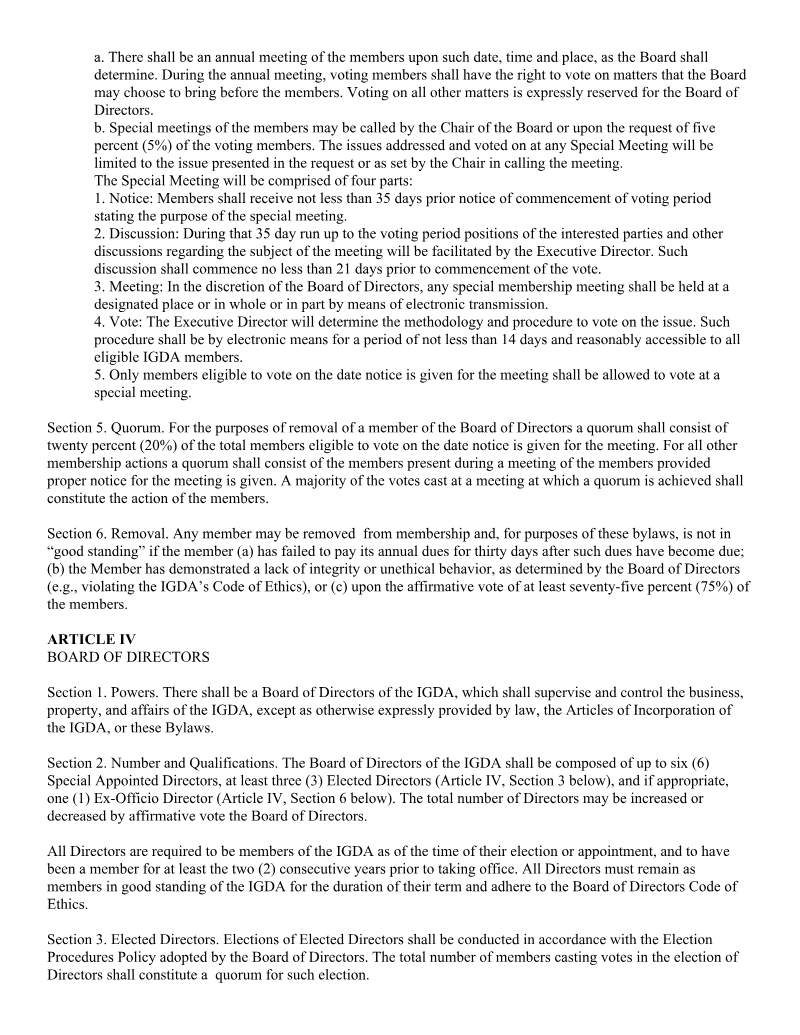
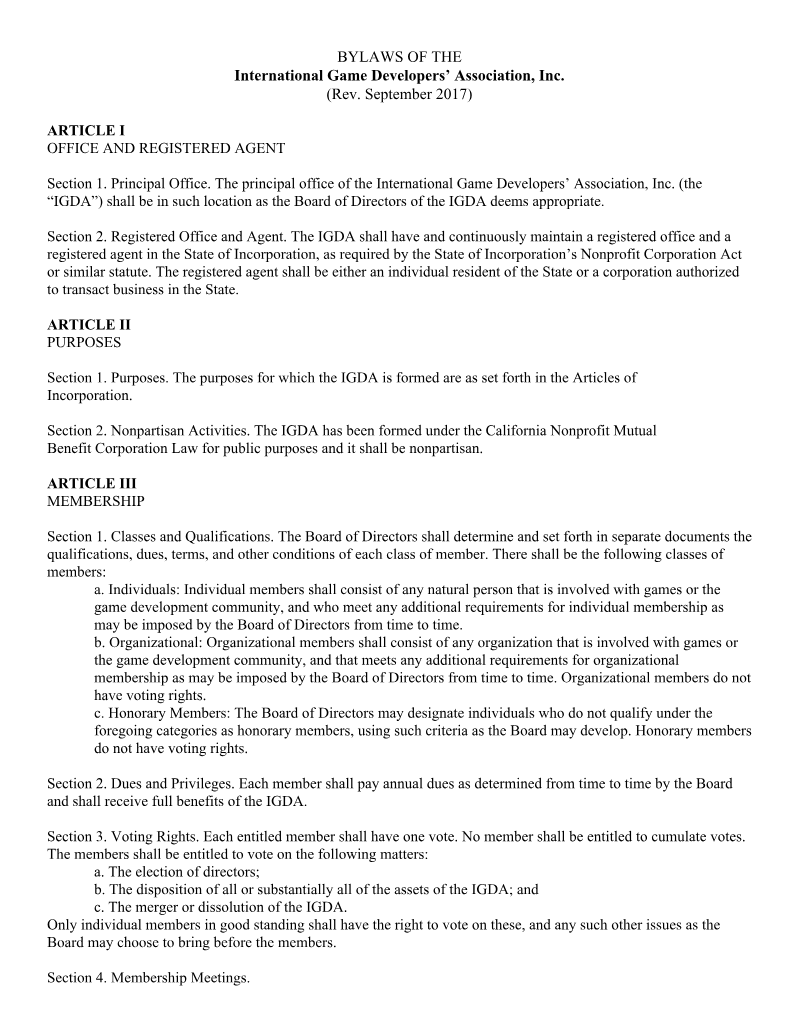
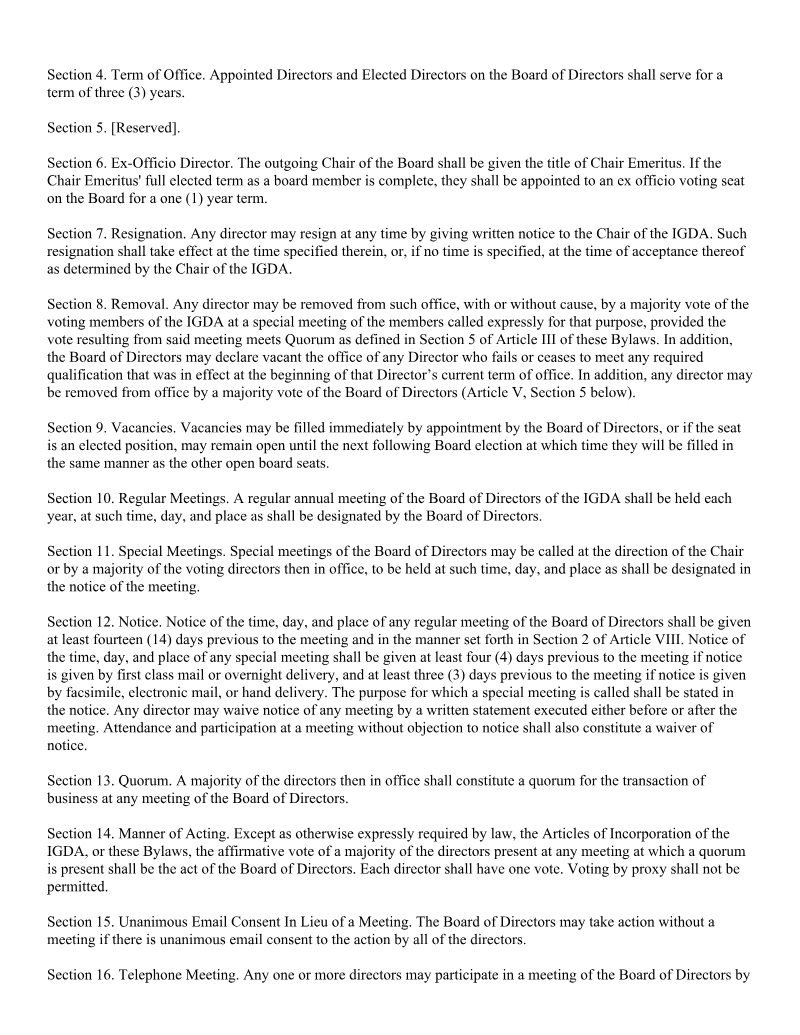
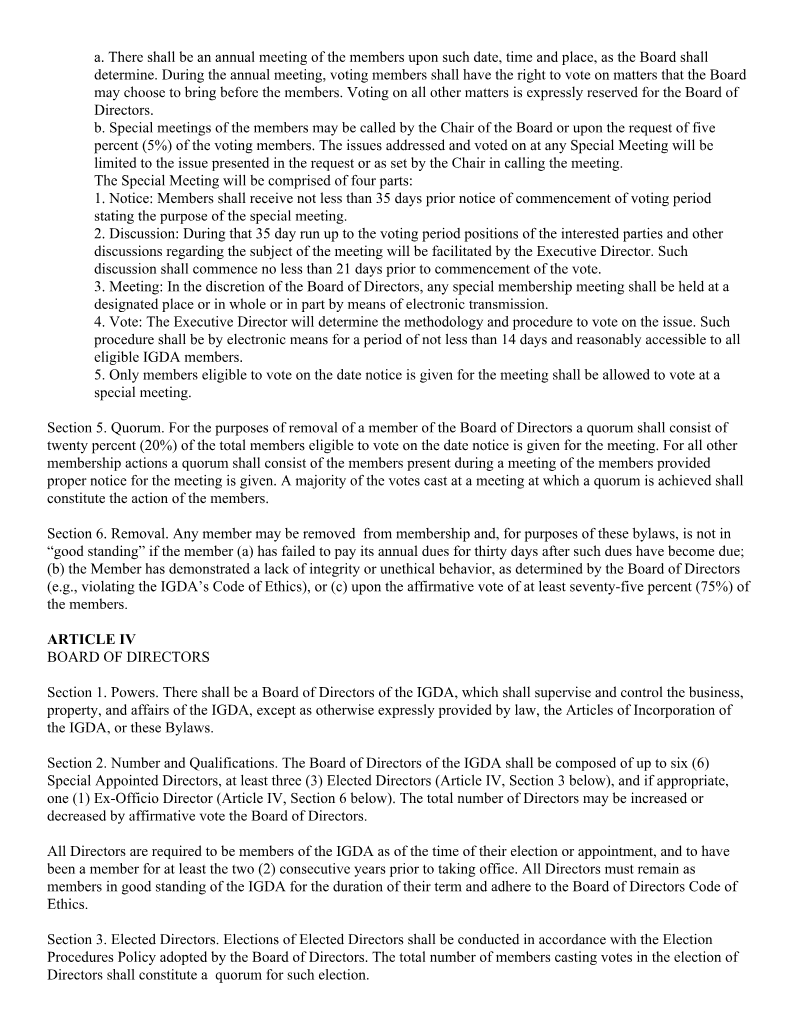
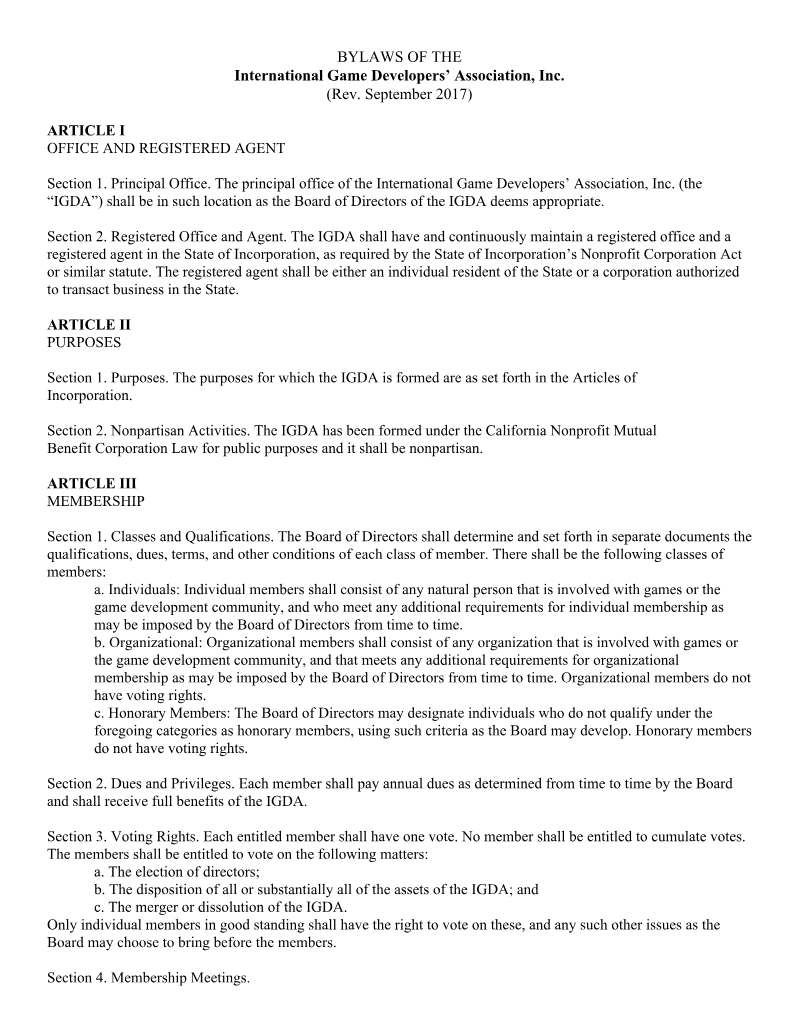
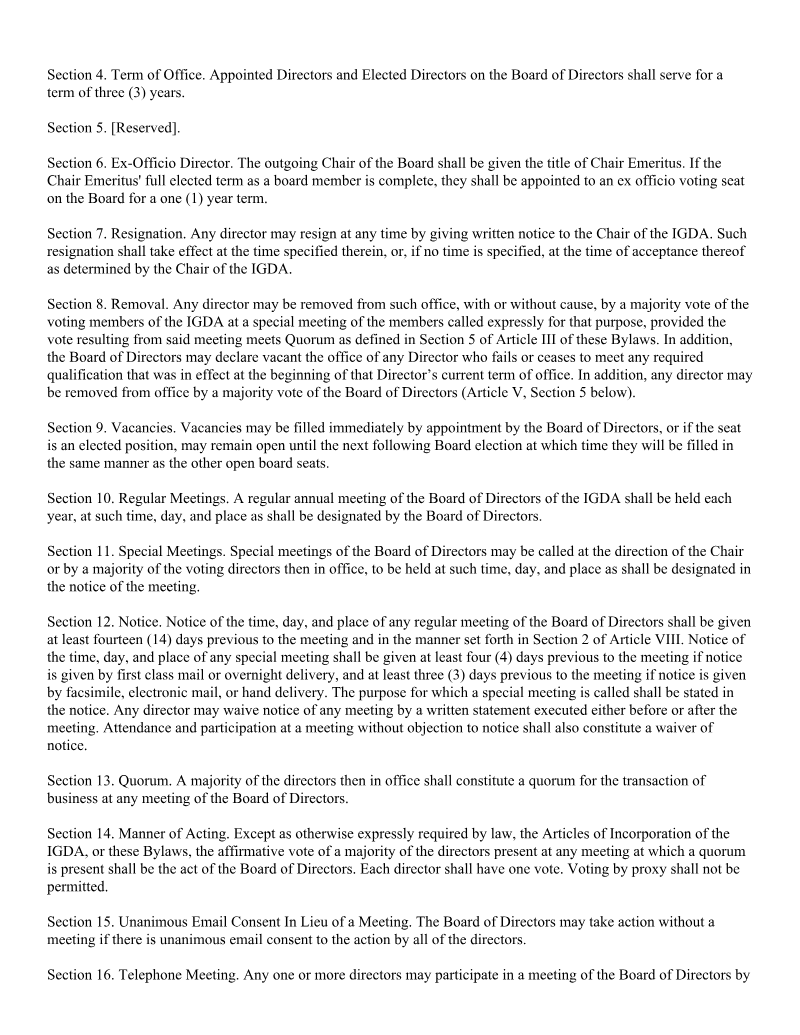
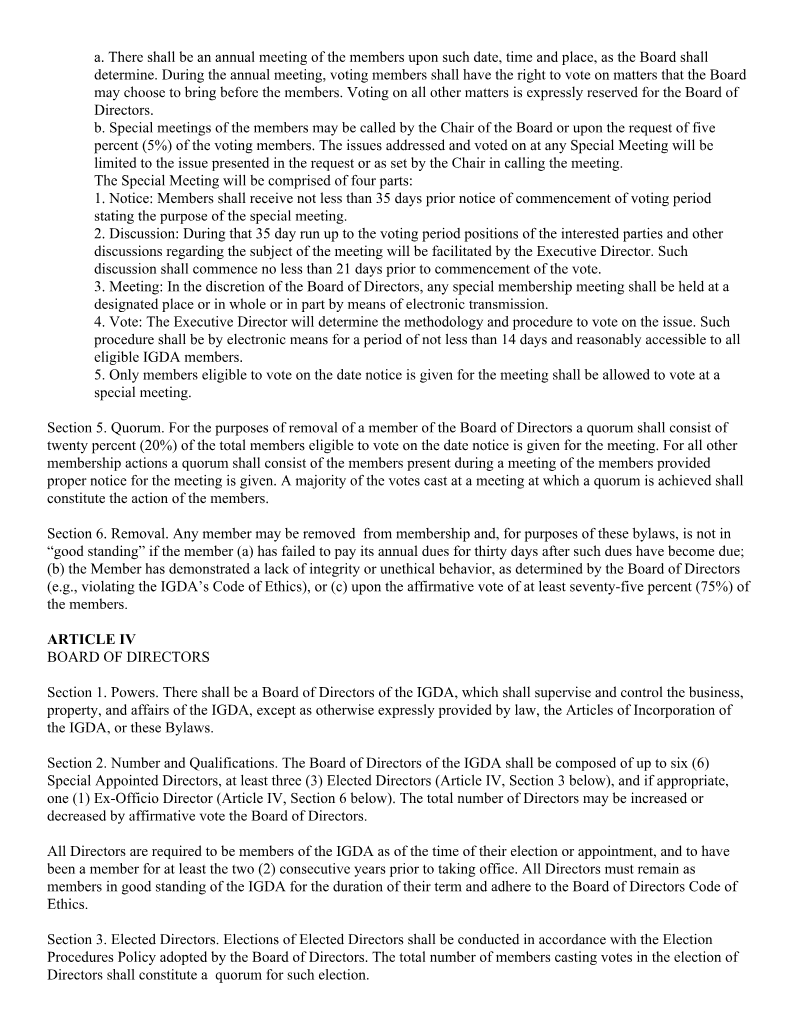
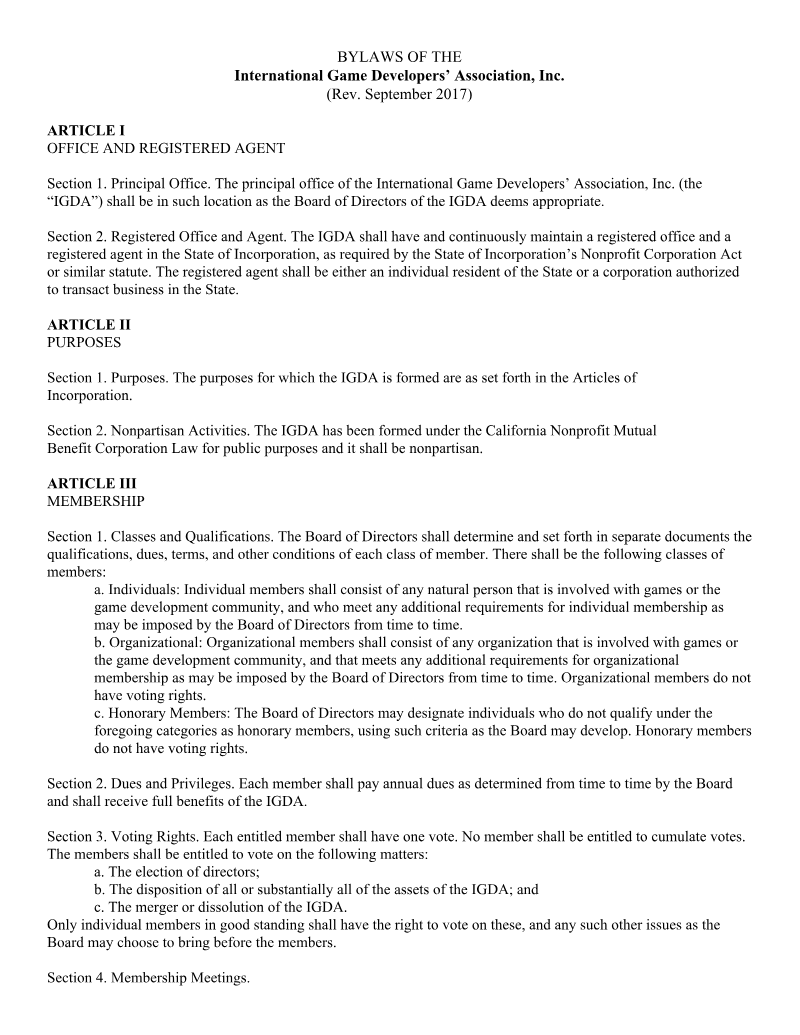
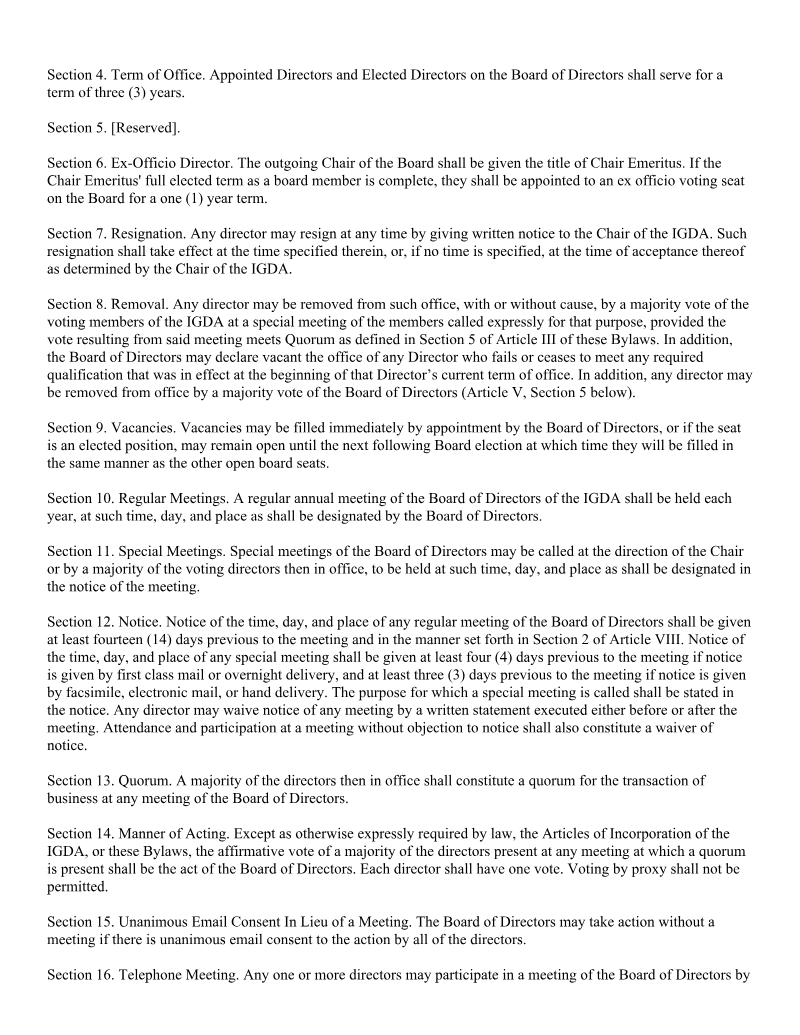
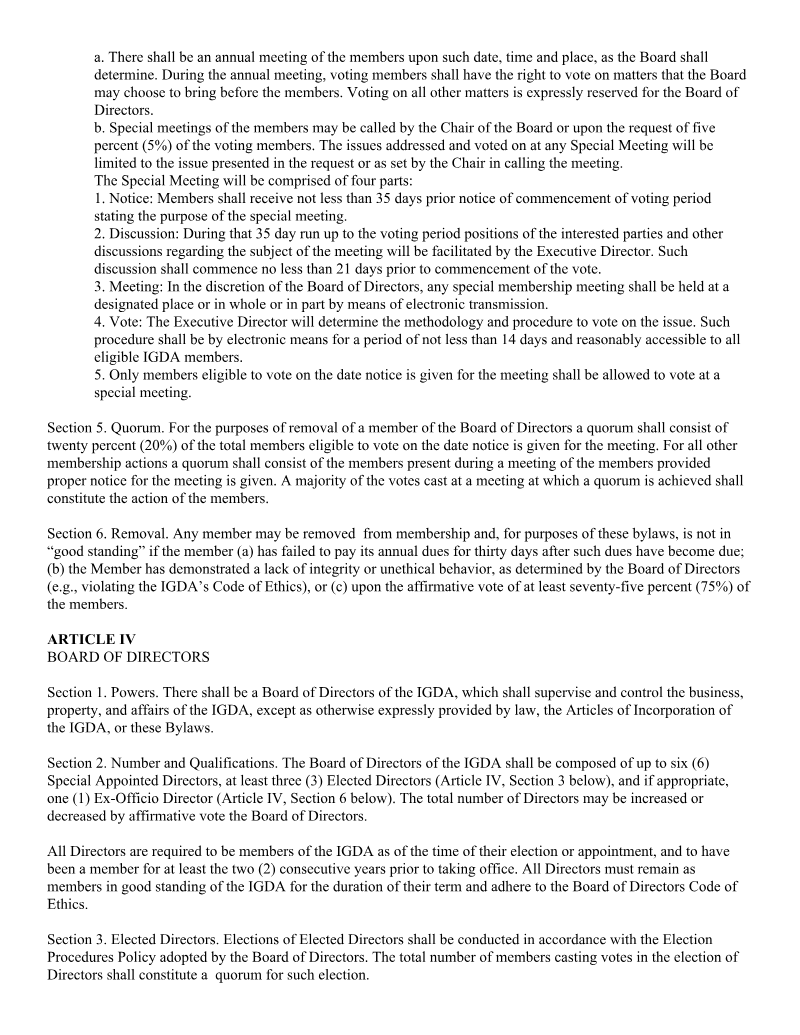
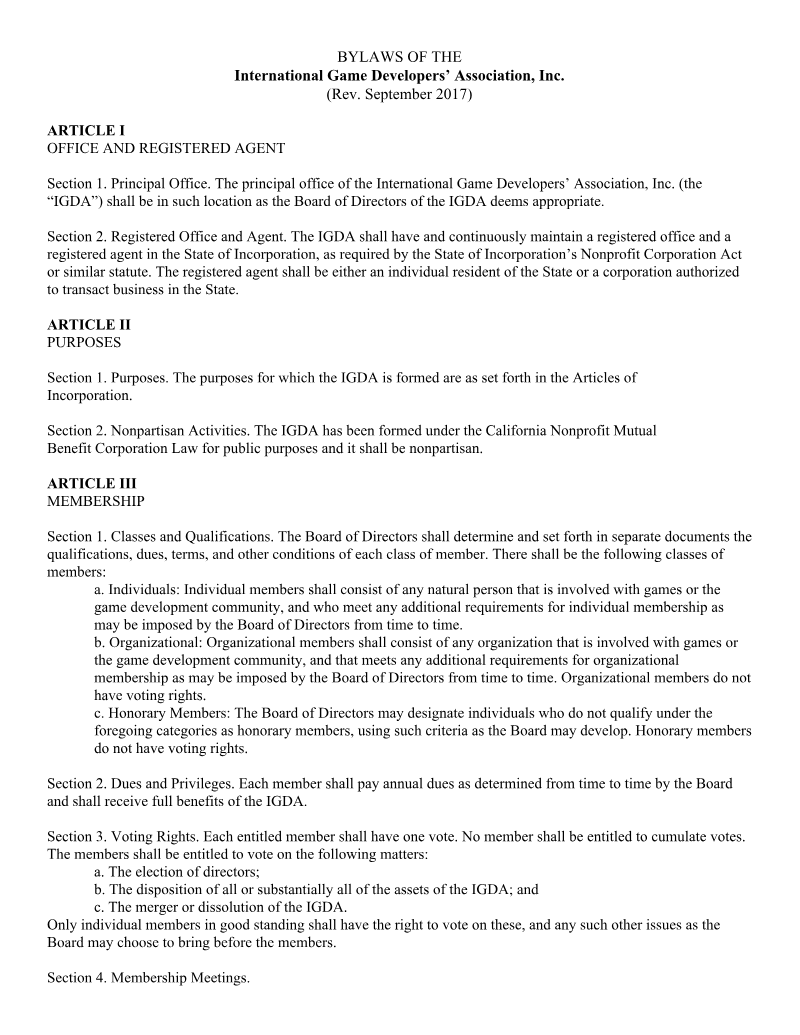
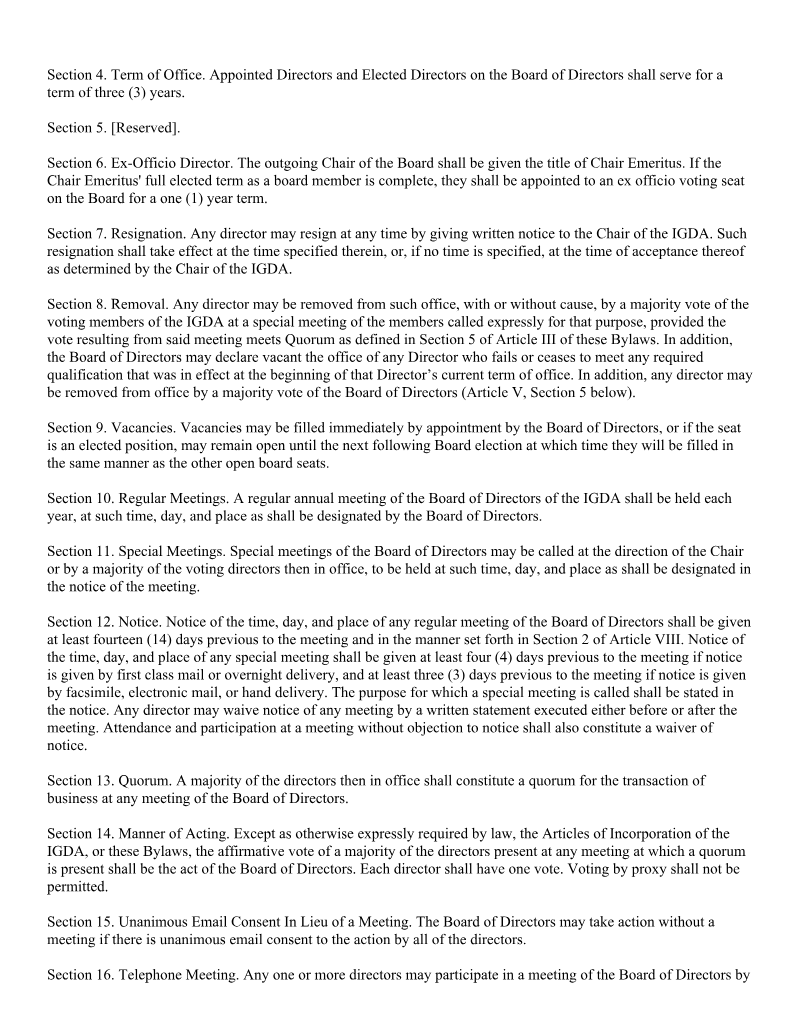
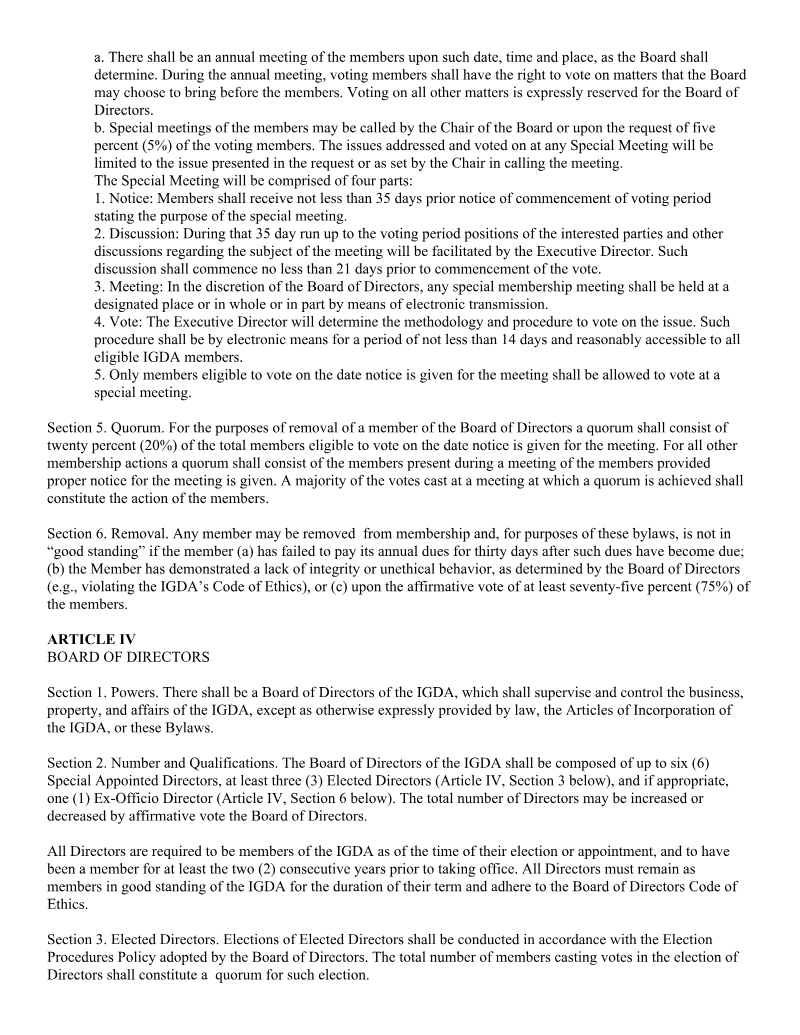
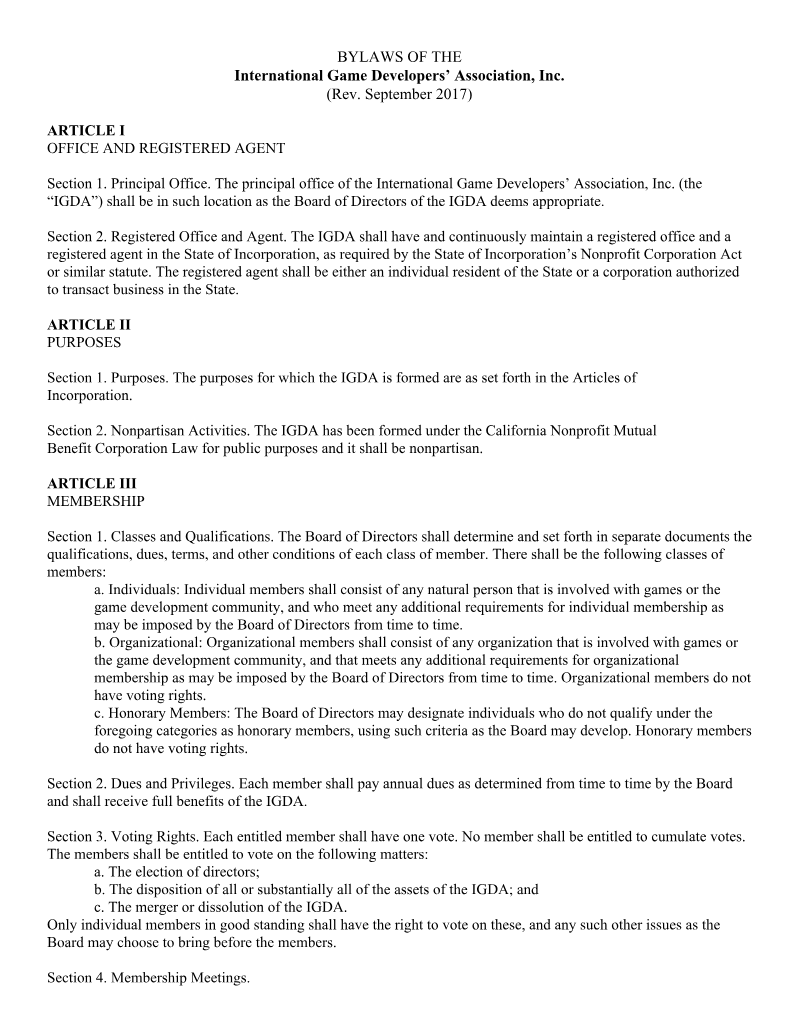
The bylaws establish the governance framework for the International Game Developers’ Association, Inc., a California‑based nonprofit created to serve public purposes within the game development community. The organization’s principal office is determined by its Board, while a registered agent must be maintained in the state of incorporation. The bylaws outline membership categories—individual, organizational, and honorary—with voting rights reserved for individual members in good standing. Annual dues are set by the Board, and membership meetings include an annual gathering and special meetings that can be convened by the Chair or a 5 % member petition, with detailed notice and electronic voting procedures. Quorum requirements vary by action, and removal of members or directors requires a 75 % vote or Board determination. The Board of Directors may consist of up to six appointed directors, at least three elected directors, and an optional ex‑officio director. Directors serve three‑year terms, must be members for two consecutive years prior to election, and are subject to a Code of Ethics. Officers—Chair, Vice‑Chair, Secretary, Treasurer—are appointed by the Board and serve one‑year terms. Committees, including an Executive Committee composed of key officers, may be formed to exercise board authority between meetings. Additional provisions cover chapters and special interest groups, an Executive Director role with Board oversight, fiscal year alignment to the calendar year, indemnification for directors and officers, and amendment procedures requiring a majority of voting members or Board approval. The bylaws collectively provide a comprehensive structure for governance, membership engagement, and operational oversight within the international game development community.
International Game Developers’ AssociationOct 2022
Whitepaper
Protecting the Games Industry: Cybersecurity Threats and Strategies
The global video game industry faces an escalating landscape of cybersecurity threats that jeopardize player trust, intellectual property, and financial stability. As digital ecosystems become increasingly interconnected, malicious actors are shifting their focus from simple cheating to sophisticated attacks targeting infrastructure and sensitive user data. Credential stuffing, distributed denial-of-service (DDoS) attacks, and the exploitation of microtransaction systems represent the primary vectors of risk. These vulnerabilities are exacerbated by the industry’s reliance on high-speed, low-latency connectivity, which often forces a compromise between robust security protocols and seamless user experiences. Data indicates that the gaming sector accounts for a disproportionate volume of web application attacks compared to other entertainment industries. Between 2021 and 2022, there was a marked increase in the frequency of SQL injection and cross-site scripting attempts aimed at compromising player accounts and backend databases. The geographic scope of these threats is global, though infrastructure in North America and Europe remains the most frequent target for high-volume DDoS campaigns. These attacks not only disrupt gameplay but also result in significant operational costs and long-term brand damage. To mitigate these risks, the industry must adopt a multi-layered defense strategy that integrates automated threat detection with proactive community management. Implementing multi-factor authentication and end-to-end encryption is essential for securing player identities and financial transactions. Furthermore, developers are encouraged to incorporate security considerations into the earliest stages of the software development lifecycle rather than treating them as an afterthought. By fostering collaboration between cybersecurity experts and game designers, the industry can build more resilient platforms capable of withstanding the evolving tactics of digital adversaries while maintaining the performance standards expected by a global audience.
International Game Developers’ AssociationOct 2022