Back to Library
Whitepaper
Bylaws of the International Game Developers’ Association, Inc.
14 August 20147 pages4,451 words
Summary
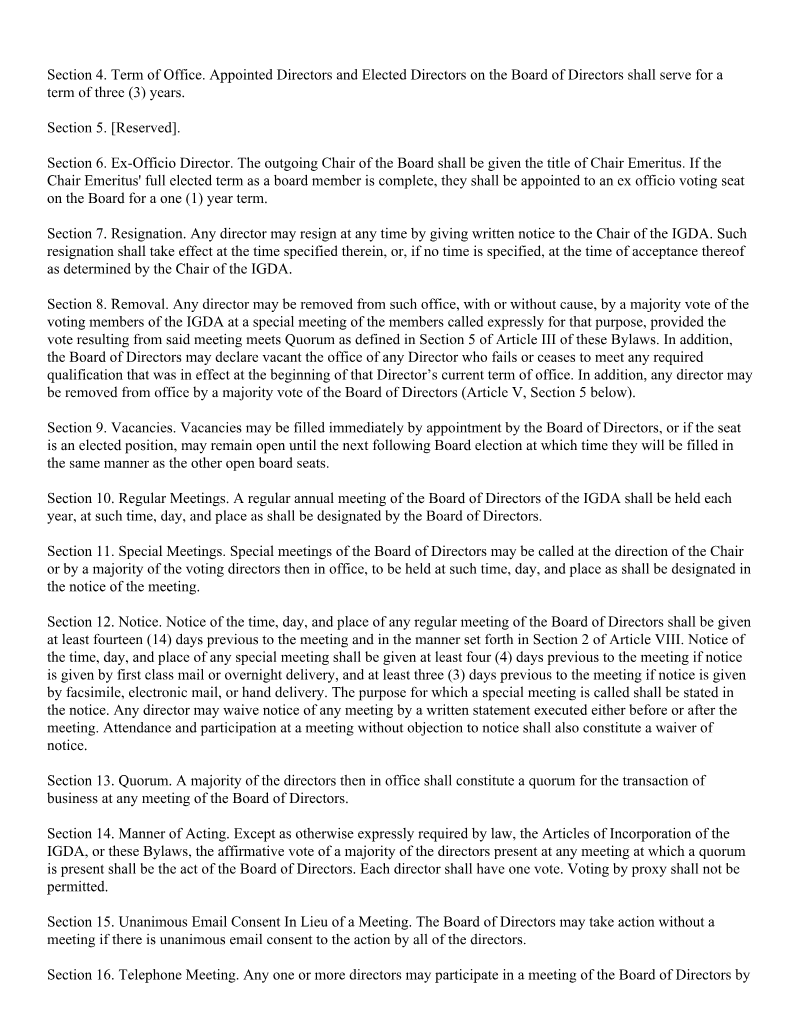
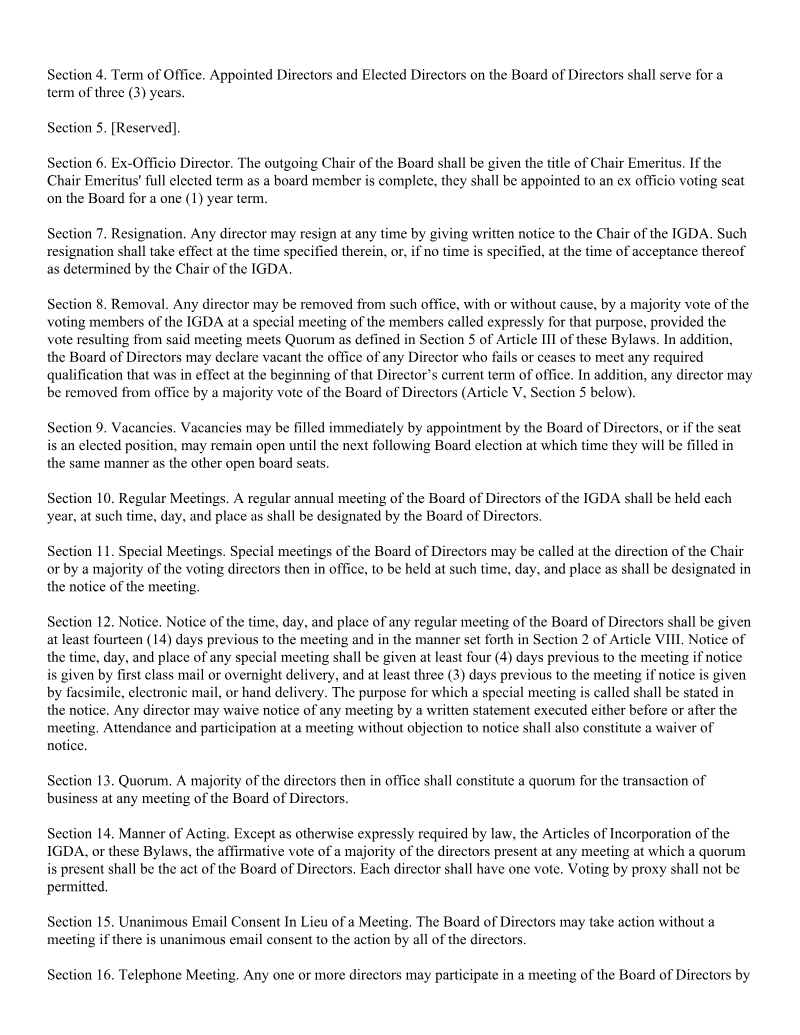
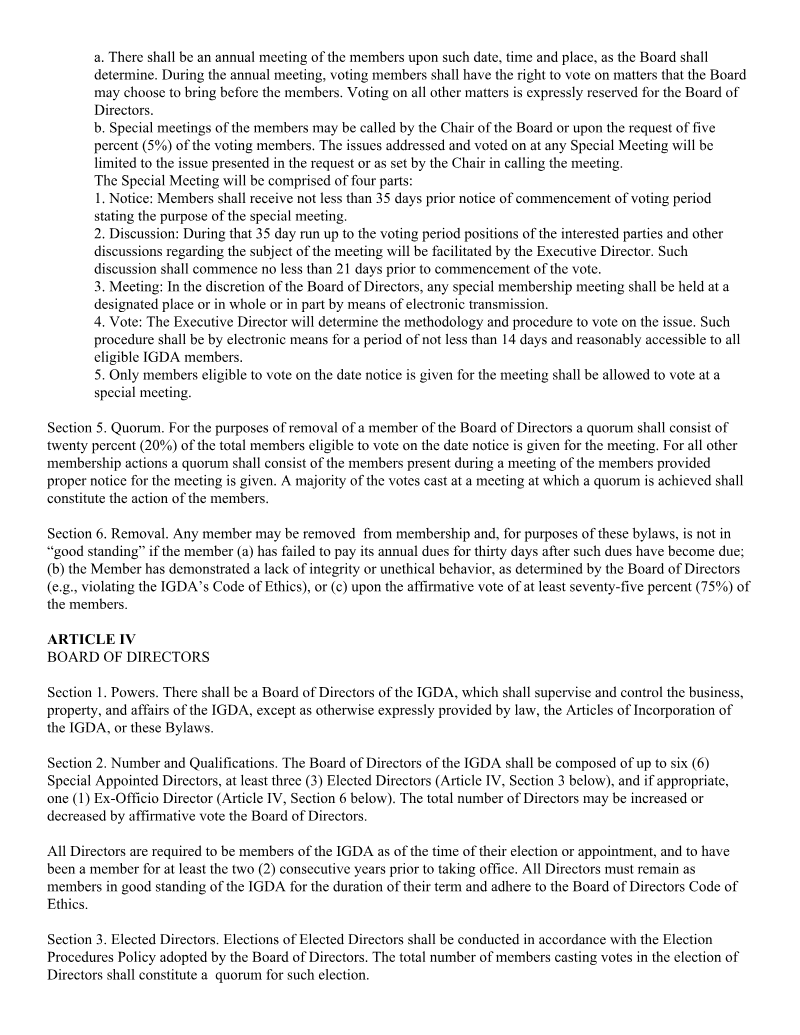
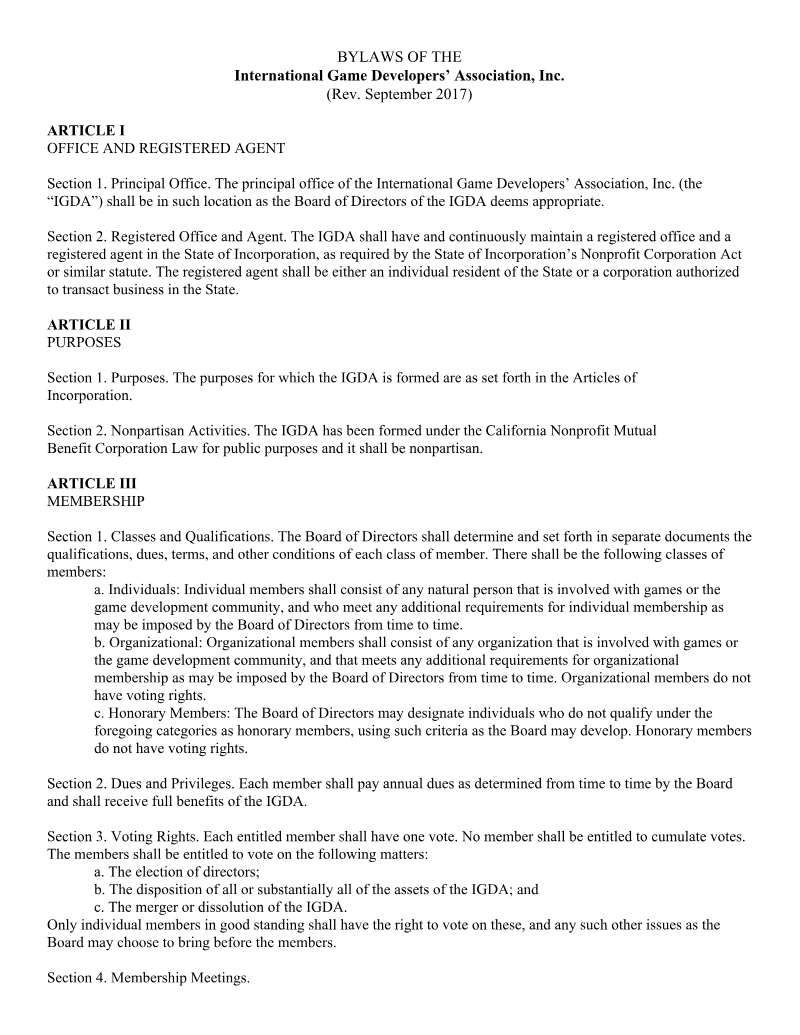
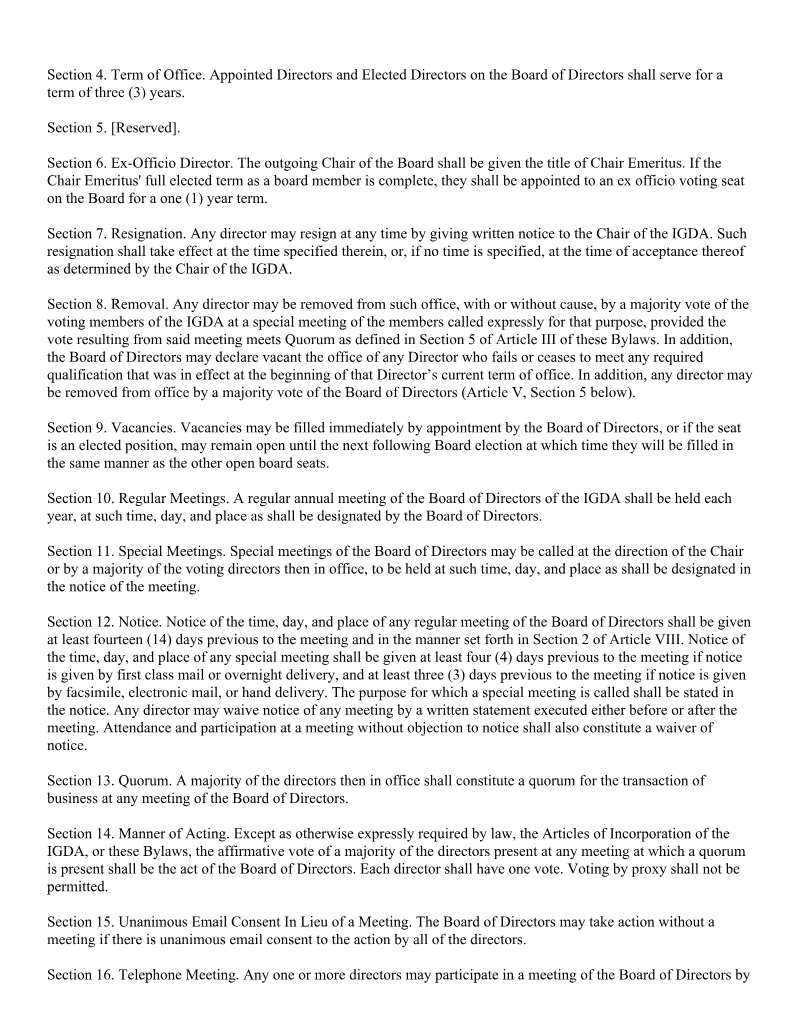
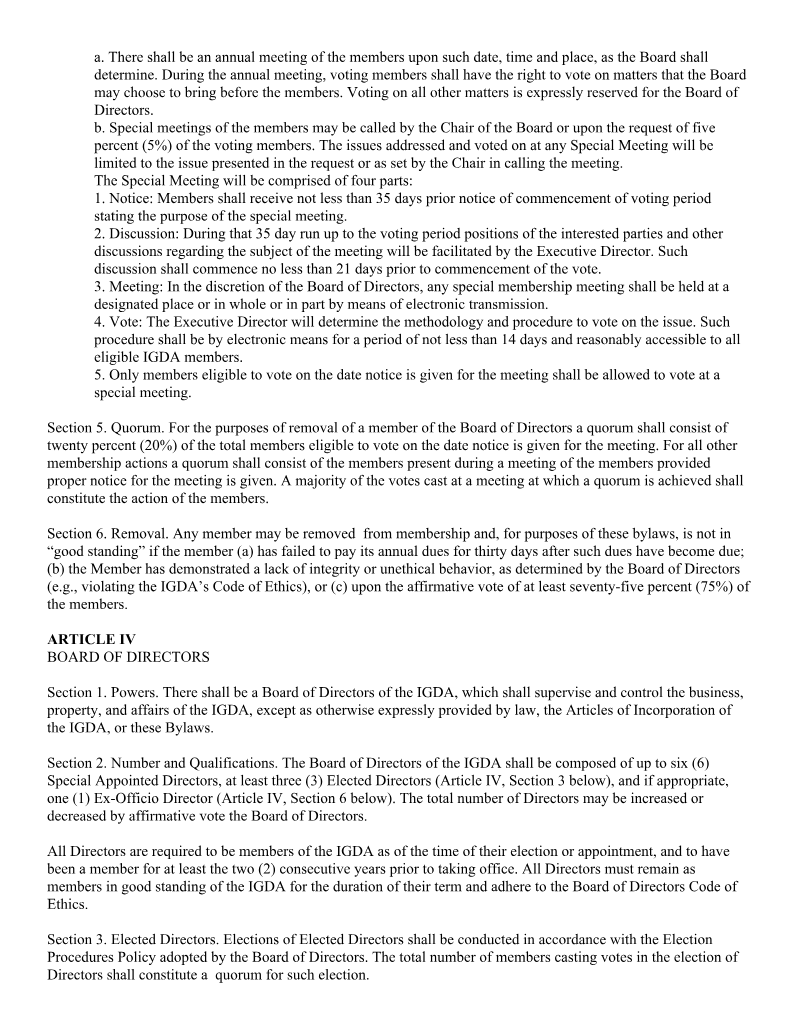
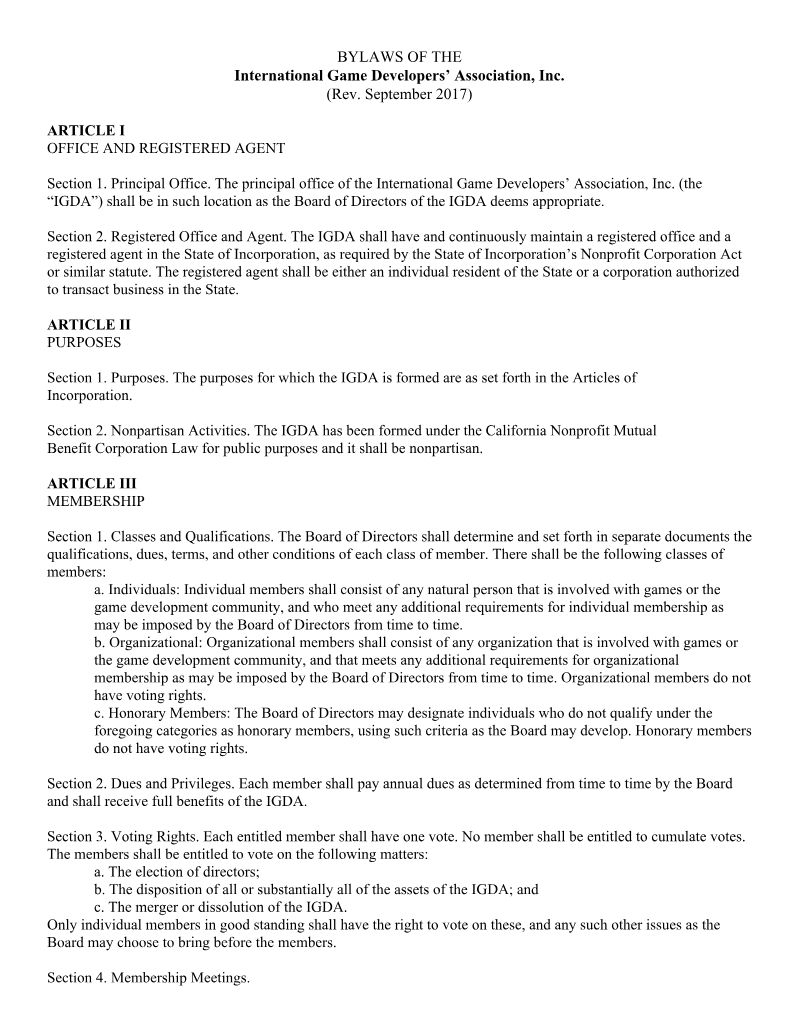
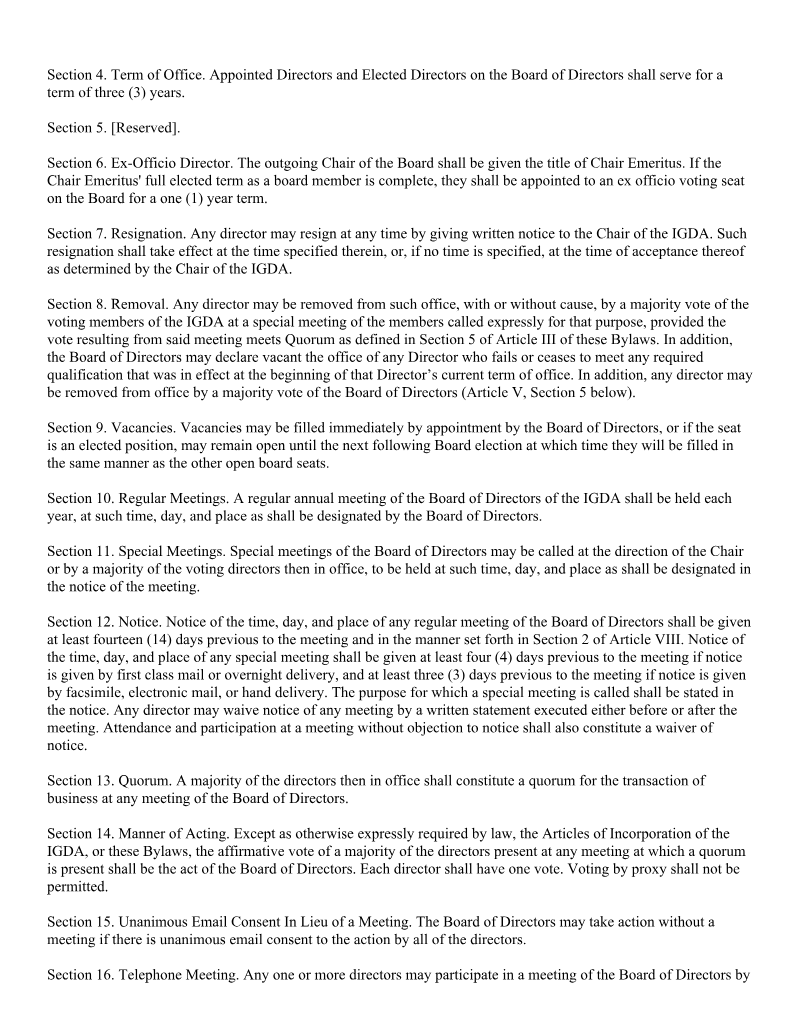
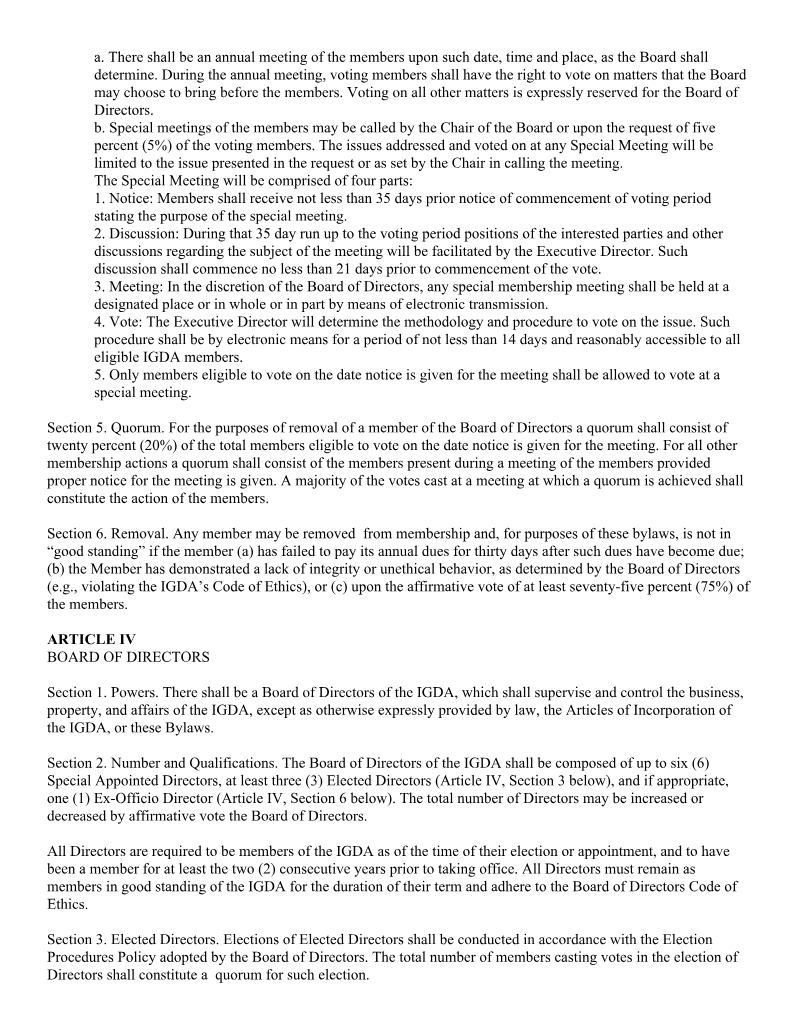
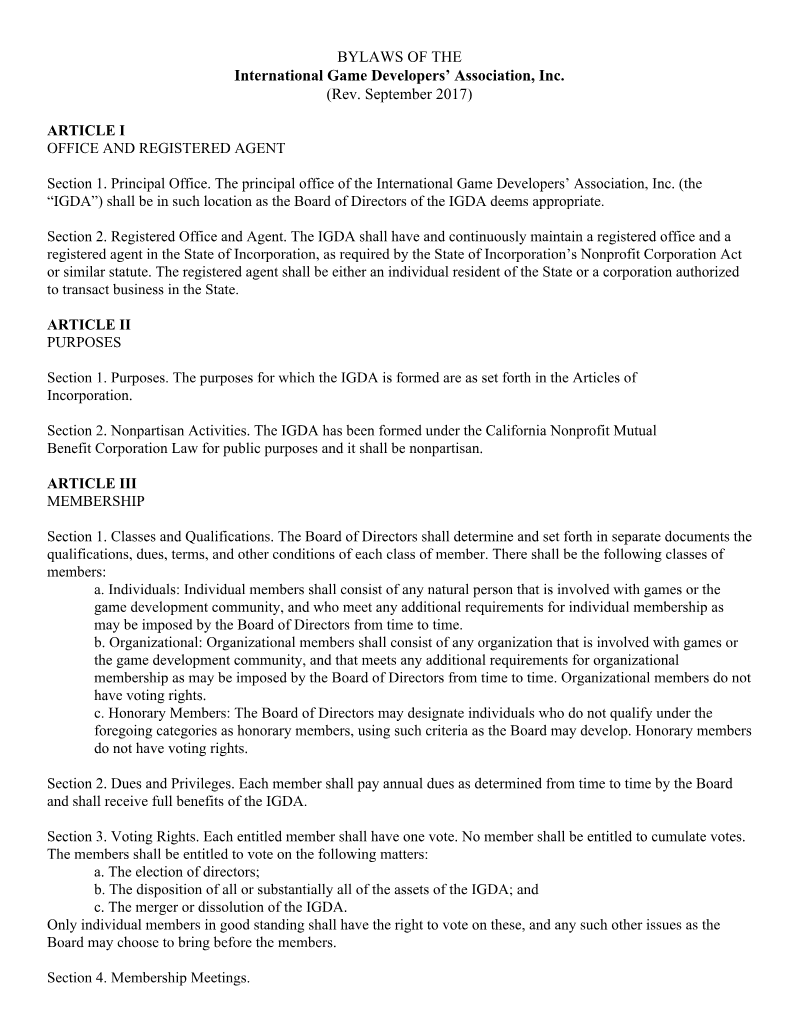
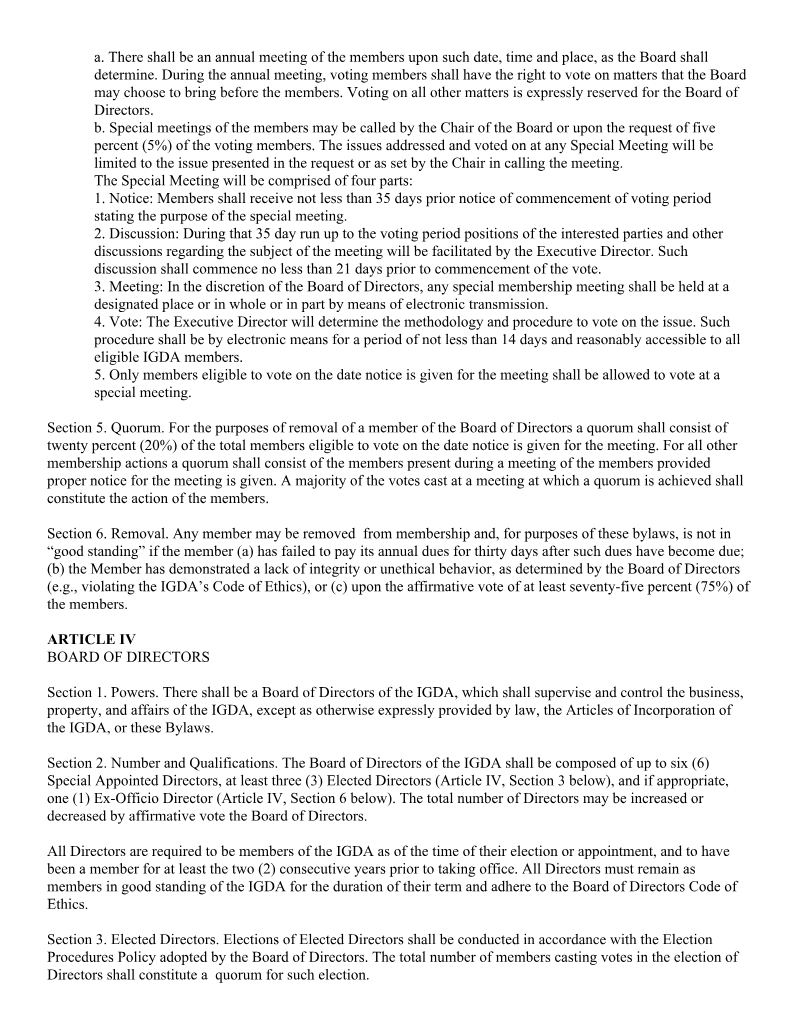
The bylaws establish the governance framework for the International Game Developers’ Association, Inc., a California‑based nonprofit dedicated to serving the global game development community. The organization’s principal office is determined by its Board, while a registered agent must be maintained in the state of incorporation. The bylaws affirm the IGDA’s nonpartisan status and outline its purpose as defined in the Articles of Incorporation. Membership is categorized into individuals, organizations, and honorary members. Individual members hold voting rights on key matters such as director elections, asset disposition, mergers, and dissolution; organizational and honorary members receive benefits but lack voting power. Annual dues are set by the Board, and membership eligibility requires good standing, with removal provisions based on unpaid dues, ethical violations, or a 75 % member vote. Meetings include an annual general meeting and special meetings triggered by the Chair or a 5 % member petition, with detailed notice, discussion, and electronic voting procedures. Quorum requirements vary: 20 % of eligible voters for board removal, and a simple majority at meetings with quorum. The Board may consist of up to six appointed directors, three elected directors, and an optional ex‑officio director. Directors serve three‑year terms, must be IGDA members for at least two years, and are subject to removal by member or board vote. The Board appoints officers—Chair, Vice‑Chair, Secretary, Treasurer—with defined terms and responsibilities. Committees, including an Executive Committee, are empowered to act on the Board’s behalf except for major constitutional changes. An Executive Director serves as CEO, appointed by the Board and compensated accordingly. Fiscal year aligns with the calendar year, and indemnification provisions protect directors, officers, and employees from liabilities incurred in good faith. Amendments to the bylaws require a majority vote of either the membership or the Board, ensuring flexible yet accountable governance.
Tags
Pages
View all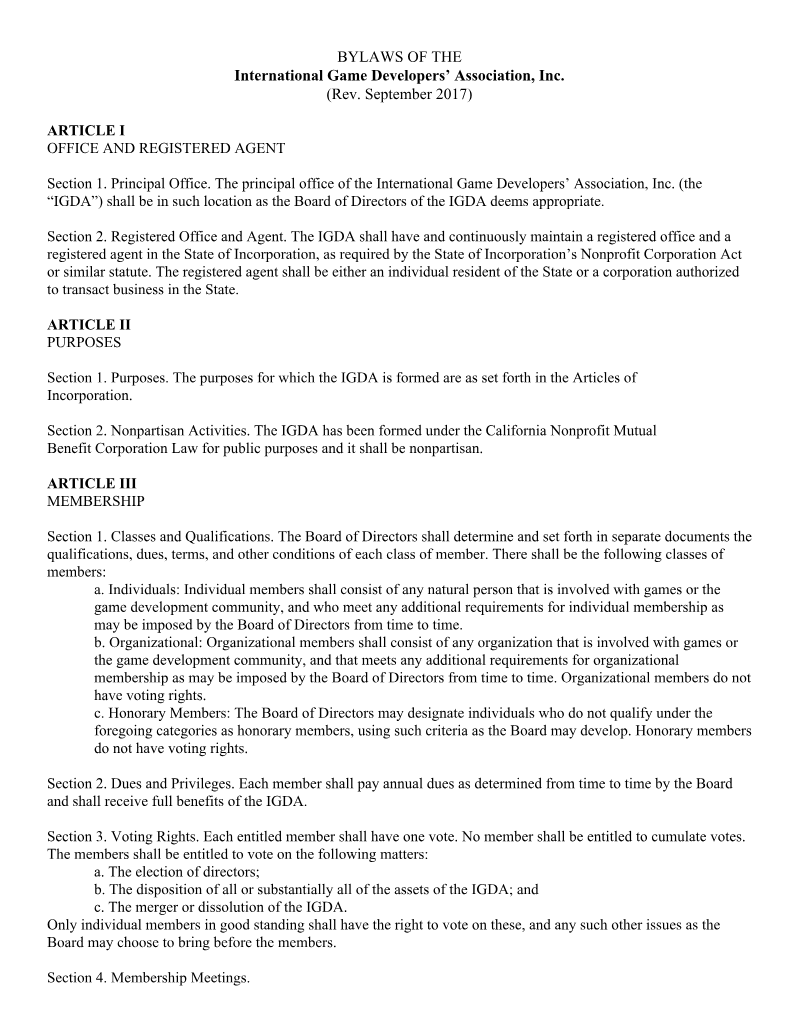
Citation
Citation
Generating citation...