
Game Developers Conference
Game Developers Conference (GDC, now the GDC Festival of Gaming) is the professional event for the games industry. It publishes recorded talks and interviews, annual industry survey reports such as the State of the Game Industry, and news articles.
Documents

I Don't Want Your Lemons: Optimism Fuel for Weary Devs
This presentation provides a framework for maintaining professional optimism and creative resilience within the game development industry.
- Maintain professional longevity by viewing industry instability, such as project cancellations and layoffs, as opportunities for personal and creative growth rather than mere setbacks.
- Protect against burnout by prioritizing working with respectful, talented peers over attachment to specific intellectual properties.
- Adopt a business-oriented mindset to prevent the exploitation of personal passion, while remaining prepared for the industry's inherent volatility.
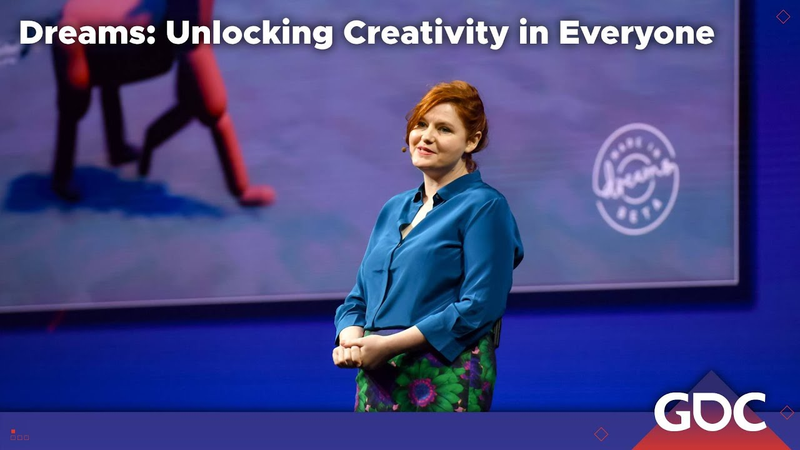
Dreams: Unlocking Creativity in Everyone
Media Molecule’s development of Dreams represents a long-term effort to democratize game creation by transforming it into an accessible, living-room hobby.
- Media Molecule developed Dreams as a unified, real-time game engine designed to eliminate the friction of fragmented development tools by allowing seamless transitions between sculpting, music, and level design.
- A six-week beta test involving 20,000 self-identified creators validated the platform's potential, with users producing complex projects ranging from music players to full games.
- The studio prioritized a fluid, experimental workflow that treats game creation as an accessible hobby, similar to learning a musical instrument.
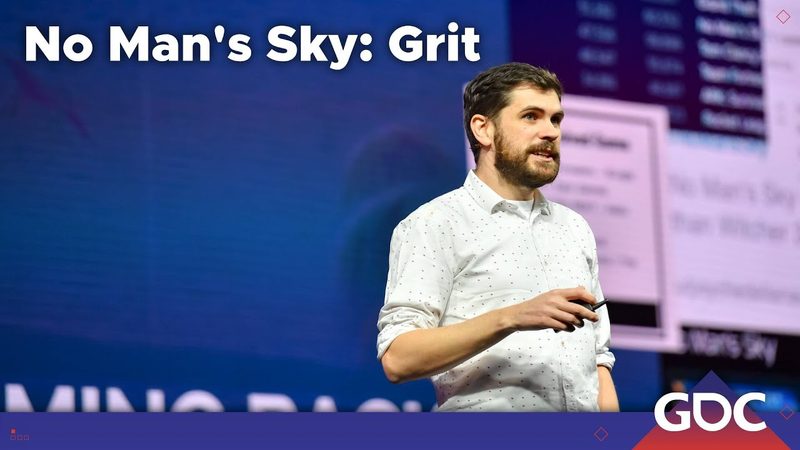
No Man's Sky: Grit
The development and launch of No Man’s Sky serves as a case study for navigating extreme industry adversity and managing the transition from a polarizing release to long-term success.
- Focus on actions over words by communicating with players exclusively through patch notes and game updates rather than blog posts or press releases.
- Filter feedback by treating it as raw data; analysis revealed that 80-90% of toxic commentary originated from individuals not invested in the game, allowing the team to ignore noise and focus on actionable player needs.
- Define a clear metric for success—such as player concurrency or critical reception—and optimize every team decision toward that specific goal to simplify complex development choices.

Tree's Company: Systemic AI Design in Just Cause 3
The systemic design of artificial intelligence in Just Cause 3 relies on a modular architecture that balances emergent, open-world behavior with the precise requirements of scripted mission content.
- Avalanche Studios utilized a hybrid AI architecture for Just Cause 3 that combined behavior trees for high-level logic with utility functions to rank and select optimal positions or targets based on environmental variables.
- Content designers were empowered to customize AI behavior by filling out exposed parameters in the engine, which were then dynamically read and utilized by the behavior trees at runtime.
- The team implemented modular 'micro-behaviors' as external tree objects, allowing designers to inject specific tasks—such as flying a helicopter to a point—into the main AI logic without requiring custom programming for every scenario.
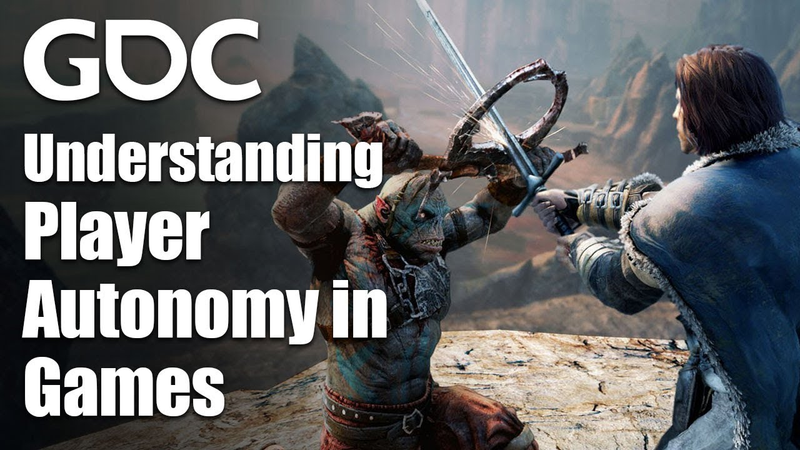
The Freedom Fallacy: Understanding Player Autonomy in Game Design
The freedom fallacy represents a fundamental misunderstanding in game design, where developers equate total independence and expansive open-world environments with player autonomy.
- True player autonomy is defined by the PENS model (autonomy, relatedness, and competence) rather than the scale of an open world or total independence.
- Excessive, unstructured freedom often leads to 'motivational sand traps' that fail to sustain long-term engagement compared to structured, goal-oriented pathways.
- Players prioritize core mechanics and narrative agency over superficial features like avatar customization, making these the primary drivers of satisfaction.
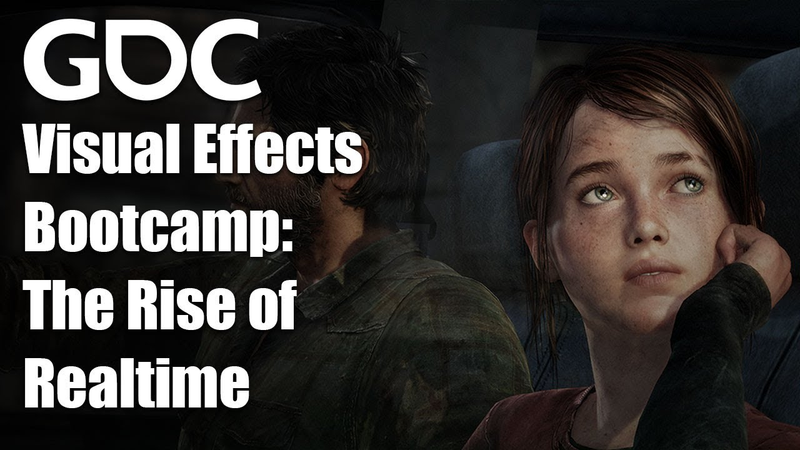
Visual Effects Bootcamp: The Rise of Realtime
The rapid evolution of real-time visual effects is fundamentally reshaping the creative landscape, necessitating a shift in the professional profile of visual effects artists.
- Real-time visual effects are shifting from traditional particle simulations toward a multidisciplinary requirement for rigging, programming, and tool development skills.
- Artists are increasingly utilizing data-driven techniques like motion vector flipbooks and vertex animation textures to bake complex lighting and fluid dynamics into shaders for high-fidelity performance.
- Procedural tools and analytic simulations, such as spline-based trails and mesh-based particle systems, are replacing traditional physics-based approaches to provide greater artistic control and efficiency.

Unpopular Opinion: All Narrative is Linear
The core thesis of this analysis is that all narrative experiences, regardless of their level of interactivity or non-linearity, fundamentally adhere to a linear structure defined by the tracking of tension over time.
- All narrative experiences, regardless of interactivity or branching logic, fundamentally adhere to a linear structure defined by the tracking of tension over time.
- Technical frameworks like state machines and core loops constitute a possibility space, whereas the underlying emotional arc constitutes the actual narrative.
- Every player’s journey, even in open-ended sandbox environments like Minecraft or branching narratives like Life is Strange, maps to a traditional arc of introduction, inciting incident, rising action, climax, and resolution.
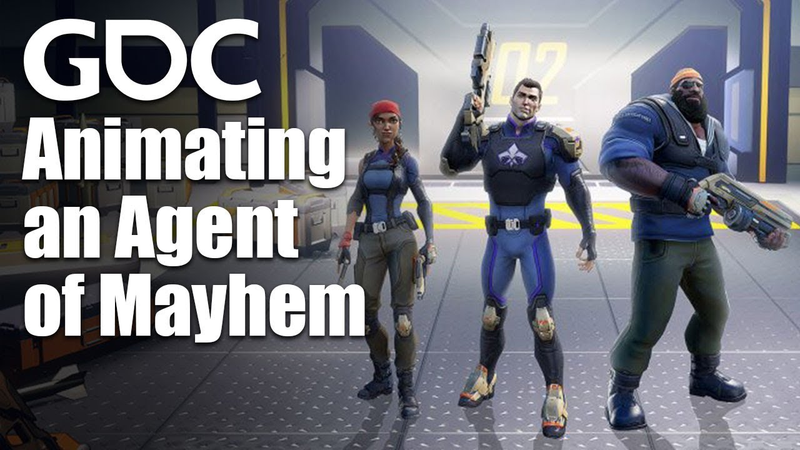
Animating an Agent of Mayhem
The development of Agents of Mayhem centers on a systematic approach to character animation that balances high-fidelity personality with technical efficiency.
- Volition utilized 'character one sheets' to define core traits, gameplay strengths, potential pitfalls, and character secrets, ensuring consistent animation performance without relying on lengthy documentation.
- The animation team categorized movements into 'ordinary' (standard mocap) and 'extraordinary' (exaggerated, stylized) to allocate time efficiently, applying snappy timing and held poses to the latter to match the game's 2D-inspired aesthetic.
- To manage limited resources, the team implemented procedural systems for jump landings and turns, which saved approximately 30% of animation production time by layering arm-only overrides onto existing idle or run animations.

Vehicle Audio of Mafia III: Recreating a Classic Era in Automotive History
The audio production for Mafia III centers on the challenge of recreating the authentic mechanical soundscape of 1968 New Orleans within the constraints of a high-octane, open-world action game.
- The development team recorded 30 distinct vehicle archetypes from 20 cars, two trucks, seven boats, and one electric vehicle to populate an expansive 1968 New Orleans setting.
- To ensure high-fidelity audio without environmental interference, the team used a Dyno-pack hydraulic braking system for controlled, silent recording sessions.
- The production scaled 30 original recordings across 90 total in-game car models by utilizing a flexible audio architecture that adapts to real-time physics data.
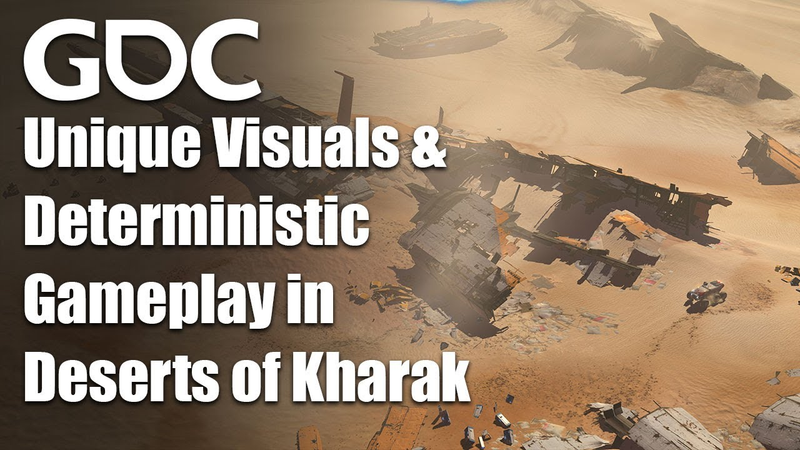
The Great Divide: Unique Visuals and Deterministic Gameplay in Deserts of Kharak
Homeworld: Deserts of Kharak demonstrates a sophisticated architectural approach to real-time strategy development by enforcing a strict separation between the deterministic simulation layer and the Unity-based visual presentation layer.
- To achieve deterministic gameplay for multiplayer RTS, Blackbird Interactive separated the simulation layer from the presentation layer, ensuring the simulation never calls Unity APIs and uses internal scope to prevent accidental cross-layer dependencies.
- The team implemented a custom entity system using structs that act as indices into pre-allocated arrays, allowing for up to 5,000 entities without triggering the .NET garbage collector during gameplay.
- To maintain visual fidelity while keeping the simulation lightweight, the game uses a 2D driving model for physics calculations, while the 3D presentation layer handles complex visual elements like vehicle suspension, jumping, and terrain interaction.

8 Frames in 16ms: Rollback Networking in Mortal Kombat and Injustice 2
NetherRealm Studios successfully transitioned from traditional lockstep networking to a rollback architecture to eliminate the input latency inherent in fighting games.
- NetherRealm Studios successfully implemented a rollback networking architecture that maintains a consistent three-frame input delay by simulating up to eight frames within a 16ms window.
- The system supports competitive-grade online play for round-trip times up to 333ms, covering over 99% of all online matches.
- To ensure performance, the engine maintains a compact state footprint of less than one megabyte per frame by using handles instead of pointers and excluding non-essential systems like audio and particles during re-simulation.

Up Sh*t Creek: Pro Tips for Managing the Unmanageable Project
Managing high-risk, time-constrained game development projects requires a strategic framework centered on fear management, expectation management, and chaos management.
- Producers must act as a stabilizing force by using fear as a diagnostic tool to identify potential failure points rather than reacting impulsively to pressure.
- Project stability requires radical transparency and meticulous documentation of all scope changes, trade-offs, and action items to facilitate effective stakeholder negotiations.
- Adding resources is rarely an effective solution for structural issues; instead, teams should prioritize right-sizing processes and eliminating unnecessary overhead.