
Game Developers Conference
Game Developers Conference (GDC, now the GDC Festival of Gaming) is the professional event for the games industry. It publishes recorded talks and interviews, annual industry survey reports such as the State of the Game Industry, and news articles.
Documents
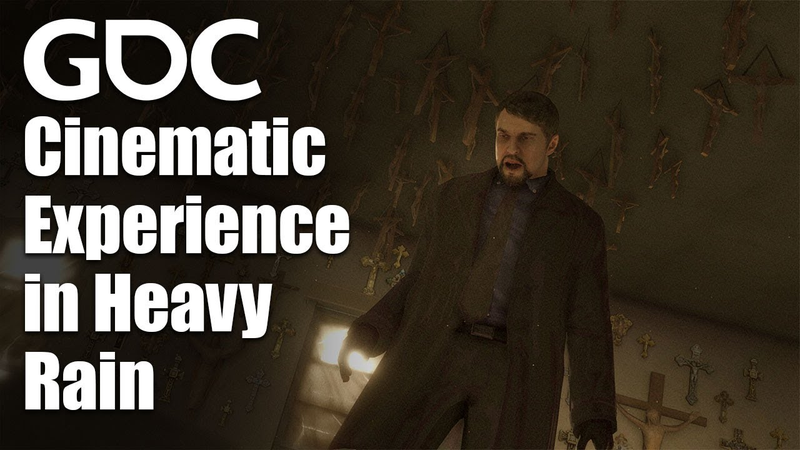
How Art Was Used to Create a Unique Cinematic Experience in Heavy Rain
Heavy Rain functions as a pioneering interactive drama that prioritizes emotional resonance and mature narrative depth over conventional gaming tropes like boss battles or traditional failure states.
- The development team prioritized a grounded, cinematic aesthetic by modeling environments after Philadelphia’s industrial landscape rather than using the exaggerated, oversized spaces typical of the era.
- Visual storytelling was achieved through 'invisible' methods, embedding character history directly into environmental clutter to maintain immersion without relying on cutscenes.
- Character fidelity was maintained under a strict 20,000-polygon budget, utilizing 3D scanning and a modular motion capture system that decoupled facial and body animation.

Snap to Character: Building Strong Player Attachment Through Narrative
Building strong player attachment requires a strategic shift away from relying on pre-established relationships or generic tropes toward the cultivation of emotional parity.
- Foster emotional parity by ensuring players and avatars experience pivotal narrative events and motivations simultaneously to prevent narrative dissonance.
- Align the player’s real-world objectives with the character’s in-game goals to build genuine investment rather than relying on generic tropes.
- Establish initial player-character connections through pragmatic utility, focusing on mechanical survival and progress before transitioning to deeper emotional layers.
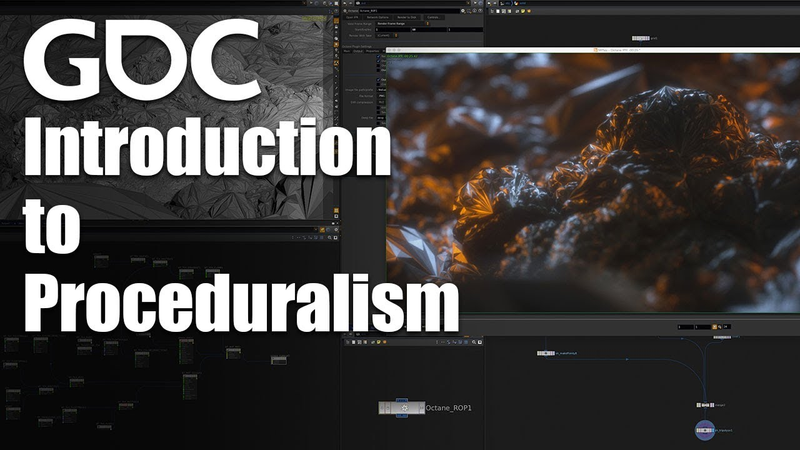
Technical Artist Bootcamp: Introduction to Proceduralism
Procedural content generation serves as a transformative framework for modern game development, shifting production away from manual, destructive workflows toward flexible, node-based systems.
- Procedural content generation shifts development from manual, destructive workflows to flexible, node-based systems, effectively reducing production bottlenecks and mitigating development crunch.
- Successful proceduralism relies on balancing algorithmic efficiency with deliberate, art-directed control, ensuring that automation supports rather than replaces artistic intent.
- Technical artists should implement procedural systems incrementally by building small, robust prototypes that solve specific production hurdles rather than attempting to overhaul entire pipelines simultaneously.
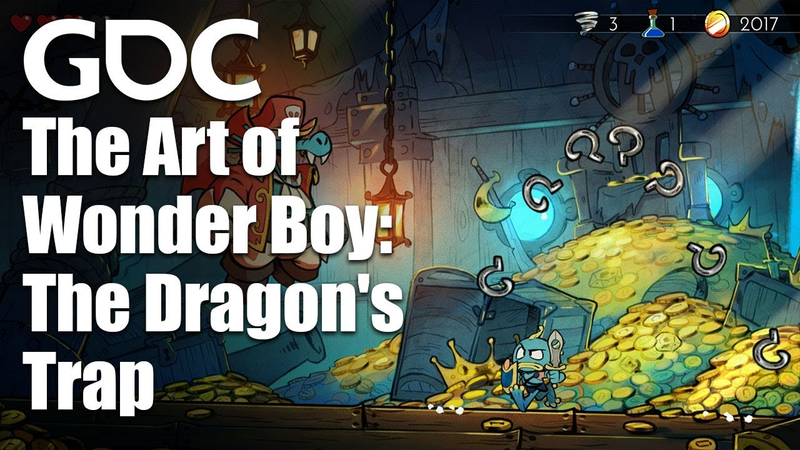
The Art of Wonder Boy: The Dragon's Trap
The artistic revitalization of the 1989 classic Wonder Boy: The Dragon’s Trap serves as a case study in balancing nostalgic fidelity with modern visual standards.
- Lizardcube successfully modernized the 1989 Master System title 'Wonder Boy: The Dragon’s Trap' by maintaining original gameplay mechanics and collision logic while replacing pixel art with hand-drawn 2D animation.
- The development team utilized a custom engine that enabled real-time asset swapping, allowing players to toggle between the original 1989 visuals and the updated aesthetic.
- To compensate for the lack of original concept art, the team interpreted existing pixel-art sprites through a stylistic blend of European comics and 1980s Japanese animation.
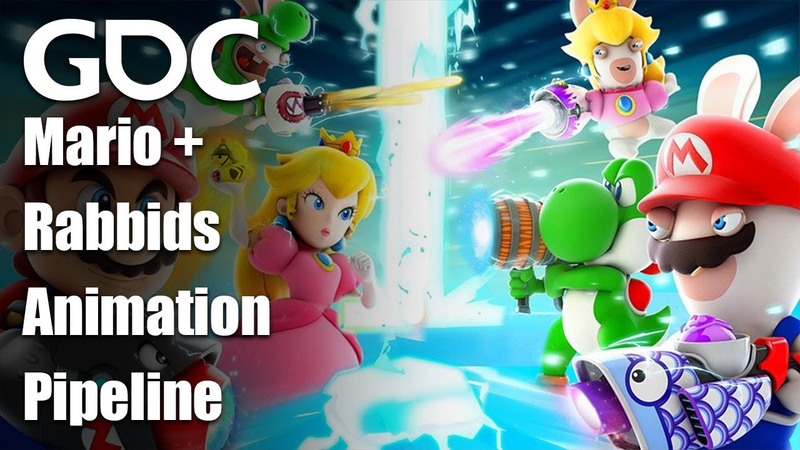
The Animation Pipeline of Mario + Rabbids Kingdom Battle
The development of Mario + Rabbids Kingdom Battle centered on synthesizing the structured, iconic posing associated with Nintendo characters with the unpredictable, chaotic energy of the Rabbids.
- The animation team unified the distinct visual styles of Nintendo characters and Rabbids by applying rigorous principles of clear silhouettes and lines of action to the chaotic Rabbid designs.
- Developers utilized a hybrid rigging system combining joint-based rigs and automated blend shapes to balance high-fidelity character deformations with the responsiveness required for tactical combat.
- A proprietary Take System built within Maya enabled rapid iteration and organized clip management, utilizing sidecar descriptors and dirty-bit tracking to automate mirroring and file synchronization.
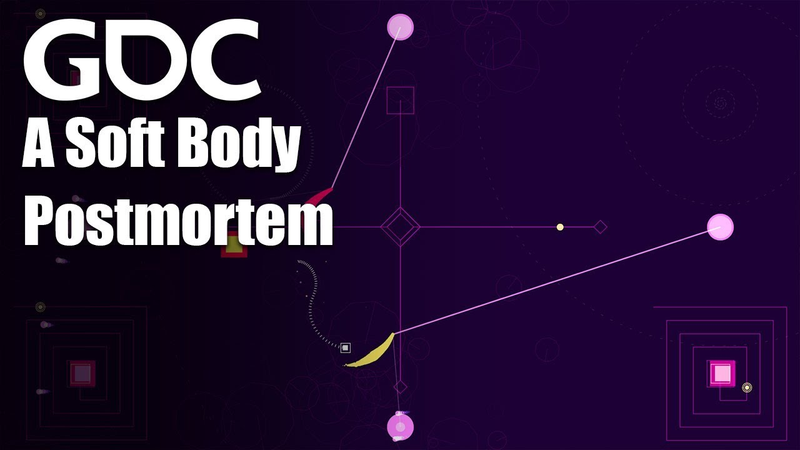
Untangling Experiments in Split-Mind Design: A Soft Body Postmortem
The development of the action game Soft Body serves as a case study in implementing "split-mind" mechanics, where players control two distinct entities simultaneously.
- The 2.5-year development of Soft Body demonstrates that split-mind mechanics require players to master complex spatial tasks, such as crossing paths or maintaining distance, rather than allowing them to bypass the challenge by keeping entities close together.
- Early development suffered from a lack of conceptual cohesion due to 'wishful' feature additions like narrative elements and co-op modes that failed to integrate into a unified experience.
- The project’s turning point occurred when the developer shifted from exploratory prototyping to a structured analysis of core mechanical friction, specifically isolating why players struggled with simultaneous control.

The Science of Off-Roading: Uncharted 4's 4x4
The development of the 4x4 vehicle in Uncharted 4 focused on balancing realistic physical simulation with accessible, fun gameplay mechanics suitable for an adventure title.
- The development team utilized a hybrid physics model built on the Havoc engine, prioritizing accessible, fun gameplay over strict mechanical simulation.
- To eliminate terrain penetration and jittering, the team replaced standard ray casting with shape casting and a multi-point contact system.
- Custom logic was applied to ignore specific surface normals and counter-act unwanted rotations, preventing the vehicle from flipping and maintaining momentum on steep terrain.
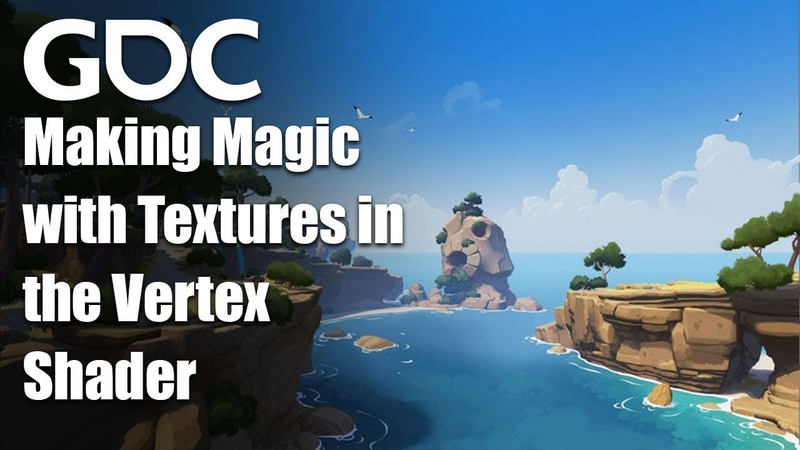
The Illusion of Motion: Making Magic with Textures in the Vertex Shader
Leveraging vertex shaders to sample textures as data containers offers a high-performance alternative to traditional CPU-driven animation pipelines.
- Encoding animation data like vertex positions, rotations, and bone weights directly into textures allows developers to offload processing from the CPU to the GPU vertex shader.
- This GPU-centric approach enables the management of complex simulations—such as cloth, liquids, and large-scale particles—while supporting higher bone counts than conventional animation pipelines.
- Treating textures as data containers allows for extreme compression, such as storing 166 minutes of facial animation at 30 frames per second within a single 2K texture.
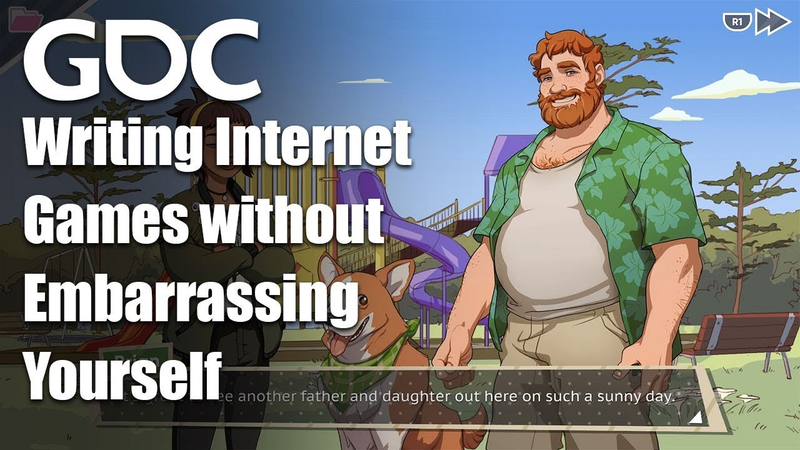
How to Write Games for the Internet without Embarrassing Yourself
Successful game marketing in the modern digital landscape depends on the concept of spreadability, which prioritizes the intentional design of content that facilitates organic sharing over the unpredictable nature of virality.
- Prioritize 'spreadability'—the intentional design of content for organic sharing—over the unpredictable and unreliable goal of virality.
- Adopt a metamodern approach that balances sincerity with self-awareness, using irony as a tool for authentic storytelling rather than cynical detachment.
- Design 'compressible' content by incorporating recognizable archetypes and open-ended narrative gaps that invite fans to remix and share the work.

Folk Games, Festivity and Subversive Game Design
The core thesis of this presentation is that game developers, particularly independent creators, should embrace the inherent limitations of motion-control technology rather than attempting to overcome them with complex, expensive algorithms.
- Developers should prioritize 'folk game' design, which emphasizes simple, physical, and absurd activities over complex algorithms to overcome motion-control limitations.
- By 'deputizing' the player, game design can offload the burden of gesture recognition to human participants, who enforce rules and improvise during gameplay.
- Successful motion-control projects like Johan Sebastian Joust, Dog the Wag, and Beacons of Hope demonstrate that embracing an aesthetic of imperfection fosters social interaction and slapstick comedy.
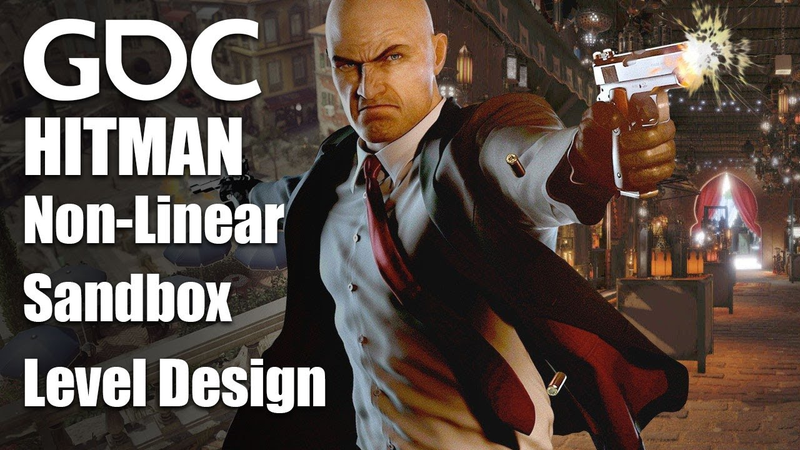
Level Design in Hitman: Guiding Players in a Non-Linear Sandbox
The design philosophy behind the modern Hitman series centers on reconciling the vast, non-linear potential of sandbox environments with the necessity of providing players with meaningful direction.
- Effective sandbox design requires balancing structured guidance with player-driven freedom to prevent users from feeling overwhelmed by complex, non-linear environments.
- Onboarding is integrated directly into the gameplay loop, forcing players to master core mechanics like infiltration and disguise usage through practice rather than passive instruction.
- The 'Opportunities' system provides optional, time-loop-inspired paths that allow players to learn environmental patterns and assassination methods without forcing a linear narrative.
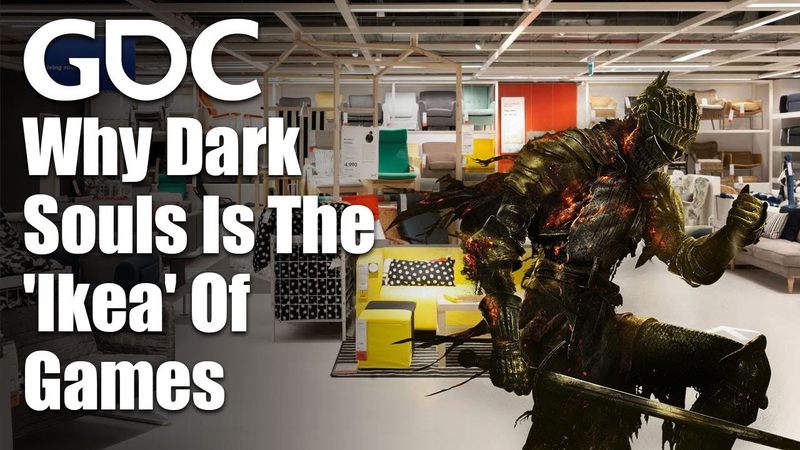
Why Dark Souls Is The 'Ikea' Of Games
Strategic design in the video game industry requires a shift from reactive decision-making toward a framework rooted in core business principles, specifically the pursuit of unique competitive advantages.
- Strategic success in game development requires prioritizing unique competitive advantages over mass-market appeal by making deliberate trade-offs in product features.
- The 'IKEA' model of game design focuses on intentional limitations to create a cohesive value proposition, mirroring the operational strategies of companies like Southwest Airlines.
- Dark Souls achieved market success by rejecting industry standards such as extensive tutorials, multiple difficulty settings, and heavy cinematic reliance, which reduced production complexity while increasing player loyalty.