
Game Developers Conference
Game Developers Conference (GDC, now the GDC Festival of Gaming) is the professional event for the games industry. It publishes recorded talks and interviews, annual industry survey reports such as the State of the Game Industry, and news articles.
Documents
Art Direction: Escaping Your Comfort Zone
In this 2018 GDC presentation, Ubisoft art director Liam Wong explores the professional and personal growth achieved by stepping outside one’s comfort zone.
- Creative stagnation is best overcome by actively seeking out unfamiliar territory where you feel out of your depth, as this is where the most significant artistic breakthroughs occur.
- Artists should prioritize sharing their work publicly rather than waiting for perfection, as consistent curation and exposure are essential for building professional confidence.
- Proactive networking, including reaching out to industry icons and collaborators, is a critical component of career advancement that requires overcoming the fear of rejection.
Random Tidbits: Use Chance to Enhance Fun!
This presentation explores the strategic application of randomness in game design, emphasizing that random number generation (RNG) should be treated as a deliberate design tool rather than a mere technical necessity.
- Treat random number generation as a deliberate design tool rather than a technical necessity to align outcomes with specific player experiences.
- Implement custom RNG systems using high-quality, efficient algorithms like Xorshift128+ instead of relying on basic platform-provided functions.
- Avoid common technical pitfalls such as re-seeding before every request and bias in modular arithmetic when calculating dice rolls.
Destiny 2: Linear Music in an Open World
The audio team at Bungie developed a modular, systemic approach to music implementation for Destiny 2 to address the challenges of scaling linear, high-production-value scores across a vast, open-world environment.
- Bungie transitioned from Destiny's original system of custom-scripted, one-off music for missions to a modular 'music system' that uses expanded, multi-intensity audio pieces to create a linear-feeling score in an open-world environment.
- The new system allows designers to script activity scores directly during development, enabling them to audition music immediately and reducing the need for audio team intervention in the early scripting process.
- Music is organized into 'music sets' assigned to specific destinations, which randomly cycle through various intensity levels and transitions to maintain a consistent, high-quality score without requiring unique, hard-coded implementation for every encounter.
The 2019 Tech Toolbox
Modern game development increasingly relies on the creative repurposing of enterprise technology and the implementation of specialized, tactile tooling to foster iterative design.
- Modern game development is shifting toward decoupling complex narrative logic from core code by integrating enterprise tools like Google’s Dialogflow and node-based frameworks such as Yarn Spinner.
- Developers are bypassing traditional, time-consuming compilation cycles by adopting hardware-integrated interfaces, such as MIDI controllers, to manipulate game variables and physics in real-time.
- Procedural techniques, specifically the use of Perlin noise for organic animation and parameterized storylets for narrative generation, are being used to reduce reliance on manual keyframing and labor-intensive asset creation.
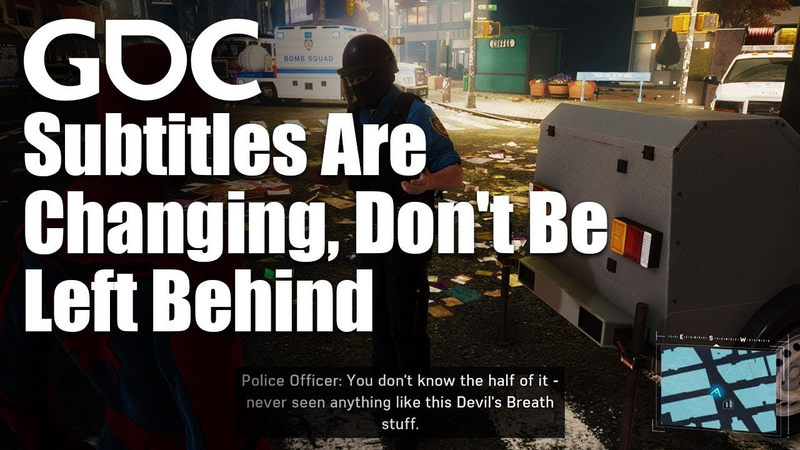
Subtitles Are Changing, Don't Be Left Behind
Subtitles are a critical accessibility feature in modern gaming, serving a diverse user base that extends far beyond the deaf and hard-of-hearing community.
- Over 60% of players utilize subtitles, as evidenced by usage metrics from Assassin’s Creed Origins, indicating that demand extends well beyond the deaf and hard-of-hearing community.
- Effective readability requires a minimum font size of 46 pixels at 1080p, with text limited to two or three lines per screen and a maximum of 38 characters per line.
- Developers must prioritize high contrast by using drop shadows, outlines, or adjustable background boxes to ensure text remains legible against varying game environments.
The Gamer's Brain, Part 3: The UX of Engagement and Immersion (or Retention)
Engageability serves as the foundational pillar for long-term player retention, requiring a multifaceted approach that integrates cognitive science with game design.
- Retention and engagement are driven by motivation, which relies on managing goals, fostering a sense of competence, and maintaining positive moment-to-moment emotions through game feel.
- Rewards should be designed as starting points for new goals rather than end points; they must be meaningful and provide feedback on competence to avoid decreasing intrinsic motivation.
- Effective onboarding is critical for long-term retention, as poor tutorials are frequently identified as the most impactful factors for player churn.
State of the Game Industry 2020
The global game development landscape in 2020 is characterized by a transition toward next-generation hardware and a diversifying array of digital storefronts.
- The industry is experiencing a significant shift in revenue expectations, as most developers reject the standard 30% platform fee in favor of a 10-15% revenue split.
- Workforce demographics remain stagnant, with 75% of professionals identifying as male and nearly 50% of studios lacking formal diversity or accessibility initiatives.
- Labor concerns persist as workweeks exceeding 40 hours remain common, and while a majority of developers support unionization, there is widespread skepticism regarding its near-term feasibility.
Animation Isn't the Answer
The modern landscape of game development demands a fundamental shift in how animators and engineers interact, moving away from rigid departmental silos toward a model of deep, iterative collaboration.
- Game development success requires moving away from rigid departmental silos toward a model of deep, iterative collaboration between animators and engineers.
- Studios should prioritize the development of hybrid professionals who possess the skills to bridge the gap between creative nuance and functional engineering.
- Technical systems must be designed to serve creative intent, ensuring that high-fidelity artistic vision is not compromised by underlying software architecture.
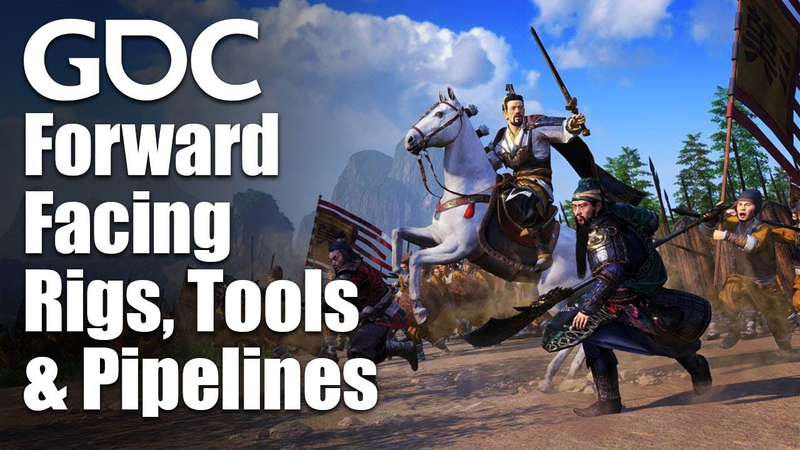
A Practical Approach to Developing Forward-Facing Rigs, Tools and Pipelines
Monolithic tool development frequently leads to bloated, unmaintainable codebases that hinder long-term project scalability.
- Transitioning from monolithic tool development to a factory-based plugin architecture prevents bloated, unmaintainable codebases and enhances long-term project scalability.
- Using abstract base classes to define requirements and a factory to manage modular components isolates features, preventing updates from causing unintended side effects across the pipeline.
- A directory-based structure combined with Python’s keyword arguments allows for the seamless integration of 'bolt-on' functionality, such as specialized export logic or animation tools.
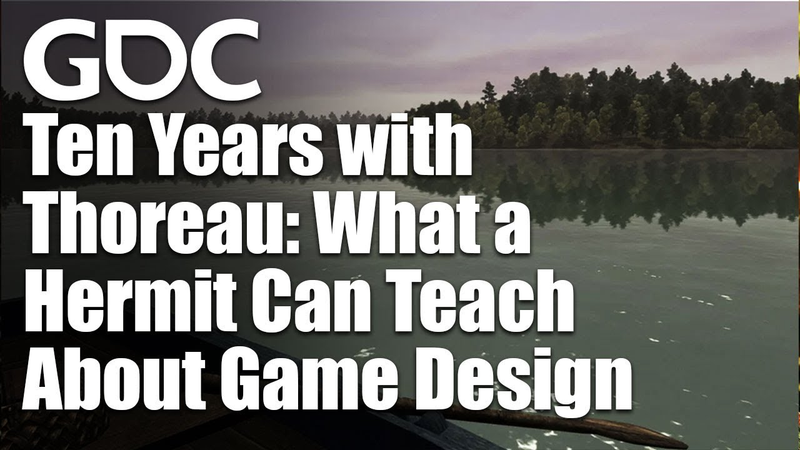
Ten Years with Thoreau: What a Hermit Can Teach About Game Design
The game Walden serves as a transformative exploration of Henry David Thoreau’s 19th-century experiment in living, reimagining the survival simulation genre to prioritize philosophical reflection over material accumulation.
- The game Walden subverts survival simulation tropes by replacing material accumulation and leveling up with the optimization of time for nature-based inspiration.
- Designers intentionally use traditional resource-gathering mechanics as a trap to demonstrate that prioritizing wealth and commercial success leads to a diminished, uninteresting player experience.
- The game utilizes subtle audiovisual cues to represent internal states, effectively retraining players to move away from a reliance on external rewards.
More Feelings, Fewer Features: Showcasing Your Indie Game Through Messaging and Video
Effective indie game promotion requires a cohesive strategy that integrates clear messaging with compelling visual storytelling.
- Define a clear 'hook' that focuses on the specific emotional resonance and unique player experience rather than listing generic game features or genre-based comparisons.
- Develop messaging early in the production cycle to serve as a foundational filter for both marketing efforts and core design decisions.
- Avoid industry jargon and clichés in promotional copy, using descriptive language that clearly explains the 'what' and 'why' of the gameplay to make the title easier for players to share.
Performance and Memory Postmortem for Middle-earth: Shadow of War
Middle-earth: Shadow of War required extensive technical optimization to support a complex open-world environment featuring up to 200 unique AI actors.
- To manage 200 unique AI entities in Middle-earth: Shadow of War, the team moved away from individual system threading in favor of a 'monolithic' approach, where entire systems like effects were scheduled to run on a single core to minimize context switching and cache misses.
- The engine team replaced expensive kernel semaphores with lightweight multiple-reader/single-writer primitives, such as Microsoft’s Slim Reader/Writer (SRW) lock, to reduce CPU overhead during high-contention scenarios.
- To optimize GPU constant buffer uploads, the team implemented named constant buffers and heuristic-based data packing, which prioritized frequently used constants and zero-valued data to minimize memory footprint and avoid cache line flushing issues.