
Game Developers Conference
Game Developers Conference (GDC, now the GDC Festival of Gaming) is the professional event for the games industry. It publishes recorded talks and interviews, annual industry survey reports such as the State of the Game Industry, and news articles.
Documents
Forging Audio Workflow Changes on Destiny: Rise of Iron
The development of audio for Destiny: Rise of Iron necessitated a fundamental shift in production methodology to overcome inefficiencies inherent in traditional, isolated testing environments.
- The development team reduced individual audio mix-testing cycles from fifteen minutes to mere seconds by shifting from manual testing to an automated, intuitive workflow.
- Transitioning from siloed, solo testing to a collaborative framework where audio leads participated in design and balance sessions ensured mixes were informed by complex, real-world multiplayer gameplay.
- The implementation of 'Guardian,' a centralized PC-based development tool, replaced cumbersome platform-specific debug menus with a streamlined command assistant interface.
Automated Testing and Profiling for Call of Duty
The development of the Call of Duty franchise relies on a sophisticated, custom-built continuous integration system known as Compass to manage the immense technical complexity of multi-studio, multi-platform production.
- The Call of Duty franchise utilizes a custom Python-based CI system called Compass to manage a massive infrastructure comprising 700 worker PCs, 300 development kits, and 50,000 daily tasks.
- By shifting from GUI-based build servers to a code-centric architecture, developers can define performance metrics and memory statistics directly within source control, enabling version history and debugging for testing workflows.
- The system employs advanced error-bucketing to categorize failures by log-based keys, allowing teams to address recurring trends rather than isolated incidents.
How to Talk About Games, Today
Public and political scrutiny of video games frequently mirrors historical moral panics directed at previous forms of entertainment, such as comic books and tabletop role-playing games.
- Public and political scrutiny of video games is a recurring cycle of moral panic that mirrors historical anxieties directed at comic books and tabletop role-playing games.
- Scientific research has failed to establish a causal link between gaming and real-world violence, as studies often rely on flawed laboratory proxies for aggression and struggle to isolate media consumption from socioeconomic variables.
- The industry must shift from a defensive posture to proactive advocacy, ensuring that legislative policy and public discourse are based on empirical reality rather than sensationalized misinformation.

The 2019 Experimental Gameplay Workshop
The 2019 Experimental Gameplay Workshop serves as a vital platform for exploring the boundaries of interactive design, advocating for a shift away from traditional genre conventions toward systems-driven, unconventional experiences.
- The 2019 Experimental Gameplay Workshop advocates for a shift from traditional genre-based progression loops toward systems-driven, unconventional design experiences.
- Innovation is driven by opportunistic learning, where designers transform daily observations, technical constraints, or unique physical properties into core gameplay mechanics.
- Successful experimental titles like 'Carto' and 'What the Golf?' demonstrate the value of deconstructing established mechanics, such as tile-based map manipulation and sports physics, through constant iteration.
Art Direction for AAA UI
Effective AAA game interface design hinges on the delicate equilibrium between aesthetic visual identity and functional transparency.
- AAA UI design must balance aesthetic identity with functional transparency by using Gestalt theory to minimize cognitive load and prevent player distraction.
- Designers should prioritize visual hierarchy through strategic use of color, shape, and typography to ensure interface elements support rather than intrude upon gameplay.
- Typography must be legible at varying distances and include a mandatory 40% text expansion buffer to accommodate global localization requirements.
Game Studio Leadership: You Can Do It
The primary role of a game studio leader is to serve as a protective buffer against external chaos, allowing creative teams to focus entirely on the development process.
- The primary function of a studio leader is to act as a protective buffer, shielding creative teams from external chaos to ensure focus on the development process.
- Leadership should prioritize team composition over rigid top-down planning, allowing the collective expertise of talented individuals to shape the studio's product vision.
- As studios scale, leaders must transition from direct game creation to organizational design, implementing structured feedback loops and clear career paths to replace informal communication.
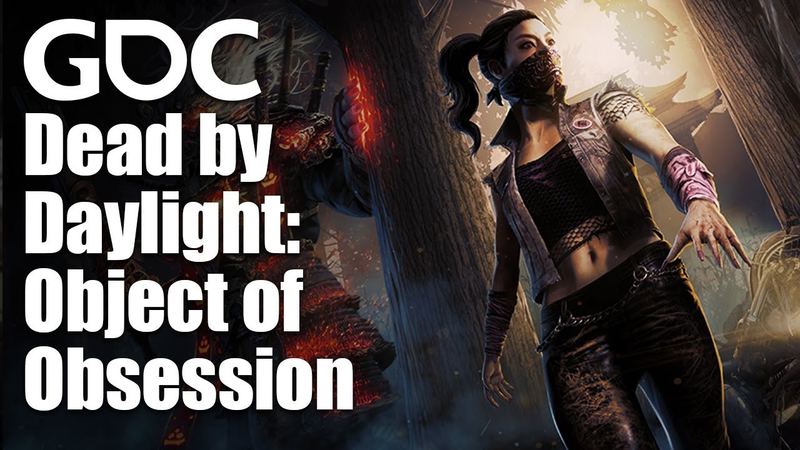
Dead by Daylight: Object of Obsession
Dead by Daylight functions as a foundational case study in the evolution of asymmetrical 4v1 multiplayer horror, prioritizing visceral, emergent gameplay over traditional interface-heavy mechanics.
- Behaviour Interactive transitioned from a work-for-hire model to self-publishing to establish a sustainable development framework focused on rapid prototyping and internal playtesting.
- The studio shifted from a volume-based content model to a structured, chapter-based release cycle to ensure long-term viability and prevent technical debt.
- Map design utilizes a semi-procedural approach that combines static landmarks for navigational stability with randomized elements to maintain replayability.

Brain-Computer Interfaces: One Possible Future for How We Play
Brain-computer interfaces represent a fundamental shift in the future of interactive entertainment, aiming to transcend traditional input methods by directly measuring a player’s internal neurological and physiological states.
- Brain-computer interfaces (BCI) enable the transition from subjective player surveys to objective, real-time monitoring of neurological and physiological states like engagement, frustration, and cognitive load.
- Developers can use granular data from EEG, fNIRS, and fMRI technologies to optimize game design elements and accelerate iterative development cycles.
- BCI technology facilitates adaptive gameplay by dynamically adjusting difficulty, narrative pacing, and reward structures to maintain a player's optimal flow state.

Dinosaurs and Volcanoes: Roblox Education's Jurassic World Challenge
The Jurassic World Creator Challenge serves as a strategic framework for democratizing game development education by leveraging high-profile intellectual property to lower the barrier to entry for novice creators.
- The Jurassic World Creator Challenge engaged over 6 million participants and resulted in the publication of 270,000 games within a three-month period.
- Leveraging high-profile intellectual property acts as a strategic framework to democratize game development education by lowering the barrier to entry for novice creators.
- Educational outcomes were optimized by transitioning from complex tutorials to concise 40-minute modules designed for seamless classroom integration.
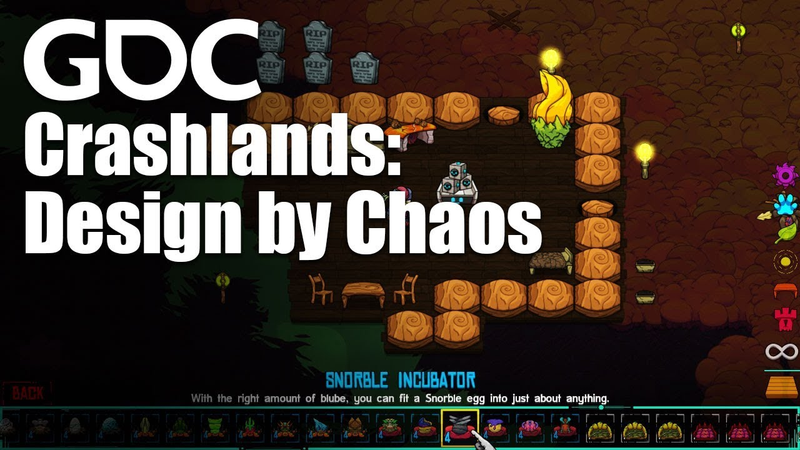
Crashlands: Design by Chaos
The development philosophy behind the action-crafting RPG Crashlands centers on a bottom-up, iterative approach that eschews traditional planning, game design documents, and long-term forecasting.
- Butterscotch Shenanigans achieved a 93 Metacritic score and over 500,000 units sold in the first year of Crashlands by prioritizing rapid, bottom-up iteration over rigid planning.
- The development process rejects traditional game design documents and long-term forecasting in favor of a brief, high-level directional anchor.
- The 'Goodenough' principle prioritizes immediate progress and player experience over perfection, which the studio credits with preventing crunch and burnout.
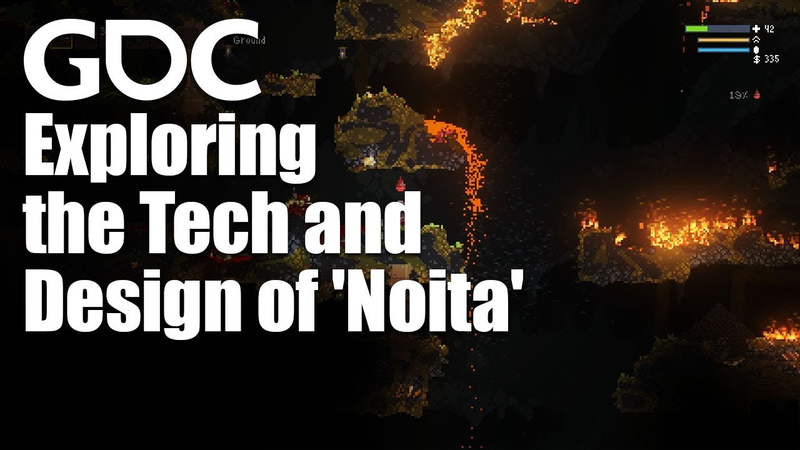
Exploring the Tech and Design of Noita
Noita functions as a technical showcase for pixel-based physics, utilizing a custom engine that integrates granular falling sand simulations with Box2D rigid body dynamics.
- Noita achieves high-fidelity pixel physics by integrating granular falling sand simulations with Box2D rigid body dynamics within a custom engine.
- The engine maintains performance in a continuous world through a chunk-based multithreading system that uses a checkerboard pattern to prevent thread conflicts.
- Memory management is handled by a dynamic streaming system that loads and unloads world chunks to ensure stability during complex simulations.

The Banner Saga Franchise: Making Indie Sound AAA
The Banner Saga trilogy demonstrates that high-fidelity, AAA-quality audio is achievable within indie-budget constraints through strategic creative choices and unconventional financial models.
- To achieve a high-production sound on a limited indie budget, embrace creative constraints by using specialized ensembles—such as the Dallas Wind Symphony—rather than attempting to replicate a full orchestral score.
- Leverage non-traditional talent pools like YouTube stars (e.g., Peter Hollens) to provide unique, cost-effective, and high-quality vocal performances that add a distinct emotional core to the project.
- When recording budgets are tight, prioritize spending on crucial, high-impact moments rather than spreading resources thin across the entire score, filling the gaps with creative sound design and smaller, specialized instrument groups.