
Game Developers Conference
Game Developers Conference (GDC, now the GDC Festival of Gaming) is the professional event for the games industry. It publishes recorded talks and interviews, annual industry survey reports such as the State of the Game Industry, and news articles.
Documents

Battling Burnout: The Side Project Ritual
Burnout remains a pervasive crisis within the game development industry, driven by chronic workplace stress, relentless creative critique, and a culture of silence that prevents systemic reform.
- The game development industry faces a significant 15-year career cliff where highly skilled professionals exit the field due to the cumulative emotional toll of chronic workplace stress and creative critique.
- Developers can mitigate burnout by implementing a structured side project ritual that functions as a psychological reset mechanism to decouple personal identity from corporate production demands.
- Effective rituals require a dedicated sacred space and specific mindfulness practices, including coherence-focused meditation, controlled superstition, and task-based context management.

R-E-S-P-E-C-T: Practical Tips to Prevent Abuse & Build Team Trust
Workplace harassment remains a systemic challenge within the gaming industry, with data indicating that 60 percent of women and 20 percent of men have experienced abuse.
- Workplace harassment in the gaming industry is a systemic issue, with data showing that 60 percent of women and 20 percent of men have experienced abuse.
- Leadership must dismantle the 'indispensable genius' myth by ensuring that no employee is shielded from accountability, regardless of their perceived value or performance.
- Organizations should treat the reporting of incidents as a positive indicator of institutional trust rather than a management failure, while providing clear and accessible escalation paths.

Lessons from Duolingo: How to Turn Good Intentions Into Good Numbers
The primary objective of this analysis is to demonstrate how game developers and technology companies can reconcile ethical values and educational missions with the pursuit of profitability and data-driven growth.
- Duolingo scaled from zero to over $100 million in annual revenue within 3.5 years while simultaneously increasing day-one retention fivefold.
- The company maintains a high-volume experimentation culture, having conducted over 3,000 A/B tests to drive growth and product development.
- Organizations can protect core values during rapid growth by implementing 'guardrail metrics' that prevent teams from optimizing isolated KPIs at the expense of overall user experience or company health.
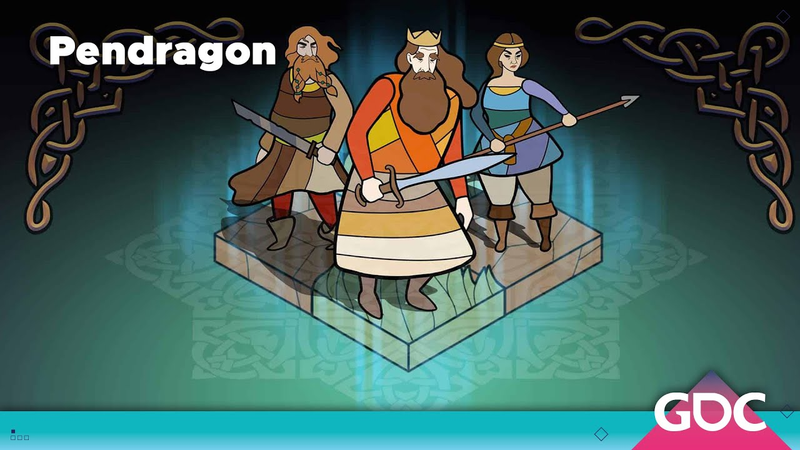
GDC Plays Pendragon with Inkle Studios
Pendragon represents a deliberate effort to synthesize turn-based strategy with procedural narrative, moving away from the rigid, solved nature of traditional tactical games.
- Pendragon integrates turn-based strategy with procedural narrative by replacing traditional skill trees and experience points with tactical advantages earned through story-based choices.
- The game utilizes 'failing-forward' mechanics, such as a rage system and flee options, to ensure that defeat advances the narrative rather than forcing a restart.
- Inkle Studios developed a modular architecture using the 'ink' engine to decouple game-state analysis from dialogue generation, allowing for complex, context-aware interactions.
Disrupt the Game Industry Culture for Good: Starting from Square One
Systemic inequality within the video game industry requires a fundamental shift in how organizations approach diversity, equity, and inclusion (DEI).
- Organizations must transition DEI from a secondary initiative to a core business imperative to drive innovation and better serve global player communities.
- Meaningful progress requires moving beyond performative gestures like conference sponsorships toward systemic internal changes, such as auditing executive leadership composition and addressing pay disparities.
- The 'activation trinity' framework mandates that leaders move from intellectual understanding and empathy to tangible, vulnerable actions that hold high-performing but toxic individuals accountable.
Designing for Multiple Minds: Crafting the Craft of Player Dynamics
Player dynamics represents an emerging design discipline dedicated to the intentional cultivation of healthy, cohesive social interactions within multiplayer environments.
- Player dynamics is a design craft that requires intentional integration from the ideation phase, rather than being treated as a reactive problem to be solved solely through punishment or the removal of disruptive players.
- Designing for cohesion requires understanding player populations, context, and the 'curse of knowledge'—where developers must avoid creating friction by assuming players inherently understand complex game systems.
- Matchmaking should prioritize aligning player intentions and roles to reduce pre-game friction, as seen in League of Legends' team builder queue and Overwatch's role-selection systems.
What Online Games Can Learn from the Failures of Social Media
Online games have evolved into essential digital social spaces, yet they currently face significant challenges regarding hate, harassment, and extremism.
- Gaming platforms face a critical safety crisis, with 74% of players reporting harassment and 65% encountering severe incidents like stalking, doxing, or identity-based discrimination.
- Exposure to extremist content is a documented risk, as 23% of players reported encountering white supremacist ideology within gaming environments.
- To avoid the regulatory scrutiny and public distrust currently facing social media, the gaming industry must shift from prioritizing engagement to adopting 'anti-hate by design' principles throughout the development lifecycle.
Ask Me Anything: Unionizing the Games Industry Q&A with Kevin Agwaze
Unionization within the video game industry serves as a critical mechanism for addressing systemic labor issues, including wage theft, contractor misclassification, and persistent workplace harassment.
- Unionization is presented as a primary mechanism to combat systemic industry issues, specifically wage theft, contractor misclassification, and workplace harassment.
- Effective labor organization requires an inclusive framework that spans all roles, from quality assurance testers to software engineers, to ensure equitable benefits and standardized reporting.
- Modern labor efforts prioritize intentional, inclusive organizational structures that provide stability for both small studios and worker-owned cooperatives, moving away from historical models that favored privileged demographics.
Skill-Building Series: Emotion in Game Design (A UX Perspective)
Effective game design requires a sophisticated balance between functional usability and emotional engageability.
- Game design should prioritize 'engageability'—the intersection of motivation, emotion, and flow—to move beyond basic usability and ensure players are actively interacting with the system.
- Effective game feel relies on the 'three C's' (camera, controls, and character), which should be prioritized during pre-production to establish a solid foundation for player interaction.
- Presence and physical reality are enhanced when UI elements feel like a natural part of the game world rather than an overlay, as demonstrated by the loot box design in Fortnite which uses a reactive, thematic 'llama pinata' instead of a generic chest.
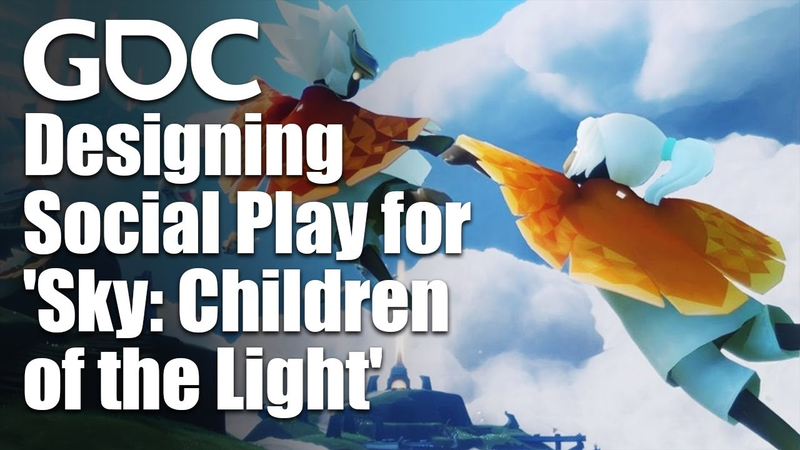
Designing Social Play for Sky: Children of the Light
The design philosophy behind Sky: Children of the Light centers on fostering genuine interpersonal connections by prioritizing empathy and social simulation over traditional goal-oriented multiplayer mechanics.
- Social play is defined as any activity performed near others that encourages the simulation of another person's thoughts and feelings, effectively requiring players to practice empathy rather than just coordination.
- Goal-oriented gameplay often discourages social interaction, as players focused on objectives tend to ignore others; therefore, thatgamecompany places cooperative tasks on optional side paths while keeping main story progression single-player.
- The 'hand-holding' mechanic serves as a core social tool that allows one player to guide another, fostering intimacy and requiring the guide to actively anticipate the needs and interests of their partner.
Game Dev Archeology: Unearthing and Preserving Japanese Game History
Preserving the history of Japanese video games requires a rigorous, archaeological approach that transcends simple emulation.
- Preserving Japanese game history requires an archaeological approach that combines developer interviews, archival scans, and the recovery of lost source code rather than relying solely on emulation.
- Success in this field depends on persistent, on-site relationship-building within the Japanese industry to navigate corporate sensitivities and gain access to internal archives.
- Field research has yielded concrete results, such as the recovery of the unreleased title 'Samurai Shodown 5 Perfect' from a forgotten hard drive and the clarification of technical specifications for early SNK hardware.
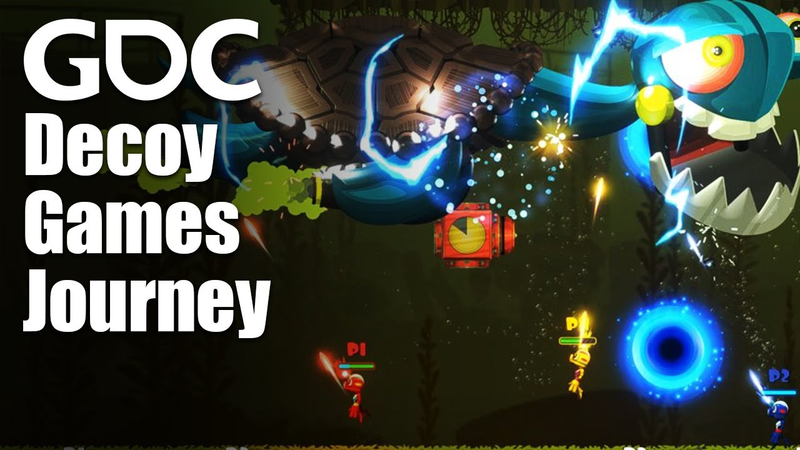
The Decoy Games Journey: From Gaming Brothers to Console Devs
The transition from hobbyist game development to professional console publishing requires a disciplined, business-first mindset that prioritizes long-term sustainability over rapid growth.
- Maintaining full-time employment while self-funding development preserves creative autonomy and eliminates the risks associated with external financing.
- Securing an internal champion within a console organization is a critical requirement for navigating the complex certification and approval processes.
- Success in console publishing relies on treating game development as a formal business enterprise, utilizing structured business plans and rigorous, unbiased playtesting.