
Game Developers Conference
Game Developers Conference (GDC, now the GDC Festival of Gaming) is the professional event for the games industry. It publishes recorded talks and interviews, annual industry survey reports such as the State of the Game Industry, and news articles.
Documents

Jumpstarting Your Creativity: From Hobbyist to Professional
The transition from hobbyist to professional game developer is often hindered by a cycle of starting ambitious projects, encountering technical hurdles, and losing motivation before reaching completion.
- Prioritizing the completion of small-scale projects over ambitious, complex ideas is the most effective way to break the cycle of unfinished work and stalled professional growth.
- Finishing projects is the critical metric for development, as evidenced by a shift from zero output to the release of eight projects over a two-year period through disciplined completion.
- Developers should implement strict time constraints, such as two-day or two-month windows, to force the completion of projects and prevent scope creep.
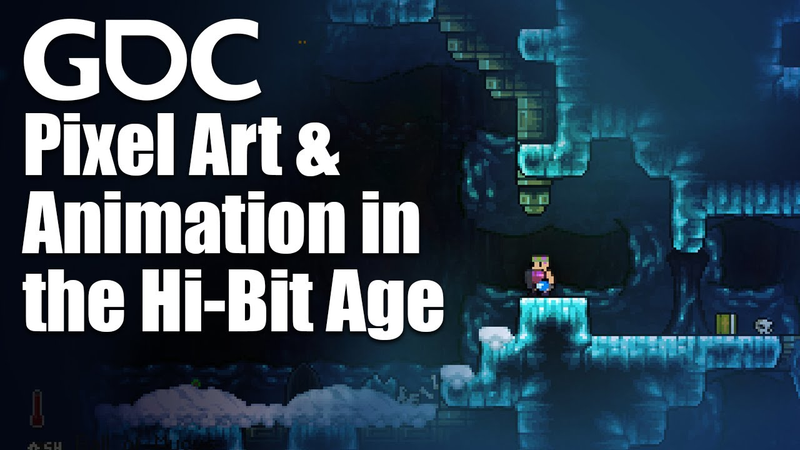
Skill-Building Series: Pixel Art and Animation in the Hi-Bit Age
Hi-bit art represents a sophisticated evolution of traditional pixel art, moving beyond the constraints of legacy hardware to function as a versatile, modern medium.
- Hi-bit art is a modern design evolution that integrates contemporary 3D environments, volumetric lighting, and complex shaders with traditional low-resolution aesthetics.
- Professional compensation for pixel art specialists has stabilized, with standard industry rates typically ranging between $40 and $60 per hour.
- Pixel art functions as a deliberate design tool that enhances gameplay readability and communicates mechanics through established gaming tropes.
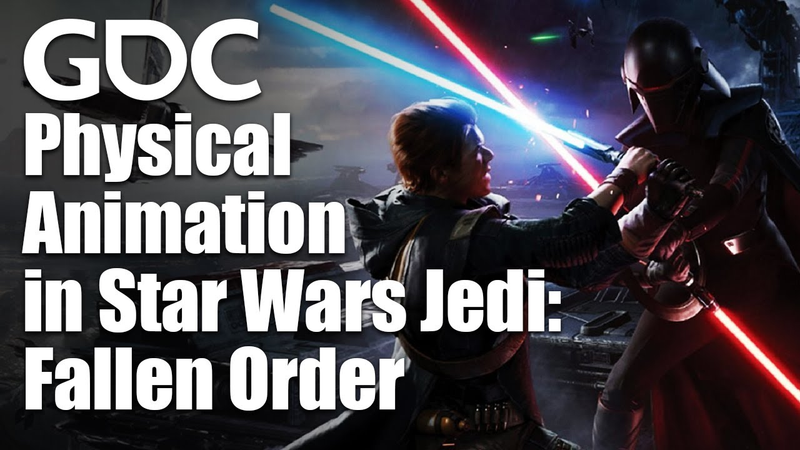
Physical Animation in Star Wars Jedi: Fallen Order
Star Wars Jedi: Fallen Order integrates physical animation to bridge the gap between authored character poses and dynamic physics simulations.
- Star Wars Jedi: Fallen Order utilizes a hybrid animation system that blends authored poses with dynamic physics simulations to eliminate geometry clipping and improve movement fluidity.
- The system employs motors, velocity-based drives, and custom constraints to ensure characters maintain natural, physically grounded presence during complex actions.
- Combat interactions for NPCs, such as force-pulls and death sequences, use intelligent transitions to freefall ragdoll states when obstacles are detected.
Taming the Chaos: Lessons in Project Management
Game development teams must transition from rigid, fragile waterfall methodologies toward anti-fragile systems that leverage controlled pressure to improve project outcomes.
- Transition from rigid waterfall methodologies to anti-fragile systems that use controlled pressure and iterative exploration to improve project outcomes.
- Prioritize the discovery of core gameplay mechanics during early development rather than relying on strict adherence to pre-production documentation to avoid late-stage death marches.
- Implement proactive risk management techniques, such as pre-mortems to identify failure points and maintaining magazine-style demos to ensure a shippable build throughout the production cycle.

David & Goliath: How a Newbie Solo Developer Landed on Xbox Game Pass
The journey of a solo developer securing a spot on Xbox Game Pass for the title She Dreams Elsewhere highlights the critical intersection of creative development, strategic networking, and business pragmatism.
- Securing a spot on Xbox Game Pass requires a unique, polished game identity that justifies its existence to platform holders like Microsoft.
- Active participation in industry events such as GDEX, DreamHack Atlanta, and GDC is essential for building the direct relationships with platform representatives necessary to secure publishing or distribution deals.
- The Xbox Game Pass deal provided the financial stability required to complete the four-year development of She Dreams Elsewhere without the need for a traditional third-party publisher.
Changing the Game: Cultivating Female Talent in AAA Studios
The gaming industry faces a significant gender representation gap, with women comprising nearly half of the player base but only 22% of the development workforce.
- While women represent nearly 50% of the gaming player base, they account for only 22% of the industry's development workforce.
- Gender diversity is a strategic business imperative, as research shows that organizations with higher rates of women in leadership positions achieve greater profitability.
- Studios must audit job descriptions to remove masculine-coded language and increase female representation in marketing and recruitment materials to combat unconscious bias during hiring.
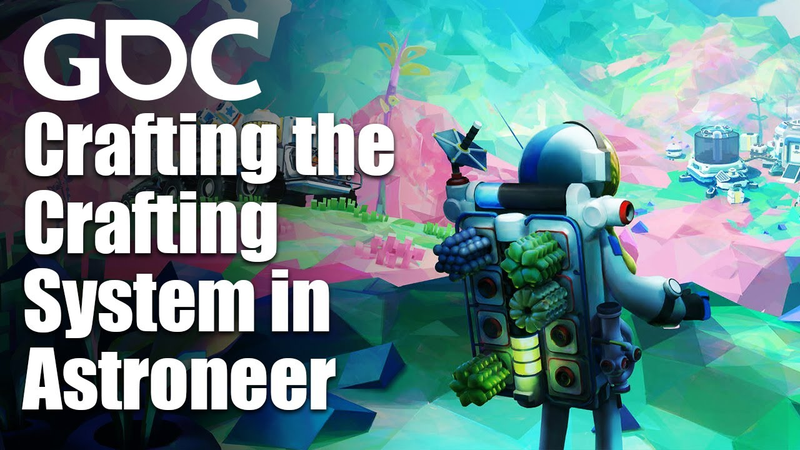
Mining Your Own Design: Crafting the Crafting System in Astroneer
The crafting system in Astroneer underwent a comprehensive structural overhaul to address declining player engagement caused by a repetitive core loop and a lack of meaningful progression.
- To avoid design paralysis in live games, treat existing systems like an archaeological dig to uncover the core intent behind original features rather than just iterating on surface-level mechanics.
- When team members have conflicting visions, explicitly map out specific subsets of the system to identify if the disagreement stems from different focuses, such as moment-to-moment tactile interaction versus long-term systemic complexity.
- Use the 'What’s This For' (WTF) thought exercise to strip away entrenched assumptions and clarify the ultimate goal of a feature, such as identifying that a module was intended as a resource sink rather than a resource generator.
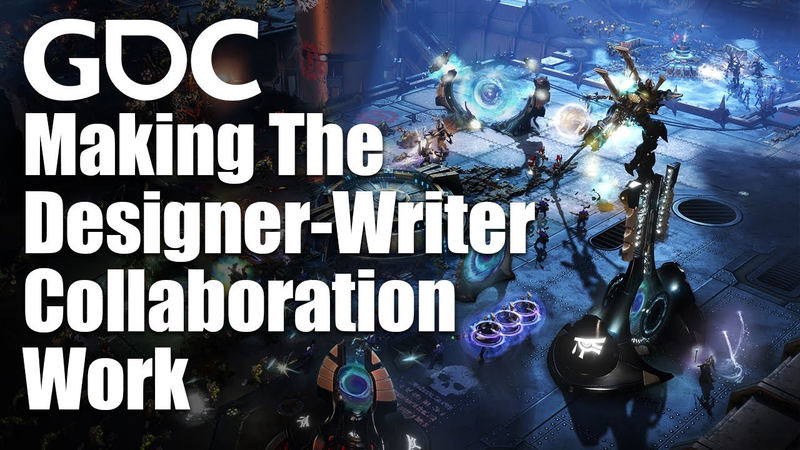
Skill-Building Series: Making The Designer-Writer Collaboration Work
Effective game development requires a fundamental shift from siloed workflows to a collaborative, responsive partnership between writers and designers.
- Align mechanical win states with narrative motivations by shifting from siloed, parallel development to a collaborative partnership between writers and designers.
- Prioritize shared thematic goals over rigid, linear plot beats to ensure that narrative and mechanics express the same core concepts.
- Utilize pull storytelling—hiding information within the environment and gameplay rewards—to enhance player agency and reduce reliance on disruptive, pushed cutscenes.
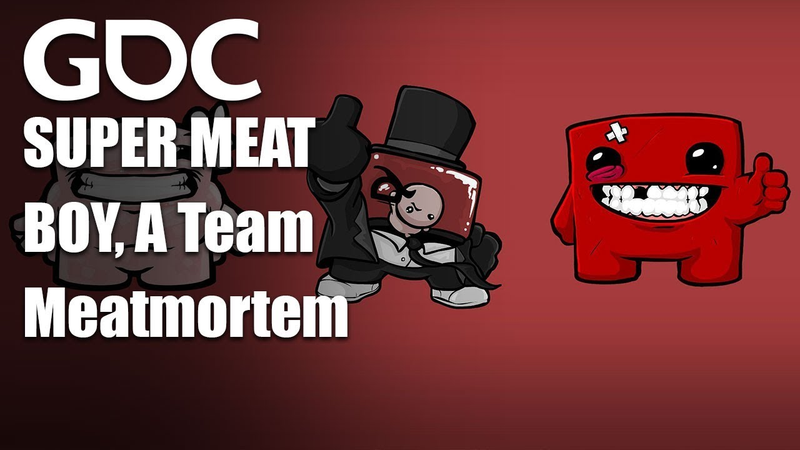
Super Meat Boy, A Team Meat Meatmortem
Super Meat Boy emerged from a desire to create a responsive, physics-driven platformer that evolved from a modest project into an ambitious, feature-rich title.
- The development of Super Meat Boy relied on non-formulaic, 'duct-taped' physics, with the creators spending two months exclusively refining movement and controls before testing individual levels.
- The team faced extreme financial pressure, with Tommy Refenes reporting a bank balance of -$853 during the final stages of development.
- The final development phase involved a grueling cycle where the team attempted to fix 129 bugs daily, only to have testers uncover more issues overnight, resulting in a month and a half of constant crunch.
GDC Summer Live Podcast - Day 3
Workplace harassment within the gaming industry is a systemic issue rooted in power dynamics and the marginalization of others, rather than the actions of isolated individuals.
- Workplace harassment in the gaming industry is a systemic issue driven by power dynamics, requiring leadership to prioritize psychological safety and collective group norms over individual disciplinary measures.
- The gaming industry experienced significant growth during the COVID-19 pandemic, marked by a 46 percent increase in daily active users across PC, console, and mobile platforms.
- Market engagement metrics during the pandemic period showed an 84 percent surge in app downloads and a 24 percent increase in in-app purchases.
GDC Summer Live Podcast - Day 2
Predictable success in the independent game industry relies on a rigorous, data-driven approach to publishing and community management.
- Launch performance is best forecasted by prioritizing data-driven metrics, specifically Steam wishlists and platform-specific algorithm behavior.
- The Nintendo eShop ranking system favors unit volume over revenue, incentivizing developers to use aggressive discounting to achieve top-seller visibility.
- Discord communities are more effective than traditional mailing lists for driving the early reviews and wishlist counts required for successful game launches.
GDC Summer Live Podcast - Day 1
Game accessibility functions as a critical design philosophy centered on the removal of barriers to play, ensuring that all users can engage with challenges in ways that accommodate their individual needs.
- Accessibility is a design philosophy focused on removing barriers through granular, customizable options rather than simplifying gameplay or compromising creative vision.
- The U.S. market for accessible gaming includes 46 million potential players with approximately $21 billion in discretionary income.
- The Accessible Player Experience (APX) framework advocates for integrating physical, cognitive, and mental health barrier mitigation early in the development cycle through iterative, data-driven testing.