
Game Developers Conference
Game Developers Conference (GDC, now the GDC Festival of Gaming) is the professional event for the games industry. It publishes recorded talks and interviews, annual industry survey reports such as the State of the Game Industry, and news articles.
Documents

Top 3 Mistakes of Angry Birds 2
This analysis outlines the primary development and design challenges encountered during the lifecycle of Angry Birds 2, as presented by the game’s former product lead.
- Prioritize the experience of high-value players over non-paying users, as focusing resources on the majority of non-monetizing players can neglect the primary revenue drivers.
- Avoid underestimating player capability by over-simplifying interfaces; adding depth through features like arenas and daily challenges significantly increases engagement.
- Ensure that core gameplay remains the primary focus, as retention mechanics like daily login rewards are ineffective at converting disinterested players if the fundamental experience is not enjoyable.
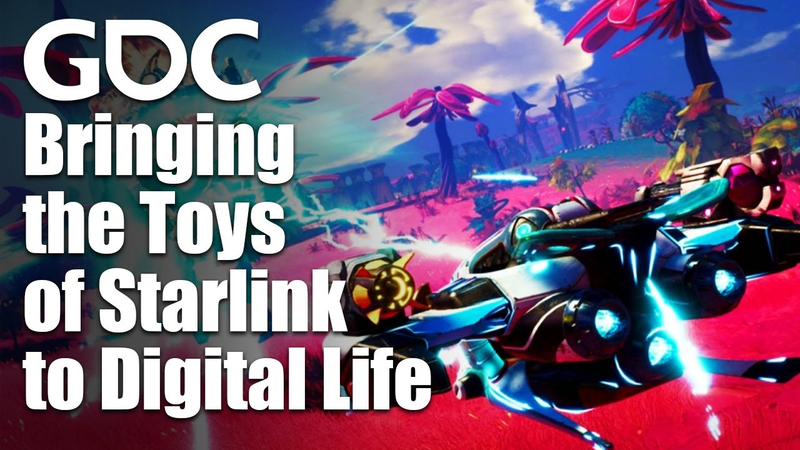
Starship Physics and Controls that Feel Real: Bringing the Toys of Starlink to Digital Life
The development of Starlink: Battle for Atlas focused on creating a responsive, physically plausible flight system that translated the tactile experience of physical toy ships into a digital open-world environment.
- The Starlink: Battle for Atlas flight system utilizes a modular architecture that dynamically adapts physics and controls to diverse ship geometries without requiring unique collision hulls for every combination.
- Movement is managed through a layered behavior system that sequences reusable classes—such as thrusters and terrain-following repulsors—to handle distinct navigation modes for space, atmosphere, and ground skimming.
- Procedural animation techniques apply additive offsets to the base ship transform to simulate engine activity and environmental reactions, maintaining tight control while providing high-quality visual feedback.
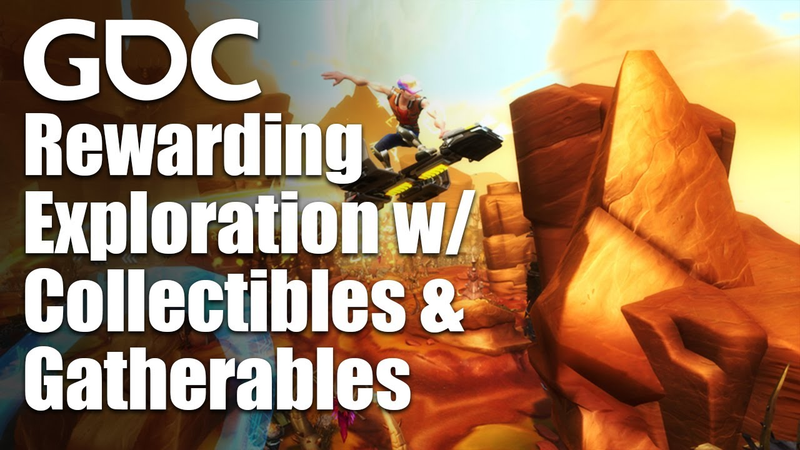
Rewarding Exploration with Collectibles and Gatherables
Strategic placement of collectibles and gatherables serves as a fundamental pillar of game design, functioning as the connective tissue that bridges environmental storytelling with player progression.
- Effective exploration design, as seen in The Legend of Zelda: Breath of the Wild, uses consistent visual language to teach players that environmental anomalies—such as out-of-place rocks—consistently yield rewards.
- Gathering systems in MMOs like World of Warcraft serve as a social anchor, as players who combine resource collection with social interaction demonstrate higher long-term retention than those who engage in non-productive social activities.
- To prevent player frustration in shared game worlds, designers should use spawn migration or discrete spawn groups to ensure that resources are distributed across the map rather than clustering entirely in high-traffic areas.
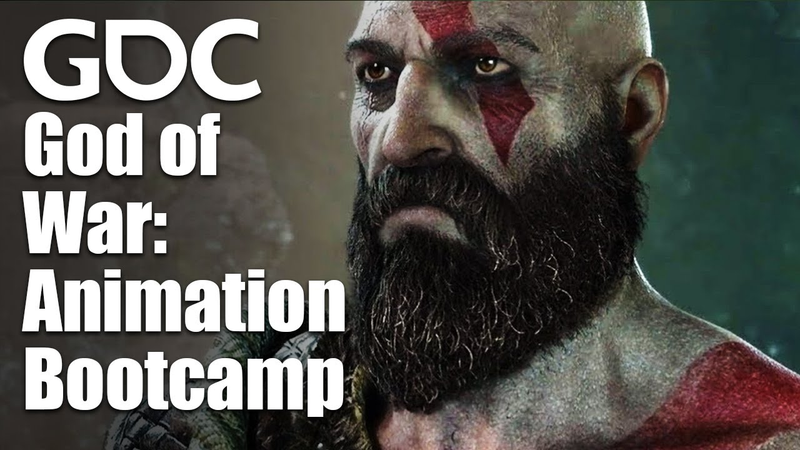
God of War: Breathing New Life into a Hardened Spartan
The 2018 reimagining of God of War represents a fundamental shift in character design and narrative delivery, moving the protagonist, Kratos, from a stylized, rage-driven figure into a grounded, relatable mentor.
- The 2018 God of War reboot transitioned from stylized, rage-driven character design to realistic, human-like models to explore themes of fatherhood and vulnerability.
- The production utilized a theater-inspired model, incorporating extensive rehearsals, table reads, and live-action pre-visualization to support a continuous one-take narrative style.
- Full-performance capture—recording body, face, and audio data simultaneously—was implemented to ensure consistent emotional chemistry between Kratos and Atreus.
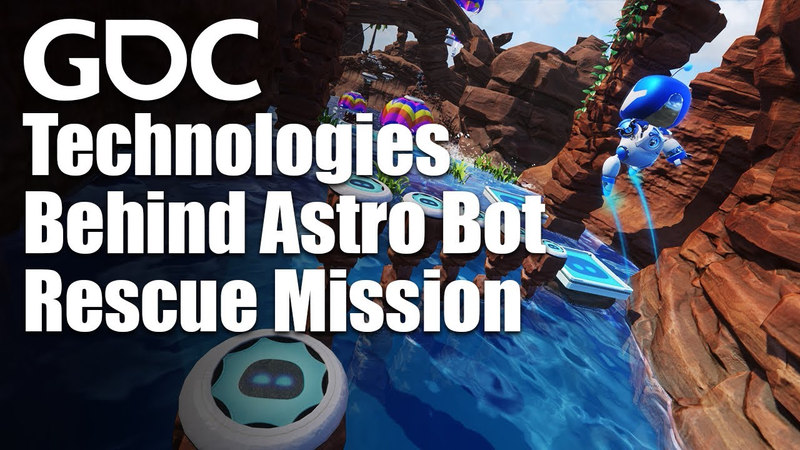
Taming Technologies Behind Astro Bot Rescue Mission
The technical development of the virtual reality platformer Astro Bot Rescue Mission focused on maintaining high performance and user comfort within the constraints of the PlayStation VR hardware.
- To prevent motion sickness on PlayStation VR, the team maintained a constant 60 FPS, scaled to 120Hz via reprojection, throughout the 18-month development cycle.
- Performance was optimized by manually segmenting levels into 30-meter sections to manage visibility and draw calls effectively.
- The rendering pipeline utilized a forward approach with MSAA and a dynamic resolution system that adjusted based on previous frame GPU times to ensure stability on PS4 Pro.

Ethics in Artificial Intelligence
The integration of artificial intelligence into the gaming industry necessitates a fundamental shift from profit-driven engagement metrics toward frameworks rooted in equity, transparency, and user well-being.
- Developers must shift from profit-driven engagement metrics to frameworks rooted in equity, transparency, and user well-being to prevent AI from codifying societal biases and harmful stereotypes.
- Ethical considerations must be integrated into the entire development lifecycle through behavioral psychology and rigorous data auditing rather than being treated as a secondary concern.
- Industry practitioners should adopt multi-dimensional success metrics that prioritize long-term user satisfaction over short-term retention to mitigate the influence of manipulative dark patterns.

It Just Works: Ray-Traced Reflections in Battlefield V
The integration of real-time ray-traced reflections into the Battlefield V engine represents a significant milestone in adapting deferred rendering pipelines to experimental hardware-accelerated APIs.
- DICE implemented a hierarchical screen-space tracing technique in Battlefield V that reduced the total number of rays required by approximately 40%, significantly improving real-time performance.
- Ray-tracing performance was highly dependent on scene content; complex geometry like wrought iron fences caused ray divergence that made rendering up to four times slower than standard scenes.
- To manage the high cost of ray tracing, the engine uses a hybrid pipeline that combines screen-space tracing with DXR, utilizing spatial and temporal filtering to denoise the resulting output.
Technical Tools for Authoring Branching Dialogue
Effective narrative design in large-scale video games requires specialized, node-based authoring tools to manage the inherent complexity of reactive, branching dialogue.
- Obsidian Entertainment’s conversation editor utilizes a node-based visual tree structure that automatically spaces and organizes dialogue, replacing chaotic flowchart methods to manage projects with over 25,000 nodes.
- The tool integrates conditional scripting directly into the dialogue tree, allowing designers to regulate conversation flow based on player variables like skills, background, and quest status.
- A real-time conversation debugger connects to game engines via a UDP listener, enabling developers to monitor node states, test script conditions, and manipulate game variables during live play sessions.
Towards Filmic Quality at 30 FPS: Real-Time Ray Tracing for Practical Game Engine Pipelines
Achieving filmic visual quality at a consistent 30 frames per second requires a strategic integration of real-time ray tracing within standard game engine pipelines.
- Achieving 30 FPS filmic quality requires a minimal ray strategy of one to four rays per effect, paired with temporal accumulation and joint bilateral filtering to manage noise without heavy denoisers.
- Computational load is significantly reduced by rendering indirect specular reflections at quarter-resolution and utilizing camera-aligned voxels for spatial management.
- Performance is maintained by combining brute-force path tracing with light probe systems using spherical harmonic encoding to ensure visual stability.

Low Cost Facial Scanning Using Photogrammetry in State of Decay 2
The integration of a low-cost photogrammetry pipeline into the production of State of Decay 2 demonstrates a successful shift toward efficient, scalable character asset creation.
- The implementation of a $500 single-camera photogrammetry rig reduced character head model production time from one week to one day.
- The workflow successfully generated over 200 raw scans, resulting in 75 unique, high-fidelity character faces for State of Decay 2.
- Technical success requires manual camera settings, RAW file formats, and the use of polarizing filters and anti-shine powder to neutralize skin reflectivity and specular highlights.
State of the Game Industry 2021 Survey
The 2021 State of the Game Industry survey, conducted by the Game Developers Conference (GDC), provides a comprehensive analysis of current developer sentiment regarding platform preferences, revenue models, and the operational impact of the COVID-19 pandemic.
- Only 3% of developers believe the industry-standard 30% storefront revenue cut is justified, with most preferring a share between 10% and 20%.
- PC remains the primary platform of interest for 58% of developers, followed by PS5 (44%), Nintendo Switch (38%), Xbox Series X|S (30%), and VR headsets (27%).
- The COVID-19 pandemic continues to impact production, with 44% of developers reporting game delays, an increase from 33% the previous year.
NPCs Have Feelings Too: Verbal Interactions with Emotional Character AI
The integration of advanced artificial intelligence into non-player characters (NPCs) marks a significant shift toward more immersive, language-independent interactions within virtual reality environments.
- NPCs utilize a conceptual mapping system that assigns 'semantic DNA' to objects and actions, enabling language-independent interpretation of player intent.
- Autonomous decision-making is driven by a utility-based scoring hierarchy that allows NPCs to evaluate their surroundings and respond without relying on scripted dialogue.
- Emotional states are generated using an OCC-inspired framework that assesses events based on valence and agency, while long-term mood and animation are maintained via a PAD (Pleasure, Arousal, and Dominance) model.