
Game Developers Conference
Game Developers Conference (GDC, now the GDC Festival of Gaming) is the professional event for the games industry. It publishes recorded talks and interviews, annual industry survey reports such as the State of the Game Industry, and news articles.
Documents

Designing the Secret Game that Helped Win World War II
During the height of the Battle of the Atlantic, the British Admiralty faced a catastrophic threat from German U-boat wolf pack tactics, which decimated merchant shipping and endangered the nation’s essential supply lines.
- The Western Approaches Tactical Unit utilized floor-based wargaming simulations to identify and counter German U-boat wolf pack tactics that were decimating Allied merchant shipping.
- By reconstructing historical engagements, the unit debunked the assumption that U-boats attacked only from the perimeter, revealing that they were infiltrating convoy lanes to launch point-blank torpedo attacks.
- The team developed the 'Raspberry' maneuver, a coordinated defensive strategy that shifted the Allied response from disorganized individual reactions to a unified, lethal defense.

Giving Back to the Community as a Game Developer: A Case Study
Game studios increasingly view community engagement as a core business strategy rather than a peripheral philanthropic activity.
- Game studios are shifting community engagement from philanthropy to a core business strategy that directly supports talent acquisition, retention, and long-term organizational growth.
- Nordeus leveraged its internal expertise to address systemic industry barriers in Serbia by co-founding the Digital Serbia Initiative and establishing the Nordeus Hub.
- The Nordeus Hub supports the regional gaming ecosystem through physical collaboration spaces, boot camps, and an indie incubator that requires no equity, revenue sharing, or IP rights from participants.

Applying Methods from Other Domains to Identify Gamer Behaviors
Addressing disruptive conduct in digital environments requires a sophisticated, dual-modeling approach that synthesizes top-down hypothesis testing with bottom-up data mining.
- Games with low toxicity levels demonstrate over 16% higher player retention compared to high-toxicity games, while medium-toxicity titles see approximately 10% higher retention.
- Analysis of player behavior shows that 35% of players make potentially offensive statements, and in nearly 20% of reported toxicity cases, the offender was provoked by another player.
- Contextual gameplay data reveals that friendly fire rates increase significantly when a team is losing by a large margin, suggesting that environmental triggers like score deficits influence disruptive behavior.
Maximizing Animation and Cinematic Content Workflows for 'Just Cause 4'
The production of Just Cause 4 required the creation of over 7,200 unique animations and 65 minutes of cinematic footage, a massive undertaking managed by a lean technical team.
- Avalanche Studios developed a centralized batch-processing tool driven by JSON configuration files to automate animation exports and transfers between Maya and MotionBuilder, significantly reducing the need for manual DCC interaction.
- To manage the complexity of a AAA open-world title with limited technical animation staff, the team implemented a 'driver root control' system that functions as a high-performance locator, allowing animators to bake and transfer animation across rigs with immediate space-matching functionality.
- The studio optimized locomotion workflows by implementing a distance-threshold script that automatically identifies and tags foot-plant positions by analyzing frame-to-frame world-space movement, effectively filtering out non-planted data.
'Death Stranding': An AI Postmortem
The development of Death Stranding necessitated a fundamental reimagining of artificial intelligence navigation to accommodate a vast, traversal-focused environment defined by jagged, fragmented terrain.
- To manage the computational cost of high-density navmeshes in a vast, fragmented environment, the team replaced interval-based pathfinding with an event-driven system that updates only when environmental conditions change.
- The engineering team implemented a hybrid navigation network that integrates standard navmeshes with high-level AI road systems to ensure stable NPC movement across the game's expansive world.
- Dynamic navmesh generation, powered by time-sliced terrain analysis and a delta path cost heuristic, allows NPCs to evaluate the trade-off between distance and traversal difficulty in real-time.
How to Teach 5 Semesters of Game Design in 1 Class
The game design curriculum at Tufts University achieves an accelerated pedagogical model by condensing five semesters of traditional instruction into a single term.
- Jason Wiser’s game design course at Tufts University condenses five semesters of traditional curriculum—including tabletop design, Unity/C# programming, 3D/2D art, and project management—into a single, high-intensity term.
- The course utilizes 'stacking theory,' which focuses on mastering one concept at a time while layering them to build complex skills, allowing students to learn multiple disciplines through rapid, iterative prototyping.
- The first half of the semester focuses on tabletop game design with pass/fail grading to lower the pressure to succeed, encouraging students to prioritize experimentation, teamwork, and radical revision over polished final products.
Changing Navigation Mid-Flight: 'War Dragons', a UX Redesign on Mobile
The modernization of the mobile title War Dragons centers on a comprehensive user experience overhaul designed to resolve navigation inconsistencies and inefficient screen utilization.
- The 'War Dragons' UX redesign resulted in a 30% increase in time spent in-game, a 27% increase in daily active users (DAU), and a 10% improvement in early player retention.
- A phased rollout strategy—moving through concept, engineering, and testing phases—allowed the team to mitigate risk and gather continuous feedback while maintaining a live product.
- To modernize the 2015-era interface, the team replaced fragmented, undersized windows with standardized mobile design patterns, such as carousels and consistent sidebar navigation, to improve ergonomics and discoverability.
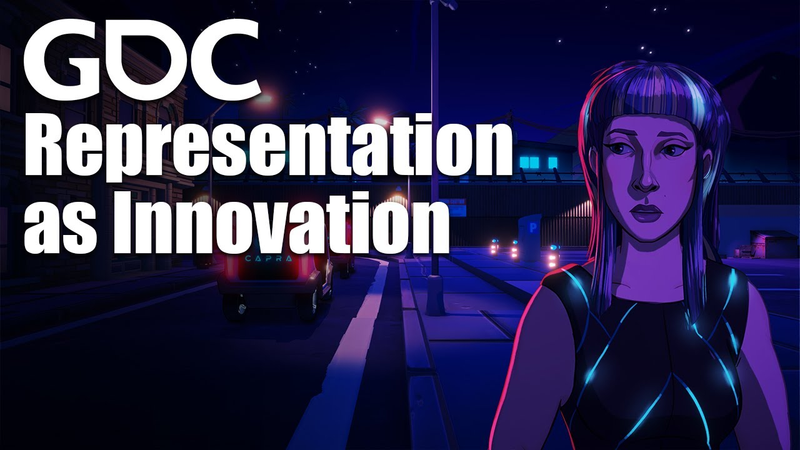
Now You See Me: Representation as Innovation
The narrative design industry often treats representation as a risk-mitigation exercise rather than a creative opportunity.
- The narrative design industry currently treats representation as a risk-mitigation exercise to avoid offense, which stifles creative innovation and limits the potential of the medium.
- Developers should shift from viewing diversity as a defensive measure to utilizing it as a tool for authentic, joyful storytelling that expands the appeal of their games.
- Relying on outdated demographic assumptions that prioritize a cisgender, heterosexual white male audience creates a cycle of fear that prevents studios from exploring new, compelling narratives.
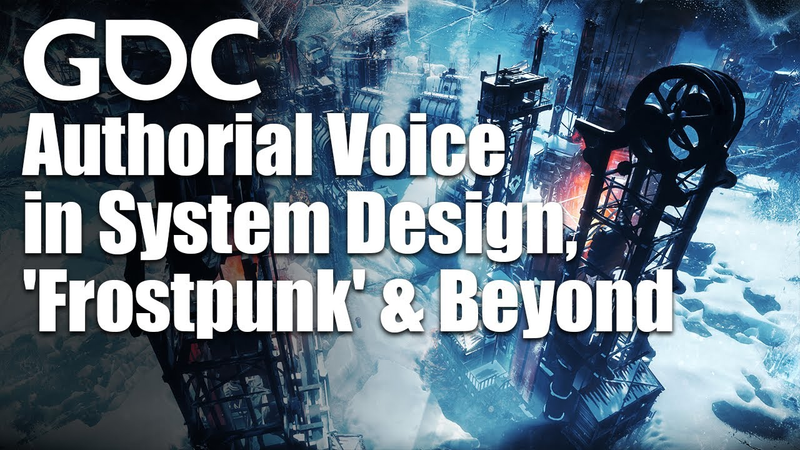
Ghost in the Machine: Authorial Voice in System Design, 'Frostpunk' & Beyond
The concept of authorial voice in game design posits that a creator’s worldview is inherently embedded within their work, manifesting not only through narrative, visuals, and audio but also through the underlying mechanics and system balance.
- Game mechanics are not neutral; they carry the authorial voice and worldview of the designer, meaning every systemic balance decision communicates a value judgment.
- In Frostpunk, the design team realized that balancing mechanics—such as the penalty for amputations—required careful ethical consideration, as purely functional math can inadvertently express a worldview the designer does not hold.
- Designers must be aware that players increasingly analyze games beyond surface-level narratives, interpreting the underlying systemic rules as a form of communication or ideological statement.

Scoring the Open World Samurai Epic 'Ghost of Tsushima'
The musical architecture of Ghost of Tsushima centers on the challenge of blending authentic feudal Japanese instrumentation with grand, cinematic orchestral themes to mirror the protagonist’s internal conflict.
- The score utilizes a 'Music Encounter System' that employs a buffer-based state system and dual-radii distance triggers to ensure fluid, non-jarring audio transitions during exploration.
- Musical intensity is dynamically calculated using a formula that balances enemy threat levels against a 'hero factor' derived from player progression.
- The production team prioritized a minimalist aesthetic to avoid listener fatigue, blending authentic feudal Japanese instruments like the shamisen and shakuhachi with grand orchestral themes.
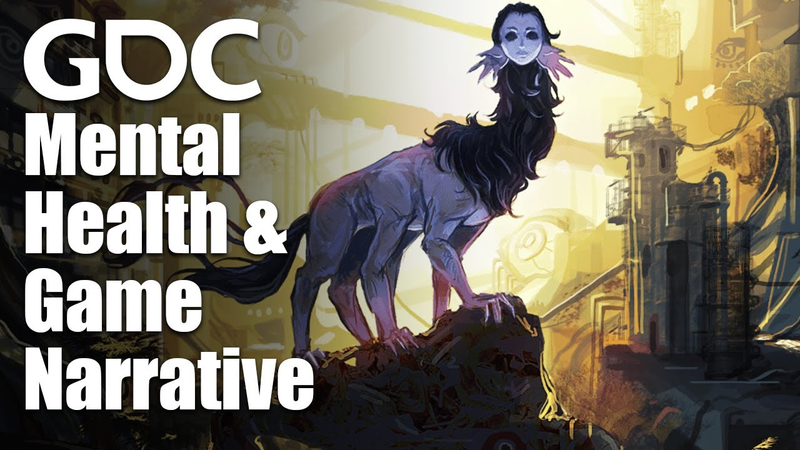
Stories that Haunt and Heal: Mental Health and Game Narrative
Narrative games are increasingly serving as a medium for exploring complex mental health topics, including PTSD, disordered eating, and the aftermath of sexual assault.
- Developers creating games about sensitive mental health topics, such as sexual assault and disordered eating, should consult with mental health professionals and survivors to ensure due diligence and responsible representation.
- Games can effectively use visual and auditory mechanics to simulate mental health conditions; for example, the visual novel 'Shrinking Pains' uses dropping frame details and narrowing fields of vision to mimic the progression of anorexia.
- Lived experience can provide significant narrative authority and credibility to a game, though developers must weigh the personal cost of publicly disclosing their own trauma against the potential impact of their work.
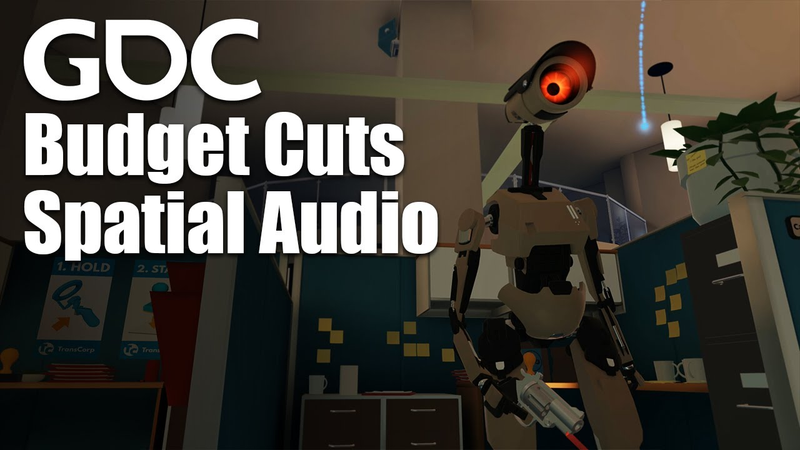
Spatial Audio in 'Budget Cuts': A VR Stealth Game
Spatial audio serves as a foundational element for immersion and tactical gameplay in virtual reality stealth titles, specifically within the office-based environment of Budget Cuts.
- Spatial audio is a critical gameplay mechanic in VR stealth titles like 'Budget Cuts,' providing essential tactical data on enemy positioning, room dimensions, and material composition.
- To maintain VR performance, the developers utilized a hybrid architecture that combined manually placed portals for early reflections with a directional, physics-based reverb system.
- The system optimized computational costs by using a listener-centric sub-mix and triggering impulse-convolved reverbs via filtered white noise, avoiding the overhead of scaling individual sound sources.