
Game Developers Conference
Game Developers Conference (GDC, now the GDC Festival of Gaming) is the professional event for the games industry. It publishes recorded talks and interviews, annual industry survey reports such as the State of the Game Industry, and news articles.
Documents
How DayZ Deals With Cheaters
The modern cheating industry has matured into a sophisticated, multi-million dollar enterprise that leverages subscription models and social engineering to sustain its operations.
- DayZ maintains its active cheater population at approximately 1.5% of the total player base through a multi-layered security strategy.
- The effectiveness of anti-cheat measures is challenged by a 76% bounce rate among banned users, who prioritize illicit software access over game account retention.
- Developers utilize a 'never trust the client' architecture, relying on authoritative server-side logic and kernel-level agents to validate gameplay and prevent memory manipulation.
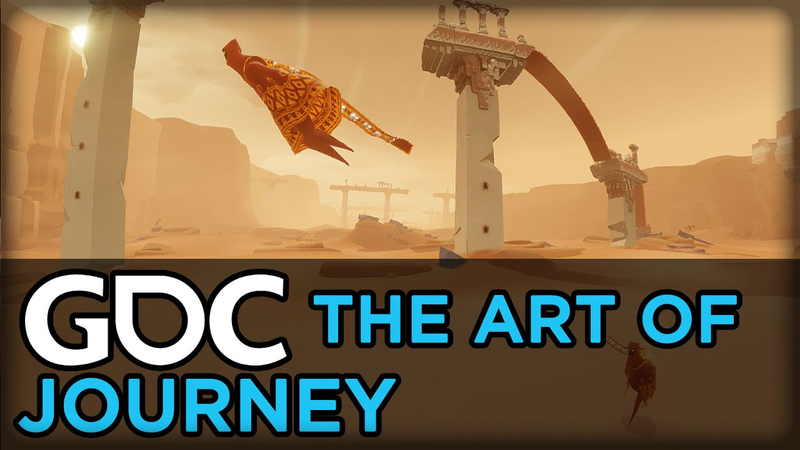
The Art of Journey
The art direction for the game Journey focused on creating an immersive, non-verbal experience through a minimalist and iconic visual language.
- The development team prioritized a minimalist, silhouette-driven aesthetic over high-detail models to enhance fluid movement and environmental interaction.
- Emotional narrative was achieved through a structured color progression, transitioning from muted, earthy tones to vibrant blues as a reward for the player.
- The removal of traditional UI and cutscenes in favor of player-controlled sequences significantly increased the emotional impact of the game's conclusion.
How Board Games Matter
Board games serve as a primary case study for the necessity of transparency in interactive design.
- Transparency in game mechanics increases player comfort and engagement by allowing users to understand the potential results of their actions before they commit to them.
- Complex systems, such as the diplomacy and happiness mechanics in Civilization IV, should be broken down into granular, readable UI elements that explain the specific modifiers behind AI decisions or game states.
- Designers should avoid forcing players to make critical, high-stakes decisions—such as drafting a deck in Magic: The Gathering—before they have had the opportunity to learn the game's core mechanics.
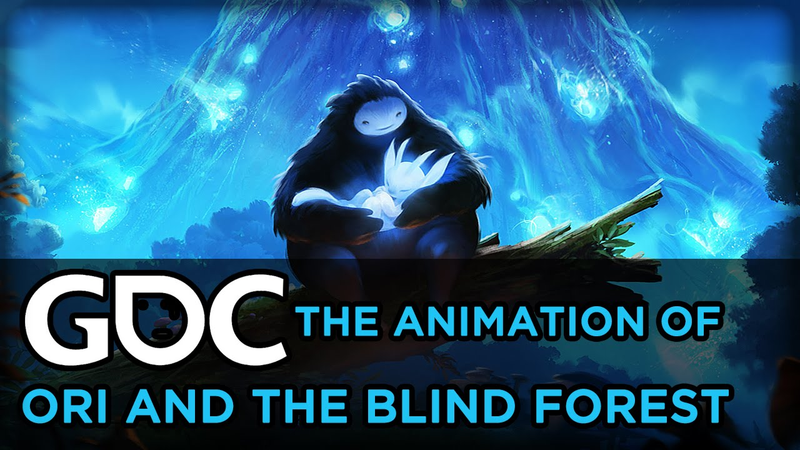
The Animation Process Of Ori & The Blind Forest
The animation process for Ori and the Blind Forest was driven by the need to achieve a lush, Ghibli-inspired aesthetic within a 2D Metroidvania framework, despite the development team’s limited size and the lead animator’s lack of traditional 2D illustration skills.
- The Ori & The Blind Forest animation pipeline utilized 3D models rendered as 2D sprites, allowing for perfect non-uniform bone scaling to achieve extreme squash-and-stretch effects that would be difficult to execute with traditional 2D art.
- By rendering 3D assets with an orthographic camera and removing all 3D lighting information, the team successfully mimicked the flat, silhouette-heavy aesthetic of Studio Ghibli films while maintaining the technical advantages of a 3D rig.
- The team bypassed the limitations of traditional 2D animation by baking complex 3D features—such as particle effects, motion blur, and dynamic contact shadows—directly into the sprite frames during the offline rendering process.
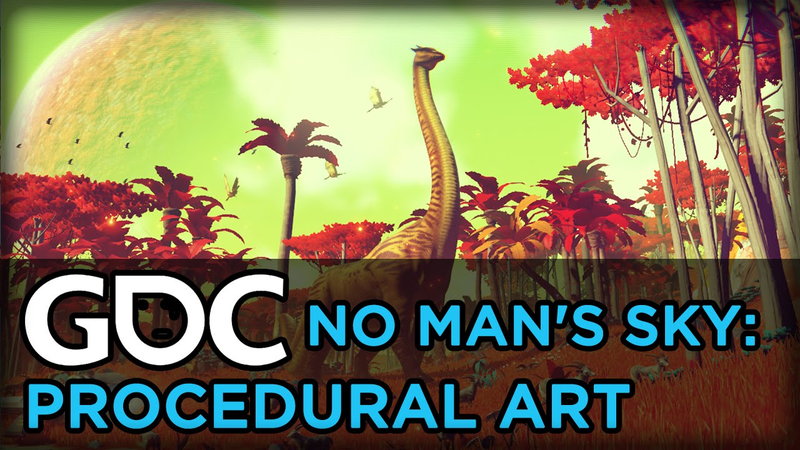
No Man's Sky: How I Learned to Love Procedural Art
The creation of an expansive, explorable universe containing 18 quintillion planets necessitates a departure from traditional, labor-intensive asset production.
- No Man's Sky utilizes a procedural generation system based on 2^64 seed values, resulting in approximately 18 quintillion unique planets.
- To avoid the 'ugly mess' of pure randomness, Hello Games implemented a blueprint system that functions as a template for all assets, ensuring stylistic consistency across procedural variations.
- The team manages the massive scale of the universe by deploying automated robot drones that visit planets and generate HTML reports with animated GIFs, allowing the four-person art team to audit visual quality efficiently.
Satoru Iwata - Heart of a Gamer
The core philosophy of game development centers on the belief that software remains the primary engine of industry success, transcending hardware specifications.
- Software quality and the gamer's perspective must remain the primary drivers of industry success, taking precedence over hardware specifications.
- The industry's focus on increasing budgets and visual fidelity has led to creative stagnation and an over-reliance on repetitive genres.
- Expanding the total gaming audience is a more viable long-term strategy than competing solely for the existing core demographic.
Building the Content that Drives the Counter-Strike: Global Offensive Economy
The Counter-Strike: Global Offensive economy functions as a highly scalable, community-driven ecosystem designed to maximize player engagement without compromising competitive integrity.
- Valve launched the 'Arms Deal' update for Counter-Strike: Global Offensive to build an economy with a small team of two artists by leveraging community-generated content through the Steam Workshop, which eventually grew to over 30,000 user-authored weapon finishes.
- To scale content production efficiently, Valve implemented procedural coloration and shader-based techniques like hydrographic-style texturing and anodization, allowing for a high volume of aesthetic variety without requiring unique assets for every item.
- Valve discovered that players valued 'paint gun' aesthetics over realistic military camouflage, proving that the game's economy is driven by its identity as a competitive sport rather than a military simulation.
Hearthstone: How to Create an Immersive User Interface
The design philosophy behind Hearthstone centers on the creation of a deeply immersive, tactile user interface that prioritizes thematic cohesion over pure functional efficiency.
- Hearthstone prioritizes thematic immersion and tactile design over pure functional efficiency to establish a distinct brand identity.
- The development process integrates UI designers as equal partners with game designers, allowing visual mockups to directly dictate and refine gameplay mechanics.
- The team intentionally accepts higher resource costs and increased user click counts to maintain a physical, handcrafted aesthetic that enhances player engagement.
How To Make Your Game Just Completely Hilarious: The Stanley Parable
The Stanley Parable co-creator William Pugh presents a deconstruction of comedy in video games, distinguishing between games designed specifically as comedies and mechanical games that incorporate humor to enhance the player experience.
- Effective game comedy is a structural design challenge rather than a purely narrative one, requiring developers to integrate humor directly into player interaction.
- Humor should be tied to player agency and exploration rather than passive sequences, turning static jokes into dynamic, conversational experiences.
- Developers can mitigate gameplay fatigue and simulate complex, reactive logic by randomizing assets and dialogue, which encourages players to perceive a deeper level of intelligence in the game's backend.
Antichamber: An Overnight Success, Seven Years In The Making
The development of Antichamber serves as a case study in the transition from an isolated student project to a commercial success, ultimately generating 750,000 lifetime sales and $5 million in revenue.
- Antichamber achieved 750,000 lifetime sales and $5 million in revenue by systematically removing chance from business operations over a seven-year development cycle.
- The developer maintained a low burn rate during the long development period by relying on government grants and competition winnings rather than external console partnerships.
- Iterative design was prioritized through rigorous, constant playtesting at industry festivals and conferences to refine the game's unique mechanics.

GuiltyGearXrd's Art Style : The X Factor Between 2D and 3D
The transition of the Guilty Gear franchise from traditional 2D sprites to a 3D framework represents a significant technical and aesthetic milestone in fighting game development.
- The Guilty Gear Xrd development team achieved a 2D aesthetic in 3D by rejecting standard rendering conventions like normal maps and global lighting, which they identified as causes of a generic digital appearance.
- The workflow prioritizes manual artist intervention over automated rendering, utilizing Unreal Engine 3 and Softimage to treat each frame as a hand-posed keyframe.
- Visual consistency is maintained by manipulating vertex-based data—specifically vertex colors, surface normals, and lighting vectors—rather than relying on resolution-dependent textures.
2026 GDC Trends Report
The 2026 GDC Trends Report serves as a strategic guide for industry professionals, identifying the primary forces currently reshaping the global gaming landscape.
- The gaming industry is shifting from the experimental phase of generative AI toward practical, large-scale implementation.
- Indie developers are facing a constrained capital environment, necessitating new strategies for securing project funding.
- The industry is seeing a rise in co-development studio models as a primary method for managing production scale and risk.