
Game Developers Conference
Game Developers Conference (GDC, now the GDC Festival of Gaming) is the professional event for the games industry. It publishes recorded talks and interviews, annual industry survey reports such as the State of the Game Industry, and news articles.
Documents
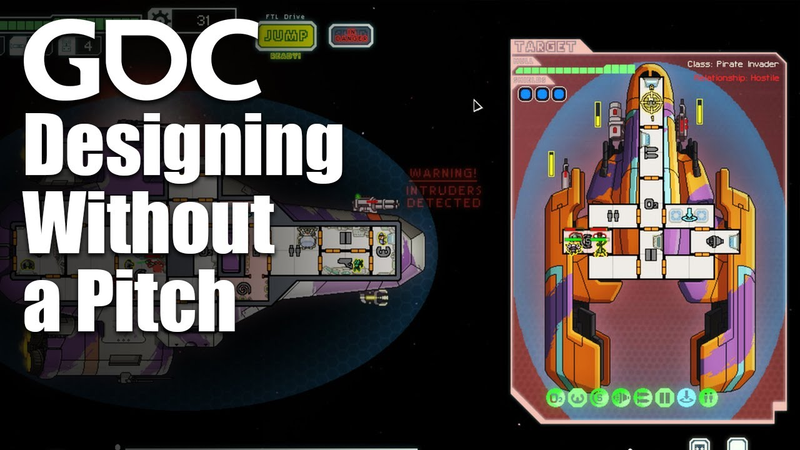
'FTL: Faster Than Light' Postmortem: Designing Without a Pitch
The development of FTL: Faster Than Light demonstrates the efficacy of prioritizing a singular, cohesive player experience over rigid design documentation or feature-heavy pitches.
- Prioritize a singular, cohesive gameplay loop—such as the tactical ship management in FTL—over rigid documentation or feature-heavy pitches to ensure a focused player experience.
- Maintain design integrity by selectively rejecting popular community feature requests that threaten gameplay balance, as demonstrated by the team's resistance to feature bloat despite pressure from 10,000 Kickstarter backers.
- Utilize large-scale beta testing to validate design direction; a 3,000-player beta confirmed that users prioritized tactical depth and difficulty over visual polish or extraneous content.
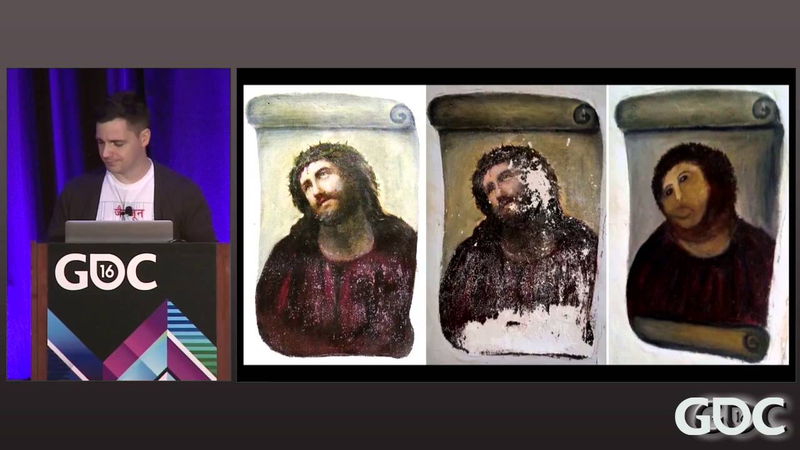
Fallout 4's Modular Level Design
Bethesda Game Studios achieves massive, high-quality open-world environments through a systematic, modular approach to level design.
- Bethesda Game Studios utilizes a modular level design workflow where 'footprint' grid systems and standardized snap points allow level designers to assemble complex environments from granular art kits rather than custom-built assets.
- Modular kits require significant upfront investment in overhead, including establishing piece logic, documentation, and ongoing maintenance, but they enable rapid iteration; for example, new architectural variations can be brought online in as little as two weeks.
- The shift toward granular, modular pieces increases object counts significantly—moving from 20 objects in a traditional 'clamshell' kit to 123 objects for the same space—necessitating the use of prefabs (or 'pack-ins') to maintain efficient editor workflows.
Lessons Learned Making Gunpoint Quickly Without Going Mad
Game development success hinges on the principle of efficiency, defined as the ratio of player value to developer effort.
- Prioritize efficiency by maximizing the ratio of player value to developer effort, focusing on manageable features that leverage existing systems rather than high-effort, singular concepts.
- Implement a test-first methodology by using fixed, short prototyping windows to validate the technical feasibility and value of a feature before committing to full-scale development.
- Avoid feature creep by critically evaluating the necessity of every mechanic and maintaining the discipline to abandon non-essential elements that do not serve core design goals.

Making Fluid and Powerful Animations For 'Skullgirls'
Effective 2D animation in fighting games requires balancing artistic fluidity with the rigid constraints of responsive gameplay.
- To maintain responsiveness in fighting games, break down every attack into four distinct parts: anticipation, smear, the main attack key, and the return to idle.
- Effective animation in constrained frame counts (as low as 5–6 frames) relies on prioritizing key poses and using smears or follow-through (such as hair or clothing movement) to bridge gaps between frames.
- Prioritize clear silhouettes and snappy timing over excessive frame counts; holding key poses longer and shortening smears can significantly improve the readability of an action.
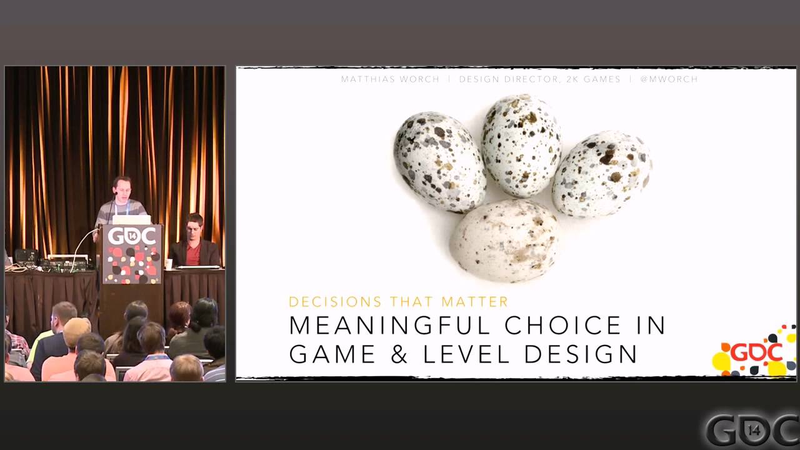
Meaningful Choice in Game Level Design
Meaningful choice in game level design functions as the primary driver of player engagement, regardless of whether a game follows a linear or open-ended structure.
- Meaningful choice is driven by systemic agency, which allows players to make discernable, integrated decisions that satisfy the psychological needs for competence, autonomy, and relatedness.
- Effective level design balances predictability with complexity, creating a 'sweet spot' that encourages pattern recognition while requiring active learning to achieve mastery.
- Games like Doom, Dead Space, and Halo utilize orthogonal unit differentiation to force players to evaluate surroundings and adapt mental schemas in real time, preventing repetitive gameplay.
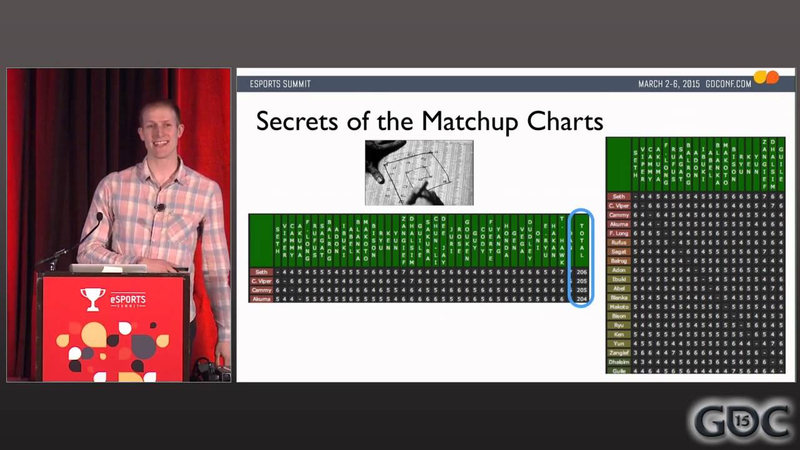
Metagame Balance For eSports & Fighting Games
Game balance in competitive titles, particularly fighting games, often suffers from a disconnect between developer data and player perception.
- Developers should shift from relying on simple win-rate averages to using game theory and linear programming to analyze character matchups as a matrix of win probabilities.
- By treating the meta-game as a formal 'selection game,' developers can calculate the theoretical bounds of character frequency to predict meta-game shifts before they occur in live environments.
- This methodology identifies three distinct categories of imbalance: characters that are always excluded, those that are sometimes dominant, and those that are always dominant.
50 Game Camera Mistakes
Effective camera design in third-person and 3D gaming environments centers on the delicate balance between player agency and automated environmental navigation.
- Prioritize manual design iterations and diverse playtesting over automated constraint solvers to ensure a predictable and intuitive camera experience.
- Implement intelligent collision detection, such as sphere-based checks and ray casting, to maintain a clear line of sight and prevent visual clipping in complex environments.
- Mitigate simulation sickness by providing robust user customization, including inverted controls, adjustable fields of view, and the option to disable motion effects like screen shake or camera bobbing.
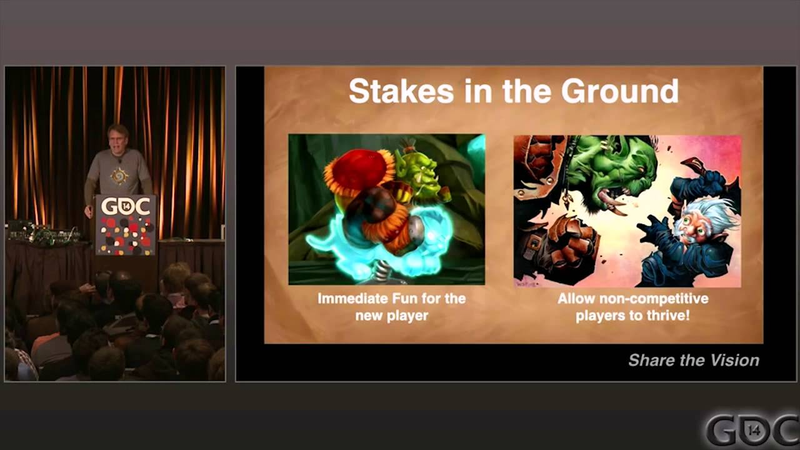
Hearthstone: 10 Bits Of Design Wisdom
The development of Hearthstone centers on the philosophy that accessibility and emotional resonance are the primary drivers of long-term player engagement.
- Prioritize removing complexity over removing depth; if a simplification reduces strategic depth, introduce new mechanics to restore it, such as the addition of Hero Powers to compensate for simplified card interactions.
- Utilize paper prototyping early in development to iterate on design concepts cheaply before committing to full-team production or engineering resources.
- Establish 'stakes in the ground'—a set of core design principles—early in development to ensure all team members, including artists and engineers, make consistent design decisions.
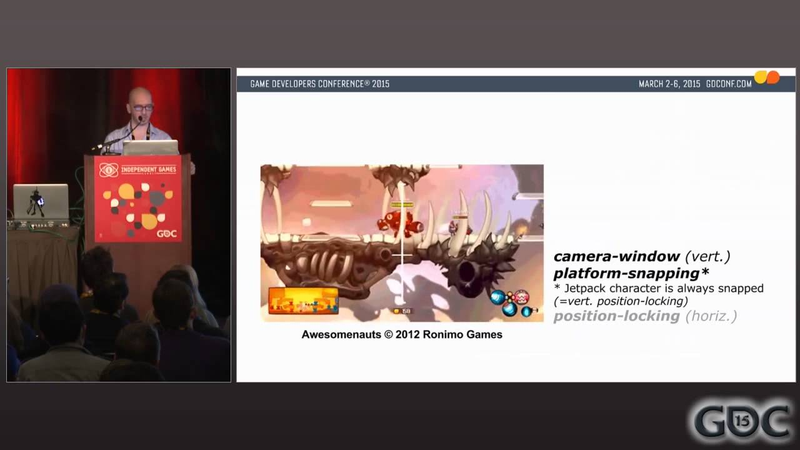
How Cameras in Side-Scrollers Work
Camera systems in 2D side-scrollers function as a critical bridge between mechanical input and human visual perception.
- Camera systems function as a critical bridge between mechanical input and human perception, using techniques like linear interpolation and speed-up push zones to prevent motion sickness and jarring transitions.
- Foundational navigation relies on position locking and the camera window method, which allow characters to move within defined zones before the frame shifts.
- Modern camera design utilizes dual-anchor systems and projected focus to anticipate player movement based on velocity and input, creating a more responsive, cinematic experience.
The Art & Inspiration of Dragon Age: Inquisition
The art direction of Dragon Age: Inquisition centers on the core thematic premise that magic is a corrupting, dangerous force.
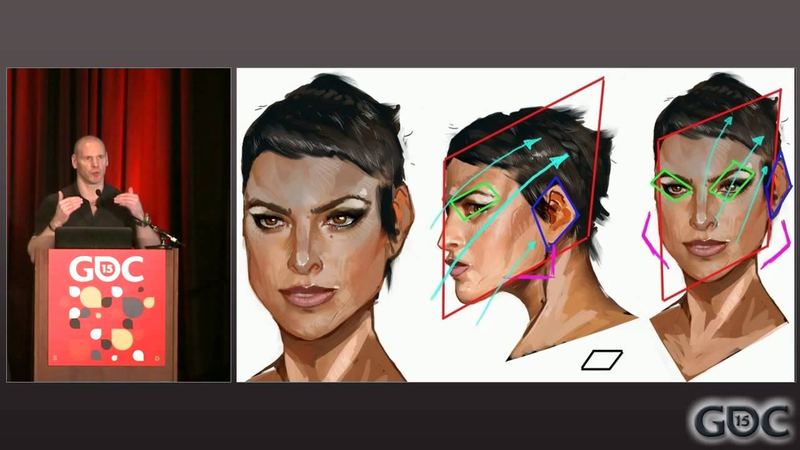
- The art direction for Dragon Age: Inquisition was heavily influenced by Northern Renaissance masters like Hans Holbein the Younger, focusing on realistic material representation—such as the texture of fur and skin—rather than pure photorealism.
- To maintain a cohesive visual identity, the team used character design to reflect personality, such as using sharp, angular facial features to convey Cassandra’s spiky, aggressive temperament.
- The development team utilized the Frostbite engine to achieve high-quality surface responses to light, while intentionally choosing to hand-craft character models rather than using the photorealistic scanning techniques common in other Frostbite-based titles.

Game Feel: Why Your Death Animation Sucks
Game feel, often described as the intangible quality that makes a game satisfying to play, is a critical component of player engagement and feedback.
- Game feel is a functional requirement rather than a cosmetic luxury, as it provides essential feedback that confirms player inputs and signals critical game events.
- Developers should integrate feedback mechanisms throughout the entire development cycle instead of relegating them to a final-stage polish phase.
- Effective game feel relies on a layered approach that combines visual polish—such as particle effects, screen shake, and chromatic aberration—with responsive sound design.
Classic Postmortem: The Making Of Myst
The development of Myst represents a foundational shift in interactive entertainment, prioritizing player agency and environmental immersion over traditional gaming conventions.
- The development of Myst prioritized environmental immersion and player agency over traditional gaming conventions, successfully targeting a broad, non-traditional audience.
- The team utilized a hub-and-spoke 'Ages' structure to manage the severe data constraints of early CD-ROM technology.
- Technical limitations regarding character interaction were addressed through creative narrative framing, such as using books to justify one-way communication.