
Game Developers Conference
Game Developers Conference (GDC, now the GDC Festival of Gaming) is the professional event for the games industry. It publishes recorded talks and interviews, annual industry survey reports such as the State of the Game Industry, and news articles.
Documents
Portal 2: Creating a Sequel to a Game That Doesn't Need One
The development of Portal 2 centered on the challenge of crafting a sequel that honored the original’s identity while expanding its mechanical and narrative scope.
- Valve prioritized the player's relationship with GLaDOS as the central narrative anchor, ensuring all new characters and events served to deepen that specific dynamic.
- To maintain player engagement with a silent protagonist, the writing team enforced a rule that all dialogue must be directed at or about the player to keep them at the center of the experience.
- The team streamlined puzzle design by allowing players to control the pace of mechanics, such as replacing automated portal movement with button-activated triggers to improve comprehension.
The Prototype that was Banned from Halfbrick
Game design possesses the capacity to fundamentally alter human behavior, often with unintended and disruptive consequences.
- A pen-and-paper strategy game developed at Halfbrick was terminated after only eight days because its complex alliance-building and high-stakes mechanics caused a total collapse in office productivity.
- The game's 'daisy-chaining' mechanics and lack of randomness transformed professional relationships into intense personal rivalries, creating a toxic environment incompatible with the workplace.
- High-stakes feedback loops and forced social dependencies in game design can prioritize engagement at the expense of player well-being, often leading to blame and frustration.
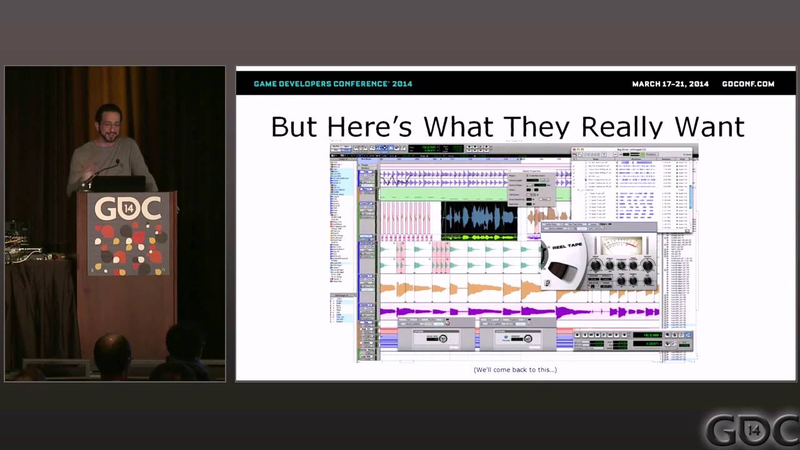
Lessons Learned from a Decade of Audio Programming
Drawing on over a decade of experience in game audio programming, this analysis outlines the core principles of building effective audio engines and fostering productive collaborations with sound designers.
- The primary challenge in audio engineering is managing mix complexity and providing high-level creative tools, rather than the computationally inexpensive task of sound playback.
- Audio programmers should prioritize memory management and mix quality over CPU overhead, as playback is inherently vectorizable and efficient.
- To maintain audio clarity and prevent clutter, developers should implement technical constraints such as virtualization, volume ducking, and the 'rule of two and a half' for spatialization.
Life is Strange: Using Interactive Storytelling and Game Design to Tackle Real World Problems
Interactive storytelling serves as a powerful medium for exploring complex, real-world challenges such as terminal illness, domestic violence, and cyberbullying.
- Interactive storytelling effectively explores complex real-world issues like terminal illness and domestic violence by grounding them in realistic, character-driven narratives rather than overt political agendas.
- Designers should prioritize authentic dialogue and environmental storytelling over traditional gamified mechanics to foster deep player empathy and personal reflection.
- Removing intrusive user interface elements and utilizing slow pacing forces players to confront the long-term consequences of their moral choices.
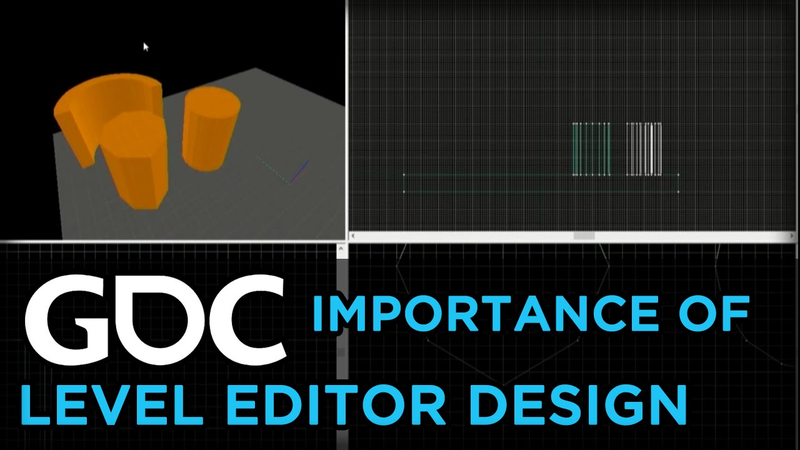
Keeping Level Designers in the Zone Through Level Editor Design
Level editor user experience serves as a foundational pillar for game development, directly influencing both the quality of the final product and the efficiency of the production cycle.
- Prioritizing intuitive level editor UX is a strategic investment that prevents the accumulation of thousands of unnecessary manual actions, directly reducing production costs and technical friction.
- Designers maintain a state of flow and avoid cognitive fatigue when editors minimize menu-diving and streamline complex workflows, allowing for more frequent creative iteration.
- Visual-based interfaces, such as drag-and-drop asset importing and icon-based browsing, significantly outperform text-based systems by eliminating issues related to naming inconsistencies and language barriers.
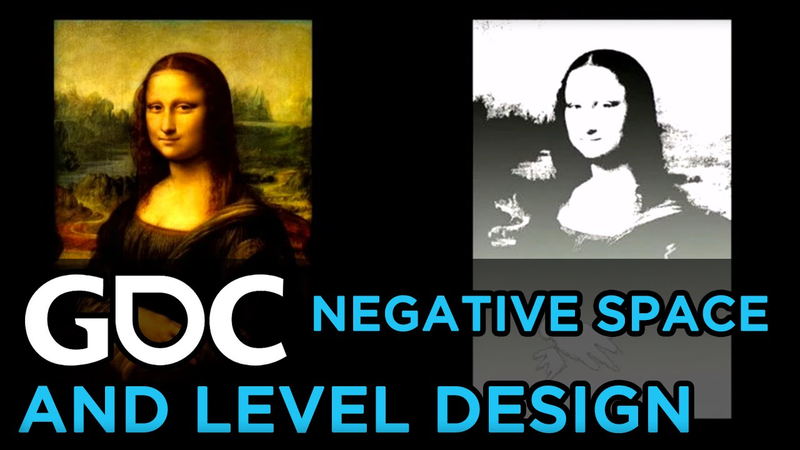
The Importance of Nothing: Using Negative Space in Level Design
Negative space serves as a foundational pillar in level design, functioning as a strategic tool to enhance visual clarity, guide player focus, and optimize gameplay flow.
- Negative space is a critical design tool used to reduce cognitive load, improve visual clarity, and guide player focus in complex 3D environments.
- Excessive visual detail in modern games often obscures navigation and combat targets, leading to sensory overload and degraded player experiences.
- Designers can evaluate environmental noise and map playability using analytical techniques such as squinting, blurring, and color histogram evaluation.
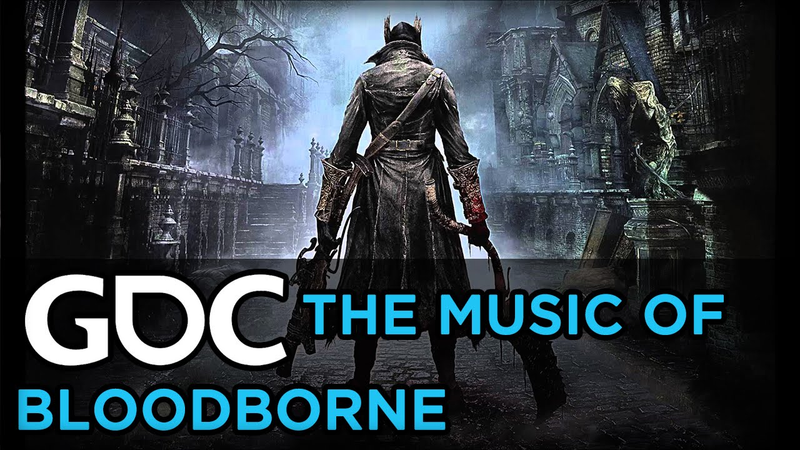
The Gothic Horror Music of 'Bloodborne'
The musical score for Bloodborne serves as a masterclass in collaborative game audio production, demonstrating how a unified aesthetic can be maintained across a distributed, multi-continental team.
- The Bloodborne score was produced over 2.5 years by a distributed team of six composers across the UK, US, and Japan, resulting in 130 minutes of music.
- To maintain a cohesive aesthetic across a fragmented creative team, the production utilized a strict style guide and a shared orchestral template.
- The musical identity was defined by a synthesis of 20th-century modernist techniques and traditional orchestral arrangements to evoke Victorian Gothic horror.
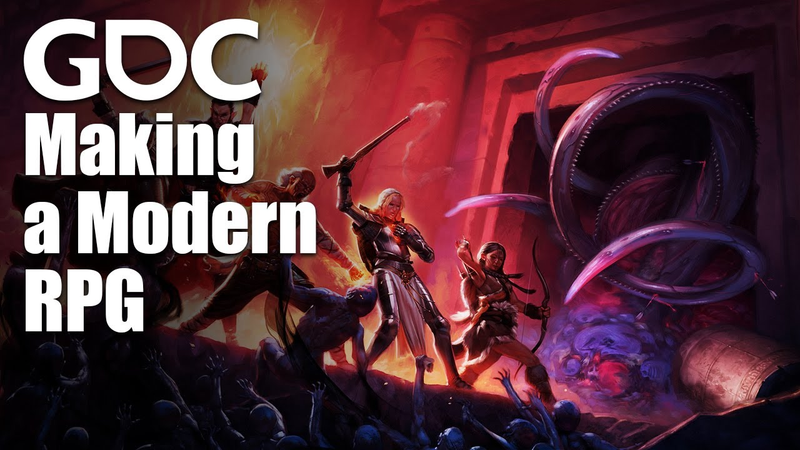
'Pillars of Eternity' and Proper Attribute Tuning
The design of Pillars of Eternity centers on modernizing traditional role-playing game mechanics by restructuring the six-attribute system to ensure universal viability across all character classes.
- Pillars of Eternity modernized the traditional six-attribute system by decoupling stats from rigid class requirements to ensure every attribute provides universal benefits.
- The design team eliminated 'dump stats' and 'trap builds' by pairing attributes with secondary defenses, ensuring tangible utility for every character archetype.
- A linear attribute system was implemented to minimize the performance gap between min-maxed builds and unconventional character concepts, such as high-strength wizards.
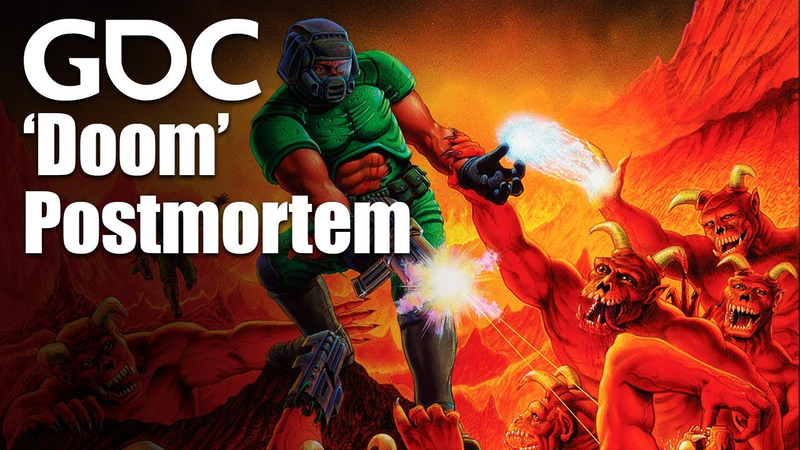
'Doom:' A Classic Game Postmortem
The development of Doom, initiated in late 1992, represents a pivotal evolution in first-person shooter design, transitioning from the rigid, military-themed architecture of its predecessor, Wolfenstein 3D, toward a more abstract and atmospheric aesthetic.
- Released on December 10, 1993, 'Doom' revolutionized the first-person shooter genre by shifting from the rigid architecture of 'Wolfenstein 3D' to complex, non-orthogonal environments enabled by Binary Space Partitioning trees.
- The development team prioritized high-speed, skill-based gameplay over complex narrative or inventory systems, utilizing NeXT workstations to achieve technical performance that exceeded contemporary hardware limitations.
- The project was defined by a lack of formal pre-production and significant internal creative friction, which led to key personnel changes and the abandonment of external collaborations like a proposed 'Aliens' project.
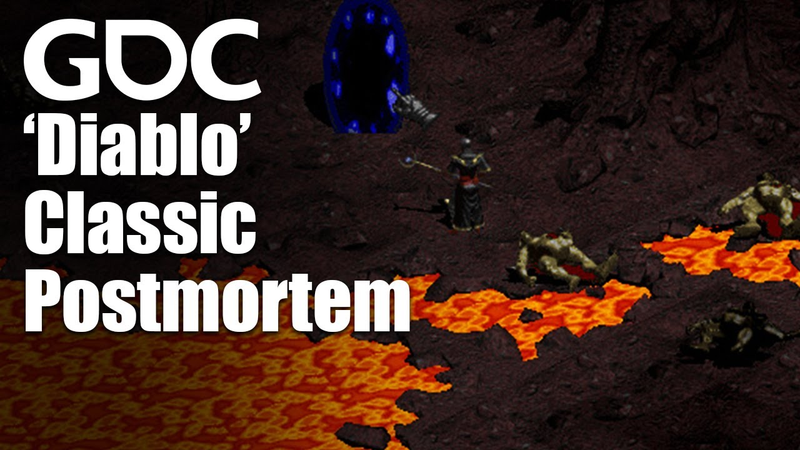
'Diablo': A Classic Game Postmortem
Diablo emerged from a vision to modernize the roguelike genre by blending atmospheric depth with accessible, action-oriented gameplay.
- Diablo's core design underwent a radical shift during development, moving from a turn-based, single-player DOS game to the real-time, multiplayer experience that defined the genre after Blizzard Entertainment insisted on the changes.
- The studio operated with severe financial constraints, signing a contract to develop the game for $300,000, which barely covered the salaries and operational costs for a 15-person team.
- Technical development was highly specialized for the era, with approximately one-eighth of the game's code written in assembly and the project serving as the lead programmer's first experience coding in C.
'Magic: the Gathering': 20 Years, 20 Lessons Learned
Effective game design relies on aligning mechanics with human nature rather than attempting to force players into unnatural behaviors.
- Design components for specific audience segments rather than trying to please everyone, as attempting to satisfy every player often results in a product that no one loves.
- Leverage the pre-existing emotional associations players bring to a game—such as established cultural concepts like zombies—to help them understand mechanics faster and deepen engagement.
- Prioritize player agency by providing diverse choices, formats, and paths, because players perceive higher quality in games where they feel a personal connection and sense of ownership.
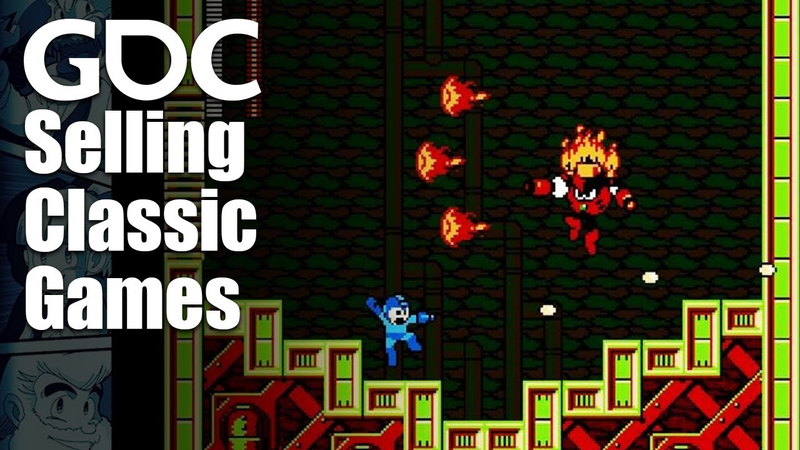
"It's Just Emulation!": The Challenge of Selling Old Games
Video game preservation remains a critical yet neglected necessity, with a significant portion of early interactive software history at risk of permanent loss.
- The gaming industry’s conflation of emulation with piracy acts as a primary barrier to preserving software, preventing companies from using it as a cost-effective, standardized tool for republishing back catalogs.
- Reframing emulation as a functional codec rather than a threat allows developers to bypass the high costs and technical risks associated with traditional porting.
- The industry is currently failing to monetize its heritage by trapping titles in legal limbo or replacing them with derivative remakes, despite proven consumer demand for authentic vintage experiences.